

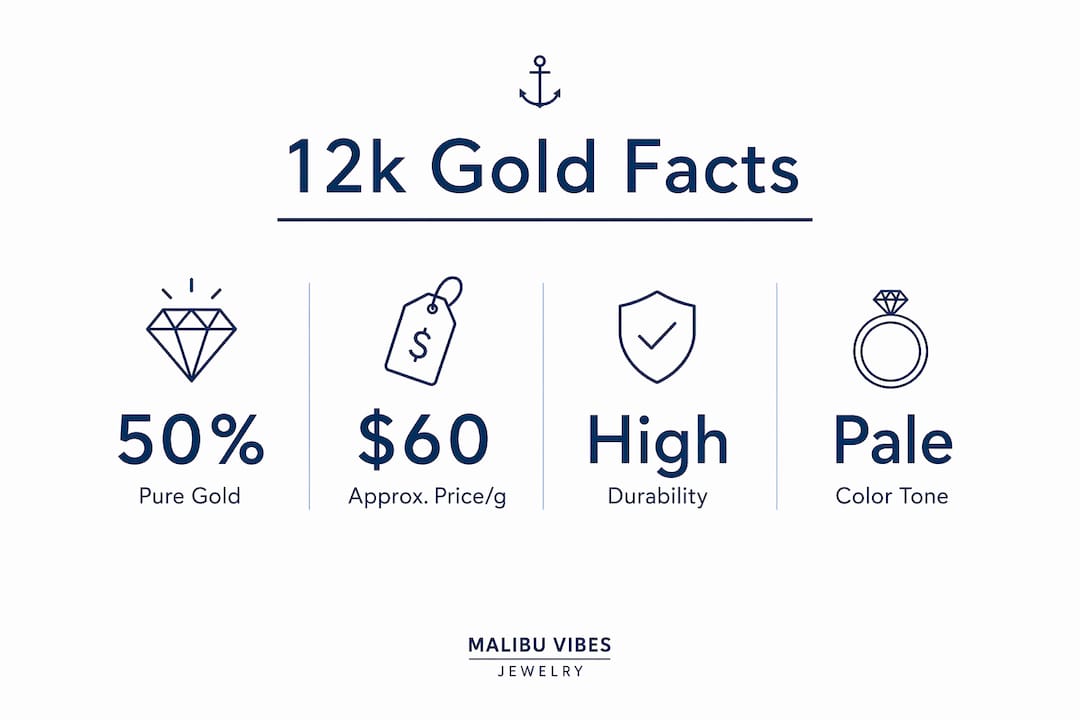
12k gold is a 50 percent pure gold alloy with a fineness mark “500,” offering moderate durability and softer yellow tone. It is less pure than higher karat gold but ranks higher in hardness and wear resistance compared to 14k or 18k gold, making it practical for daily jewelry. Market prices reflect its gold content, but its paler color and lower classification as jewelry impact resale value and perception.
12k gold is defined as an alloy containing exactly 50% pure gold and 50% other metals, stamped with the millesimal fineness mark “500.” That composition places it squarely between lower karat alloys and the more popular 14k or 18k grades. The 50/50 split gives 12k gold a specific character: moderate durability, a softer yellow tone, and a price point that reflects its gold content. Understanding what that means for your jewelry choices and your wallet is what this article covers, from composition and color to current market pricing and buyer guidance.
What is the composition of 12k gold?
12k gold sits at the exact midpoint of the gold purity scale. The millesimal fineness stamp “500” confirms that 500 parts per 1,000 are pure gold. The remaining 500 parts are typically copper, silver, zinc, or nickel, depending on the manufacturer and the intended color of the finished piece.
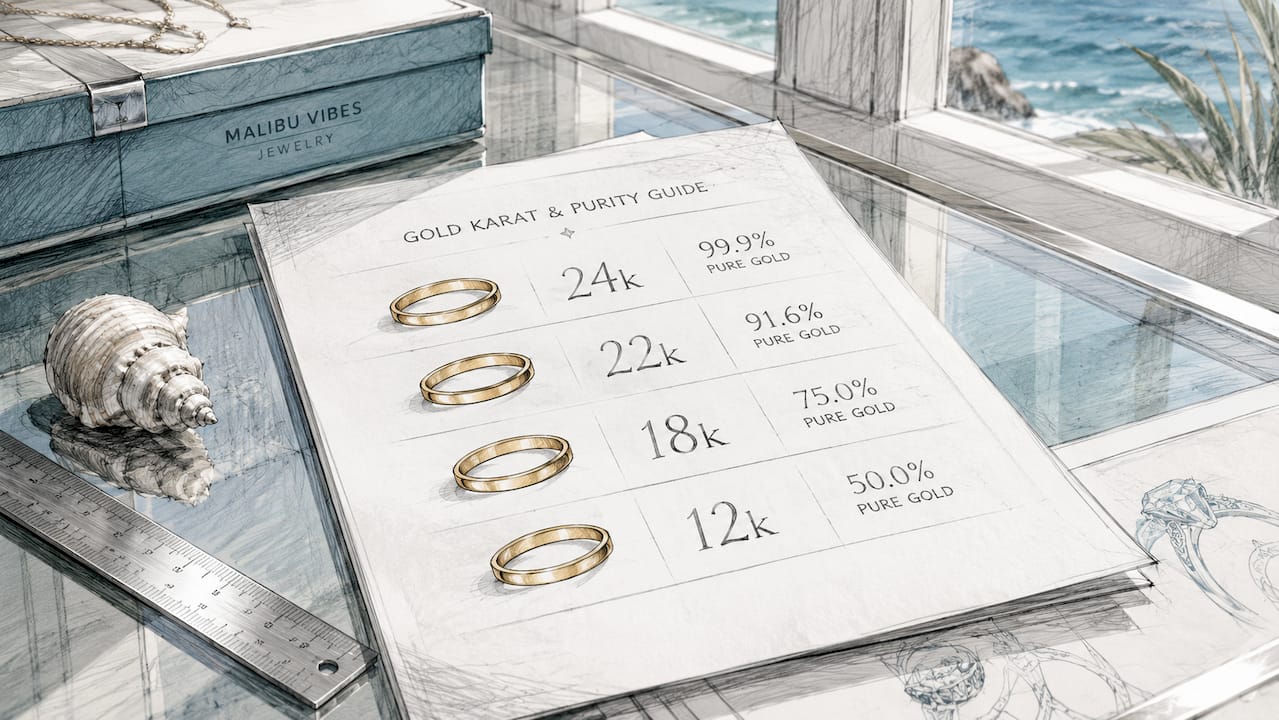
Understanding how 12k gold compares to other common karats puts its value in context. The table below shows gold content by karat.
| Karat | Gold content | Fineness stamp |
|---|---|---|
| 24k | 99.9% | 999 |
| 22k | 91.7% | 917 |
| 18k | 75.0% | 750 |
| 14k | 58.3% | 585 |
| 12k | 50.0% | 500 |
| 10k | 41.7% | 417 |
The alloy metals in 12k gold serve a real purpose. Pure gold is too soft for most jewelry. Adding copper increases hardness. Adding silver or zinc adjusts color. The specific alloy blend determines whether a 12k piece leans warm and reddish or cooler and pale yellow. Knowing the gold karat differences helps you read a hallmark and understand exactly what you are buying before you spend a dollar.
One thing worth knowing: the US jewelry trade classifies gold below 14k as lower-tier or “discount” grade. That label affects resale value and consumer perception, even when the piece itself is well-crafted. It does not mean 12k gold is poor quality. It means the market prices it accordingly.
How durable is 12k gold for everyday wear?
Durability in gold jewelry works inversely to purity. The more alloy metal in the mix, the harder the piece. 12k gold ranks above 14k, 18k, and 24k in hardness but falls below 10k gold. That ranking matters for buyers who want a piece that holds up to daily contact with surfaces, fabrics, and skin.
Here is how 12k gold performs across common wear scenarios:
- Everyday rings and bracelets: 12k gold resists bending and minor impacts better than 14k or 18k gold. It handles daily wear without deforming easily.
- Necklaces and pendants: The alloy content keeps chains from kinking as readily as higher purity options. Clasps and links stay firm longer.
- Active lifestyles: 12k gold tolerates gym use, outdoor activities, and frequent hand washing better than softer 18k or 22k pieces. It is not indestructible, but it is practical.
- Micro-scratch accumulation: Despite its hardness, 12k gold accumulates micro-scratches over time with regular use. The surface dulls gradually and needs periodic polishing to restore its original shine.
Pro Tip: Polish your 12k gold pieces with a soft microfiber cloth every two to four weeks. For deeper cleaning, use warm water with a drop of mild dish soap and a soft toothbrush. Avoid ultrasonic cleaners if your piece contains gemstones. Full care guidance is available in Malibuvibesjewelry’s gold jewelry care guide.
The practical takeaway is that 12k gold suits buyers who prioritize durability over maximum gold purity. If you wear jewelry every day and want it to last without constant professional maintenance, 12k gold delivers that balance better than 18k or 24k options.
What does 12k gold look like compared to other gold varieties?
Color is where 12k gold makes its most visible trade-off. 12k gold appears paler and softer in yellow tone than 14k or 18k gold. The higher the alloy percentage, the less saturated the warm gold color becomes.
Here is how the visual differences break down across common gold grades:
- 24k gold: Deep, rich, almost orange-yellow. Unmistakably pure gold in color.
- 18k gold: Warm, saturated yellow. The standard for luxury fine jewelry.
- 14k gold: Slightly cooler yellow with good warmth. The most popular grade in the US market.
- 12k gold: Noticeably paler yellow. Closer to a champagne or light gold tone than a rich yellow.
- 10k gold: Even paler, sometimes with a slightly greenish or gray cast depending on alloy mix.
The paler tone of 12k gold is not universally a drawback. Some buyers prefer the understated look. It pairs well with white diamonds and cool-toned gemstones. It also photographs well in natural light without the orange cast that pure gold sometimes shows.
The alloy mix matters here too. A 12k gold piece with a higher copper content will lean warmer and rosier. One with more silver or zinc will appear cooler and lighter. When you shop for 12k gold jewelry, ask about the specific alloy composition if color consistency matters to you.
How is 12k gold priced and what should buyers know about its value?
Price is the most direct way to evaluate whether 12k gold fits your budget and goals. 12k gold is valued at approximately $63.70 per gram as of july 2, 2026, with a recent market movement of -1.02% over the prior week. That figure reflects the spot price of gold adjusted for the 50% purity level.
| Karat | Approximate price per gram (2026) | Gold content |
|---|---|---|
| 24k | ~$127.40 | 99.9% |
| 18k | ~$95.55 | 75.0% |
| 14k | ~$74.32 | 58.3% |
| 12k | ~$63.70 | 50.0% |
| 10k | ~$53.08 | 41.7% |
The price per gram scales directly with gold content. That makes 12k gold a mid-range purchase, cheaper than 14k but more expensive than 10k. The gap between 12k and 14k is meaningful: you pay roughly $10.62 less per gram but also get noticeably less gold content and a paler color.
12k gold is rarely chosen for investment purposes. Investors who want gold exposure through jewelry typically target 22k or 24k pieces, where the gold content is high enough to track spot price closely. At 50% purity, 12k gold’s resale value reflects both the gold content and the craftsmanship, not just the metal.
One common buyer mistake is confusing solid 12k gold with gold-filled or gold-plated pieces. Verifying the hallmark “12K” or “500” and having a jeweler conduct an acid test or XRF scan confirms solid gold composition. Gold-filled pieces carry a different stamp format, such as “1/20 12K GF,” which means only a thin layer of 12k gold covers a base metal core.
Pro Tip: Before buying any piece labeled 12k gold, check the stamp under magnification. A loupe or jeweler’s magnifier reveals the hallmark clearly. If the stamp reads “GF,” “GP,” or “RGP,” the piece is not solid gold.
Is 12k gold a good choice for jewelry or investment?
The answer depends entirely on what you need from the piece. 12k gold occupies a specific niche, and buyers who understand that niche get real value from it.
Where 12k gold works well:
- Fashion jewelry worn daily, where durability matters more than maximum gold purity
- Buyers on a moderate budget who want real gold, not plated alternatives
- People with sensitive skin who react to 10k gold, since 12k gold’s higher gold content reduces alloy-related irritation compared to 10k’s 41.7% gold content
- Pieces designed for frequent wear, such as stacking rings, everyday necklaces, and casual bracelets
Where 12k gold falls short:
- Investment portfolios: 12k gold’s lower intrinsic value makes it a poor choice for bullion-level returns
- Heirloom or prestige pieces: the jewelry trade’s classification of sub-14k gold as lower-tier affects perceived value and resale price
- Buyers who want the richest yellow color: 14k or 18k gold delivers a more saturated, warmer tone
The buyers who benefit most from 12k gold are those who want real, solid gold at a price below 14k, with better durability than 18k, and without the skin sensitivity issues that sometimes come with 10k alloys. That is a real and useful combination. It is just not the right fit for every buyer or every occasion. Exploring the jewelry market positioning across karat grades helps clarify where 12k gold fits relative to the broader fine jewelry market.
Key Takeaways
12k gold is a solid, real gold alloy at 50% purity that suits everyday jewelry wear better than investment, offering durability above 14k and 18k gold at a lower price per gram than either.
| Point | Details |
|---|---|
| Purity and composition | 12k gold contains exactly 50% pure gold, stamped with fineness mark “500.” |
| Durability ranking | 12k gold is harder than 14k, 18k, and 24k gold, making it practical for daily wear. |
| Color appearance | 12k gold shows a paler, softer yellow than 14k or 18k gold due to its higher alloy content. |
| Market price | 12k gold trades at approximately $63.70 per gram as of july 2026, below 14k gold’s price. |
| Investment suitability | 12k gold is not a strong investment vehicle; it suits fashion jewelry, not bullion portfolios. |
12K vs. 14K Gold: Why Malibu Vibes Jewelry Primarily Uses 14K Gold
For fine jewelry designed to be worn often, 14K gold offers a particularly useful balance. It contains 58.3% pure gold, compared with 50% in 12K, giving it a richer gold content while still retaining the strength needed for rings, necklaces, earrings, and everyday pieces.
At Malibu Vibes Jewelry, our focus is primarily on solid 14K gold because it combines durability, recognizable fine-jewelry value, and the warm appearance customers expect from real gold. As a second-generation jeweler and GIA graduate with more than 35 years of hands-on jewelry experience, Ara Ajamian approaches metal choice as part of the design itself: the right karat should support the piece, the stones, and how the jewelry will actually be worn.
If you are comparing 12K and 14K, the difference is not simply “higher is better.” 12K can be a durable real-gold alloy. For buyers looking for fine jewelry with greater gold content and a widely recognized U.S. jewelry standard, 14K is often the more practical long-term choice.
Shopping for solid gold jewelry?
Explore handcrafted 14K solid gold jewelry from Malibu Vibes Jewelry, made in Los Angeles with natural diamonds and genuine gemstones.
Fine jewelry worth wearing every day, from Malibuvibesjewelry

Malibuvibesjewelry crafts fine jewelry with the same attention to material quality and wearability that makes the difference between a piece you wear once and one you reach for every morning. Every piece in the collection is made in Los Angeles with a focus on craftsmanship over volume. If you want to understand exactly how that process works, the jewelry making process page walks through every step from metal selection to final finish. For buyers ready to shop, the solid gold necklaces collection shows what real gold looks like when the craftsmanship matches the material.
Prefer 14K solid gold?
Browse Malibu Vibes Jewelry's solid gold necklaces and discover pieces made for everyday wear.
FAQ
What is 12k gold made of?
12k gold contains exactly 50% pure gold and 50% alloyed metals such as copper, silver, or zinc, confirmed by the fineness stamp “500.” The specific alloy blend varies by manufacturer and affects the piece’s color and hardness.
Is 12k gold real gold?
Yes, 12k gold is solid, real gold. It contains 50% pure gold by weight and carries a legal hallmark of “12K” or “500,” distinguishing it from gold-filled or gold-plated pieces.
How does 12k gold compare to 14k gold?
12k gold contains less pure gold (50%) than 14k gold (58.3%), making it slightly harder and more durable but paler in color and lower in resale value. 14k gold is the more common standard in the US fine jewelry market.
Can people with sensitive skin wear 12k gold?
12k gold is generally better for sensitive skin than 10k gold because its higher gold content means less alloy metal in contact with skin. People who react to 10k gold often tolerate 12k gold without irritation.
How do I verify that a piece is solid 12k gold?
Look for the hallmark “12K” or “500” stamped on the piece, ideally confirmed under magnification. A professional jeweler can perform an acid test or XRF scan to verify solid gold composition and rule out gold-filled alternatives.