

Finding that perfect handcrafted bracelet can feel surprisingly tricky when sizing confusion sets in. Many American women quickly discover that choosing one size or using an old favorite as a guide rarely works for every style or material. Accurate sizing matters because it transforms your new accessory from an almost-right piece into your most comfortable, confidence-boosting favorite. This guide delivers precise wrist measurement techniques and uncovers common sizing mistakes that stand between you and your ideal fit.
Table of Contents
- Bracelet Size Chart Basics And Misconceptions
- Measuring Your Wrist For Bracelet Sizing
- Bracelet Types And Their Specific Size Guidelines
- Average Bracelet Sizes For Women In The Us
- Fit Preferences And Adjusting Bracelet Size
- Common Sizing Mistakes And How To Avoid Them
Key Takeaways
| Point | Details |
|---|---|
| Measure Accurately | Use a soft measuring tape to find your wrist circumference and add half an inch for comfort. |
| Consider Bracelet Type | Different bracelet styles require unique sizing approaches; precision is key for bangles, while chains offer more flexibility. |
| Stay Aware of Fit Preferences | Decide whether you prefer a snug, standard, or loose fit based on your activities and jewelry style. |
| Avoid Common Mistakes | Measure multiple times and consider wrist size fluctuations throughout the day to ensure an accurate fit. |
Bracelet size chart basics and misconceptions
Understanding bracelet sizing isn’t as straightforward as most people assume. Many fashion enthusiasts make critical errors when selecting bracelet sizes, leading to uncomfortable or ill-fitting accessories. Proper wrist measurement techniques are fundamental to finding the perfect bracelet.
Bracelet sizing involves more complexity than simply choosing a “standard” size. Different styles require unique approaches:
- Bangle bracelets typically need exact wrist measurements
- Chain bracelets offer more flexibility with adjustable links
- Cuff bracelets might require additional width considerations
Common misconceptions about bracelet sizing can derail your jewelry selection process. Many people mistakenly believe one size fits all or that their existing bracelets can serve as universal sizing guides. The reality is far more nuanced. Cultural bracelet variations demonstrate that sizing isn’t just about measurements, but also about design and intended wear.
To accurately determine your bracelet size, measure your wrist at its widest point and add a comfortable half-inch. This extra space ensures the bracelet sits comfortably without feeling too tight or loose. Flexible measuring tools like soft tape measures work best for precise measurements.
Pro tip: Always try on bracelets before purchasing, and remember that different metal types and designs can impact how a bracelet fits.
Measuring your wrist for bracelet sizing
Precision is paramount when determining the perfect bracelet size. Accurate wrist measurement techniques can make the difference between a comfortable accessory and an uncomfortable fashion faux pas. Understanding how to measure your wrist correctly ensures you’ll select a bracelet that fits like a glove.
To measure your wrist accurately, you’ll need a few simple tools:
- Soft measuring tape (preferred method)
- Flexible string or floss
- Ruler
- Pen and paper for recording measurements
The measurement process involves several key steps:
- Locate the widest part of your wrist
- Wrap the measuring tool snugly (not tightly) around this point
- Note the exact circumference
- Add a half-inch for comfortable movement
Wrist sizing nuances matter more than most people realize. Hand measurement principles reveal that wrist circumference can vary based on factors like muscle tone, weight, and even time of day. Some individuals might find their wrist size fluctuates slightly throughout the day.
For the most accurate sizing, measure your wrist multiple times and take an average. When trying on bracelets, remember that different styles - from delicate chains to chunky cuffs - will fit differently. A measurement that works perfectly for one bracelet style might feel too tight or loose in another design.
Pro tip: Always measure your wrist at the end of the day when it’s typically at its largest, and leave a little extra room for comfort and potential slight swelling.
Bracelet types and their specific size guidelines
Bracelet design variations significantly impact sizing requirements, making a one-size-fits-all approach impossible. Understanding the unique characteristics of different bracelet styles is crucial for finding the perfect fit and ensuring maximum comfort and aesthetic appeal.
Bracelet types can be categorized based on their structural design:
- Bangles: Rigid, circular bracelets requiring precise wrist diameter measurements
- Chain bracelets: Flexible designs with adjustable links
- Cuff bracelets: Open-ended, semi-rigid styles that slide over the wrist
- Charm bracelets: Typically link-based with multiple hanging decorative elements
- Beaded or fabric bracelets: Often featuring elastic or adjustable closures
Each bracelet type demands a unique approach to sizing. Medical ID bracelet specifications highlight the importance of considering not just circumference, but also factors like band width and closure mechanism. For instance, a bangle requires exact wrist diameter measurement, while a chain bracelet offers more flexibility with adjustable links.
When selecting a bracelet, consider these additional sizing factors:
- Wrist circumference
- Bracelet material flexibility
- Desired fit (snug vs. loose)
- Potential weight of charms or pendants
- Personal comfort preferences
Width and material play crucial roles in determining the right fit. Heavier bracelets might require slightly more room, while delicate chains can sit closer to the skin. Metal bracelets typically have less give compared to fabric or beaded options, necessitating more precise measurements.
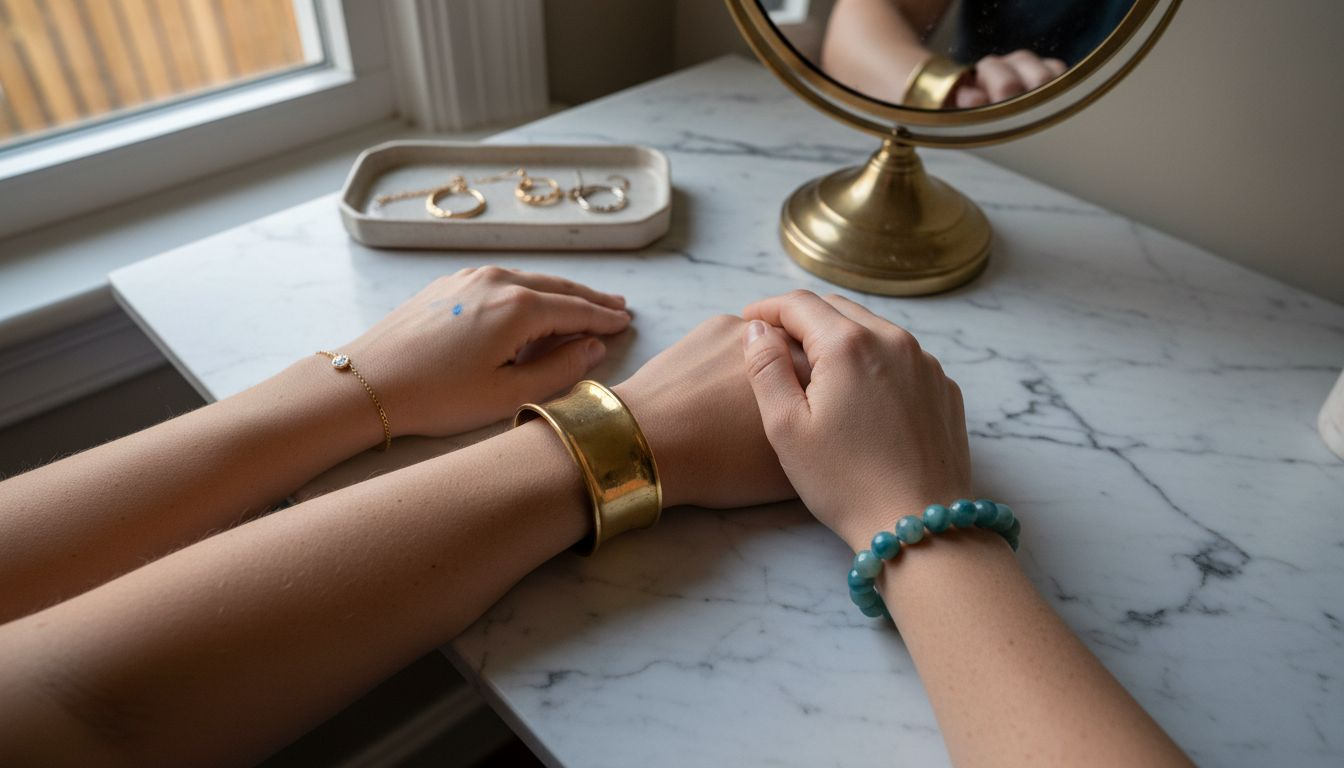
Here’s a comparison of bracelet styles and their unique sizing considerations:
| Bracelet Type | Material Flexibility | Sizing Precision Needed | Typical Adjustment Method |
|---|---|---|---|
| Bangle | Rigid | Very Precise | Exact diameter measurement |
| Chain Bracelet | Flexible | Moderate | Adjustable links or clasp |
| Cuff Bracelet | Semi-rigid | Precise with room | Open ends, minor bending |
| Charm Bracelet | Flexible | Standard | Removable links, extender chain |
| Beaded/Fabric | Very Flexible | Less Precise | Elastic or sliding knots |
Pro tip: Always try on bracelets and move your wrist around to ensure comfortable movement and prevent potential pinching or excessive looseness.
Average bracelet sizes for women in the US
Average body measurements reveal critical insights into bracelet sizing for American women. Understanding typical wrist circumferences helps fashion enthusiasts and jewelry lovers select the perfect bracelet with confidence and precision.
Standard bracelet size ranges for women in the United States typically fall within these parameters:
- Small: 6.0 - 6.5 inches
- Medium: 6.5 - 7.0 inches
- Large: 7.0 - 7.5 inches
- Extra Large: 7.5 - 8.0 inches
Most manufacturers design bracelets with the standard wrist measurement guidelines in mind. For women, the average wrist circumference hovers between 6.5 and 7 inches, which means most bracelet styles are engineered to accommodate this range comfortably.
When selecting a bracelet, consider these additional factors that influence sizing:
- Individual body composition
- Age and muscle tone
- Seasonal weight fluctuations
- Personal comfort preferences
- Specific bracelet design and material
Bracelet width also plays a significant role in determining the right size. Wider bracelets might require slightly larger measurements, while delicate chains can fit more snugly. Always add a half-inch to your wrist measurement for optimal comfort and movement.
Use this table to match wrist size with common US women’s bracelet sizes:
| Wrist Circumference (inches) | Bracelet Size Label | Best Fit Advice |
|---|---|---|
| 6.0 – 6.5 | Small | Snug to standard fit |
| 6.5 – 7.0 | Medium | Standard for most women |
| 7.0 – 7.5 | Large | For layered or looser style |
| 7.5 – 8.0 | Extra Large | Ideal for comfort plus space |
Pro tip: Measure your wrist at different times of day and use the largest measurement to ensure a consistently comfortable fit.
Fit preferences and adjusting bracelet size
Bracelet fitting principles demonstrate that personal comfort varies significantly among jewelry wearers. Understanding how to adjust and select the right bracelet size can transform your accessory experience from uncomfortable to effortlessly stylish.
Bracelet fit preferences typically fall into three primary categories:
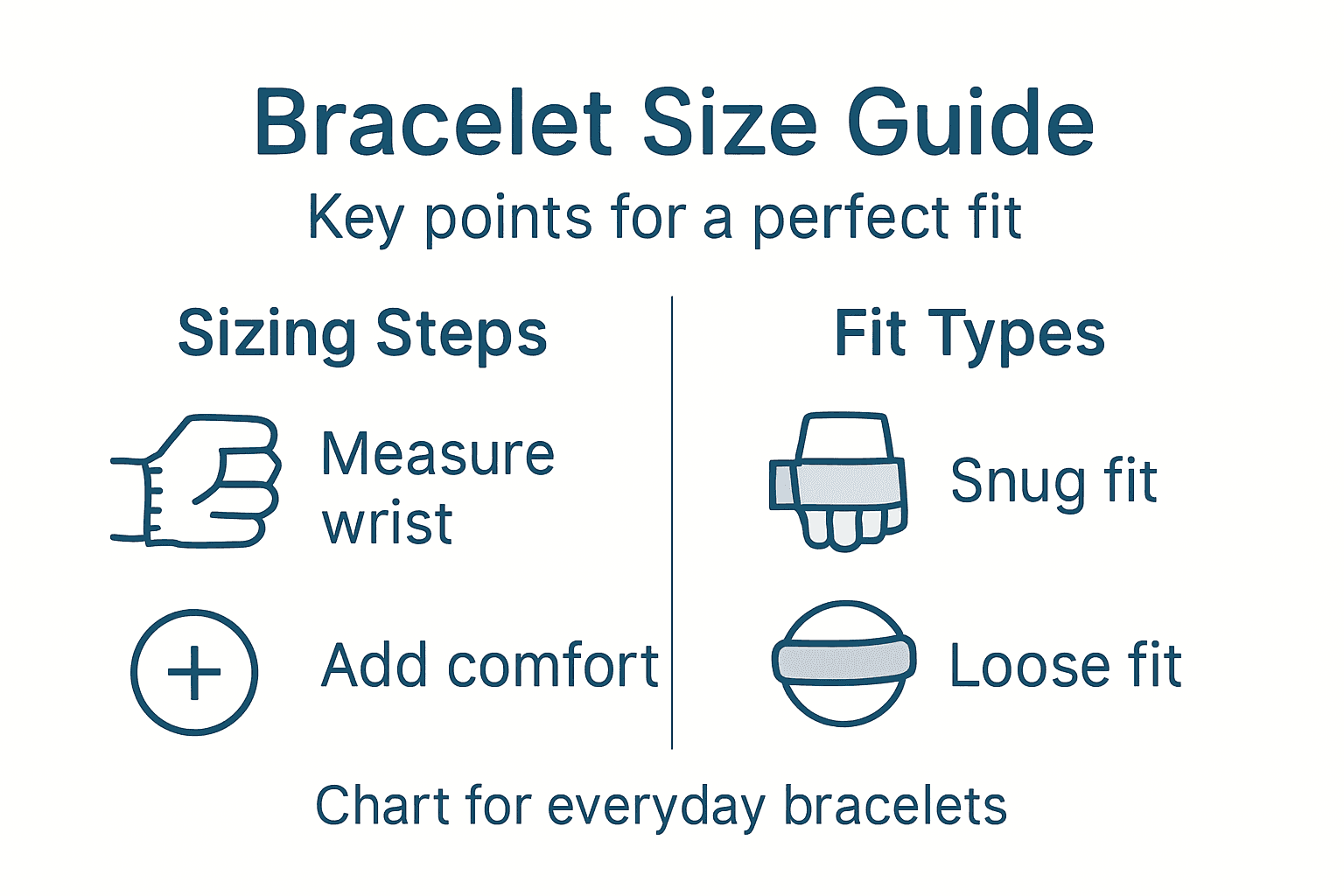
- Snug Fit: Sits closely against the skin
- Standard Fit: Allows minimal movement
- Loose Fit: Provides extra space for layering or comfort
Factors influencing personal bracelet fit preferences include:
- Daily activities and movement
- Skin sensitivity
- Jewelry style and material
- Personal aesthetic preferences
- Potential layering with other bracelets
Adjustment techniques offer multiple solutions for achieving the perfect fit. Some bracelets come with built-in mechanisms like extender chains or adjustable clasps, while others might require professional resizing. Fit testing guidelines suggest that the ideal bracelet should remain secure without causing discomfort or leaving excessive slack.
Physical comfort isn’t the only consideration. The bracelet should complement your personal style, move naturally with your wrist, and enhance your overall look without feeling restrictive or cumbersome.
Pro tip: When trying on bracelets, move your wrist through a full range of motion to ensure the bracelet feels comfortable in various positions.
Common sizing mistakes and how to avoid them
Wrist measurement techniques reveal numerous potential pitfalls that can derail your bracelet sizing journey. Understanding these common mistakes is crucial for selecting a bracelet that fits perfectly and feels comfortable throughout the day.
The most frequent bracelet sizing errors include:
- Measuring only once instead of multiple times
- Using a rigid ruler instead of a flexible measuring tape
- Forgetting to add the half-inch comfort allowance
- Ignoring individual bracelet style variations
- Measuring at different times of day without considering fluctuations
Potential consequences of these mistakes range from mildly annoying to potentially costly:
- Bracelets that slip off unexpectedly
- Uncomfortable tightness causing skin irritation
- Unnecessary returns or exchange fees
- Potential damage to delicate jewelry
- Reduced overall wearing comfort
Precision matters. Sizing tolerance principles suggest that flexibility in measurement can prevent many common fitting issues. Professional jewelers recommend taking multiple measurements throughout the day and averaging them to account for natural wrist size variations.
When measuring, always use a soft, flexible measuring tape that can conform to your wrist’s natural curves. Avoid metal rulers or stiff materials that might provide inaccurate readings. Consider your typical daily activities and the specific bracelet style when making your final size selection.
Pro tip: Keep a small notebook or digital note tracking your wrist measurements at different times, helping you develop a more accurate sizing profile over time.
Find Your Perfect Fit with Malibu Vibes Jewelry
Selecting the right bracelet size can be challenging. You want a piece that fits comfortably, complements your style, and adapts to your daily life without slipping or pinching. Our detailed bracelet size chart and expert tips on measuring your wrist ensure you avoid common sizing mistakes and find the ideal fit for your unique wrist shape and preferences.

Explore our beautifully handcrafted Bracelets Malibu Vibes Jewelry collection featuring adjustable chains, elegant cuffs, and classic bangles designed with precision and comfort in mind. Act now to enjoy timeless pieces made from high-quality precious metals with free shipping offers. Visit Malibu Vibes Jewelry to shop confidently with sizing guidance tailored to your needs.
Frequently Asked Questions
How do I measure my wrist for bracelet sizing?
To measure your wrist accurately, locate the widest part of your wrist, wrap a soft measuring tape around it snugly (not tightly), note the circumference, and add a comfortable half-inch for movement.
What are the different types of bracelets and their sizing requirements?
Bracelet types include bangles (require precise diameter measurements), chain bracelets (flexible with adjustable links), cuff bracelets (open-ended, requiring some width consideration), charm bracelets (link-based), and beaded or fabric bracelets (often elastic or adjustable). Each type has unique sizing considerations.
Why do some bracelets fit differently even if my wrist size is the same?
Different bracelet styles have varying material flexibility and design characteristics. Heavier bracelets may require more room, while delicate chains can fit closer to the skin, leading to different fit experiences.
How can I avoid common sizing mistakes when choosing a bracelet?
To avoid sizing mistakes, measure your wrist multiple times at different times of the day, use a flexible measuring tape, always add a half-inch comfort allowance, and consider the specific style of the bracelet when making your selection.
Recommended
- How to Measure Wrist for Bracelet? | Malibu Vibes Jewelry
- What is a Tennis Bracelet? Understanding This Elegant Jewelry – Malibu Vibes Jewelry
- Ring Size Guide – Malibu Vibes Jewelry
- What is a Tennis Bracelet? Understanding its Elegance – Malibu Vibes Jewelry
- Titanium Steel Wrap Ring | Gold Plated Statement Rings for Women – Be Juliet