

TL;DR:
- Gemstone cut determines how light interacts with a stone, affecting its brilliance and value.
- Major cut styles include brilliant, step, and mixed, each enhancing different gemstone features.
- Artistic cuts like cabochons and fantasy cuts create unique, sculptural effects that emphasize optical phenomena.
When shopping for fine jewelry, most people fixate on size or color, but the detail that controls how a stone actually glows is the cut. Gemstone cut refers to how a rough crystal is shaped and how its facets are arranged to direct light. It’s not the same as shape, and it’s definitely not the same as style. Understanding what cut really means can transform the way you shop, whether you’re picking a diamond ring for a milestone moment or searching for an everyday gemstone necklace that turns heads in any light.
Table of Contents
- What does ‘gemstone cut’ really mean?
- Major styles: Brilliant, step, mixed, and beyond
- Beyond the basics: Fantasy cuts, cabochons, and special surface effects
- How cut impacts jewelry style, wear, and value
- A jeweler’s perspective: Why cut matters more than carat or clarity
- Explore gemstone cuts in Malibu Vibes Jewelry collections
- Frequently asked questions
Key Takeaways
| Point | Details |
|---|---|
| Cut controls sparkle | A gemstone’s cut, not just its shape, determines how much it shines and catches the eye. |
| Style affects value | Different cutting styles highlight unique beauty or color and can boost a stone’s appeal and price. |
| Artistic cuts stand out | Nontraditional cuts, like cabochons or fantasy designs, are sought after for their unique look in handcrafted jewelry. |
| Know before you shop | Understanding cut types helps you choose jewelry that matches your style and personality. |
What does ‘gemstone cut’ really mean?
The word “cut” gets thrown around constantly in jewelry marketing, often interchangeably with shape or style. These three things are actually distinct, and mixing them up leads to real disappointment when a stone doesn’t perform the way you expected.
Shape is simply the stone’s outline when viewed from above. Round, oval, pear, cushion — those are shapes. Cut, on the other hand, describes how facets are arranged to control how light enters, bounces around, and exits a gemstone. Style is the broader artistic framework, brilliant, step, mixed, that guides the cutter’s decisions.
Here’s a quick breakdown of the three key aspects of gemstone cut:
- Facet layout: The pattern, number, and angles of flat surfaces cut into the stone
- Symmetry: How evenly those facets are placed relative to each other
- Polish: The quality of the surface finish on each facet, which affects clarity of light reflection
Think of it this way. Two stones can share the same round shape but look completely different depending on whether one uses a brilliant-style cut and the other uses a simpler rose cut. The shape is identical. The light behavior is worlds apart.
| Term | What it describes | Example |
|---|---|---|
| Shape | Outline of the stone | Round, oval, pear |
| Cut | Facet arrangement and light control | Brilliant, step, mixed |
| Style | Artistic framework for faceting | Classic, fantasy, cabochon |
Cut impacts value in a direct way. A gemstone with poor angles wastes light, making even a large, clear stone look dull. A well-executed cut squeezes every bit of brilliance out of a stone, even if it’s on the smaller side. If you’re curious about how different types of gemstone cuts perform in real jewelry settings, understanding cut is the first step.
Pro Tip: Not all sparkle is equal. A brilliant-style cut with ideal proportions produces scintillation, which is that lively play of light and dark when the stone moves. A mediocre cut on the same material produces a flat, glassy look with no life.
Major styles: Brilliant, step, mixed, and beyond
With those definitions in mind, let’s explore the major cutting styles and what they bring to jewelry.
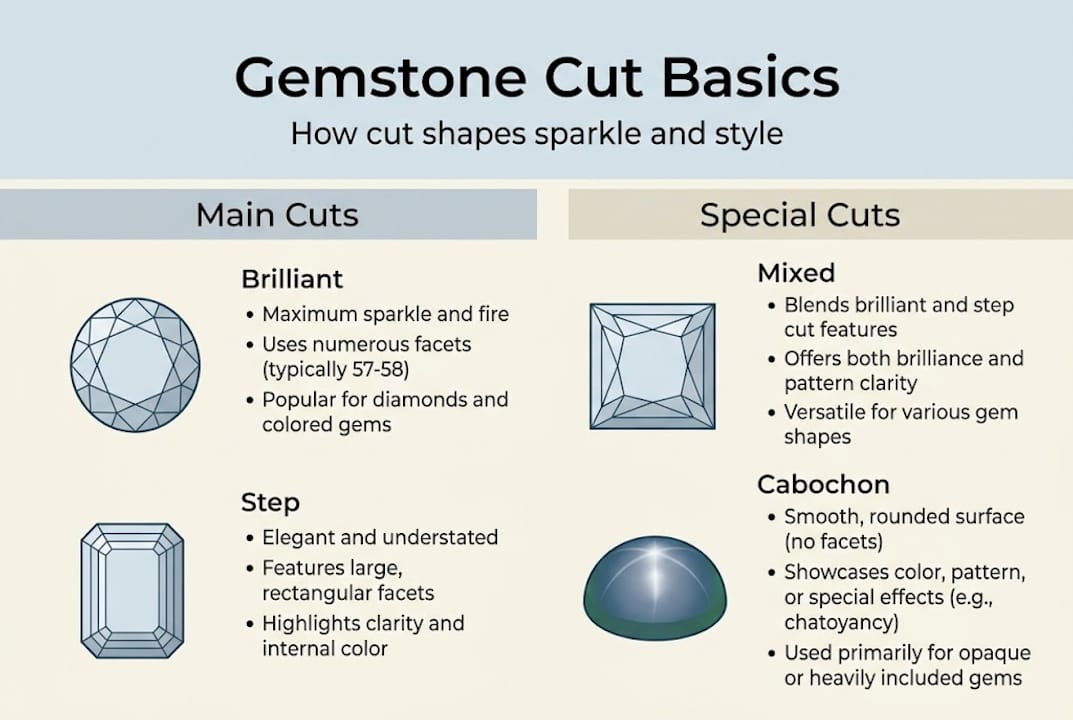
Brilliant cuts are the showstoppers of the gem world. Triangular and kite-shaped facets radiate from the center, engineered specifically to maximize light return and that signature sparkle most people associate with diamonds. The round brilliant is the most studied and perfected cut in existence, but fancy brilliants like the marquise, heart, and pear shapes follow the same principles.
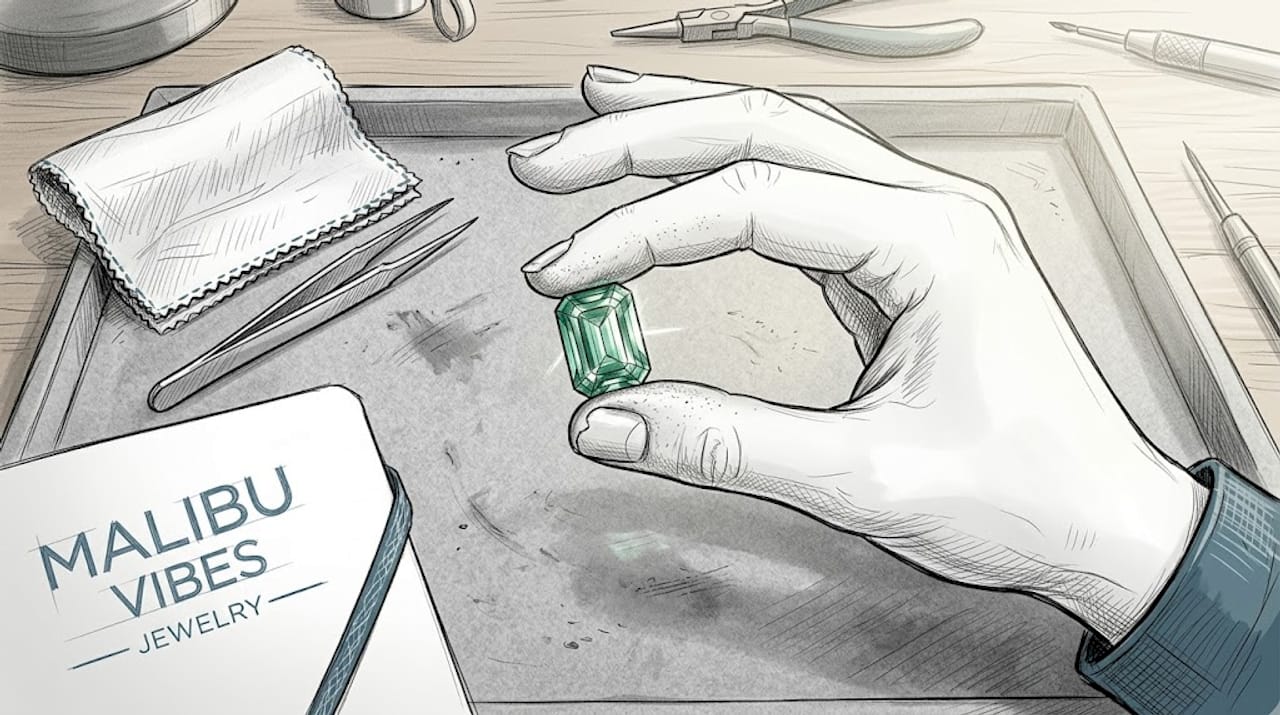
Step cuts take a completely different approach. Rectangular facets run parallel to the stone’s edges in a staircase pattern, creating a mirror-like quality that emphasizes clarity and the depth of color rather than explosive sparkle. The emerald cut and baguette are classic step-cut examples. Sapphires and emeralds often look stunning in step cuts because the style lets the color breathe.
Mixed cuts combine brilliant and step features to achieve something in between. The Ceylon cut, for example, uses a brilliant-style crown with a step-style pavilion. You get enhanced color richness plus some sparkle, a practical choice for gems where color is the main selling point.
| Cut style | Number of facets | Optical effect | Best for |
|---|---|---|---|
| Brilliant | 57-58 (round) | Maximum sparkle | Diamonds, white sapphire |
| Step | Fewer, larger | Clarity and color depth | Emeralds, sapphires |
| Mixed | Variable | Balanced color and sparkle | Color gems, rubies |
How to identify each cut type by sight:
- Brilliant: Look for a starburst or pinwheel pattern of small triangular facets from above
- Step: Notice parallel rectangular facets and a clear, hall-of-mirrors depth
- Mixed: Spot the combination, smaller facets on top, rectangular ones below
“The choice between brilliant and step cut often comes down to what you’re celebrating in the stone. Brilliance for diamonds. Depth and color for colored gems.” This distinction shapes how experienced jewelers match cutting style to material.
If you want to see these essential gemstone cuts applied across different stone types, the difference becomes much more intuitive when you look at real examples side by side.
Beyond the basics: Fantasy cuts, cabochons, and special surface effects
Now that you know the major classic cuts, it’s time to look at artistic and non-traditional approaches that have grown especially popular in handcrafted fine jewelry.
Fantasy cuts are where gem cutting becomes sculpture. Curved or unconventional facets are carved directly into the stone, creating three-dimensional landscapes, organic shapes, or reflective patterns that no standard brilliant or step cut can replicate. These are labor-intensive pieces. Each stone becomes one-of-a-kind, which is exactly why artisan jewelers and collectors prize them.
Then there are cabochons, which are the opposite of faceted cuts entirely. A cabochon is a smooth, domed stone with no facets at all. Alternative surface treatments like cabochons are used specifically when the gemstone’s optical effects shine best without facets. Think of moonstone’s adularescence, that glowing blue sheen that floats inside the stone, or opal’s play of color, which disappears under aggressive faceting.
When and why designers choose special cuts or cabochons:
- Phenomenal stones like moonstone, opal, and star sapphire rely on smooth surfaces to display optical magic
- Organic or artistic pieces where the design concept calls for sculptural, non-geometric elements
- Lower clarity material where a smooth surface disguises inclusions naturally
- Everyday wearability since smooth cabochons snag less on fabric and feel comfortable against skin
You’ll find cabochons and fantasy cuts appearing in some of the most striking examples of gemstone necklaces crafted for women who want something beyond the expected.
Pro Tip: If you’re drawn to moonstone, opal, or labradorite, always look for a well-shaped cabochon. These stones were made for this treatment. A faceted moonstone rarely captures the same magic as a smooth, domed one.
How cut impacts jewelry style, wear, and value
Once you know the types, the next piece is understanding how cut follows you out of the showcase and onto your wrist, neck, or finger.
Style impact is immediate. Brilliant cuts read as modern, lively, and high-energy. Step cuts feel vintage, refined, and composed. Mixed cuts occupy an elegant middle ground, lending themselves to versatile, fashion-forward designs. If you wear mostly clean, minimalist outfits, a step-cut sapphire ring tends to feel more cohesive than a flashy round brilliant.
Wearability is something people rarely think about before buying. High-profile cuts with steep crowns can catch on clothing, while low-profile cuts sit closer to the metal and move more comfortably through daily life. A bezel-set cabochon, for example, is practically indestructible in a wearability sense, making it ideal for rings worn every single day.
Value is where cut becomes financial. The arrangement and quality of facets directly control a gemstone’s light performance, overall brilliance, and its value in the market. Well-cut stones often show up to 30% more brilliance than poorly cut ones of the same material and size, which is why a smaller, ideally cut stone can outshine and outsell a larger, poorly proportioned one. That’s not marketing. That’s geometry.
Steps to picking the right cut for your style:
- Identify your aesthetic: bold and modern, or understated and vintage?
- Think about your lifestyle: desk work and keyboards call for low-profile, snag-resistant cuts
- Choose by stone type: let the gem’s best feature guide you, color gems to step, brilliant to clear white stones
- Consider the setting: prong settings show off faceted cuts, bezels complement cabochons beautifully
- Look at movement: hold the piece under different light sources to see how the cut responds
Learning about types of gemstone settings alongside cut knowledge gives you a complete picture of how your final piece will look and wear.
A jeweler’s perspective: Why cut matters more than carat or clarity
Most shoppers walk into a jewelry purchase focused on carat weight. They want size. They equate size with value, and they’ve been conditioned to do so by decades of marketing. Here’s what actually happens at the bench: a smaller stone with a masterful cut commands more attention than a larger stone with mediocre proportions every single time.
Clarity matters less than people think when a cut is doing its job well. Minor inclusions disappear inside a stone that’s throwing light in every direction. A flawless stone with a flat, lifeless cut sits on the finger like a piece of glass.
The real lesson is this: when you find a piece with an unusual or artisan cut, treat it seriously. That essential cuts guide isn’t just about terminology. It’s about recognizing the skill and decision-making that went into shaping that stone. Signature cuts become signature pieces. They carry personality. Mass-market stones with generic proportions simply do not.
“Cut is where the true artistry and magic of a gemstone comes alive.”
This is the truth no size chart or grading report fully captures.
Explore gemstone cuts in Malibu Vibes Jewelry collections
Ready to see gemstone cuts in action? At Malibu Vibes Jewelry, every piece is handcrafted in Los Angeles with serious attention to how each stone is cut and set. Browsing the collections in person (or online) is genuinely the fastest way to feel the difference between a brilliant-cut stone and a step-cut one.

From vibrant colored stones to sleek modern designs, our color gemstone necklace collection showcases a range of cut styles across 14k gold settings. If rings are your focus, the gemstone ring collection features designs built around both classic and distinctive cuts. For everyday luxury, explore our sterling silver jewelry pieces that pair beautiful stone cuts with accessible, wearable designs.
Frequently asked questions
What is the difference between gemstone cut, shape, and style?
Shape refers to the stone’s outline (round, oval, pear), cut describes how facets are arranged to control light, and style is the broader artistic approach used for faceting such as brilliant, step, or mixed.
Which gemstone cut sparkles the most?
Brilliant cuts, especially the round brilliant, are engineered for maximum sparkle. Triangular and kite-shaped facets radiate from the center to maximize light return and scintillation.
Are cabochon cuts less valuable than faceted cuts?
Not at all. Some gemstones are best cut as cabochons because their optical properties, like translucency or light-banding phenomena, are best revealed on smooth, domed surfaces rather than through faceting.
Does a better cut always mean a higher price?
Facet quality directly controls light performance and value, so well-cut gems often carry a premium, but rarity, stone type, color intensity, and current fashion trends also shape final pricing.
Recommended
- 7 Types of Gemstone Cuts Every Jewelry Lover Should Know – Malibu Vibes Jewelry
- 7 Types of Gemstone Cuts Every Jewelry Lover Should Know – Malibu Vibes Jewelry
- 7 Essential Types of Gemstone Cuts Every Jewelry Lover Should Know – Malibu Vibes Jewelry
- 7 Essential Types of Gemstone Cuts Every Jewelry Lover Should Know – Malibu Vibes Jewelry
- How Craftsmanship Shapes Luxury Watch Value and Artistry – OP