

Choosing your wedding and engagement rings is more than just picking beautiful pieces. The way you style and wear these rings can express your unique personality while honoring meaningful tradition. American brides have endless options to combine modern flair with classic elegance, from matching metals to creative stacking choices. This guide shares fresh, actionable ideas for building a wedding set that fits your style, feels comfortable day-to-day, and gives your rings a perfectly unified look.
Table of Contents
- Step 1: Select Matching Wedding Band And Engagement Ring Styles
- Step 2: Position Rings In The Traditional Or Modern Order
- Step 3: Align Rings For Optimal Comfort And Security
- Step 4: Check The Fit And Appearance For Everyday Wear
Quick Summary
| Key Point | Explanation |
|---|---|
| 1. Match Metal Color and Type | Ensure your wedding band and engagement ring are the same metal type and color for visual harmony and style consistency. |
| 2. Consider Ring Width and Height | Choose a wedding band that balances with your engagement ring’s width and height for a pleasing visual effect when stacked. |
| 3. Align Rings for Comfort | Properly align both rings to sit flush against your finger, minimizing movement and ensuring comfort throughout daily activities. |
| 4. Evaluate Fit for Daily Wear | Test the combined feel of your rings in various conditions to ensure comfort and durability before wearing them long-term. |
| 5. Try Different Positions | Experiment with different ways to wear your rings, such as stacking or separating, to find what feels most comfortable and stylish for you. |
Step 1: Select matching wedding band and engagement ring styles
Choosing matching wedding band and engagement ring styles is about creating visual harmony between two pieces that’ll sit together on your finger for years to come. The goal isn’t matching perfection, but rather designing a cohesive look that reflects your personal aesthetic while ensuring both rings complement each other.
Start by evaluating the metal color of your engagement ring. If your solitaire features 14k white gold or platinum, your wedding band should use the same metal tone to avoid a disjointed appearance. Yellow gold pairs beautifully with yellow gold, and rose gold stays with rose gold. Mixing metals is absolutely possible, but it requires intentional design rather than accident.
Consider the band width and height next. A delicate engagement ring with a thin band looks better paired with a similarly understated wedding band. A bold, statement engagement ring can handle a thicker band without feeling overwhelming. Think about how the two rings will stack or sit alongside each other—they should feel balanced in proportion.
Different engagement ring settings significantly influence which wedding bands work best. A solitaire diamond setting offers maximum flexibility and looks stunning with nearly any band style. Halo settings need bands that won’t compete with that surrounding sparkle. Three-stone or vintage-inspired rings pair beautifully with contoured bands that curve slightly to accommodate the center stone.
Here is a comparison of common engagement ring settings and the matching wedding band styles that best complement each:
| Engagement Ring Setting | Ideal Wedding Band Style | Visual Impact |
|---|---|---|
| Solitaire | Straight or contoured | Clean, versatile pairing |
| Halo | Thin, low-profile band | Enhances sparkle, avoids bulk |
| Three-stone | Curved or contoured | Flows smoothly around center stones |
| Vintage-inspired | Decorative or custom-fit | Highlights ornate details |
Think about your lifestyle and daily routine when selecting styles. If you’re active, sleek and modern bands stay secure better than ornate designs. If you prefer timeless elegance, classic curves and subtle details create a wedding set that feels refined rather than trendy.
Here are key style considerations:
- Metal type and color consistency
- Band width that balances your engagement ring’s size
- Setting style that complements your stone shape
- Texture and finish (polished, matte, or textured)
- Whether you want a curved band or straight band
The most stylish wedding band isn’t the one that matches perfectly in every detail, but the one that feels intentionally chosen to complete your unique ring story.
Pro tip: Visit a jeweler with your engagement ring and try bands in person before deciding, as metals and proportions look dramatically different on your hand versus online. The right pairing should feel like a naturally unified piece when worn together.
Step 2: Position rings in the traditional or modern order
Once you’ve selected your rings, deciding how to wear them comes next. You have two main paths: the traditional order that has been practiced for generations, or a modern approach that suits your lifestyle and comfort.
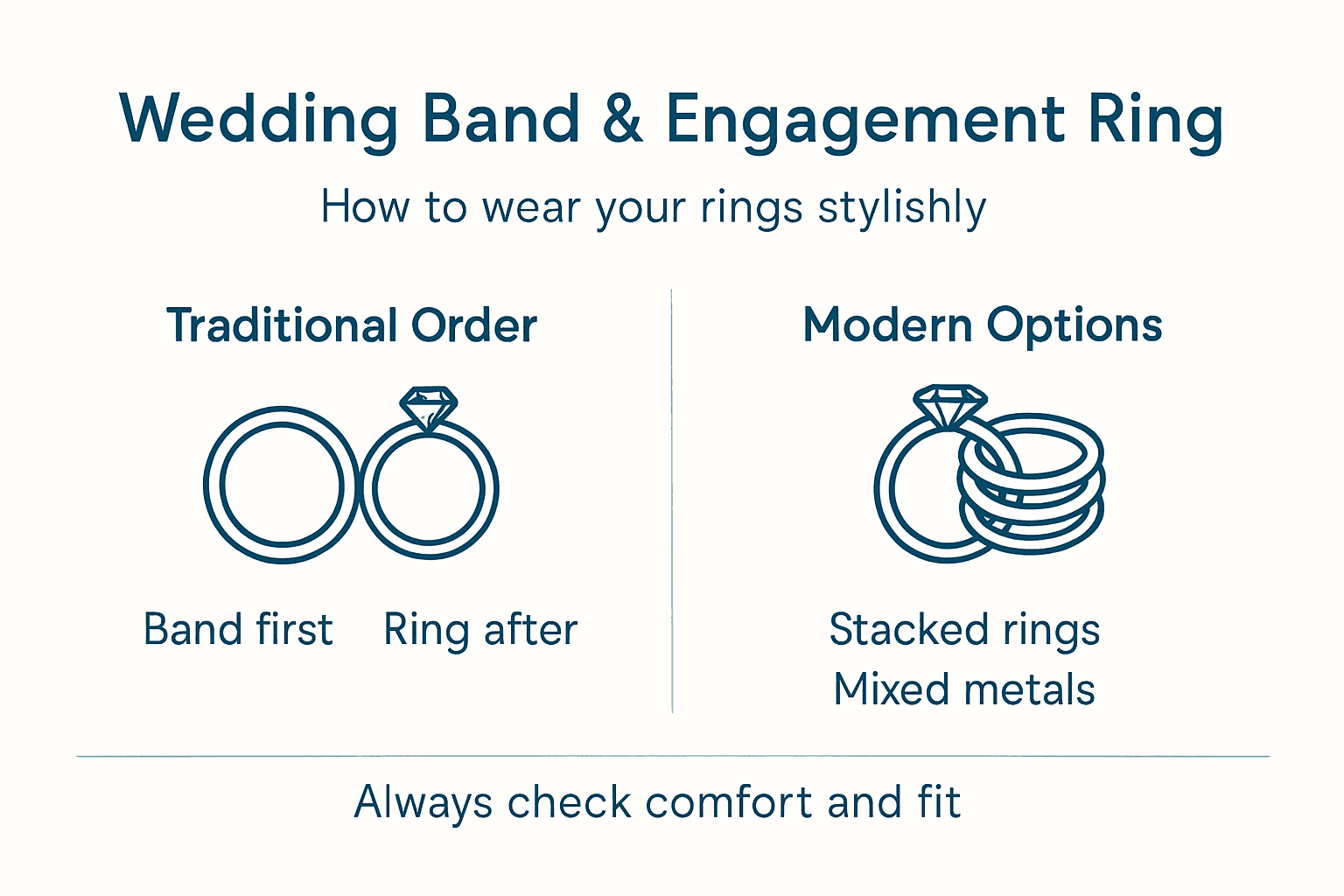
The traditional approach places your wedding band closest to your heart on the ring finger, with your engagement ring worn on the outside. This positioning reflects the historical belief that the vena amoris vein runs directly from your ring finger to your heart, making the wedding band’s inner position particularly meaningful. Your engagement ring sits on top, creating a visible, layered look that showcases both pieces.
Many women follow this order because it feels ceremonial and honors the symbolism of marriage being closest to your heart. The wedding band typically goes on first during the ceremony, then the engagement ring slides over it after you’re pronounced married.
If traditional positioning feels uncomfortable or doesn’t match your style, modern alternatives work beautifully too. Some women wear their engagement ring on one hand and their wedding band on the other, giving each piece its own spotlight. Others choose to stack them as a unified set, treating both rings as a single cohesive design that appears as one piece on your finger.
Consider these positioning options:
Below is a summary of ring positioning styles and their main benefits:
| Ring Position Option | Best For | Key Benefit |
|---|---|---|
| Traditional stacking | Sentimental wearers | Symbolizes marriage close to heart |
| Separate hands | Modern, practical users | Prevents wear, highlights each ring |
| Unified stacking set | Style-focused individuals | Sleek, cohesive appearance |
| Alternating daily/formal wear | Active lifestyles | Increases comfort, reduces damage |
- Wedding band closest to heart, engagement ring on top (traditional)
- Engagement ring on one hand, wedding band on the other (modern separation)
- Both rings stacked as a matched set (unified look)
- Engagement ring only for daily wear, wedding band only for formal events (alternating)
- Custom guards or spacers between rings for comfort
Your ring positioning should reflect what feels natural on your hand and matches your personal style, not what others expect.
Think about your daily activities when deciding. If you work with your hands frequently, ring stacking techniques that keep rings secure and comfortable matter more than maintaining a specific traditional order. If you prioritize aesthetics, traditional layering might feel more elegant to you.
Pro tip: Try wearing your rings in different positions for a few days before making a final decision, as comfort and visual appeal often feel different in real life than they do in your mind.
Step 3: Align rings for optimal comfort and security
Proper alignment of your wedding band and engagement ring ensures both pieces sit comfortably on your finger while staying secure throughout your day. This step focuses on the physical fit and positioning that keeps your rings where they belong.

Start by checking that both rings sit flush against your finger without gaps or wobbling. A ring that slides around or rotates easily risks damage and loss. If your wedding band and engagement ring don’t naturally sit flush when stacked, you may need sizing adjustments to create a snug but comfortable fit.
Consider the width and curve of your wedding band carefully. A straight band works best if your engagement ring has a straight shank, but prong settings and gemstone shapes often require bands with subtle curves to prevent gaps between the two rings. A curved or contoured wedding band follows the natural angle of your engagement ring’s setting.
Proper spacing matters for both comfort and appearance. Rings that touch each other should have consistent contact along the entire length rather than touching only at certain points. Gaps between rings can catch on fabric, hair, or skin, causing discomfort during daily activities.
Test your alignment with these checks:
- Slide both rings together to see if they sit completely flush
- Rotate the rings around your finger to ensure even contact
- Check that the stack doesn’t create pressure points
- Verify the rings don’t rock or move independently
- Ensure you can still bend your finger comfortably
If your rings don’t align naturally, a jeweler can adjust the band’s curve to match your specific engagement ring setting. Many fine jewelry retailers offer this customization service.
The best alignment is one you never think about, where both rings feel like a single, secure piece on your hand.
Your lifestyle influences how strictly you need to align your rings. Active individuals who exercise frequently benefit from tighter alignment and secure sizing to prevent movement during physical activity. If you spend most of your time in an office environment, slightly looser alignment may feel more comfortable.
Pro tip: Have your jeweler check the fit and alignment of both rings together during the first sizing appointment, as the combined weight of two rings sometimes requires different sizing than a single ring.
Step 4: Check the fit and appearance for everyday wear
Before you commit to wearing your rings daily, take time to evaluate how they feel and look during normal activities. This final check ensures your investment works beautifully for your lifestyle, not just special occasions.
Start with a comfort assessment by wearing both rings together for at least a few hours. Pay attention to any pressure points, rubbing, or areas where the rings dig into your skin. Your rings should feel so natural that you occasionally forget you’re wearing them. If they cause irritation after just a few hours, sizing adjustments are necessary before long-term wear.
Check that accurate ring sizing allows your rings to stay secure without rotating or sliding down your finger. A properly sized ring should slide over your knuckle with gentle pressure but sit snugly on your finger base. If your ring moves around easily, moisture from daily activities will cause it to slip off.
Evaluate the visual appearance of your stacked rings in different lighting conditions. Natural daylight, office lighting, and indoor evening light all showcase your rings differently. Make sure both pieces complement each other in all these environments and that the overall look matches your personal style.
Consider these practical checks:
- Wear your rings while working, exercising, or doing household tasks
- Check for any rubbing or pressure after extended wear
- Verify the rings don’t catch on clothing or hair
- Test that you can still perform daily activities comfortably
- Ensure the metal finish holds up during typical wear
- Confirm the overall aesthetic feels right for your lifestyle
If your rings don’t pass these checks, communicate with your jeweler about adjustments before making them permanent parts of your everyday look.
The perfect ring fit is one that feels invisible during your day but catches your eye and makes you smile whenever you notice it.
Remember that fashion jewelry choices for everyday wear balance durability with style. Your wedding band and engagement ring combination should withstand daily activities while maintaining its beauty and appeal.
Pro tip: Wear your rings for an entire week before finalizing any sizing decisions, as your finger size fluctuates throughout the day and changes with weather, hydration, and activity level.
Find Your Perfect Wedding Band and Engagement Ring Combination
Choosing and styling your wedding band and engagement ring can feel challenging with so many details to consider like metal color, setting styles, and daily comfort. This article highlights how important it is to balance matching aesthetics while ensuring practical wearability — both crucial for rings you will cherish every day. Malibu Vibes Jewelry is proud to offer a curated collection of handcrafted, luxury rings designed with this perfect balance in mind. Whether you seek a classic solitaire paired with a sleek band or a unique contoured style that fits flawlessly together, you will find pieces crafted to bring your ring story to life.

Explore our exclusive fine jewelry selections at Malibu Vibes Jewelry where expert craftsmanship meets timeless style. Discover how our rings can effortlessly blend comfort, durability, and beauty to complement your lifestyle. Start creating your ideal wedding set today and enjoy the confidence that comes with rings made just for you. Shop now and transform your ring wearing experience with designs that feel naturally unified and stunningly stylish.
Frequently Asked Questions
How do I select matching wedding band and engagement ring styles?
Choosing matching styles involves ensuring both rings complement each other in metal color, band width, and design. Start by checking that both rings are made of the same metal to maintain visual harmony.
What is the traditional order for wearing a wedding band and engagement ring?
The traditional order places the wedding band closest to your heart, with the engagement ring worn on top. This arrangement emphasizes the significance of the wedding band and is often followed during ceremonies.
How can I align my wedding band and engagement ring for optimal comfort?
To align your rings for comfort, ensure they sit flush against your finger without gaps or wobbling. Try stacking them together and adjust the fit at a jeweler if they do not align naturally.
What should I check to ensure my rings are suitable for everyday wear?
Perform a comfort assessment by wearing both rings together for several hours. Verify that they do not cause irritation or pressure, and ensure that they complement your look and feel comfortable during daily activities.
Can I mix metals for my wedding band and engagement ring?
Yes, you can mix metals, but it requires intentional design to maintain a cohesive look. Consider selecting bands that are designed to complement each other in a way that feels harmonious rather than mismatched.
How do I determine the right fit for my engagement ring and wedding band?
To determine the right fit, slide the rings over your knuckle; they should pass with gentle pressure but feel snug at the base of your finger. If they move around too easily, consult a jeweler for adjustments to ensure a secure fit.
Recommended
- Stacking Diamond Rings is a reflection – Malibu Vibes Jewelry
- How to Stack Rings: Create Your Unique Jewelry Style – Malibu Vibes Jewelry
- 7 Inspiring Examples of Stacking Rings for Everyday Style – Malibu Vibes Jewelry
- 7 Must-Know Wedding Jewelry Essentials for Every Bride – Malibu Vibes Jewelry
- Draco Tennis Bracelet – Dracoslides