

Layering necklaces transforms a simple outfit into a personal style statement, but many women find themselves struggling with tangled chains and cluttered looks that miss the mark. The secret lies in understanding intentional spacing, texture mixing, and focal point selection. This guide delivers clear, expert tips to help you master polished, tangle-free layered necklaces that elevate your everyday jewelry wardrobe with confidence and ease.
Table of Contents
- Prerequisites And Preparation: Understanding Necklace Lengths
- Step 1: Selecting The Number Of Necklaces To Layer
- Step 2: Mixing Chain Styles For Texture And Anti-Tangle
- Step 3: Choosing A Focal Point To Anchor The Stack
- Step 4: Mixing Metals With Purpose
- Step 5: Layering By Occasion And Neckline
- Troubleshooting: Tangling Prevention Techniques
- Common Mistakes And How To Fix Them
- Expected Results And Measures Of Success
- Explore Malibu Vibes’ Fine Necklace Collections For Perfect Layering
Key Takeaways
| Point | Details |
|---|---|
| Optimal layering is 2 to 4 necklaces with 2-inch spacing | This prevents tangling while maintaining visual clarity and balance. |
| Mix chain textures to add dimension | Contrasting styles like cable, rope, and paperclip reduce interlocking and enhance depth. |
| Anchor with a single focal necklace | One statement pendant creates intentional balance and prevents visual chaos. |
| Match layering to neckline and occasion | V-necks suit pointed stacks while crew necks need longer chains for elongation. |
| Use extenders and layering clasps | These tools separate chains and eliminate knots throughout the day. |
Prerequisites and Preparation: Understanding Necklace Lengths
Before you start stacking necklaces, you need to grasp the length categories that form the foundation of effective layering. Necklace length categories like choker, princess, and matinee fall into specific inch ranges that determine how pieces sit on your neckline. A choker measures 14 to 16 inches and hugs the base of your neck. The princess length spans 17 to 19 inches, resting just above the collarbone. Matinee necklaces reach 20 to 24 inches, falling at or below the collarbone.
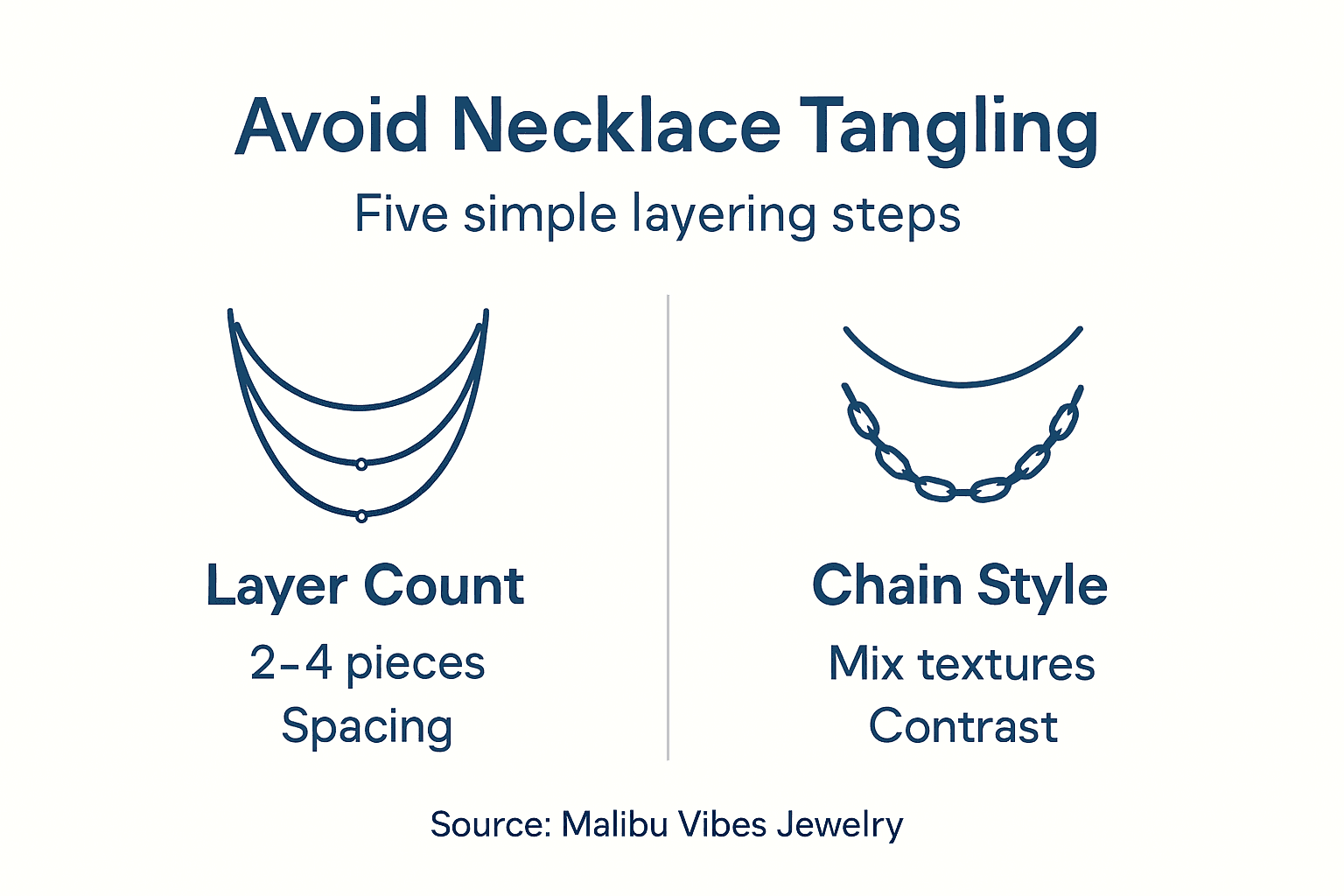
Spacing is everything when building layers. You need at least a 2-inch gap between each necklace to prevent tangling and ensure each piece remains visible. This spacing creates the distinct tiers that make layering look intentional rather than accidental. Without proper gaps, chains interlock and create frustrating knots that ruin your look.
Length variation does more than prevent tangling. It creates the visual balance that makes layered necklaces appealing to the eye. Each tier should be clearly defined, allowing light to catch different chains at different levels.
To prepare for successful layering, gather these essentials:
- Multiple necklaces in different length categories (choker, princess, matinee)
- Understanding of how necklines affect necklace visibility and drape
- Knowledge of your outfit’s color palette and style to coordinate metals and textures
- Willingness to experiment with different combinations until you find your signature stack
Once you understand these fundamentals, you can move forward with selecting the right number of pieces for your look.
Step 1: Selecting the Number of Necklaces to Layer
How many necklaces should you wear at once? Experts recommend layering 2 to 3 necklaces at a time for a balanced look without overcrowding. Going beyond 4 pieces typically creates visual clutter that distracts rather than enhances your outfit. The sweet spot depends on your personal style, the occasion, and your outfit’s neckline.
Start by considering your overall aesthetic. Minimalist looks shine with just 2 delicate chains that create subtle dimension without overwhelming your neckline. This approach works beautifully for professional settings or when your clothing features bold patterns or colors. You want your jewelry to complement, not compete.
For casual everyday wear, 3 necklaces offer more personality and visual interest. This combination allows you to mix a simple chain with a textured piece and a pendant, creating depth that catches the eye. Formal events can handle more elaborate layering, but even then, restraint often produces the most sophisticated results.
Your neckline plays a major role in determining quantity. Deep V-necks accommodate more layers because they expose more space, while high crew necks leave less room and demand fewer pieces. A button-down shirt with an open collar provides a perfect canvas for 3 to 4 necklaces arranged in descending lengths.
Here are practical guidelines for selecting layering quantity based on context:
- Everyday casual: 2 to 3 delicate necklaces in mixed lengths
- Professional settings: 2 understated pieces in similar metal tones
- Evening events: 3 to 4 necklaces with one statement focal piece
- Weekend outings: 3 mixed-texture chains for relaxed dimension
Pro Tip: Start with 2 necklaces and wear that combination for a full day. Once you feel confident with the spacing and style, add a third piece. This gradual approach helps you develop an eye for balance without overwhelming yourself early on.
Step 2: Mixing Chain Styles for Texture and Anti-Tangle
Chain texture makes the difference between a flat, boring stack and a dynamic layered look. Mixing different chain textures contrasts and adds dimension while significantly reducing the tendency for chains to tangle and knot. When you combine varied textures, each chain maintains its own space rather than interlocking with neighboring pieces.
Popular chain styles include cable, curb, rope, paperclip, beaded, box, and snake. Each brings unique visual weight and movement. Cable chains feature oval links that create classic, timeless appeal. Rope chains twist for dimensional texture that catches light beautifully. Paperclip chains deliver modern, elongated links that make bold statements.
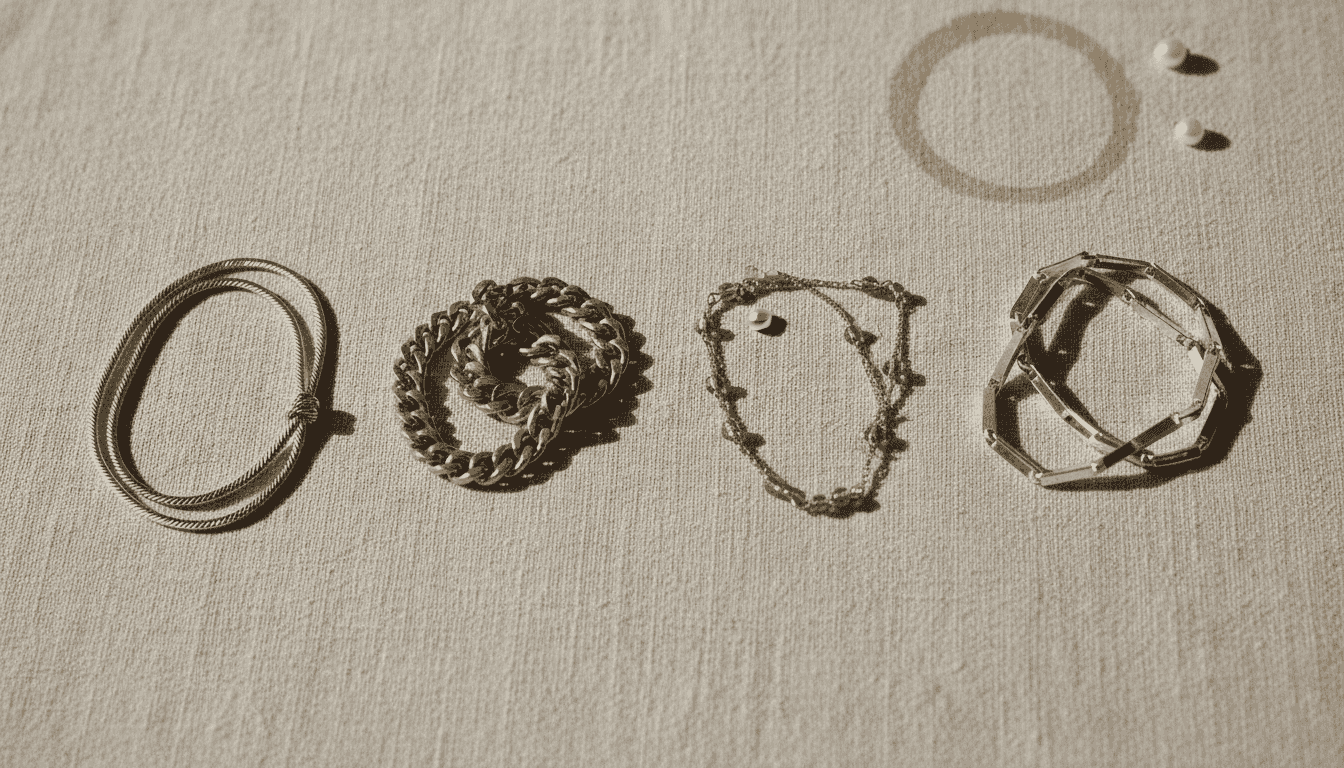
The key to successful texture mixing lies in contrast. Pair a delicate beaded chain with a chunky curb chain to create visual hierarchy. Combine a smooth snake chain with a textured rope chain to maximize the difference in surface quality. This variety prevents chains from sliding into the same plane and tangling.
Here is how different chain textures perform in layered arrangements:
| Chain Style | Visual Effect | Durability | Tangle Tendency |
|---|---|---|---|
| Cable | Classic, versatile | High | Medium |
| Rope | Dimensional, textured | High | Low |
| Paperclip | Modern, bold | Medium | Low |
| Beaded | Delicate, refined | Low | High |
| Box | Sleek, smooth | High | Medium |
| Snake | Fluid, flexible | Medium | High |
Pro Tip: Alternate flat and rounded chains when building your stack. A flat paperclip chain sits differently than a rounded rope chain, maximizing tangle prevention while creating compelling texture contrast. This simple strategy ensures your layers stay separated and beautiful throughout the day.
Consider mixing delicate and chunkier chains to establish clear visual tiers. A thin cable chain at choker length, a medium rope chain at princess length, and a bold curb chain at matinee length create a balanced gradient that guides the eye downward naturally.
Step 3: Choosing a Focal Point to Anchor the Stack
Every successful layered look needs an anchor. A single statement piece as focal point balances your stack and prevents visual clutter by giving the eye a clear place to rest. Without this anchor, multiple necklaces can appear chaotic and unintentional, no matter how carefully you space them.
Your focal point is typically a necklace with a pendant, charm, or medallion that draws attention. This piece should be larger or more detailed than your other chains, creating obvious hierarchy within the stack. The focal necklace usually sits at the longest layer, though some styles work with a centered focal point at medium length.
Popular focal piece options include:
- Pendant necklaces with gemstones or meaningful symbols
- Charm necklaces featuring personalized elements
- Medallion necklaces with engraved or textured surfaces
- Locket necklaces that add vintage appeal
Limit yourself to one focal piece per stack. Wearing multiple pendants or large charms creates competing visual elements that confuse the overall composition. Your other chains should be simple and understated, allowing the focal piece to shine without distraction.
Coordinate your focal piece size and design with your other chains. If your pendant is large and ornate, keep accompanying chains delicate and minimal. A small, subtle pendant allows for slightly more elaborate accompanying chains without overwhelming the look. Consider the pendant’s shape too. A circular pendant creates different visual flow than a pointed or geometric design.
The focal point also helps you tell a story with your jewelry. A celestial pendant anchors a stack of simple chains while expressing your personal style. A birthstone pendant adds meaning while maintaining the sophisticated balance that makes focal point importance in layering so critical to polished results.
Step 4: Mixing Metals with Purpose
Gone are the days when matching metals was mandatory. Mixed gold tones and silver can be combined effectively when you approach metal mixing with intention and understanding. Modern layering embraces yellow gold, white gold, rose gold, and sterling silver in the same stack, creating sophisticated dimension that elevates your look.
The critical rule is material compatibility. Never mix gold-plated jewelry with solid gold pieces in the same stack. Plated metals wear differently and can tarnish or discolor when in contact with solid metals, damaging your jewelry over time. Stick with all solid metals or all plated pieces to protect your investment.
A purposeful color palette enhances rather than distracts. Choose a dominant metal tone as your base, then add one or two accent pieces in contrasting metals. For example, two yellow gold chains paired with one rose gold chain creates intentional mixing that looks curated rather than random. This approach maintains cohesion while adding contemporary flair.
Start small if you are new to metal mixing. Add a single accent piece in a different metal to an otherwise matched stack. This gentle introduction helps you develop confidence before attempting more complex combinations. Pay attention to how different metals interact with your skin tone and clothing colors.
Practical metal mixing tips for stylish results:
- Use your dominant metal tone for at least half of your layered pieces
- Limit accent metals to one or two colors to avoid chaos
- Consider warm metals (yellow gold, rose gold) together or cool metals (white gold, silver) together for harmony
- Match metal warmth or coolness to your outfit’s color palette for polish
- Keep focal pendants in your dominant metal for clarity
Metal mixing also offers practical versatility. When you master intentional mixing, you can wear the same layered stack with different outfits and accessories without needing perfectly matched metals throughout your jewelry collection.
Step 5: Layering by Occasion and Neckline
Your layering strategy must adapt to your outfit’s neckline and the occasion to create a harmonious, polished appearance. Different necklines expose varying amounts of space and create distinct shapes that demand specific layering approaches. What works beautifully with a V-neck might overwhelm a turtleneck.
V-necks pair perfectly with Y-shaped or pointed necklace stacks that mirror and complement the neckline’s downward angle. This creates visual flow that elongates your torso and draws the eye in a flattering vertical line. Use graduated lengths that follow the V shape, with your longest necklace pointing into the neckline’s center.
Crew necks present less vertical space and benefit from longer chains that extend below the neckline. Choker-length pieces often sit too high and compete with crew necks, creating visual tension. Instead, start your layering at princess length and work downward to matinee lengths that create breathing room.
Turtlenecks require special consideration because they cover so much neck real estate. Skip short necklaces entirely and focus on longer chains that drape over the fabric. Keep your stack simple with just 2 to 3 pieces to avoid overcrowding the limited visible space.
Button-down shirts with open collars offer maximum flexibility. You can layer 3 to 4 necklaces because the collar frames them beautifully without competition. Position your shortest chain just below the collar points and cascade downward from there.
Here is how necklines match with recommended layering approaches:
| Neckline Type | Recommended Lengths | Number of Pieces | Focal Placement |
|---|---|---|---|
| V-neck | 16-22 inches | 3-4 | Longest layer |
| Crew neck | 18-24 inches | 2-3 | Medium layer |
| Turtleneck | 22-26 inches | 2 | Longest only |
| Button-down | 14-24 inches | 3-4 | Medium layer |
| Scoop neck | 16-20 inches | 2-3 | Shortest layer |
Occasion matters equally. Casual daily wear calls for simpler, understated layering that complements rather than dominates your look. Professional settings demand restraint with just 2 delicate pieces in refined metals. Evening events allow more elaborate stacks with necklaces for different occasions featuring statement pendants and mixed textures that catch light dramatically.
Consider neckline specific layering advice when planning your outfit to ensure your jewelry enhances rather than fights against your clothing choices.
Troubleshooting: Tangling Prevention Techniques
Even with careful planning, necklaces can tangle during wear, storage, or removal. Using a jewelry clasp extender or necklace layering clasp keeps multiple chains separated and dramatically reduces knots. These simple tools attach to your existing necklaces and create physical barriers that maintain spacing throughout the day.
Layering clasps connect multiple necklaces at a single point on the back of your neck, allowing each chain to hang at its designated length without sliding or bunching. This solution works especially well when you wear the same layered combination regularly and want consistent results. Jewelry extenders add length while providing attachment points that keep chains apart.
Arranging layers by both length and texture naturally minimizes tangling. Place your smoothest chain at the shortest length where it moves least. Position textured or beaded chains at longer lengths where their surface variation prevents sliding. This strategic placement reduces friction points where chains typically catch and knot.
Material selection impacts tangling frequency. Snake chains and beaded chains tangle more easily than rope or cable chains because their construction allows more interlocking. If you struggle with persistent tangles, switch to chain styles with lower tangle tendency as shown in the earlier texture comparison.
Daily maintenance prevents small tangles from becoming major knots:
- Check your layering at mid-day and gently separate any chains that have shifted
- Remove necklaces one at a time rather than pulling multiple pieces over your head at once
- Store layered sets on a necklace stand or individual hooks to maintain separation overnight
- Unclasp all pieces completely before removal instead of sliding clasped necklaces over your head
When putting on multiple tangling prevention tips in practice, clasp each necklace individually while standing in front of a mirror. This allows you to position each chain deliberately before adding the next piece, establishing proper spacing from the start.
For travel or storage, use small jewelry pouches with individual compartments. Never toss multiple necklaces together into a single container where they will inevitably tangle. The few extra seconds spent on proper storage saves frustrating minutes untangling later.
Invest in quality necklace layering clasps and extenders that match your metal tones. These affordable tools transform your layering experience and allow you to wear your favorite combinations with confidence that they will stay neat all day.
Common Mistakes and How to Fix Them
Recognizing frequent layering errors helps you avoid them and sharpen your styling skills. Many women layer necklaces with insufficient length gaps, creating inevitable tangling and visual clutter. If your chains bunch together or you cannot distinguish individual pieces, you need greater spacing between lengths. Add at least 2 inches between each necklace to solve this problem immediately.
Overcrowding happens when you exceed 4 necklaces in a single stack. While it might seem like more jewelry creates more impact, the opposite proves true. Too many pieces compete for attention and create chaos instead of style. Remove pieces one at a time until you achieve clear visual hierarchy and breathing room.
Unintentional metal mixing damages jewelry and looks haphazard. If you mix metals, do so purposefully with compatible materials. Never combine plated and solid pieces, as the chemical interaction causes tarnishing and degradation. Check your jewelry quality before mixing metals, and ensure all pieces can safely sit together.
Multiple statement pendants fight for dominance and confuse your composition. If every chain features a large charm or pendant, your stack lacks the balance that makes layering work. Choose one focal piece and make all other chains simple supports that enhance rather than compete. This single change often transforms a cluttered look into a polished statement.
Ignoring neckline compatibility creates awkward proportions. A high crew neck demands different layering than a plunging V-neck. When your necklaces seem wrong but you cannot identify why, assess whether your layering matches your neckline properly. Adjust lengths and quantities based on the available space your clothing provides.
Avoid these common layering mistakes with these corrections:
- Too-similar lengths: Increase gaps to minimum 2 inches between pieces
- Tangling chains: Mix textures and use layering clasps to maintain separation
- Mismatched metals: Choose compatible materials and limit accent metals to one or two
- Visual clutter: Reduce to 3 necklaces and establish one clear focal point
- Neckline mismatch: Study your outfit shape and adjust layering accordingly
When mistakes happen, do not get discouraged. Layering is a skill that improves with practice and experimentation. Take a photo of unsuccessful combinations so you remember what does not work for your style. Keep notes on which layering arrangements receive compliments so you can repeat those winning formulas.
Regular jewelry maintenance prevents avoidable problems. Clean your necklaces regularly following proper care guidelines to prevent buildup that increases tangling. Inspect clasps and chains for damage that might cause catching or breaking. Address small fix necklace layering errors before they become major issues that sideline your favorite pieces.
Expected Results and Measures of Success
How do you know when you have mastered necklace layering? Clear indicators help you evaluate your styling success and identify areas for refinement. Your layered look achieves its goal when specific visual and practical benchmarks fall into place naturally.
Each necklace layer should be distinct and clearly visible with at least 2 inches of difference from neighboring pieces. When you look in the mirror, you should easily count your individual necklaces without searching for where one ends and another begins. This clarity signals proper spacing and length selection.
Tangling tells you everything about execution. If you can wear your layered stack for an entire day without any visible knots or chain interlocking, you have succeeded. Zero tangling means your texture mixing, spacing, and possibly your use of layering tools is working perfectly. Any persistent knots indicate adjustments needed in chain selection or spacing.
A single focal necklace anchoring your stack creates intentional visual hierarchy. Your eye should immediately identify which piece serves as the statement element, with all other chains clearly supporting that focal point. If your attention bounces between multiple competing elements, simplify by removing pieces until one anchor emerges clearly.
Metal mixing should complement rather than clash, creating sophisticated dimension that enhances your overall look. Your metals should feel purposeful, not accidental. If someone compliments your jewelry rather than questioning your choices, your metal mixing succeeds.
Successful measures include:
- Distinct, properly spaced layers visible at every length
- Zero tangling or knots throughout the entire wearing period
- One clear focal piece anchoring the composition visually
- Purposeful metal mixing that enhances rather than confuses
- Confident adaptation of your layering to different outfits and occasions
- Compliments on your jewelry styling from others
You will know you have truly mastered layering when choosing and arranging your necklaces becomes intuitive rather than stressful. The process should feel creative and enjoyable, not complicated or frustrating. Success means expressing your personal style confidently through intentional, polished jewelry combinations that elevate your everyday look.
Explore Malibu Vibes’ Fine Necklace Collections for Perfect Layering
Ready to build your ideal layered necklace wardrobe? Malibu Vibes Jewelry offers expertly curated collections designed for fashion-forward women who want to master sophisticated layering. Our Dainty Diamond Necklaces Collection features delicate pieces in varied lengths perfect for creating balanced, tangle-free stacks.

Explore our Solid Gold Necklaces in yellow, white, and rose gold to practice intentional metal mixing with high-quality pieces that wear beautifully together. The Celestial Jewelry Collection provides stunning focal pendants that anchor your layers with meaningful symbolism. Each piece is handcrafted in Los Angeles using premium materials, ensuring your layered combinations maintain their beauty through daily wear.
Frequently Asked Questions
What is the ideal necklace length gap to avoid tangling?
Experts recommend at least a 2-inch length difference between layered necklaces to prevent tangling and visual clutter. This spacing allows each chain to remain visible and separated throughout the day, creating the distinct tiers that make layering successful.
Can I mix gold and silver necklaces in a layered look?
Yes, mixing gold and silver is fashionable when done intentionally with compatible metals that complement each other. However, avoid combining plated jewelry with solid metal pieces to prevent tarnishing or chemical damage that degrades your jewelry over time.
How many necklaces should I layer for everyday wear?
Layering 2 to 3 necklaces is ideal for everyday looks, providing dimension without overcrowding your neckline. Choose delicate pieces in varied lengths that complement your daily outfits for effortless style that transitions from work to casual settings.
What tools help prevent necklace tangling?
Use layering clasps and jewelry extenders to keep necklaces physically separated and tangle-free throughout wear. Arranging necklaces by length and mixing chain textures also minimizes knots by reducing friction points where chains typically interlock.
How should I adjust layering for different necklines?
V-necks pair beautifully with Y-shaped or pointed necklace stacks that mirror the neckline angle and create flattering vertical flow. Crew necks look best with longer chains starting at princess length for elongation, while turtlenecks and button-downs require simpler, longer layers to avoid overcrowding the limited visible space.