

Selecting fine jewelry for yourself or as a gift can feel overwhelming when purity and craftsmanship matter most. Women in Los Angeles know that quality is about more than beauty—it starts with the precise gold or silver content inside each piece. Accurate testing methods like X-ray fluorescence confirm the authenticity of every alloy, giving you confidence in the jewelry’s value and longevity. Discover how metal purity shapes durability, style, and investment-worthiness for your next purchase.
Table of Contents
- Defining Metal Purity In Fine Jewelry
- Types Of Precious Metal Purity Levels
- How Alloys Affect Jewelry Quality
- Hallmarks And Purity Marking Standards
- Metal Purity’s Impact On Durability And Price
Key Takeaways
| Point | Details |
|---|---|
| Understanding Metal Purity | Metal purity significantly impacts the quality, durability, and market value of fine jewelry. |
| Importance of Hallmarks | Hallmarks provide essential information regarding metal authenticity and composition, ensuring consumer protection. |
| Alloys and Durability | The choice of alloys affects both the aesthetic and structural qualities of jewelry, influencing its longevity. |
| Market Value Correlation | The purity level of metals directly correlates with their market value, making informed purchases crucial. |
Defining Metal Purity in Fine Jewelry
In the world of fine jewelry, metal purity represents the precise composition and quality of precious metals used in crafting exquisite pieces. Understanding metal purity goes far beyond mere aesthetic considerations - it directly impacts the durability, value, and overall performance of your jewelry.
Metal purity is scientifically determined through precise compositional analysis that verifies the percentage of pure metal within an alloy. For gold jewelry, this measurement is expressed in karats, which indicate the proportion of pure gold present:
- 24k gold: 100% pure gold
- 18k gold: 75% pure gold
- 14k gold: 58.3% pure gold
- 10k gold: 41.7% pure gold
Professional jewelers utilize advanced techniques like X-ray fluorescence to accurately assess metal composition. Modern assay methods ensure that consumers receive precisely what they’re purchasing, protecting both buyer and seller from potential misrepresentation.
Why Purity Matters:
- Higher purity metals are typically softer and more malleable
- Lower purity metals offer increased durability and scratch resistance
- Purity directly influences the jewelry’s market value
- Different purity levels suit different lifestyle needs and aesthetic preferences
Pro tip: Always request a professional metal purity certification when purchasing fine jewelry to guarantee authenticity and value.
Types of Precious Metal Purity Levels
Precious metal purity is a nuanced system of measurement that defines the quality and composition of metals used in fine jewelry. Precious metal standards are expressed through precise scientific notation, allowing consumers and jewelers to understand exactly what they’re purchasing.
For gold, purity is traditionally measured in karats, with common levels including:
- 24k: 100% pure gold (softest, most malleable)
- 22k: 91.7% pure gold
- 18k: 75% pure gold
- 14k: 58.3% pure gold
- 10k: 41.7% pure gold
Silver follows a similar purity notation system known as millesimal fineness. The most common silver standards include:
- Fine Silver (999): 99.9% pure silver
- Sterling Silver (925): 92.5% pure silver
- Coin Silver (900): 90% pure silver
Modern purity notation uses the ‘N’ system, which indicates the number of nines in the metal’s purity. For instance:
Here’s a quick comparison of common gold and silver purity standards:
| Metal Type | Purity Standard | Purity Percentage | Typical Uses |
|---|---|---|---|
| Gold | 24k | 100% | Investment-grade, soft |
| Gold | 18k | 75% | Fine jewelry |
| Gold | 14k | 58.3% | Durable jewelry |
| Silver | Fine (999) | 99.9% | Collectibles, coins |
| Silver | Sterling (925) | 92.5% | Everyday jewelry |
| Silver | Coin (900) | 90% | Antique coins, jewelry |
- 3N represents 99.9% pure metal
- 4N represents 99.99% pure metal
- 5N represents 99.999% pure metal
Why Purity Levels Matter:
- Determines metal’s durability and wear resistance
- Impacts jewelry’s market value
- Affects potential allergenic properties
- Influences the metal’s color and luster
- Determines appropriate uses for different applications
Higher purity doesn’t always mean better jewelry - it’s about finding the right balance for your lifestyle and aesthetic preferences.
Pro tip: Always verify the metal’s purity hallmark and ask for a professional certification when purchasing fine jewelry.
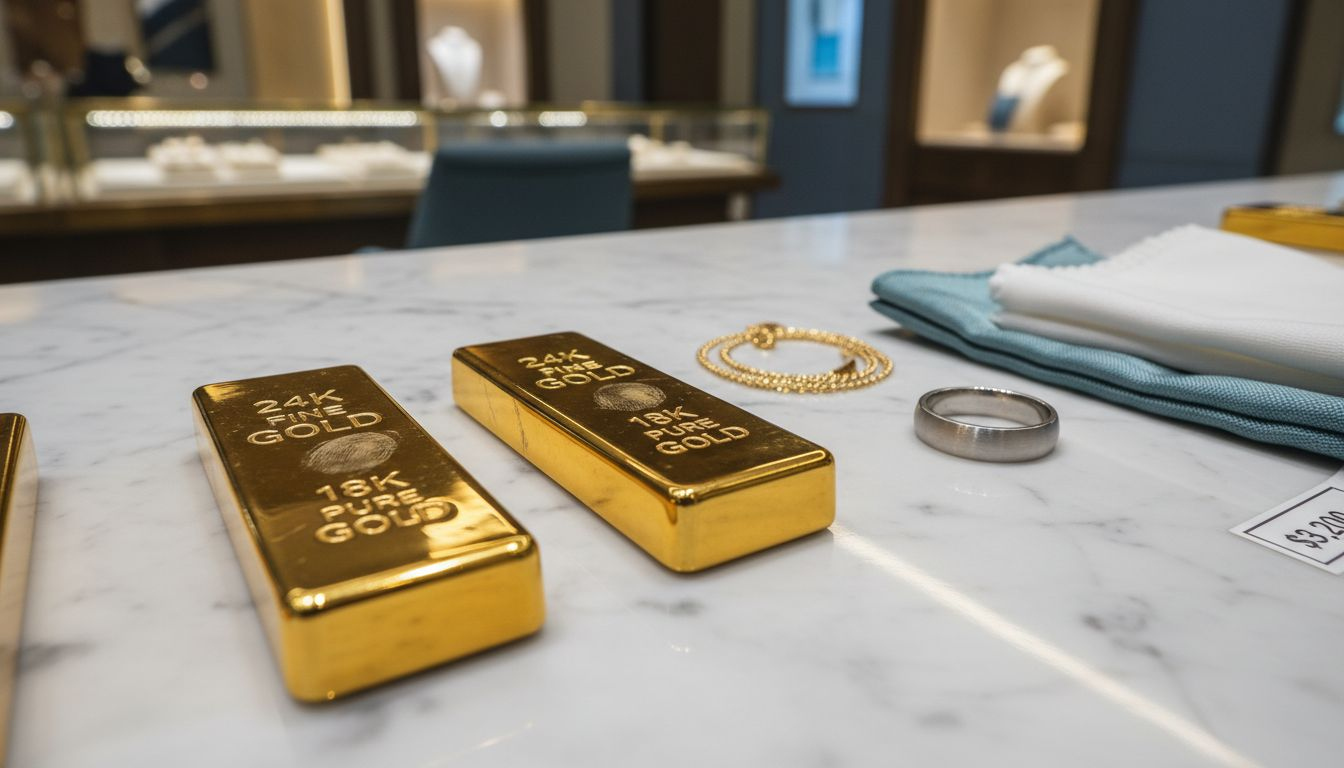
How Alloys Affect Jewelry Quality
Metal alloys are the secret ingredient that transforms pure metals into durable, beautiful jewelry pieces. Alloying techniques fundamentally change the physical and aesthetic properties of precious metals, creating unique characteristics that impact durability, color, and overall quality.
In gold jewelry, different metal combinations produce distinctive colors and properties:
- Yellow Gold: Mixed with silver and copper
- White Gold: Blended with nickel, palladium, or zinc
- Rose Gold: Combines gold with copper and silver
- Green Gold: Incorporates silver and sometimes copper
Silver alloys similarly demonstrate remarkable transformations. Silver alloy compositions dramatically influence jewelry performance:
This summary highlights how alloying influences gold jewelry appearance and durability:
| Gold Alloy Type | Main Metals Added | Color Produced | Durability Level |
|---|---|---|---|
| Yellow Gold | Silver, copper | Warm yellow | Moderate |
| White Gold | Nickel, palladium | Bright white | High |
| Rose Gold | Copper, silver | Pinkish tone | Good |
| Green Gold | Silver, copper | Light green | Moderate |
- Sterling Silver (92.5% silver): Enhanced durability
- Coin Silver (90% silver): Traditional mixed composition
- Fine Silver (99.9% silver): Extremely soft, less practical for everyday wear
Why Alloy Composition Matters:
- Increases metal’s structural strength
- Prevents premature wearing
- Modifies metal’s color and appearance
- Reduces production costs
- Enhances resistance to scratching and deformation
The perfect alloy balances aesthetic beauty with practical durability - not all metals are created equal.
Pro tip: When purchasing jewelry, ask about the specific alloy composition to understand its long-term wear characteristics and maintenance requirements.
Hallmarks and Purity Marking Standards
Hallmarks are the legal language of jewelry, providing consumers with critical information about metal composition and authenticity. Federal Trade Commission regulations mandate precise marking standards to protect buyers from misleading claims and ensure transparency in the precious metals market.
Traditional hallmark systems include various international standards:
-
Gold Hallmarks:
- 14k: 585 parts pure gold per 1000
- 18k: 750 parts pure gold per 1000
- 24k: 999 parts pure gold per 1000
-
Silver Hallmarks:
- 925: Sterling Silver (92.5% pure)
- 999: Fine Silver (99.9% pure)
- 900: Coin Silver (90% pure)
Where to Find Hallmarks:
- Inside ring bands
- On pendant clasps
- Near earring posts
- On bracelet connections
- Stamped on jewelry clasps
Jewelry marking standards protect consumers by requiring manufacturers to accurately represent metal content. These markings serve multiple crucial functions:
- Verify metal authenticity
- Indicate precise metal composition
- Provide legal product documentation
- Help determine jewelry value
- Ensure consumer protection
A hallmark is more than just a stamp - it’s a guarantee of quality and origin.
Pro tip: Always examine jewelry hallmarks using a jeweler’s loupe or magnifying glass to ensure clarity and authenticity.
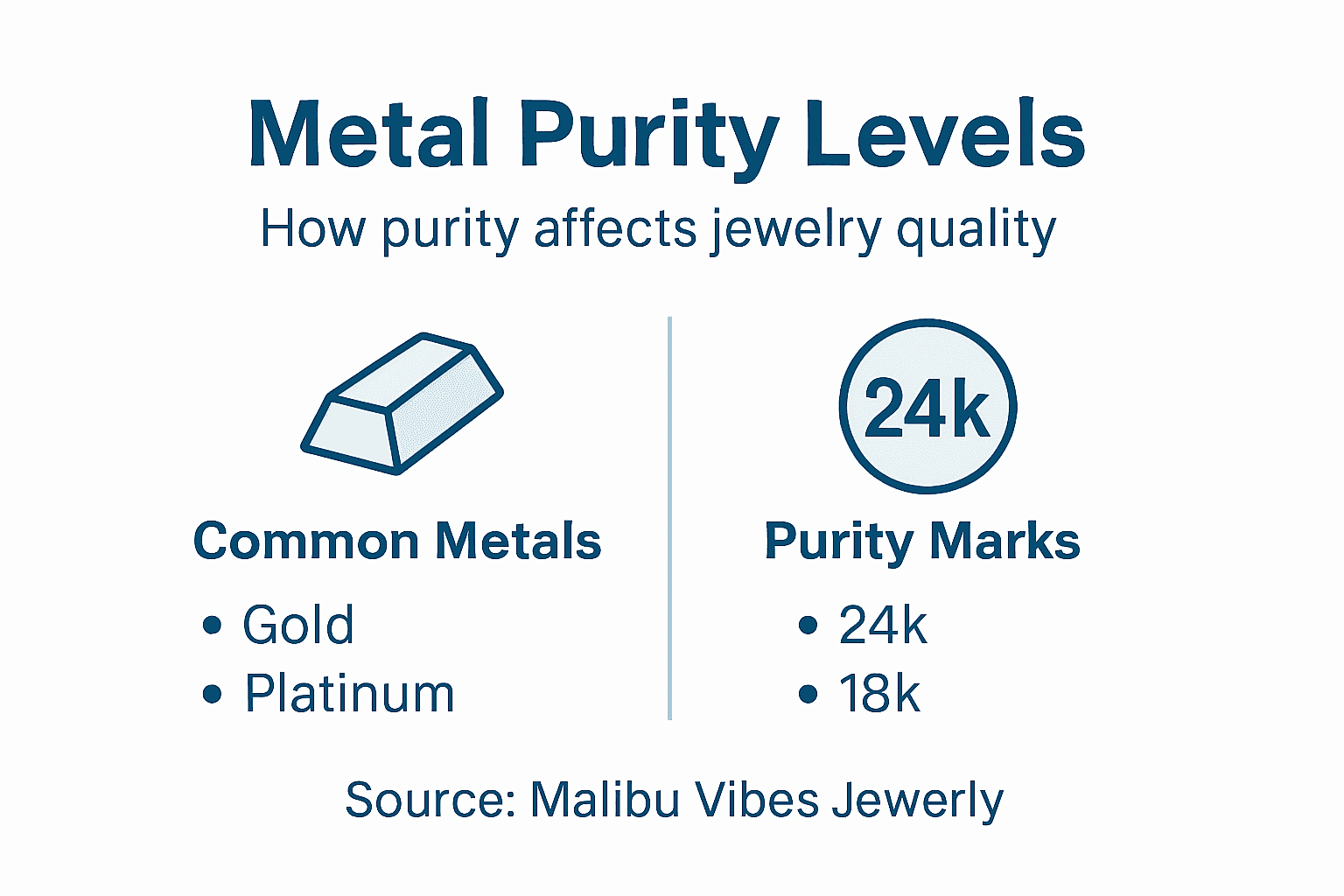
Metal Purity’s Impact on Durability and Price
Understanding the relationship between metal purity and jewelry performance is crucial for making informed purchasing decisions. Metal composition fundamentally influences both the durability and market value of fine jewelry pieces.
Metal Purity and Durability Considerations:
- Higher purity metals are softer and more prone to scratching
- Lower purity alloys provide increased structural strength
- Pure metals bend and deform more easily
- Alloyed metals resist everyday wear and tear
Silver purity standards demonstrate this principle perfectly. Take sterling silver (92.5% pure) versus fine silver (99.9% pure):
- Fine Silver (999): Extremely soft, easily damaged
- Sterling Silver (925): Enhanced durability, more resistance to deformation
Price Factors Related to Metal Purity:
- Intrinsic metal value increases with higher purity
- Production complexity affects pricing
- Durability requirements impact manufacturing costs
- Rarity of pure metal content
- Market demand for specific purity levels
Not all high-purity metals are created equal - durability matters as much as percentage of pure metal.
Pro tip: Consider your lifestyle and intended jewelry usage when selecting metal purity, balancing aesthetic preferences with practical durability requirements.
Discover Jewelry That Balances Purity and Durability Perfectly
Choosing the right metal purity is essential to owning fine jewelry that truly lasts and matches your lifestyle. The article highlights how higher purity metals may be softer and less durable while alloys can improve strength and wear resistance. At Malibu Vibes Jewelry, we understand that balance is key. Our handcrafted collection features expertly crafted pieces made from trusted purity standards like 14k gold and sterling silver, offering both enduring beauty and practical durability.

Explore our curated selection today at Malibu Vibes Jewelry and find stunning rings, necklaces, and bracelets designed not only to dazzle but to withstand everyday life. Don’t wait to invest in fine jewelry that combines quality craftsmanship with authentic metal purity—shop now and experience timeless elegance that suits your unique needs.
Frequently Asked Questions
What is metal purity in fine jewelry?
Metal purity refers to the composition and quality of precious metals used in jewelry, impacting its durability, value, and performance.
How is gold purity measured?
Gold purity is measured in karats, where 24k represents 100% pure gold, 18k is 75% pure, and so on down to 10k, which is 41.7% pure gold.
Why does the alloy composition matter in jewelry?
Alloy composition influences the appearance, durability, and overall quality of jewelry. For instance, different metals mixed with gold can create yellow, white, or rose gold, each with unique characteristics.
How do hallmarks verify metal purity in jewelry?
Hallmarks provide essential information about a piece’s metal composition, ensuring authenticity and protecting consumers. They indicate the purity level, such as 925 for sterling silver or 18k for gold.
Recommended
- What is Fine Jewelry? Understanding Luxury and Craftsmanship – Malibu Vibes Jewelry
- Explore the World of Precious Metals in Jewelry – Malibu Vibes Jewelry
- Understanding the Difference Between 14k and 18k Gold – Malibu Vibes Jewelry
- What is 14k Gold? Understanding Its Beauty and Value – Malibu Vibes Jewelry
- DIY: Homemade Jewelry Cleaners - Home Remedies
- Gold vs Silver Opal Jewelry: Complete Comparison Guide - Australian Opal Direct
- Echtes Gold erkennen: Methoden, Prüfung, Ankauf – GoldSilberMarkt