

TL;DR:
- Gold necklace styles vary based on chain design, length, and gold purity, affecting their durability and look.
- Choosing solid 14K gold ensures longevity for daily wear, while vermeil and plated options offer more affordable, yet less durable, alternatives.
Types of gold necklaces are defined by three variables: chain design, length, and gold purity. Each combination produces a piece with a distinct look, weight, and lifespan. Whether you are shopping for yourself or choosing a gift, knowing the difference between a rope chain and a Figaro, or between 14K and gold vermeil, changes every decision you make. Brands like Ana Luisa and Malibuvibesjewelry have built entire collections around these distinctions, and for good reason. The right necklace style lasts decades. The wrong one fades in two years.
What are the most popular types of gold chain necklaces?
Gold chain necklaces fall into eight primary styles, each with a different structure, texture, and ideal use case.
- Cable chain: The most classic structure. Uniform oval or round links connect in a flat, even line. It is lightweight, flexible, and works as a standalone piece or a pendant base.
- Rope chain: Twisted segments of metal create a spiral texture that catches light from every angle. Rope chains are among the most popular foundations for pendants because of their durability and visual depth.
- Figaro chain: Alternating short and long links in a repeating pattern. Originally Italian in origin, Figaro chains read as slightly more decorative than cable chains without crossing into statement territory.
- Box chain: Square links that connect at right angles. The result is a smooth, geometric look that holds its shape well and resists kinking better than most styles.
- Herringbone chain: Flat, V-shaped links lie parallel and close together, creating a ribbon-like surface. It is one of the most visually striking gold chain types but requires careful handling since it bends easily.
- Curb chain: Interlocking, uniform links that lie flat. Cuban link is a thicker variation of the curb chain and has become a dominant style in both men’s and women’s jewelry.
- Singapore chain: Twisted and woven links that create a fluid, diamond-cut texture. It catches light differently than a rope chain and works well at finer gauges.
- Bead chain: Uniform spheres connected by short bars. Simple and minimal, bead chains work best as delicate everyday pieces.
Pro Tip: When choosing a chain for a pendant, prioritize cable, box, or rope styles. Their link structures distribute pendant weight evenly and resist stretching over time.
| Chain Type | Best Use | Durability |
|---|---|---|
| Cable | Pendants, everyday wear | High |
| Rope | Statement wear, pendants | High |
| Figaro | Casual and dressy layering | Medium-High |
| Box | Geometric looks, pendants | High |
| Herringbone | Statement, flat wear | Medium |
| Curb/Cuban | Bold statement, men’s styles | High |
| Singapore | Delicate layering | Medium |
| Bead | Minimal everyday wear | Medium |
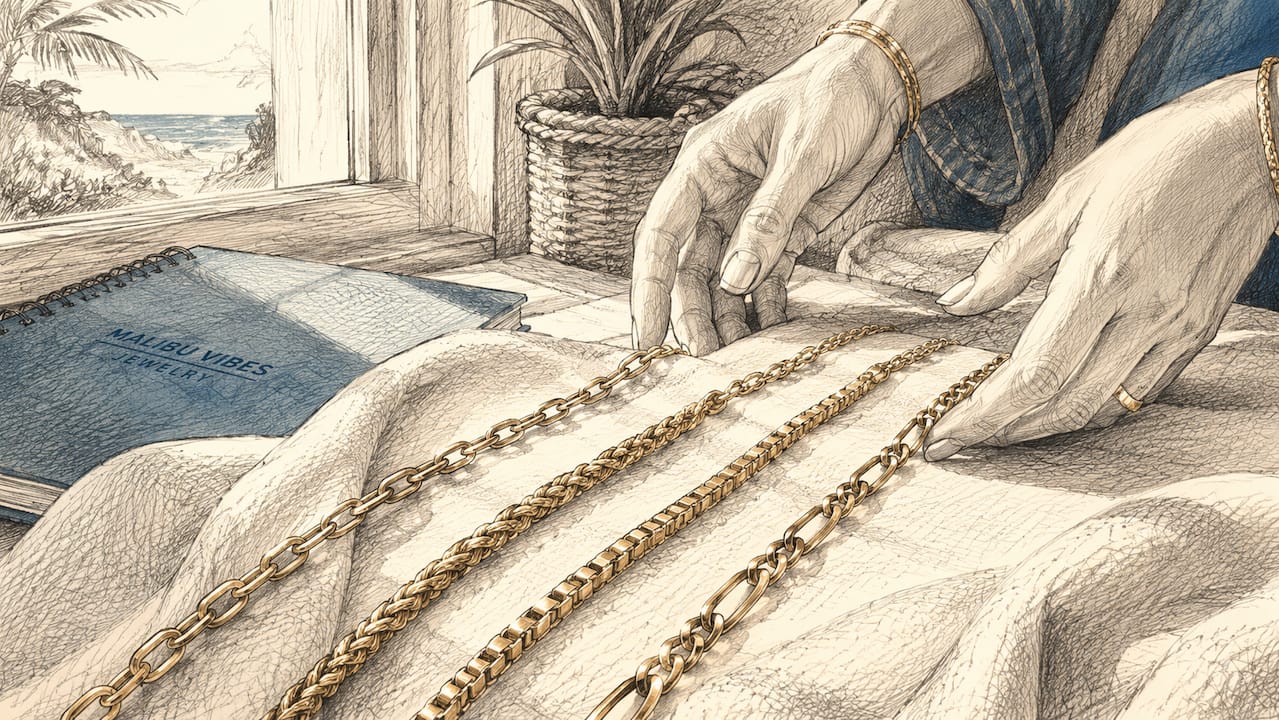
Men’s popular gold chain styles include Cuban link, rope, and Figaro chains, with thickness ranging from 2mm to 18mm depending on whether the goal is subtle or bold. That range matters for women’s styling too. A 1.5mm cable chain and a 6mm rope chain create completely different visual statements even at the same length.
How do gold purities and plating affect quality and maintenance?
Gold purity is the single most important factor in how long a necklace lasts and how it looks after years of wear.
14K gold contains 58.3% pure gold and is the standard for daily wear jewelry. The remaining alloy content makes it harder and more scratch-resistant than higher-karat options. If you wear a necklace every day, 14K is the practical choice. Malibuvibesjewelry builds most of its fine necklace collection in 14K for exactly this reason.
18K gold carries 75% pure gold, which gives it a richer, warmer color. The tradeoff is softness. 18K pieces are better suited for occasional wear or pieces that do not take daily friction, such as a pendant worn over clothing rather than against bare skin.
| Gold Type | Gold Content | Lifespan | Best For |
|---|---|---|---|
| 14K solid gold | 58.3% | Decades | Daily wear |
| 18K solid gold | 75% | Decades (with care) | Occasional wear |
| Gold vermeil | 2.5+ micron plating over sterling silver | 3 to 5 years | Premium plated option |
| Gold-plated | Thin plating over base metal | 2 to 4 years | Budget-friendly styling |
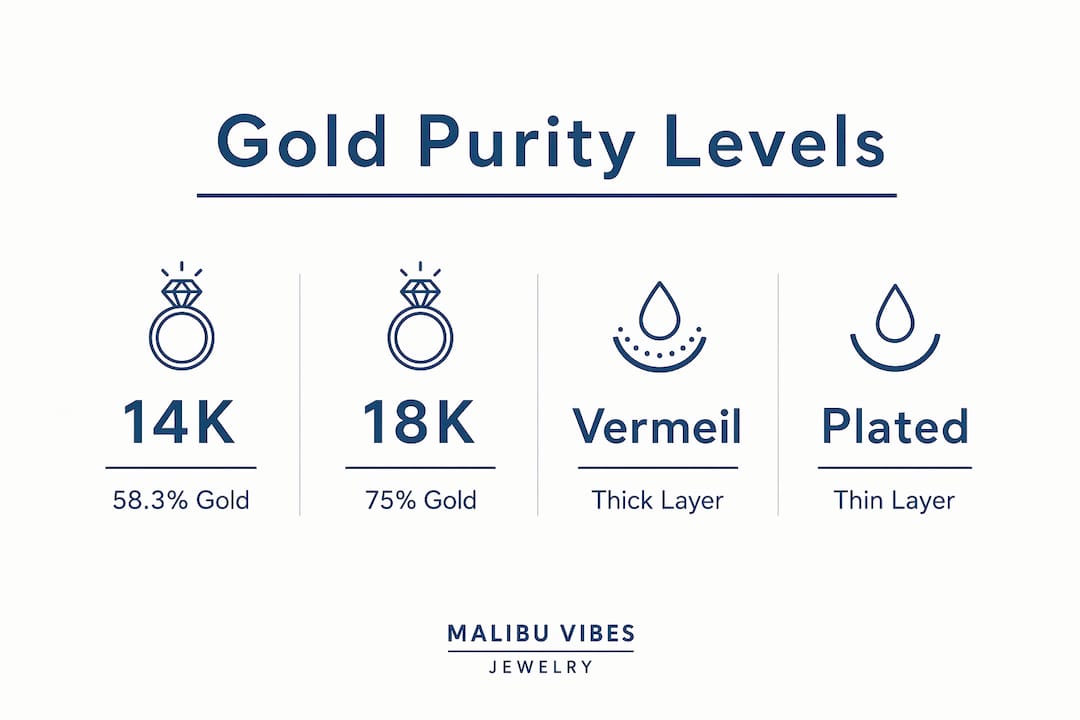
Gold vermeil uses a minimum 2.5-micron gold layer over a sterling silver base. This makes it significantly more durable than standard gold-plated pieces and gives it a premium look at a lower price point than solid gold. Gold-plated jewelry uses a much thinner layer over base metals like brass, which is why it fades faster and can cause skin reactions in some wearers.
Pro Tip: Store gold necklaces individually in soft pouches to prevent chain tangling and surface scratching. Wipe them with a dry microfiber cloth after wearing to remove oils and extend the finish.
Rose gold necklaces follow the same purity tiers but use a copper-heavy alloy that gives the metal its warm pink tone. Rose gold necklaces in 14K are particularly durable because the copper content adds hardness. They have become one of the most requested gold necklace styles for gifting, especially for birthdays and anniversaries.
What necklace lengths work for different occasions and looks?
Necklace length determines where a piece sits on the body, which directly affects how it interacts with necklines, other jewelry, and the overall outfit.
Chokers sit at 14 to 16 inches and rest snugly at the base of the throat. They work best with open necklines like V-necks, off-shoulder tops, and crew necks. A thin gold choker in a cable or herringbone style reads as elegant and minimal. A wider curb chain choker reads as bold and fashion-forward.
Princess length runs 17 to 19 inches and is the most versatile everyday length. It falls just below the collarbone and works with nearly every neckline. This is the default length for most pendant necklaces and the starting point for layered looks.
Beyond princess length, the options expand into matinee (20 to 24 inches), opera (28 to 36 inches), and rope length (over 36 inches). Each longer length creates a different visual line on the body and suits different outfit types.
- Choker (14 to 16 inches): Best for open necklines and minimalist styling
- Princess (17 to 19 inches): The most versatile length for pendants and everyday wear
- Matinee (20 to 24 inches): Works well with business attire and higher necklines
- Opera (28 to 36 inches): Suits formal wear and can be doubled for a layered effect
- Rope length (over 36 inches): Dramatic, statement-making, often worn knotted or looped
Lariat necklaces and bib necklaces occupy a different category entirely. Lariats have no clasp and are looped or knotted at the front, making them one of the most adjustable popular gold necklace designs available. Bib necklaces feature multiple strands or a wide decorative front section and function as statement pieces on their own.
How to layer gold necklaces like a style expert
Layering is not simply stacking necklaces. It is a deliberate combination of chain types, lengths, and weights that creates a cohesive look without visual clutter.
Style experts recommend mixing delicate chains with bolder links to create balance. A thin cable chain at 16 inches, a medium rope chain at 18 inches, and a pendant on a box chain at 20 inches form a layered set that has texture contrast, length variation, and a clear focal point. That combination works for casual, professional, and evening settings.
Here is a practical approach to building a layered set:
- Start with the shortest piece. A choker or 16-inch chain anchors the look at the collarbone and sets the visual starting point.
- Add a mid-length chain with a different texture. If your shortest chain is a cable, try a rope or Figaro at 18 to 19 inches for contrast.
- Add a pendant or statement chain at the longest length. A pendant on a box chain at 20 to 22 inches draws the eye downward and adds a focal point.
- Balance weight and thickness. Avoid pairing two thick chains at similar lengths. The goal is contrast, not competition.
- Stick to one metal tone. Mixing yellow gold, rose gold, and white gold in one layer set creates visual noise. Choose one tone and vary the chain styles instead.
Layering combines minimal and statement chains for looks that transition from daytime to evening without changing the entire outfit. A herringbone paired with a box chain creates a flat, graphic effect. A rope chain paired with a bead chain creates a textured, organic feel.
Pro Tip: For professional settings, limit layers to two chains maximum. Three or more chains work well for casual and evening looks but can read as too casual in formal office environments.
Knowing how to wear gold necklaces in layers also means knowing when not to layer. A single bold curb chain or a statement herringbone often carries more impact alone than surrounded by competing pieces.
Key takeaways
The type of gold necklace that lasts and looks best is determined by chain design, length, gold purity, and how you plan to wear it.
| Point | Details |
|---|---|
| Chain design drives the look | Cable, rope, Figaro, and box chains each create a distinct texture and suit different styling purposes. |
| Gold purity determines durability | 14K solid gold is the best choice for daily wear; gold vermeil and gold-plated options suit occasional use. |
| Length defines placement and occasion | Princess length at 17 to 19 inches is the most versatile; chokers and opera lengths suit specific necklines and settings. |
| Layering requires contrast | Mix chain textures and lengths deliberately, keeping metal tone consistent to avoid visual clutter. |
| Rose gold adds warmth and durability | Rose gold necklaces in 14K are harder than yellow gold equivalents due to copper content, making them practical and distinctive. |
What I have learned from years of choosing gold necklaces
My honest take on gold necklaces is that most people overthink the style and underthink the purity. I have watched friends spend real money on gold-plated pieces that looked perfect in the store and faded within a year of daily wear. The finish disappears fastest at the clasp and wherever the chain rubs against clothing. That is not a styling failure. It is a material failure.
For anything worn daily, 14K solid gold is the only choice that makes financial sense over time. The upfront cost is higher, but a well-made 14K rope chain from a brand like Malibuvibesjewelry will outlast three or four gold-plated alternatives. That math is not complicated once you see it play out.
On the styling side, I think the most underrated gold chain type is the Figaro. It reads as more intentional than a plain cable chain, it layers beautifully, and it works on both men and women without leaning too far in either direction. Rope chains are the crowd favorite for good reason, but Figaro chains are the ones I reach for when I want something that looks considered without being loud.
Layering is where personal style actually shows up. Two people can own the same three chains and create completely different looks based on how they combine them. The jewelry layering tips that actually work are the ones that treat layering as composition, not accumulation. Start with one anchor piece, add contrast, and stop before it gets busy.
The one thing I would tell anyone buying a gold necklace as a gift: choose a timeless chain style in solid gold over a trendy design in plated metal. The recipient will still be wearing the rope chain or Figaro in ten years. The plated piece will be gone in two.
— Ara
Explore gold necklaces at Malibuvibesjewelry

Malibuvibesjewelry offers a curated collection of solid gold necklaces handcrafted in Los Angeles, including rope, cable, and Figaro styles in 14K gold. Each piece is built for daily wear and designed to layer well with other chains. The brand also carries 14K gold diamond pieces for those looking to add a pendant focal point to a layered set. If you want to understand exactly how each piece is made before you buy, the fine jewelry process page walks through every step from design to finished piece. Quality over quantity is the standard at Malibuvibesjewelry, and it shows in every chain.
FAQ
What are the most durable types of gold necklaces?
Solid 14K gold necklaces are the most durable option for daily wear because 14K gold contains 58.3% pure gold with hardening alloys that resist scratching and bending. Box chains and rope chains in 14K are particularly resilient due to their interlocking link structures.
How long does a gold-plated necklace last?
Gold-plated necklaces last 2 to 4 years under typical wear conditions, while gold vermeil pieces last 3 to 5 years with proper care. Neither matches the lifespan of solid gold, which can last decades with basic maintenance.
What is the best necklace length for everyday wear?
Princess length at 17 to 19 inches is the most versatile everyday length because it falls just below the collarbone and works with nearly every neckline and outfit type.
What is the difference between gold vermeil and gold-plated?
Gold vermeil uses a minimum 2.5-micron gold layer over a sterling silver base, making it more durable and skin-safe than standard gold-plated jewelry, which uses a thinner layer over base metals like brass.
Can you mix different gold necklace styles when layering?
Yes. Mixing chain types such as rope, cable, and Figaro at different lengths creates visual contrast and a polished layered look. Keep the metal tone consistent across all pieces to maintain cohesion.