

TL;DR:
- Fine jewelry is made from precious metals like gold, platinum, or sterling silver and set with genuine gemstones. Its value relies on material quality and craftsmanship, not price or rarity, making simple solid gold pieces highly genuine. Cost-effective minimalist fine jewelry offers durability, ethical sourcing, and timeless style suitable for everyday wear.
Fine jewelry is defined as jewelry made from precious metals such as gold, platinum, or sterling silver and set with genuine gemstones like diamonds, sapphires, rubies, or emeralds. The term “fine jewelry” is the recognized industry standard, and it draws a clear line between pieces built to last generations and fashion or costume jewelry made from base metals and simulated stones. Understanding what is considered fine jewelry protects you from overpaying for the wrong thing and helps you recognize real value when you see it. Malibuvibesjewelry, based in Los Angeles, builds every piece around this standard: precious materials, genuine stones, and craftsmanship meant to endure.
What is considered fine jewelry, and what materials qualify?
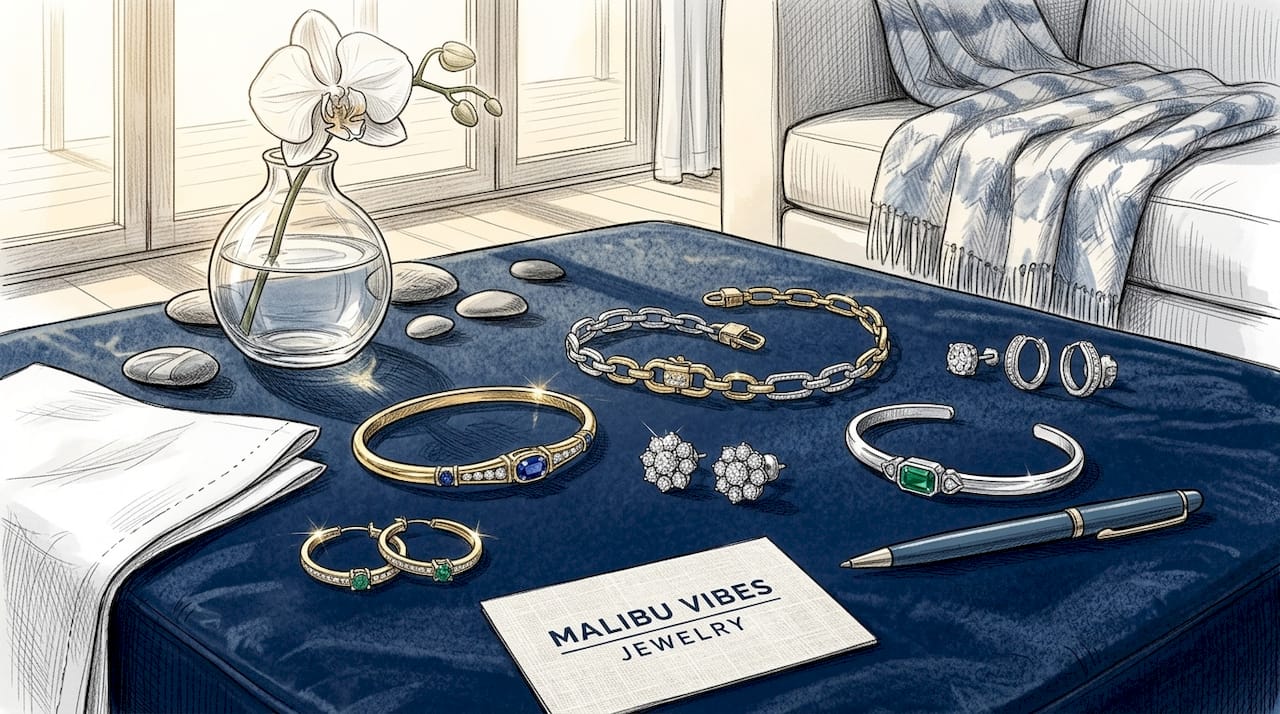
Fine jewelry is defined by material composition, not price or rarity. A $200 14k gold stacking ring with a genuine gemstone qualifies as fine jewelry. A $2,000 piece made from brass and cubic zirconia does not.
The core materials that qualify a piece as fine jewelry are:
- Solid gold: Most commonly 14k (58.3% pure gold) or 18k (75% pure gold). Gold-filled and gold-plated pieces do not qualify.
- Platinum: Denser and more durable than gold, typically 95% pure. Used in high-end settings and engagement rings.
- Sterling silver: Marked 925, meaning 92.5% pure silver. The standard for silver fine jewelry.
- Genuine gemstones: Diamonds, sapphires, rubies, emeralds, and other natural or lab-grown stones with verifiable origin. Simulated stones like cubic zirconia are not genuine gemstones.
Craftsmanship is the second pillar of fine jewelry. High-quality pieces require 20–60 labor hours per piece, covering hand-finishing, precise stone setting, and structural integrity. That labor investment is what makes a piece repairable, resizable, and worth maintaining over decades.
Price and rarity do not define fine jewelry. This is the most common misconception buyers carry into a purchase. A simple, delicate band in solid 14k gold is fine jewelry. An elaborate piece in gold-plated brass is not, regardless of its retail price.
Pro Tip: Look for metal stamps inside rings or on clasps. “14k,” “18k,” “PT950,” and “925” are the marks that confirm you are buying genuine fine jewelry materials.
How does fine jewelry differ from fashion, costume, and high jewelry?
Fine jewelry occupies a specific tier in the jewelry market, and knowing where it sits helps you shop with confidence.
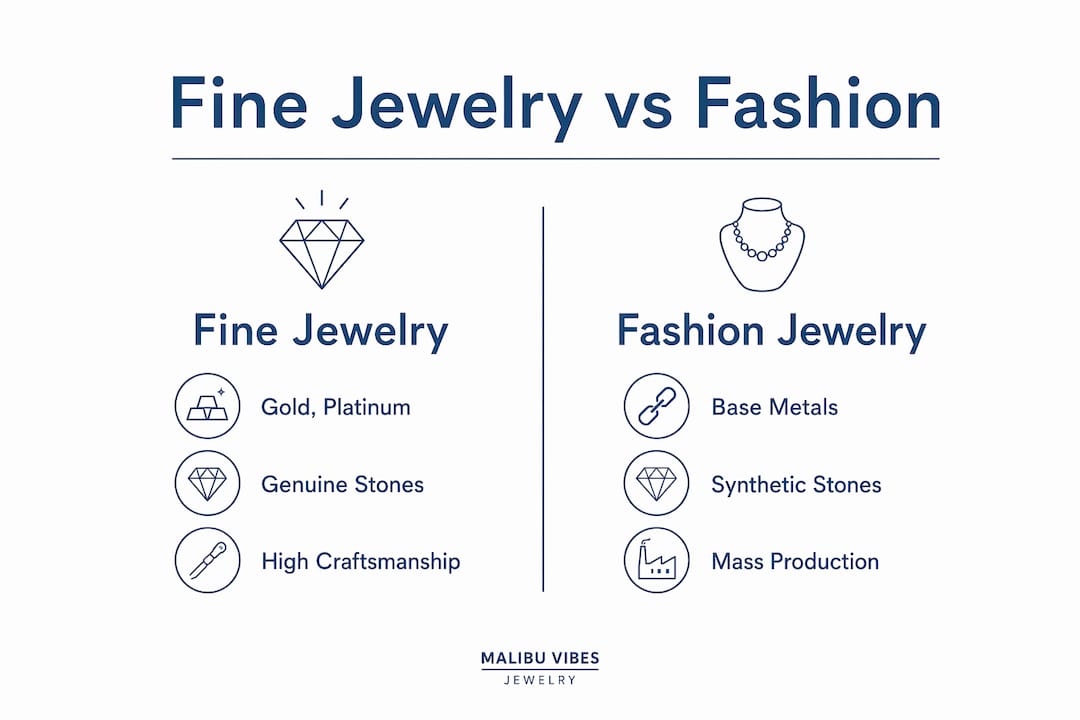
Fashion jewelry uses base metals like brass, copper, or zinc alloy, and relies on synthetic or simulated stones. It carries minimal resale value and typically tarnishes or discolors within months. Costume jewelry follows the same material logic but leans toward theatrical or trend-driven design. Neither category is built for longevity or repair.
High jewelry, sometimes called haute joaillerie, sits above fine jewelry in exclusivity and production scale. High jewelry requires 300–1,000+ hours of handwork per piece, uses rare one-of-a-kind gemstones, and is produced in extremely limited quantities. Fine jewelry, by contrast, uses calibrated stones and repeatable designs that can be reordered. That repeatability is not a flaw. It is what makes fine jewelry accessible without sacrificing material integrity.
| Category | Metals used | Stones | Production | Resale value |
|---|---|---|---|---|
| Fine jewelry | Gold, platinum, silver | Genuine or lab-grown | Repeatable, 20–60 hrs | Moderate to high |
| High jewelry | Gold, platinum | Rare, one-of-a-kind | Unique, 300–1,000+ hrs | Very high |
| Fashion jewelry | Base metals | Synthetic or simulated | Mass-produced | Minimal |
| Costume jewelry | Base metals, plastic | Imitation | Mass-produced | None |
The practical takeaway: fine jewelry gives you genuine materials and lasting construction at a price point that does not require a museum budget. For a deeper look at how these categories compare, the material differences are more significant than most buyers realize before their first purchase.
What role does minimalist fine jewelry play in modern collections?
Minimalist fine jewelry is fine jewelry defined by clean lines, simple forms, and restrained design. Thin bands, small solitaire settings, and delicate chain necklaces are the most common examples. The category has grown because it delivers the material integrity of fine jewelry at a lower entry price, making it the most accessible form of genuine precious-metal jewelry available.
The investment case for minimalist pieces is straightforward. Simple, delicate fine jewelry does not follow fast-fashion trends, which means cost-per-wear drops steadily over time. A thin 14k gold chain worn daily for ten years costs far less per wearing than a trendy fashion piece replaced every season.
Minimalist fine jewelry also leads the category in sustainable sourcing. Many minimalist pieces use recycled metals and conflict-free diamonds, often backed by lifetime quality warranties. That commitment to ethical sourcing reflects a broader shift in how buyers think about what they put on their bodies every day.
Key benefits of minimalist fine jewelry:
- Versatility: Thin bands and small pendants layer easily and transition from casual to formal without effort.
- Timelessness: Simple designs do not date. A plain gold band looks as current in 2026 as it did in 1996.
- Lower cost-per-wear: Durability and trend-resistance make minimalist pieces among the best value in jewelry.
- Sustainability: Recycled metals and responsibly sourced stones are standard in quality minimalist collections.
One care note worth knowing: thin bands around 0.7 mm can bend under pressure if worn during heavy activity. Minimalist does not mean indestructible. Remove delicate pieces before workouts or manual labor, and store them flat or on a ring holder.
Pro Tip: Browse minimalist jewelry styles before buying to understand which proportions work for your hand size and daily routine. A 1.2 mm band reads very differently on different fingers.
How to identify authentic fine jewelry and assess its quality
Identifying genuine fine jewelry requires checking five specific things, in this order.
-
Metal stamps and purity marks. Look inside the band of a ring or on the clasp of a necklace. Stamps like “14k,” “18k,” “PT950,” or “925” confirm the metal is what the seller claims. No stamp is a red flag, not a minor omission.
-
Gemological certificates. GIA reports verify a stone’s cut, color, clarity, and carat weight through independent laboratory testing. Any seller offering a significant diamond or colored stone without a certificate is asking you to take their word for it.
-
Artisan hallmarks and signatures. Fine jewelry from established makers carries maker’s marks, often viewable under magnification. These marks confirm origin and support authentication if you ever resell or insure the piece.
-
Setting quality and finish. Run your fingernail across prongs and bezels. Rough edges, uneven prong heights, or wobbly stones indicate poor craftsmanship. Quality settings hold stones firmly and feel smooth against skin.
-
Weight and durability. Solid precious metals feel heavier than base metals of the same size. A piece that feels surprisingly light for its apparent size may be hollow or plated.
Knowing how to identify quality gemstones before you buy is as important as checking the metal. Color saturation, clarity, and cut all affect a stone’s value and how it holds up over years of wear.
Fine jewelry can be professionally cleaned, repaired, and resized to maintain quality over time. That repairability is itself a quality indicator. If a jeweler tells you a piece cannot be resized or repaired, the materials are likely not what they claim.
Key Takeaways
Fine jewelry is defined by precious metal composition and genuine gemstones, not by price, and those material standards determine whether a piece holds lasting value.
| Point | Details |
|---|---|
| Material defines fine jewelry | Solid gold, platinum, or sterling silver with genuine stones qualifies; base metals and simulated stones do not. |
| Craftsmanship signals quality | Fine jewelry requires 20–60 labor hours per piece, enabling repair, resizing, and long-term durability. |
| Minimalist pieces fully qualify | A simple 14k gold band with a genuine stone is fine jewelry, regardless of its modest price. |
| Verification protects buyers | Check metal stamps, GIA certificates, and artisan hallmarks before any significant purchase. |
| Repairability is a quality test | Genuine fine jewelry can be professionally cleaned, repaired, and resized; pieces that cannot be repaired likely are not fine jewelry. |
Why price is the wrong lens for fine jewelry
I have watched buyers walk past genuinely beautiful 14k gold pieces because the price felt “too accessible” to be real. That instinct is understandable but wrong. The jewelry industry has spent decades conditioning buyers to equate high price with high quality, and that conditioning costs people real money.
The truth I keep coming back to is simpler: the metal stamp and the gemological certificate tell you everything the price tag does not. A $350 sterling silver ring with a certified sapphire is fine jewelry. A $1,500 gold-plated piece with cubic zirconia is not. The label “fine” is a material designation, not a luxury tier.
Minimalist fine jewelry has changed how I think about value in this category. A thin 14k gold chain worn every day for a decade costs almost nothing per wearing. The same money spent on a trendy fashion piece gets you something that tarnishes in a year and cannot be repaired. That is not a trade-off worth making.
Sustainable sourcing has also shifted from a niche concern to a genuine purchasing criterion. Recycled metals and conflict-free stones are now standard in quality collections, and buyers who ask about sourcing get better answers than they did five years ago. That transparency is a sign the industry is maturing in the right direction.
— Ara
Malibuvibesjewelry: fine jewelry built on real materials
Malibuvibesjewelry crafts every piece from solid precious metals and genuine gemstones, following the same material standards that define fine jewelry at any price point. The Los Angeles-based studio works in 14k gold, sterling silver, and platinum, setting diamonds and natural colored stones by hand.
The collections span 14k gold gemstone rings set with rubies, emeralds, and sapphires, through minimalist sterling silver pieces designed for daily wear. The fine jewelry making process is documented on site, showing exactly how each piece moves from raw precious metal to finished, hallmarked jewelry. For buyers who want to understand what they are purchasing before they buy, that transparency is worth more than any marketing claim.
FAQ
What makes jewelry qualify as fine jewelry?
Fine jewelry qualifies through its use of precious metals such as solid gold, platinum, or sterling silver, combined with genuine gemstones. Material composition is the defining standard, not price.
Is sterling silver considered fine jewelry?
Sterling silver marked “925” is a precious metal and qualifies as fine jewelry when paired with genuine stones. Gold-plated silver does not meet the same standard.
How do I verify that a piece is genuine fine jewelry?
Check for metal purity stamps (14k, 18k, 925, PT950) and request a GIA certificate for any significant gemstone. Artisan hallmarks and the ability to resize or repair the piece are additional confirmation.
What is the difference between fine jewelry and high jewelry?
Fine jewelry uses precious metals and genuine stones in repeatable designs requiring 20–60 labor hours. High jewelry involves unique, one-of-a-kind pieces with rare stones and 300–1,000+ hours of handwork, produced in extremely limited quantities.
Is minimalist fine jewelry a good investment?
Minimalist fine jewelry made from solid precious metals holds material value and resists trend cycles, lowering cost-per-wear over time. Pieces using recycled metals and certified stones often carry lifetime quality warranties, adding further long-term value.
Recommended
- Complete Guide to Why Invest in Fine Jewelry – Malibu Vibes Jewelry
- Fine Jewelry Buying Tips for High-Quality Selections – Malibu Vibes Jewelry
- What is Fine Jewelry? Understanding Luxury and Craftsmanship – Malibu Vibes Jewelry
- How to style fine jewelry: everyday elegance made easy – Malibu Vibes Jewelry