

TL;DR:
- Multi-stone rings offer deeper symbolism, greater visual impact, and flexible design options compared to solitaires. They represent personal stories, milestones, or relationships, and appear larger and more sparkly through strategic settings. Proper craftsmanship and thoughtful selection ensure durability, making them practical and meaningful choices for everyday wear and special occasions.
Most people picture a solitaire when they think about a beautiful ring. One stone, one setting, one statement. But that assumption misses something real. Understanding why multi-stone rings attract so many buyers comes down to three things: symbolism that a single stone simply cannot carry, visual impact that punches above its price point, and a design flexibility that lets a ring tell a genuinely personal story. This article covers all of it, from the meaning behind classic trilogy designs to the practical cost math, so you can make a choice that actually fits your life.
Table of Contents
- Key takeaways
- Why multi-stone rings carry meaning that solitaires cannot
- Visual advantages: size, sparkle, and design range
- Cost efficiency and real value
- Style trends and how to wear multi-stone rings
- How to choose the right multi-stone ring
- My take on the multi-stone conversation
- Discover handcrafted multi-stone rings at Malibuvibesjewelry
- FAQ
Key takeaways
| Point | Details |
|---|---|
| Symbolism runs deep | Three-stone rings traditionally represent past, present, and future, making them emotionally layered gifts. |
| More stones, more sparkle | Cluster and multi-stone settings reflect light from multiple angles, creating standout visual impact. |
| Better budget value | Smaller stones cost less per carat, so you get a bigger look without paying solitaire premiums. |
| Stacking-friendly by nature | Multi-stone rings pair naturally with modern ring stacking trends and personalized styling. |
| Craftsmanship determines durability | Secure mounts and low-profile settings are what separate a beautiful multi-stone ring from one that needs constant repairs. |
Why multi-stone rings carry meaning that solitaires cannot
There is a reason the three-stone ring, also called the trilogy ring, has held its ground for centuries. The design is built on a concept: the center stone represents the present, and the two flanking stones represent the past and the future of a relationship. Three-stone rings symbolize this relationship timeline in a way that feels concrete, not abstract. When someone wears it, that story lives on their finger.
But the symbolism does not stop at romantic relationships. Many buyers use multi-stone designs to represent other forms of meaning entirely.
- Birth months or family members: A ring with stones representing each child’s birthstone turns into a permanent family keepsake.
- Milestones layered together: Three stones can mark a graduation, a career change, and a new chapter all at once.
- Balance and harmony: Designs with symmetrical stone placement embody balance and harmony, which resonates with buyers who see jewelry as a reflection of personal values.
- Friendship or self-gifting: Multi-stone rings make powerful gifts precisely because they carry a story the giver chose deliberately.
What makes this work is flexibility. There is no single right interpretation of multi-stone symbolism. Buyers and couples assign personal meanings beyond traditional norms, which means a multi-stone ring can hold exactly as much or as little symbolism as you want it to carry.
“The best jewelry doesn’t announce itself. It speaks quietly to the person wearing it and the people who know what it means.”
That quality, the ability to hold a private meaning, is something a multi-stone ring delivers better than almost any other design.
Visual advantages: size, sparkle, and design range
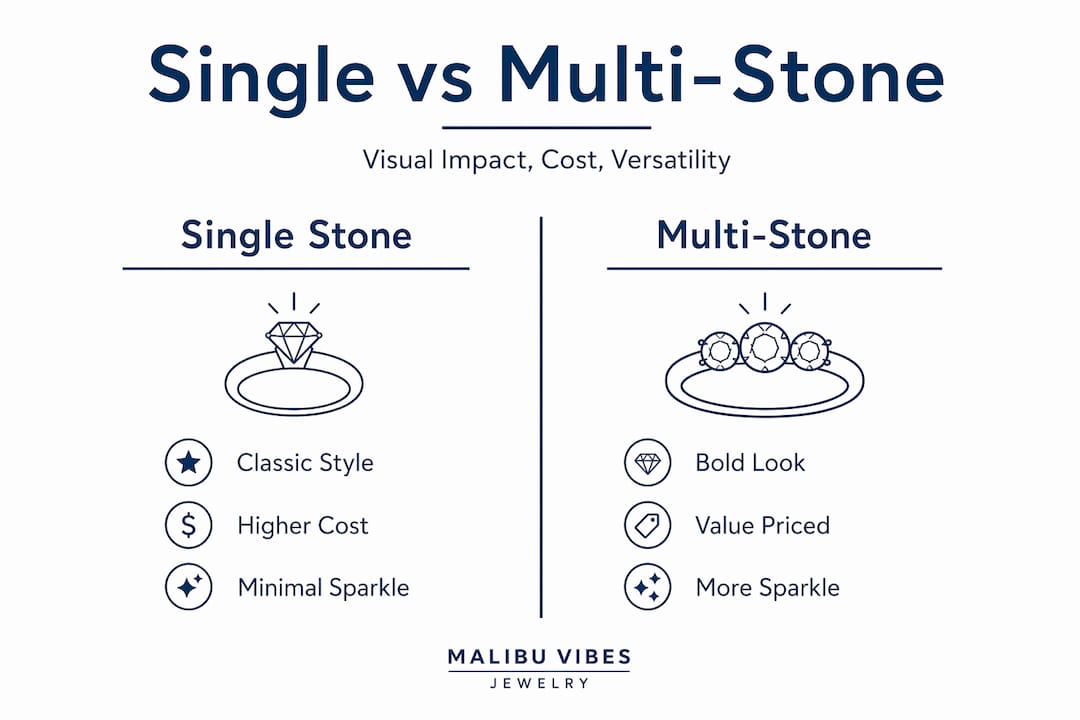
Here is something the solitaire world rarely advertises. A cluster or multi-stone setting can look significantly larger than a single stone of equivalent carat weight, simply because it covers more surface area on the finger. Cluster settings create a size illusion that most people cannot detect unless they are told to look for it.
The sparkle story is just as compelling. A single stone reflects light from one point. Multiple stones reflect light from many angles simultaneously. The result is a ring that catches the eye across a room in a way that a solitaire of the same size often cannot match.
A few specific design advantages that multi-stone rings hold:
- Toi et moi rings: Two stones side by side, each representing a different person, create a deeply personal silhouette with a dramatic look.
- Halo settings: A center stone surrounded by a ring of smaller diamonds amplifies the perceived size dramatically.
- Cluster designs: Irregular or geometric stone groupings offer a sculptural quality that solitaires physically cannot achieve.
- Graduated bands: Stones that decrease in size as they move down the shank create movement and flow that changes how the ring looks from different angles.
According to the statistic that backs this up: clusters reflect light in multiple directions, increasing both perceived sparkle and size. That is not just a styling preference. It is optics working in your favor.
Pro Tip: If you are drawn to a bold look but working with a defined budget, a halo or cluster setting will give you the most visual return for your money compared to any other setting type.
Cost efficiency and real value
The pricing structure of diamonds rewards multi-stone buyers in a real, measurable way. Large center stones carry an exponential premium because large gem-quality diamonds are genuinely rare. Smaller diamonds cost much less per carat than larger stones, which means splitting your budget across several well-chosen smaller stones gets you more visible diamond for the same spend.
Here is how that plays out in practical terms:
| Ring type | Visual impact | Relative cost | Setting complexity |
|---|---|---|---|
| Single solitaire (1 ct) | Concentrated, focused | High premium | Low |
| Three-stone ring (3 x 0.33 ct) | Spread across the finger | Moderate | Medium |
| Cluster ring (10 x 0.1 ct) | Wide, sparkly surface area | Lower per carat | Higher |
| Halo ring (center + accents) | Amplified center stone | Moderate to high | Medium to high |
The trade-off is real. Setting multiple stones takes more labor and skill than setting one. A poorly made multi-stone ring will lose stones. That is not a scare tactic. It is simply why craftsmanship matters more with these designs than with a solitaire. Multi-stone rings require quality craftsmanship to maintain durability and comfort for daily wear.
The overall value proposition holds. Choosing multi-stone rings is financially accessible while achieving the kind of visual impact that a comparable solitaire would cost significantly more to match.
Pro Tip: Ask specifically about prong security and stone setting technique before purchasing any multi-stone ring intended for everyday wear. This one question will tell you a great deal about whether a jeweler takes durability seriously.
Style trends and how to wear multi-stone rings
Multi-stone rings fit the way people actually wear jewelry in 2026. The rigid old rules, engagement ring on one finger, wedding band on another, no mixing metals, have largely given way to personal preference. Modern bridal trends show growing openness to mixing styles and stacking rings in non-traditional orders, prioritizing personal meaning over etiquette.
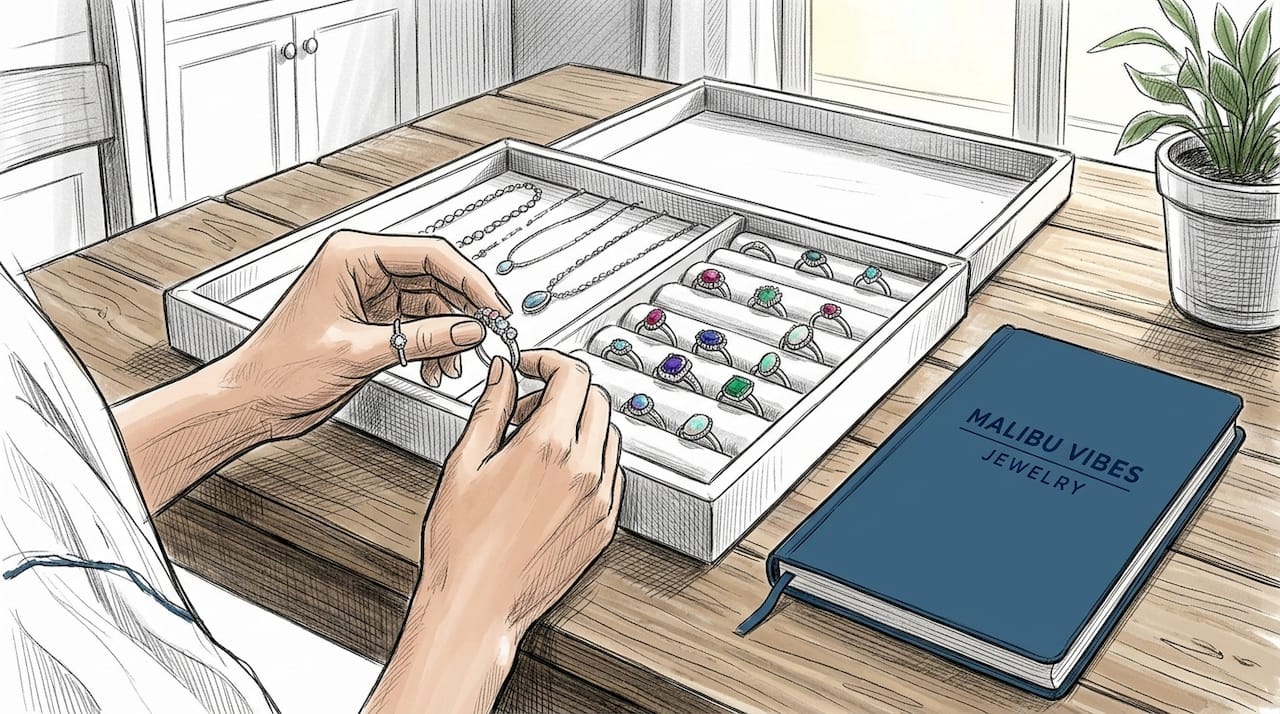
That shift benefits multi-stone ring wearers specifically. When stacking is the norm, a multi-stone ring becomes an anchor piece rather than an outlier. You can learn more about building those combinations through a practical ring stacking guide that walks through the process step by step.
A few approaches that work well with multi-stone pieces:
- Use a multi-stone ring as the statement piece in a stack, flanked by simpler bands that let the design breathe.
- Mix stone shapes deliberately: A round-cluster ring next to an emerald-cut band creates contrast that feels intentional rather than accidental.
- Match metals or mix them: A yellow gold trilogy ring alongside a white gold eternity band works when the stone colors create visual cohesion.
- Consider the occasion: Multi-stone rings with lower profiles and secure settings transition easily from daily wear to formal events, which a very tall solitaire sometimes cannot.
For more on how diamond stacking rings can reflect personal meaning, there is a specific conversation worth having about choosing pieces that work together rather than pieces that simply coexist.
How to choose the right multi-stone ring
Getting this decision right takes more than picking a design you like in a photo. Here is a practical sequence that covers the factors most buyers overlook:
- Start with your symbolism intention. Do you want the ring to tell a specific story? If so, the number of stones and their placement should reflect that story. Three stones for a relationship timeline. Five stones for a milestone anniversary. Two stones for a partnership.
- Set your budget before looking at designs. Multi-stone rings span an enormous price range. Knowing your number going in prevents the cognitive bias of “just a little more” that inflates jewelry purchases beyond what actually makes sense.
- Evaluate stone quality over stone count. Forty low-quality diamonds do not outperform five well-cut ones. Prioritize cut grade and clarity in the stones you can see most easily.
- Think about your daily life. Someone who works with their hands needs a lower-profile setting with secure mounts. Low-profile settings designed for daily wear reduce snag risk and protect stones from impact.
- Consider what you already own. A multi-stone ring should complement your existing jewelry, not compete with it. If you wear yellow gold consistently, a white gold multi-stone ring will feel disconnected in a stack.
Pro Tip: Request to see the ring in natural light before purchasing. Multi-stone rings look dramatically different under jewelry store lighting versus daylight, and natural light is the truest test of how a ring will actually look on your hand day to day.
My take on the multi-stone conversation
I have watched the multi-stone ring category grow from a niche preference into something buyers actively seek out, and the reason is not just aesthetic. What I have found is that the people who choose these rings are often the ones who think hardest about what their jewelry means.
The clients I see drawn to trilogy or cluster designs are not settling for something because a large solitaire is out of budget. They are actively choosing a design that holds more of their story. That distinction matters. A ring is not just a purchase. It is something you look at every day, and the symbolism you attach to it either deepens over time or it does not.
My honest observation after years in this space: the buyers who regret their ring choice almost always went with the most conventional option rather than the one that resonated personally. The multi-stone buyer rarely regrets the choice because they made it for specific reasons.
The practical wisdom I would add is this. Do not compromise on setting quality when buying multi-stone. The design only works if the stones stay put. A beautifully designed ring with loose prongs becomes stressful to wear within a year. Invest in the craftsmanship, not just the stones.
— Ara
Discover handcrafted multi-stone rings at Malibuvibesjewelry
If the benefits of multi-stone rings resonate with you, the next step is finding a piece where design and craftsmanship actually meet.
Malibuvibesjewelry crafts fine jewelry from its Los Angeles studio, working in 14K gold with diamonds and gemstones set by hand. The collection includes trilogy rings, halo designs, cluster styles, and diamond-accented bands built for both everyday wear and special occasions. Every piece is designed with durability in mind, which matters most when multiple stones are involved. Browse the diamond rings collection to explore the full range of multi-stone options available in current inventory. If you want to understand what goes into making these pieces before you buy, the jewelry making process page walks through every stage from design to final polish.
FAQ
What does a three-stone ring symbolize?
A three-stone ring traditionally represents past, present, and future in a relationship, with the center stone marking the present commitment. Many buyers also assign personal meanings unrelated to romance, such as milestones, family members, or personal values.
Are multi-stone rings good value compared to solitaires?
Yes, in most cases. Smaller stones cost less per carat than a single large stone of equivalent total weight, so a multi-stone ring delivers more visual impact for the same budget. The trade-off is that quality craftsmanship is critical for durability.
Can multi-stone rings be worn every day?
They can, provided the setting is designed for it. Low-profile settings with secure prongs or bezel mounts hold stones reliably through daily activity. High-profile or intricate designs are better reserved for occasional wear.
How do multi-stone rings fit with ring stacking?
Multi-stone rings work especially well as anchor pieces in a stack. Their surface coverage and visual weight naturally draw the eye, so pairing them with simpler bands creates a balanced look that feels deliberate. Modern stacking styles, as seen with the evolving bridal ring traditions trend, make this approach widely accepted.
What stone number works best for a meaningful gift?
Three stones are the most universally recognized for symbolic gifts because the past, present, future framework is intuitive. For personal meaning beyond that, symbolism is fully customizable to the relationship or milestone you want to mark.