

TL;DR:
- Proper diamond jewelry care involves regular cleaning and professional inspections to maintain its brilliance and safety. Weekly cleaning with mild soap and gentle brushing prevents buildup, while storing pieces separately protects against scratches. Annual professional checkups catch loose stones and worn prongs before they cause permanent damage.
Diamond jewelry care is the practice of cleaning, storing, and handling your pieces in ways that preserve their brilliance and protect their settings. Done right, it keeps a diamond looking as sharp as the day you bought it. Done wrong, even a flawless stone goes dull. These diamond jewelry care tips cover every layer of maintenance, from your weekly cleaning routine to knowing when a jeweler needs to step in.
1. What is the safest way to clean diamond jewelry at home?
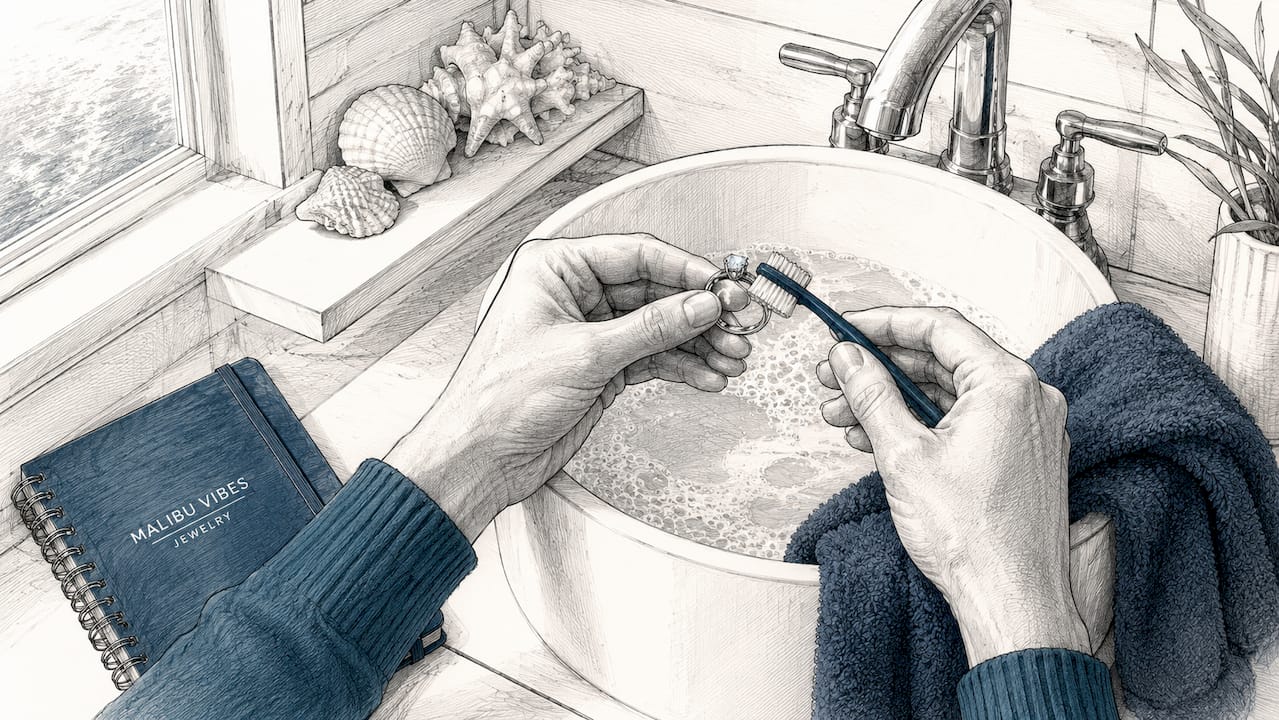
The safest at-home cleaning method is a warm water soak with mild dish soap, followed by gentle brushing. Soaking for 15–30 minutes loosens the oils and grime that build up under a stone. That loosened film is exactly what kills a diamond’s sparkle, and a soft-bristled toothbrush removes it without scratching the metal or the setting.
Here is the full process:
- Fill a small bowl with warm (not hot) water and a few drops of mild dish soap.
- Place your ring, necklace, or earrings in the bowl and soak for 15–30 minutes.
- Use a soft-bristled toothbrush to gently scrub the stone, the underside of the setting, and the band.
- Rinse thoroughly under warm running water.
- Pat dry with a lint-free cloth and let air dry completely before storing.
Clean your diamond jewelry weekly if you wear it daily. Biweekly cleaning works for pieces worn less often. The goal is to prevent buildup before it becomes visible.
Pro Tip: Rinse over a closed drain or a bowl, never directly over an open sink. A loose stone can fall out during cleaning, and a drain is not forgiving.
2. Why does your diamond look cloudy?
Diamond cloudiness is almost never caused by damage to the stone itself. The real culprit is an invisible film of skin oils, lotion residue, and soap buildup on the diamond’s underside. This film blocks light from entering and reflecting back out, which is exactly what creates that signature sparkle.
The fix is straightforward. A 15–30 minute soak and a gentle brush restore the original brilliance in most cases. Knowing this matters because many owners assume a cloudy diamond is permanently damaged and stop caring for it properly. Regular cleaning prevents the film from ever reaching that point.
3. How daily habits affect diamond jewelry maintenance
Daily activities like cooking, exercising, and applying lotion are the primary sources of grime on diamond jewelry. Each of these deposits a thin layer of oil or residue on the stone and setting. Over time, those layers compound and block light.
The most effective habit is removal before these activities:
- Take off rings before applying hand lotion, sunscreen, or perfume.
- Remove diamond jewelry before cooking, especially when handling oils or doughs.
- Skip wearing rings and bracelets at the gym. Sweat accelerates grime buildup and can stress prong settings.
- Take off necklaces before swimming. Chlorine in pools is harsh on metal settings.
Jewelry designers recommend placing small trinket trays in key spots around your home, near the bathroom sink, the kitchen counter, and your gym bag. A tray in the right place makes removal a reflex rather than a decision.
Pro Tip: Keep a dedicated trinket tray on your nightstand. Removing your jewelry before bed is one of the single best habits for protecting diamond settings long term.
4. What are the best storage solutions for diamond jewelry?
Proper storage in separate compartments or soft pouches prevents scratches and slows metal tarnish. Diamonds rate 10 on the Mohs hardness scale, meaning they can scratch almost any other material they touch, including other jewelry. Piling pieces together is a reliable way to damage everything in the pile.
The best storage options by use case:
- Jewelry boxes with dividers: Ideal for home storage. Individual slots keep pieces separated and protected.
- Soft fabric pouches: Good for travel or storing single pieces. Velvet and microfiber are the best materials.
- Ring trays: Useful for everyday rings you remove frequently. Keeps them visible and accessible without risk of scratching.
For travel, wrap each piece individually in a soft cloth before placing it in a travel case. Never toss loose jewelry into a bag or purse. For long-term storage, keep pieces away from direct sunlight and humidity. Both accelerate tarnish on metal settings. Malibuvibesjewelry recommends checking your fine jewelry storage setup at least once a year to replace worn pouches and check for loose clasps or prongs.
5. When should professional jewelry maintenance replace home care?
Professional inspections are recommended annually to check setting security and clean stones with industry-grade methods. At-home cleaning is effective for surface grime, but it cannot replace what a trained jeweler does. A professional can spot a worn prong before it fails, re-polish metal, and use tools that restore brilliance beyond what a toothbrush can achieve.
Watch for these signs that professional attention is needed:
- A stone that moves or feels loose in its setting.
- Visible wear on prongs, especially on rings worn daily.
- Metal that looks dull even after cleaning.
- A clasp or closure that no longer holds securely.
Ultrasonic cleaners can loosen stones and damage fragile or vintage settings. This is a critical warning for anyone who owns antique or intricate pieces. The vibrations that make ultrasonic devices effective on simple settings can crack pavé stones or weaken older prong work. Leave ultrasonic cleaning to professionals who can assess whether your specific piece can handle it.
6. What cleaning products and tools are safest for diamonds?
Retail-safe cleaning products and soft microfiber cloths are the standard recommendation for gentle diamond maintenance. The key is choosing products formulated for fine jewelry, not general household cleaners. Most general cleaners contain chemicals that attack metal settings even if they leave the diamond itself unharmed.
Safe tools and products to keep on hand:
- Mild dish soap: Dawn or any gentle, fragrance-free dish soap works well for the soak method.
- Soft-bristled toothbrush: A baby toothbrush is ideal. The bristles are fine enough to clean around prongs without scratching.
- Microfiber cloth: Use for drying and light polishing. Avoid paper towels, which can leave micro-scratches on metal.
- Jewelry-specific cleaning solution: Commercially available sprays formulated for fine jewelry are safe when used as directed.
Harsh chemicals like bleach, chlorine, and acetone cause lasting damage to metal settings and can soften certain gemstones. Diamonds themselves are durable, but the gold or silver holding them is not. Protecting the setting is just as important as protecting the stone. For a full breakdown of safe cleaning methods, Malibuvibesjewelry has a detailed guide on cleaning jewelry at home.
7. How to care for diamond necklaces and earrings specifically
Caring for diamond necklaces and earrings follows the same core principles as ring care, but with a few differences worth knowing. Necklace chains collect oils and skin cells along their full length, not just at the pendant. Soak the entire chain, not just the diamond portion, and use the toothbrush along each link.
Diamond earrings need attention at the post and backing. Grime accumulates where the post meets the ear, and that area is easy to miss during cleaning. Use the toothbrush tip to clean around the post base and the back of the stone. Check earring backings regularly for wear. A loose backing is a lost earring waiting to happen.
For caring for diamond necklaces specifically, store them flat or hanging to prevent chain kinks and tangles. A tangled chain puts stress on the clasp and can weaken links over time.
8. What not to do: common mistakes that damage diamond jewelry
The most damaging mistake is wearing diamond jewelry through activities that stress the setting. Rings worn during weightlifting, rock climbing, or heavy yard work are at serious risk of bent prongs and loose stones. A bent prong does not always look dramatic. Sometimes it is a tiny shift that only a jeweler catches on inspection.
The second most common mistake is using the wrong cleaner. Toothpaste is a popular home remedy that actually causes damage. It is mildly abrasive and scratches both metal and stone surfaces. Baking soda carries the same risk. Stick to mild dish soap and warm water for home cleaning.
Skipping storage is the third mistake. Leaving jewelry on a bathroom counter exposes it to humidity, hairspray, and cleaning product fumes. All three accelerate tarnish and can dull a stone’s surface over time. A dedicated jewelry organizer costs very little and prevents a lot of damage.
Key Takeaways
Consistent at-home cleaning combined with annual professional inspections is the most effective approach to preserving diamond jewelry brilliance and setting security.
| Point | Details |
|---|---|
| Weekly cleaning prevents buildup | Soak in warm soapy water for 15–30 minutes and brush gently to restore sparkle. |
| Daily habits protect settings | Remove diamond jewelry before exercising, cooking, or applying lotion to prevent grime and prong stress. |
| Separate storage prevents scratches | Store each piece in its own compartment or pouch; diamonds scratch other jewelry easily. |
| Annual professional inspection is necessary | A jeweler checks for loose stones and worn prongs that home cleaning cannot detect. |
| Avoid harsh chemicals and abrasives | Bleach, acetone, and toothpaste damage metal settings even when the diamond itself survives. |
What I have learned from years of watching people care for their diamonds
Most people treat diamond care as something they will get to eventually. They wear their ring through every workout, every dish-washing session, and every lotion application, then wonder why it looks dull six months later. The cloudiness is not a mystery. It is physics. Oil blocks light. Remove the oil and the sparkle comes back.
What I have found actually works is building removal into existing habits rather than creating new ones. A trinket tray next to the soap dispenser costs almost nothing. It turns “remember to take off your ring” into an automatic action tied to something you already do. That one change does more for long-term diamond maintenance than any cleaning product.
The professional inspection piece is where most owners cut corners, and it is the one that costs them the most. A loose prong caught early is a $50 repair. A lost stone is a very different conversation. I have seen beautiful pieces come in with stones that were one gym session away from falling out. Annual inspections are not a luxury for valuable jewelry. They are basic protection.
The last thing worth saying: diamonds are hard, but their settings are not. The Mohs scale 10 hardness of a diamond means nothing if the gold prong holding it bends and releases the stone. Care for the setting as carefully as you care for the stone, and your jewelry will last a lifetime.
— Ara
Fine diamond jewelry worth caring for, from Malibuvibesjewelry
The right care routine starts with jewelry built to last. Malibuvibesjewelry designs its pieces in Los Angeles using 14k gold and hand-set diamonds, with settings built for both everyday wear and special occasions.

Every piece in the diamond jewelry collection is crafted with the kind of setting quality that holds up to regular cleaning and daily life. From diamond rings to diamond necklaces, each design is made to be worn, loved, and maintained for years. Good care habits and well-made jewelry work together. One without the other only goes so far.
FAQ
How often should I clean my diamond ring?
Clean your diamond ring weekly if you wear it daily, and biweekly if you wear it occasionally. Regular cleaning prevents oil and grime from building up into the film that causes cloudiness.
Can I use toothpaste to clean diamond jewelry?
Toothpaste is mildly abrasive and scratches both metal settings and stone surfaces. Use mild dish soap and warm water instead for safe, effective cleaning.
What is the best way to store diamond jewelry?
Store each piece in a separate compartment, soft pouch, or fabric-lined jewelry box. Keeping pieces separated prevents diamonds from scratching other jewelry and protects metal settings from tarnish.
Are ultrasonic cleaners safe for diamond jewelry?
Ultrasonic cleaners can loosen stones and damage fragile or vintage settings. Leave ultrasonic cleaning to a professional jeweler who can assess whether your specific piece is suitable.
How do I know when my diamond jewelry needs professional care?
Take your jewelry to a jeweler if you notice a stone that moves in its setting, visible wear on prongs, or a clasp that no longer holds securely. Annual professional inspections are recommended even when no visible damage is present.