

TL;DR:
- Gemstone setting is a precise metalwork technique crucial for protecting and showcasing jewelry stones.
- Seven main setting types offer different levels of security, style, and light interaction.
- Quality setting craftsmanship enhances durability, appearance, and overall value of the jewelry piece.
Most people assume gemstones are simply glued into their settings, but that couldn’t be further from the truth. The way a stone is mounted in a piece of jewelry is one of the most technical and artistically demanding parts of the craft. A well-executed setting protects the stone, enhances its beauty, and signals the jeweler’s skill level. Whether you’re shopping for an engagement ring, a statement necklace, or everyday earrings, understanding gemstone setting will completely change how you evaluate jewelry quality and make your next purchase with real confidence.
Table of Contents
- What is gemstone setting?
- Types of gemstone settings
- How gemstone setting affects jewelry quality
- Selecting the right gemstone setting for your style
- Why gemstone setting reveals true craftsmanship
- Explore fine, handcrafted gemstone jewelry
- Frequently asked questions
Key Takeaways
| Point | Details |
|---|---|
| Setting defines quality | The gemstone setting technique directly impacts durability and aesthetics of jewelry. |
| Many setting options | There are several main styles—like prong and bezel—that create unique looks and levels of protection. |
| Choose based on lifestyle | Selecting the right setting depends on your style, intended wear, and maintenance preferences. |
| Craftsmanship matters | Skilled setting work is a hallmark of fine, handcrafted jewelry that stands out from mass-produced pieces. |
What is gemstone setting?
Gemstone setting is the technique a jeweler uses to securely mount a stone into a piece of jewelry. It’s not glue. It’s not magic. It’s a precise combination of metalwork, pressure, and skill that holds a gemstone firmly in place while showing it off to its best advantage. Think of it as the architecture of a jewelry piece. The metal is the structure, and the setting is how that structure embraces the stone.
Understanding a few key terms will help you navigate the world of fine jewelry with more confidence:
- Setting: The metal framework that holds the stone in place.
- Prong: A small claw-like metal projection that grips the stone from above.
- Bezel: A metal rim or collar that wraps around the entire circumference of the stone.
- Mounting: The complete metal structure of the jewelry piece, including the setting.
- Girdle: The widest part of the stone, which is often where the setting makes contact.
As a craft, gemstone setting types have evolved over centuries, moving from basic wire wraps used by ancient artisans to highly engineered tension settings that seem to defy gravity. Today, quality fine jewelry rarely uses adhesives. Even when adhesive is applied as a secondary measure in some costume pieces, it is never the primary support.
“Gemstone settings secure stones in place and define a piece’s look.” This single principle is the foundation of everything a skilled jeweler builds.
A well-chosen setting does three critical things. First, it physically protects the stone from chips, scratches, and loss. Second, it contributes to the overall style of the piece, whether that’s a vintage romantic feel or a sleek modern aesthetic. Third, it influences how light interacts with the stone, which directly affects how much it sparkles. Choosing or recognizing the right setting is not about preference alone. It’s about understanding what serves the stone and the wearer best.
Types of gemstone settings
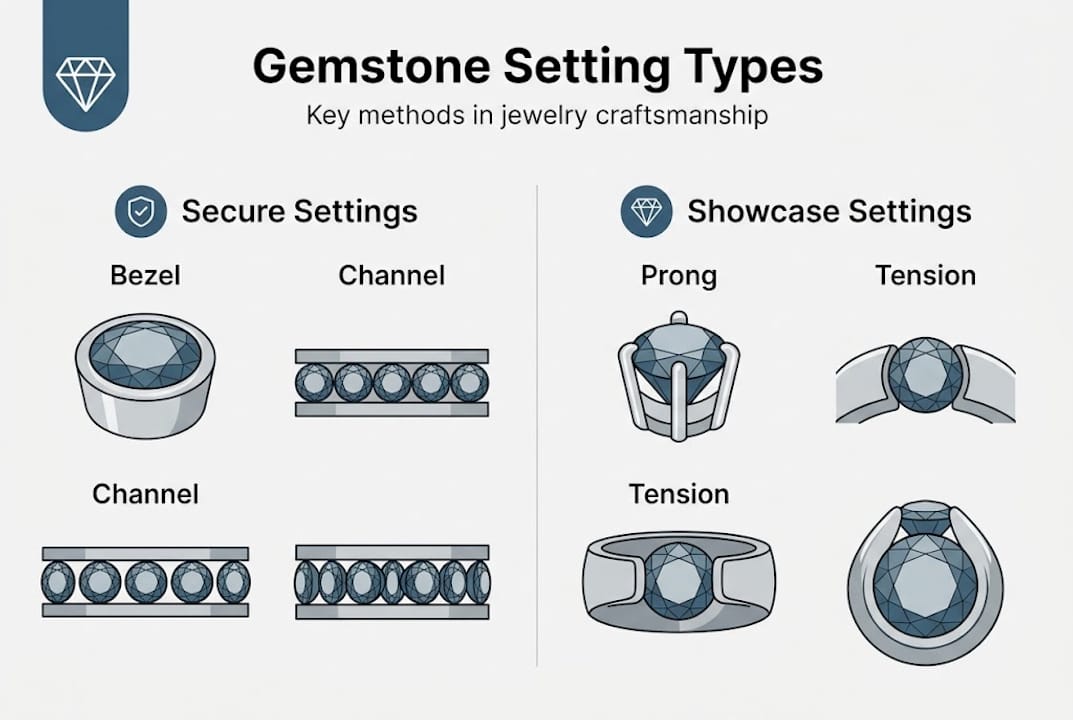
There are seven main setting methods used in fine jewelry, and each one creates a distinct look and level of security. Here’s a breakdown of the most important ones:
- Prong setting: The most classic choice. Metal claws grip the stone at its girdle, allowing maximum light to enter from all angles. This is why prong-set diamonds appear so brilliant.
- Bezel setting: A continuous metal band encircles the stone completely. It’s one of the most protective options and gives a modern, minimalist look. For more detail, the bezel setting guide covers everything from metal choices to stone compatibility.
- Channel setting: Stones are set into a grooved channel of metal with no prongs separating them. Common in wedding bands, this setting gives a smooth, streamlined appearance.
- Pavé setting: Tiny stones are set very close together, held by small beads of metal, creating a surface that appears fully covered in sparkle.
- Tension setting: The stone is suspended between two metal ends, held in place by the spring tension of the metal itself. This looks striking but requires precise engineering.
- Flush setting: The stone sits recessed into the metal surface so that it’s level with or slightly below the top of the band. Clean, subtle, and very durable.
- Cluster setting: Multiple smaller stones grouped closely together to mimic the look of one large stone. Great for bold, vintage-inspired designs.
| Setting type | Light entry | Durability | Best for |
|---|---|---|---|
| Prong | High | Moderate | Diamonds, sapphires |
| Bezel | Moderate | Very high | Everyday wear, soft stones |
| Channel | Low | High | Wedding bands, side stones |
| Pavé | High | Moderate | Accent stones, halos |
| Tension | Very high | Requires care | Statement pieces |
| Flush | Low | Very high | Active lifestyles |
| Cluster | High | Moderate | Vintage or bold designs |
Pro Tip: If you wear jewelry every day, especially rings, prioritize settings with higher durability like bezel or channel. Reserve prong and tension settings for pieces you wear occasionally or with care. Always check jewelry maintenance tips to understand what upkeep each setting requires before you buy.
The bezel setting details are particularly worth reviewing if you’re drawn to secure, modern pieces that still look polished and refined.
How gemstone setting affects jewelry quality
The setting does far more than hold a stone in place. It directly shapes the durability, comfort, and perceived value of the entire piece. A poorly executed setting, even on an expensive stone, can ruin a piece. Conversely, exceptional craftsmanship in setting can make a modest stone look extraordinary.
Consider the physical risks a setting protects against:
- Chipping: Hard impacts can crack stones, especially near their edges. Bezel settings guard these vulnerable edges effectively.
- Loss: Prongs can bend or break over time, especially with daily wear. Regular inspections matter.
- Scratching: Settings that allow stones to protrude above the metal surface are more exposed to surface scratches.
- Loosening: Pavé and channel settings can loosen if the metal is not properly hardened during the setting process.
Settings affect both the look and durability of a jewelry piece in ways that casual shoppers often overlook. A stone that feels wobbly, shows uneven prong spacing, or has visible gaps between the metal and the stone is a red flag for poor craftsmanship.
| Quality indicator | What to look for | What to avoid |
|---|---|---|
| Prong symmetry | Evenly spaced, same height | Bent, uneven, or sharp prongs |
| Stone fit | Stone sits flush, no wobble | Visible gaps, movement when touched |
| Metal finish | Smooth, polished surfaces | Rough edges, tool marks |
| Bezel fit | Tight, even rim all around | Lifted or uneven bezel edges |
A well-set stone should feel like it was born in its setting. No rattle, no gap, no sharp edges catching on fabric.
Comfort matters too. Settings with sharp prong edges or protruding metalwork can snag clothing, scratch skin, or feel uncomfortable during daily wear. Flush and bezel settings are frequently recommended for people with active lifestyles for exactly this reason.

Knowing how to identify quality gemstones and their settings together gives you a real advantage when investing in fine jewelry. And once you own a piece, understanding how to care for the setting is just as important. Learning about maintaining settings properly extends the life of the piece significantly.
Selecting the right gemstone setting for your style
Choosing a setting is personal. It should reflect your lifestyle, taste, and how you plan to wear the piece. Settings help express personal style and influence daily wearability in ways that make this decision genuinely important, not just aesthetic.
Here’s how to think through your choice:
- Active lifestyle: Go for bezel, flush, or channel settings. These keep stones secure and avoid snagging during exercise or hands-on work.
- Minimal, everyday look: Bezel or tension settings give a sleek, modern finish that pairs well with casual and professional styles alike.
- Statement jewelry: Pavé, cluster, and prong settings offer maximum visual impact, perfect for special occasions and formal events.
- Delicate or soft stones: Softer gemstones like turquoise, opal, or malachite need protective settings. Bezel is often ideal.
- Maximizing brilliance: If sparkle is your priority, choose a prong or tension setting that lets light reach the stone from multiple angles.
You should also think about the stone itself. Exploring choosing meaningful gemstones helps align your stone choice with the right setting, because some stones are too soft or too fragile for exposed settings. For a broader overview of what factors matter before you purchase, the gemstone selection tips resource is highly practical.
Always ask your jeweler specific questions: How often does this setting need to be checked? Can it be resized without damaging the setting? What cleaning method is safe for this combination of metal and stone?
Pro Tip: Before buying, ask your jeweler to tilt the piece under light so you can watch how the setting interacts with the stone. A quality setting will show no movement and catch light beautifully from every angle. Refer to the gemstone choosing guide if you want a structured approach to narrowing down your options.
Why gemstone setting reveals true craftsmanship
Here’s something most jewelry shoppers get wrong. They spend hours comparing carats, metal purity, and brand names, but they barely glance at the setting. That’s backwards. The setting is where a jeweler’s true skill either shows or breaks down.
Anyone can source a beautiful diamond. Not everyone can set it in a way that’s perfectly symmetrical, structurally sound, and visually elegant all at once. When we look at pieces we’re truly proud of, it’s the precision of exploring setting artistry that separates an heirloom from a throwaway purchase.
Mass-produced jewelry cuts corners on setting work. Prongs are stamped rather than shaped by hand. Bezels are machine-rolled rather than fitted individually to the stone. The difference is subtle to untrained eyes but immediately obvious to anyone who knows what to look for. A handcrafted setting has character. It has intentionality. It tells you someone cared enough to get it exactly right.
The real luxury in fine jewelry is not the stone alone. It’s the skill and artistry used to honor that stone through expert setting. That is what creates lasting value.
Explore fine, handcrafted gemstone jewelry
If reading this has inspired you to invest in jewelry that truly reflects the craft behind it, you’re in the right place. At Malibu Vibes Jewelry, every piece is handcrafted in Los Angeles with the kind of attention to setting detail this article describes.

From expertly executed bezel settings to brilliant prong designs, our bezel jewelry collection showcases what secure, thoughtful craftsmanship looks like in practice. If color and sparkle are your priority, explore our color gemstone rings crafted in 14k gold with stones that are set to last. Want to go deeper? Our fine jewelry making process page walks you through every stage of how our pieces are made, from stone selection to final setting inspection.
Frequently asked questions
What is the most secure gemstone setting?
The bezel setting offers strong security for gemstones because it wraps a full metal rim around the stone, protecting its edges from all sides.
Can gemstone settings affect the look of jewelry?
Absolutely. Settings influence appearance and brilliance by controlling how much light reaches the stone and how the metal frames it visually.
How do you clean jewelry with gemstone settings?
Use a soft brush with mild soapy water and rinse thoroughly. Gentle cleaning is advised for all settings, as harsh chemicals can weaken metal and dull stones over time.
Do different stones require special settings?
Softer stones need protective settings like bezels to shield their edges from impact, while harder stones like diamonds can handle more exposed styles such as prong or tension settings.
Recommended
- 7 Essential Types of Gemstone Cuts Every Jewelry Lover Should Know – Malibu Vibes Jewelry
- How to Identify Quality Gemstones for Fine Jewelry Online – Malibu Vibes Jewelry
- The Art of Gemstone Selection: Essential Tips You Need – Malibu Vibes Jewelry
- 7 clear signs of quality jewelry every woman should know – Malibu Vibes Jewelry
- How Craftsmanship Shapes Luxury Watch Value and Artistry – OP