

TL;DR:
- Jewelry coordination involves selecting pieces that match your outfit’s color, scale, and occasion for a polished look. Matching metal tones, proper layering, and choosing jewelry based on neckline and event ensure a cohesive appearance. Keeping accessories simple in professional settings and more expressive for casual or formal events creates balanced and stylish outfits.
Jewelry coordination is the practice of selecting pieces that align with your outfit’s color palette, scale, and occasion to create a unified, intentional look. Knowing how to match jewelry with outfits separates a polished appearance from one that feels thrown together. The core factors are metal tone, proportion, neckline, and dress code. Get these right, and every outfit you wear tells a complete story.
How does color coordination influence jewelry and outfit pairing?
Color is the first decision in any jewelry and outfit coordination. Metal tone sets the foundation. Gold reads warm and pairs naturally with earth tones, camel, olive, burgundy, and cream. Silver reads cool and complements navy, gray, black, white, and jewel tones like sapphire or emerald. Rose gold sits between the two and works well with blush, mauve, and dusty pink.
Contrast is just as valid as matching. A silver pendant against an all-black outfit creates clean visual tension. A bold turquoise stone against a white linen dress draws the eye without competing with the fabric.
Matching jewelry metal to garment hardware like buttons and zippers creates a polished, intentional appearance beyond just matching skin tone. If your blazer has gold buttons, gold jewelry ties the look together. If your jeans have silver rivets, silver or white gold pieces keep the outfit cohesive.
Mixing metals is acceptable when you follow the 60/30/10 rule for metals: 60% primary metal, 30% secondary, and 10% accent. This ratio maintains visual balance. For example, a gold layered necklace set as the 60%, a silver ring as the 30%, and a small rose gold charm as the 10% creates a curated, not chaotic, result.
Pro Tip: Lay your outfit flat and place your jewelry on top before wearing it. This quick visual test reveals clashes and imbalances before you leave the house.
- Warm outfits (rust, mustard, brown, cream): yellow gold, copper, amber stones
- Cool outfits (navy, gray, black, white): silver, white gold, platinum, sapphire or clear stones
- Neutral outfits (beige, blush, taupe): rose gold, pearl, muted gemstones
- Bold or patterned outfits: stick to one simple metal tone and avoid competing stones
What role does outfit style and occasion play in choosing jewelry?
Occasion is the filter that determines scale, formality, and restraint. The same diamond pendant that looks perfect at a dinner party can feel excessive at a Monday morning meeting. Reading the dress code before selecting jewelry prevents mismatches in tone.
Professional and workplace settings call for quiet, refined pieces like diamond studs under 0.25ct or bezel-set pendants. Pieces should not make noise or distract during movement. A single delicate chain or a pair of small hoops communicates professionalism without sacrificing style. Minimalist jewelry is the default for office environments.
Casual and social settings open the door to expression. A weekend brunch outfit pairs well with layered necklaces, stacked rings, or bold hoop earrings. The key is that casual dressing allows more volume and personality in your accessories.
Formal events call for intentional restraint paired with quality. One statement piece, such as a chandelier earring or a diamond tennis bracelet, carries the look. Adding more competes with the outfit rather than completing it.
- Office or professional: small studs, thin chains, bezel-set pendants, no bangles that clatter
- Casual day out: layered necklaces, stacked rings, medium hoops, colorful stones
- Evening or cocktail: one statement earring or necklace, fine chains, gemstone accents
- Formal or black tie: single high-quality statement piece, diamond or pearl jewelry, minimal layering
- Outdoor or active: minimal and secure pieces, small studs, simple bands, nothing that snags
How to layer and stack jewelry pieces effectively with outfits
Layering is the most misunderstood skill in jewelry styling. Done right, it looks intentional and editorial. Done wrong, it looks cluttered and distracting. The difference comes down to spacing, focal zones, and count.
Getting necklace lengths right
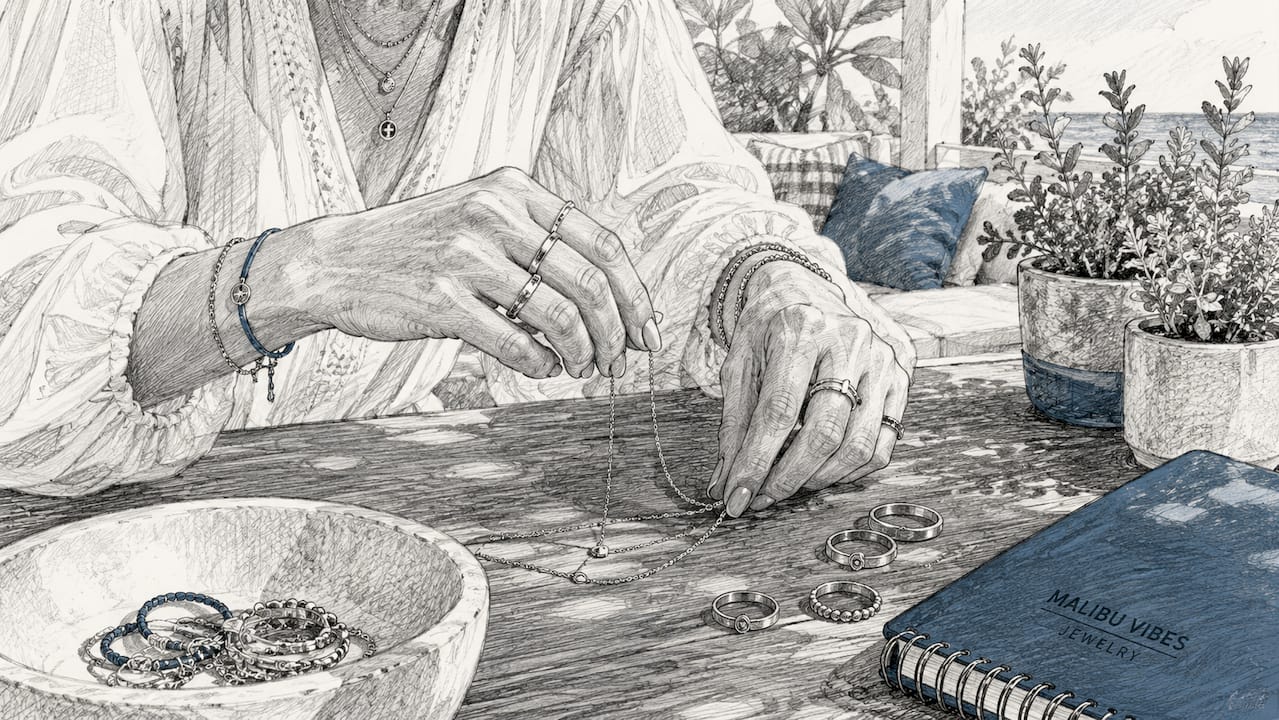
Layering necklaces requires chain lengths spaced at least 2 inches apart: 14–16 inches for a collar length, 18–20 inches for a princess length, and 22–24 inches for a statement drop. This spacing prevents tangling and keeps each piece visible. A common mistake is layering two chains of the same length. They merge into one visual line and lose their individual impact. For more detail on building these combinations, Malibuvibesjewelry’s guide on layering necklace techniques covers chain pairings for 2026 looks.
Choosing your focal zone
Pick either the neck or ears as your primary focus when building a layered look. Maximalism works in one zone, rarely both, unless every piece is very fine and delicate. If you are wearing a three-layer necklace stack, keep earrings small. If you are wearing dramatic chandelier earrings, skip the necklace or wear a single thin chain.
Stacking rings and bracelets
Odd numbers of stacked rings or bracelets appear more curated and intentional than even numbers. Three rings read as a considered choice. Four rings read as an accident. The same logic applies to bracelets. Stack three thin bangles rather than two or four.
Pro Tip: Mix textures within the same metal family for depth without chaos. Pair a hammered gold band with a smooth gold chain ring and a twisted gold midi ring. All gold, but visually interesting.
Here is a quick comparison of layering approaches by occasion:
| Occasion | Necklace layers | Earring scale | Ring count |
|---|---|---|---|
| Office | 1 delicate chain | Small studs | 1–2 rings |
| Casual | 2–3 layered chains | Medium hoops | 3 stacked rings |
| Evening out | 1–2 fine chains | Statement earrings | 1–2 rings |
| Formal event | 1 statement necklace | Elegant drops | 1 cocktail ring |
How to match jewelry with different necklines and outfit types
Neckline is the single most practical guide for jewelry selection. The shape of your collar determines which pieces enhance the outfit and which ones disappear or compete.
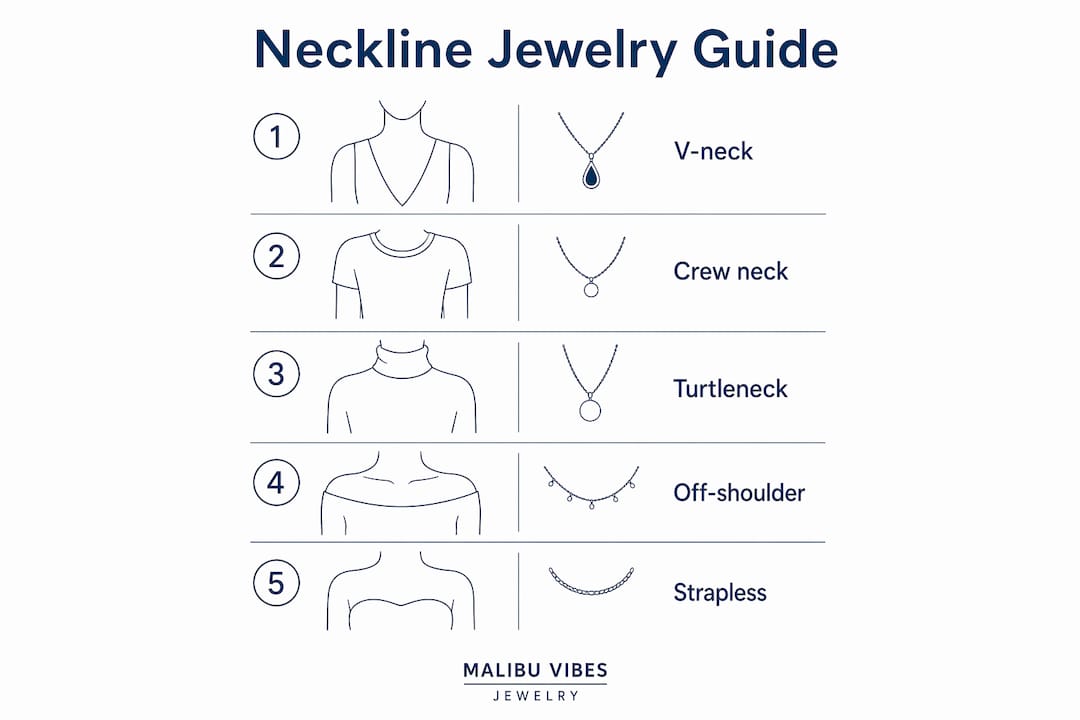
A V-neck creates a natural triangle that a pendant necklace follows perfectly. A 16–18 inch chain with a small pendant drops right into the V and draws the eye down. Avoid chokers with V-necks. They cut across the line and break the visual flow.
A crew neck or round neck works best with a choker or a short 14–16 inch necklace that sits just above the fabric. Longer chains disappear behind the collar. Statement earrings become the better choice when the neckline is high and closed.
Turtlenecks and high-neck garments require skipping necklaces entirely or choosing a long chain that falls below the fabric. Short necklaces disappear into the turtleneck or create an awkward visual clash at the collar line. Long pendant necklaces worn over the fabric are the exception that works.
An off-shoulder or strapless neckline exposes the collarbone and shoulders. A statement necklace or a bold collar piece shines here. Alternatively, dramatic earrings draw attention upward and frame the face beautifully.
| Neckline | Best jewelry choice | What to avoid |
|---|---|---|
| V-neck | Pendant necklace, 16–18 inch chain | Chokers, chunky collars |
| Crew neck | Choker, short chain, statement earrings | Long pendant chains |
| Turtleneck | Long chain below fabric, bold earrings | Short necklaces |
| Off-shoulder | Statement collar, chandelier earrings | Delicate studs that get lost |
| Scoop neck | Layered chains, medium pendants | Very long chains |
Fabric and pattern also influence the choice. A heavily patterned dress competes with bold jewelry. Solid fabrics give jewelry room to breathe and stand out. Textured fabrics like tweed or boucle pair better with simple, clean metal pieces rather than ornate stones that fight the surface detail.
Key takeaways
Matching jewelry with outfits requires aligning metal tone, scale, neckline, and occasion before adding a single piece.
| Point | Details |
|---|---|
| Color coordination first | Match metal tone to outfit warmth and garment hardware for a cohesive look. |
| Occasion sets the scale | Professional settings call for small, quiet pieces; casual and formal settings allow more expression. |
| Spacing prevents clutter | Layer necklaces at least 2 inches apart in length to keep each piece visible and distinct. |
| Pick one focal zone | Commit to either neck or ears for statement pieces; keep the other zone minimal. |
| Odd numbers stack better | Three rings or bracelets read as intentional; even numbers often look accidental. |
What I’ve learned from years of watching jewelry make or break an outfit
Most people over-accessorize because they are not confident in the pieces they own. They add more to compensate. The result is noise, not style.
The fix is a jewelry capsule of 5 to 12 versatile pieces that work across occasions. This approach prevents impulse buying and eliminates the frustration of owning jewelry that never gets worn. A single pair of diamond stud earrings, one delicate gold chain, one statement ring, and one versatile bracelet will outperform a drawer full of trendy pieces every time.
The other mistake I see constantly is treating jewelry as an afterthought. People dress, then grab whatever is on the nightstand. Intentional styling means choosing jewelry at the same time as the outfit, not after. That shift alone changes the result dramatically.
Proportion is the rule most people skip. A petite frame wearing an oversized collar necklace looks overwhelmed. A tall person wearing a tiny stud earring loses the piece entirely. Scale your jewelry to your frame and your outfit’s visual weight. A structured blazer can carry a bolder piece. A flowy sundress calls for something lighter.
Experiment freely, but always come back to these three questions: Does the metal tone work with the outfit? Does the scale fit the occasion? Am I working in one focal zone or two? Answer those honestly, and you will rarely go wrong.
— Ara
Discover Malibuvibesjewelry pieces built for every outfit
Malibuvibesjewelry designs fine jewelry with outfit coordination in mind. Every piece is handcrafted in Los Angeles using 14k gold, sterling silver, and genuine diamonds or gemstones, built to transition from casual to formal without effort.

The sterling silver collection covers cool-tone wardrobes with minimalist and statement options. The solid gold necklaces are made for layering, with clean chains at lengths that stack without tangling. If you want to build a capsule wardrobe of fine jewelry that works across every occasion, Malibuvibesjewelry’s curated collections are the place to start. Quality over quantity is the entire philosophy.
FAQ
What is the easiest rule for matching jewelry with outfits?
Match your metal tone to the warmth of your outfit. Warm colors pair with gold, cool colors pair with silver, and neutral outfits work with rose gold or pearl.
Can you mix gold and silver jewelry in one outfit?
Yes, mixing metals works when one metal dominates. Follow the 60/30/10 rule: 60% primary metal, 30% secondary, and 10% accent to keep the look balanced.
What jewelry works best for a professional or office setting?
Small diamond studs, bezel-set pendants, and thin chains are the best choices for work. Pieces should be quiet, refined, and free of noise or distraction during movement.
How many necklaces can you layer at once?
Two to three necklaces is the practical limit for most outfits. Space each chain at least 2 inches apart in length to prevent tangling and keep each piece visible.
What jewelry should you wear with a turtleneck?
Skip short necklaces entirely with turtlenecks. Choose a long chain that falls below the fabric, or let bold earrings carry the look instead.