

Many believe all gold jewelry automatically appreciates, but investing wisely requires understanding purity, craftsmanship, and market demand. Not all gold jewelry gains value over time—what you wear might lose more than gold price changes. This guide will reveal how handcrafted 14k gold jewelry offers a balance of luxury and lasting value for women investors. You will learn to identify investment-worthy pieces and avoid common pitfalls.
Table of Contents
- Understanding Gold Purity And Its Investment Value
- Why Handcrafted Gold Jewelry Holds Greater Investment Potential
- Comparing Gold Jewelry With Bullion As Investment Assets
- Common Misconceptions About Investing In Gold Jewelry
- Authentication, Appraisal, And Market Trends Impacting Investment Decisions
- Maintaining And Caring For Gold Jewelry To Preserve Investment Value
- Balancing Luxury And Investment: Practical Tips For Women Buyers
- Discover Investment Quality Gold Jewelry At Malibu Vibes
- Frequently Asked Questions About Investment Gold Jewelry
Key Takeaways
| Point | Details |
|---|---|
| Optimal Gold Purity | 14k gold contains 58.3% pure gold, balancing durability with investment value for everyday luxury wear. |
| Handcrafted Premium | Artisan pieces command 10 to 30% higher resale prices than mass-produced jewelry due to unique design and craftsmanship. |
| Authentication Matters | Certified appraisals increase resale confidence by 20% and help verify fair pricing while reducing fraud risk. |
| Jewelry vs Bullion | Investment jewelry retains about 85% of bullion metal value while offering dual purpose as wearable luxury and financial asset. |
| Care Preserves Value | Proper maintenance and storage boost resale value up to 15% by preventing damage and preserving aesthetic appeal. |
Understanding Gold Purity and Its Investment Value
Karat measures the amount of pure gold in an alloy. 14k gold equals 58.3% gold content mixed with other durable metals. This ratio creates the sweet spot for investment jewelry intended for everyday wear.
Higher karat means purer gold but less durability. A 24k gold ring bends easily and scratches quickly, making it impractical for daily use despite maximum purity. In contrast, 14k gold withstands regular wear while maintaining substantial gold content. US jewelry investment norms favor 14k and 18k gold for their balance of value and practicality.
Here are key karat levels you should understand:
- 24k (99.9% pure): Too soft for jewelry, primarily used in bullion
- 18k (75% pure): Excellent purity but less durable than 14k
- 14k (58.3% pure): Optimal balance for wearable investment pieces
- 10k (41.7% pure): More durable but lower gold content reduces investment appeal
Always look for certified hallmarks stamped inside jewelry to verify karat. Reputable jewelers provide authentication certificates confirming metal purity. These documents protect your investment and simplify future resale.
While 24k gold represents maximum purity, it lacks the structural integrity needed for jewelry that serves both aesthetic and investment purposes. The metal deforms under pressure and requires constant maintenance. For women seeking pieces they can wear regularly while preserving value, 24k falls short.
Pro Tip: Choosing 14k handcrafted pieces provides resilience and steady value retention for wearable luxury. This karat level survives years of use while maintaining enough gold content to track precious metal market trends.
Why Handcrafted Gold Jewelry Holds Greater Investment Potential
Artisan crafting imparts unique design, rarity, and brand prestige that raise value beyond gold content alone. Each handcrafted piece reflects hours of skilled labor and creative vision. These qualities attract collectors and buyers willing to pay premiums for authenticity.
Handcrafted pieces sell for 10 to 30% more on resale than mass-produced items. The difference stems from several factors: limited production runs create scarcity, artisan signatures build brand recognition, and superior construction ensures longevity. Mass market jewelry floods resale channels, driving prices down through oversupply.
Buyers increasingly prefer sustainable, ethically handcrafted jewelry as signs of quality and sound investment. This shift reflects growing awareness about manufacturing conditions and environmental impact. When you invest in handcrafted jewelry, you support transparent supply chains and skilled artisans.
Craftsmanship affects collectible status dramatically. Signed pieces from recognized artisans or established brands command higher prices at auction and through private sales. The emotional appeal for gifting also elevates value. Recipients treasure handcrafted items as meaningful gestures rather than generic purchases.
Consider these handcrafted advantages:
- Unique designs that stand out in crowded markets
- Superior construction quality that extends lifespan
- Traceable provenance that builds buyer confidence
- Brand storytelling that creates emotional connections
- Limited editions that maintain scarcity value
“Investment jewelry must balance precious metal content with artistry. Handcrafted pieces from reputable makers consistently outperform mass market alternatives because buyers recognize and reward genuine craftsmanship. The maker’s reputation becomes part of the asset’s value.”
Pro Tip: Prioritize brands with transparent provenance and recognized craftsmanship certifications for lasting investment security. Documentation proving origin, maker identity, and production methods protects against counterfeits while supporting resale negotiations. Understanding luxury jewelry markers helps you identify pieces with staying power.
Comparing Gold Jewelry with Bullion as Investment Assets
Gold jewelry and bullion serve different investment purposes. Understanding their distinct characteristics helps you allocate resources wisely based on your goals. Both offer exposure to gold prices, but their practical applications differ significantly.
| Feature | Gold Jewelry | Gold Bullion |
|---|---|---|
| Purity | Typically 14k to 18k (58% to 75%) | 99.9% pure gold (24k) |
| Value Retention | ~85% of bullion metal value | 100% tracks spot gold price |
| Aesthetic Use | Wearable luxury for daily enjoyment | No aesthetic or fashion function |
| Gifting Appeal | High emotional and symbolic value | Limited personal meaning |
| Liquidity | Requires appraisal, slower to sell | Quickly convertible to cash |
| Design Premium | Adds 15% to 30% for craftsmanship | No design element or premium |
Jewelry retains about 85% of bullion’s metal value due to design premiums and artisan fees. This difference isn’t loss but reflects jewelry’s dual nature. You pay for both gold content and wearable art. The 15% gap covers craftsmanship, brand value, and aesthetic design.
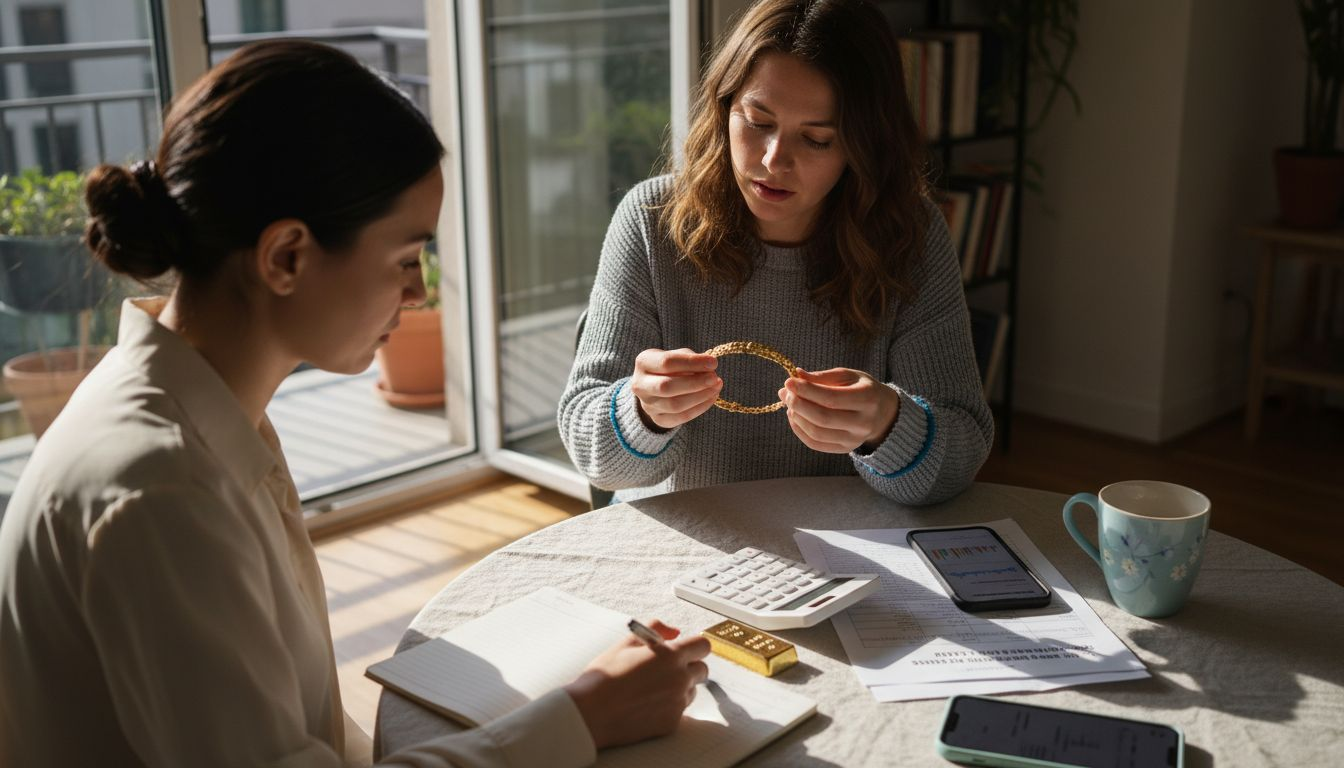
Jewelry offers dual value as luxury wearable and investment asset. You enjoy pieces daily while they maintain monetary worth. This combination particularly appeals for gifting, where emotional significance multiplies financial value. Recipients cherish jewelry in ways impossible with bullion bars.
Bullion serves as pure gold store but lacks emotional or fashion dimensions. Investors choose bullion for maximum metal exposure and simplest liquidation. However, bullion sits in safes providing no enjoyment until sold.
Consider these jewelry investment advantages:
- Daily wearability adds lifestyle value
- Gifting creates meaningful life moments | Enhanced aesthetic appeal justifies premiums
- Handcrafted pieces appreciate through brand recognition
Bullion investment limitations include:
- Zero aesthetic or emotional satisfaction
- Storage costs and security concerns
- No craftsmanship premium to capture upside
- Limited personal utility before liquidation
For women seeking jewelry and bullion investment comparison, the choice depends on priorities. Pure financial exposure favors bullion. Combining luxury enjoyment with value preservation favors quality jewelry.
Common Misconceptions About Investing in Gold Jewelry
False beliefs about gold jewelry investments cost buyers thousands annually. Correcting these misconceptions ensures you make informed decisions aligned with both financial and luxury goals. Let’s address the most damaging myths directly.
-
All gold jewelry automatically appreciates over time: Reality shows that poorly made pieces, outdated designs, and low karat gold often lose value faster than inflation erodes purchasing power. Only quality pieces from reputable makers with timeless appeal maintain or grow value.
-
Higher karat always means better investment: This myth ignores durability considerations critical for wearable jewelry. A 22k bracelet that bends after six months of wear loses more value through damage than its extra gold content provides. The 14k alternative survives decades of use.
-
Mass produced jewelry equals handcrafted in investment value: Mass market pieces flood resale channels, creating oversupply that depresses prices. Handcrafted items maintain scarcity value. Factory made jewelry often loses 40% to 60% of purchase price immediately.
-
Brand names don’t matter for investment: Brand reputation dramatically affects resale pricing. Established makers with quality track records command premiums because buyers trust their craftsmanship and authenticity. Unknown brands struggle to find buyers willing to pay fair prices.
-
Trendy designs hold value like classic styles: Fashion trends fade quickly. Statement pieces reflecting current fads become dated within years. Timeless designs maintain appeal across decades, preserving market demand.
Each myth stems from misunderstanding how jewelry markets actually function. Gold content matters, but design quality, brand reputation, craftsmanship level, and style longevity equally influence value retention. Successful jewelry investment requires evaluating all factors together.
Pro Tip: Always verify hallmark and brand authenticity to avoid overpaying for trendy or low quality pieces. Request certificates of authenticity and check maker credentials before purchasing. Research resale prices for similar items to gauge realistic value expectations. Steer toward timeless designs from reputable makers rather than chasing fads that quickly depreciate.
Authentication, Appraisal, and Market Trends Impacting Investment Decisions
Professional authentication and appraisal protect your investment from fraud while establishing fair market value. Certified appraisals improve resale reliability by 20% by providing third party validation buyers trust. Never skip this critical step.
Appraisals encompass several essential components. Karat verification confirms metal purity through scientific testing rather than relying on stamps alone. Craftsmanship assessment evaluates construction quality, finish work, and setting security. Condition reports document current state including any damage or wear requiring repair.
Growing consumer demand for sustainable, ethically handcrafted jewelry impacts market values significantly. Annual growth in this segment reaches 12%, driven by younger buyers prioritizing transparency and environmental responsibility. Pieces with documented ethical sourcing command premiums as this trend accelerates.
Appraisals help you track market trends and verify price fairness before purchasing. An experienced appraiser compares your potential purchase against recent sales of comparable items. This prevents overpaying based on seller claims unsupported by market data.
Follow these authentication steps:
- Request certificates of authenticity from sellers before purchase
- Verify hallmarks match claimed karat and maker identity
- Schedule independent appraisal within 30 days of purchase
- Document all appraisal findings with photos and written reports
- Update appraisals every three to five years as markets shift
- Maintain all paperwork for insurance and future resale
Authentication and professional appraisal services typically cost $75 to $150 per piece. This expense pays for itself by preventing fraud and establishing accurate insurance values. Many buyers skip appraisals to save money, then discover their “investment” pieces are worth 50% less than purchase price.
Market trends currently favor handcrafted jewelry with clear provenance over anonymous mass market pieces. This shift creates opportunities for informed buyers who prioritize quality and authenticity. Prices for certified artisan work rise steadily while generic jewelry stagnates or declines.
Maintaining and Caring for Gold Jewelry to Preserve Investment Value
Proper care directly impacts long term value retention. Well maintained jewelry commands 15% higher resale prices than neglected pieces of identical quality. Small daily habits prevent damage that’s costly to repair.
Daily care practices preserve both beauty and structural integrity:
- Clean gently with soft cloths after wearing to remove oils and residue
- Avoid harsh chemicals including chlorine, bleach, and household cleaners
- Remove jewelry before exercising, swimming, or doing manual work
- Apply cosmetics, perfumes, and hairspray before putting on jewelry
- Dry thoroughly if exposed to water to prevent tarnish
Storage methods protect against scratches and tangling. Keep pieces in individual soft pouches or lined compartments. Never pile jewelry together where harder gemstones can scratch gold surfaces. Store in cool, dry locations away from direct sunlight and humidity.
Regular professional inspections catch problems early. Jewelers check prong security, clasp function, and general wear during routine maintenance. Addressing minor issues costs less than repairing major damage from neglect. Schedule maintenance visits semi annually for pieces worn frequently.
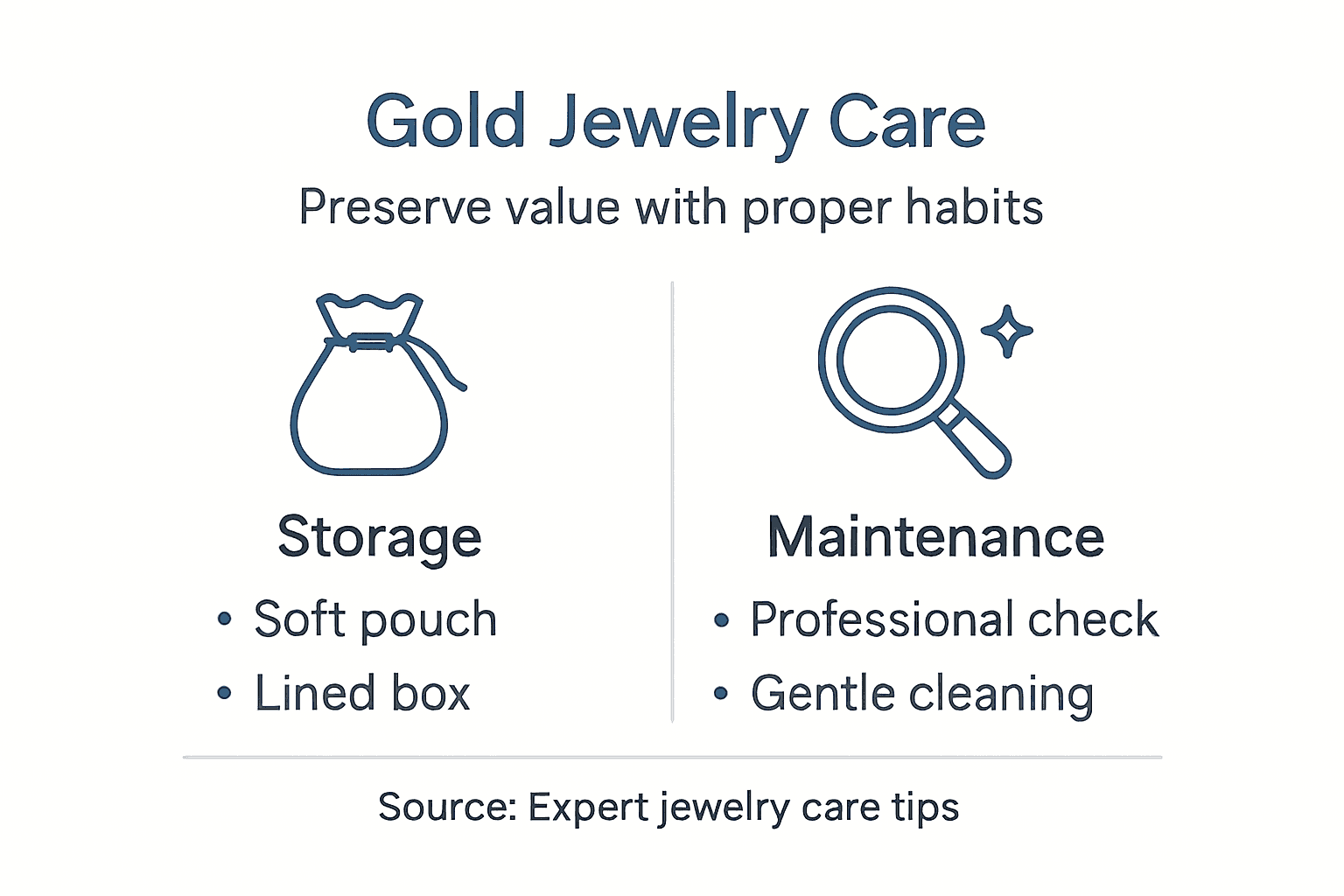
Professional cleaning restores original luster without risking damage from improper home methods. Jewelers use ultrasonic cleaners and appropriate solutions for different metals and stones. This service typically costs $20 to $50 per piece and dramatically improves appearance.
Consider these long term preservation strategies:
- Rotate pieces regularly rather than wearing same items daily
- Insure valuable jewelry with current appraisals
- Keep purchase receipts and certificates in secure storage
- Photograph pieces for documentation and insurance claims
- Track any repairs or modifications in maintenance logs
Pro Tip: Schedule semi annual cleaning and checks to maximize resale value and keep jewelry radiant. Mark calendar reminders to ensure consistency. Many jewelers offer free inspection with cleaning purchases. Proper storage techniques prevent most common damage types that reduce investment value.
Balancing Luxury and Investment: Practical Tips for Women Buyers
Smart purchasing balances emotional satisfaction with financial wisdom. You want pieces that bring daily joy while maintaining monetary value. This balance defines successful jewelry investment for women seeking both luxury and sound financial decisions.
Prioritize 14k handcrafted jewelry with classic, timeless designs. These pieces survive fashion cycles while providing enough gold content to track precious metal markets. Avoid overly trendy styles that date quickly or ultra high karat pieces too soft for regular wear.
Balance emotional value and market appreciation when selecting pieces. Jewelry you love enough to wear regularly provides lifestyle returns beyond financial metrics. However, ensure sentimental choices also meet quality standards supporting value retention. The best investments deliver both personal meaning and market staying power.
Purchase only from reputable jewelers who provide certification and provenance details. Transparent sourcing and authentication documentation protect your investment. Established retailers stand behind their products and assist with future appraisals or resale.
Key buying considerations include:
- Karat verification through certified hallmarks and testing
- Artisan brand reputation and track record
- Design longevity and timeless aesthetic appeal
- Appraisal availability from independent experts
- Return policies and satisfaction guarantees
- Craftsmanship quality visible in finish details
- Ethical sourcing and sustainability certifications
Research market prices before purchasing to avoid overpaying. Compare similar pieces across multiple retailers. Understand that handcrafted premiums of 20% to 40% above bullion value reflect legitimate craftsmanship costs. Higher markups often indicate overpricing rather than superior quality.
Pro Tip: Track market trends but trust personal style and reputable craftsmanship to ensure lasting satisfaction. Gold prices fluctuate, but quality pieces from respected makers maintain value across market cycles. Your jewelry should enhance your life daily, not sit unused in safes waiting for perfect selling moments.
Investment success in gold jewelry comes from selecting pieces that serve multiple purposes: aesthetic enjoyment, meaningful gifting, and financial value preservation. Women who master this balance build collections that enrich their lives while protecting wealth.
Discover Investment Quality Gold Jewelry at Malibu Vibes
Malibu Vibes Jewelry specializes in handcrafted, certified 14k gold pieces that combine artistry with investment value. Every piece reflects Los Angeles based craftsmanship and meticulous attention to detail throughout production. You’ll find timeless designs perfect for luxury wear and meaningful gifts with lasting financial potential.
Browse curated collections including solid gold necklaces and 14k gemstone rings designed for women who value both beauty and smart investment. Transparent sourcing, authentication services, and commitment to sustainable practices ensure your purchases meet the highest standards. Discover jewelry that enhances your style today while preserving value for tomorrow.
Frequently Asked Questions About Investment Gold Jewelry
Is 14k gold the best karat for investment jewelry?
Yes, 14k gold offers the optimal balance between purity and durability for wearable investment pieces. It contains 58.3% pure gold while remaining strong enough for daily wear over decades. Higher karats like 18k or 22k bend and scratch more easily, reducing long term value through damage.
How does handcrafted jewelry affect investment value?
Handcrafted pieces command 10% to 30% higher resale prices than mass produced jewelry. The premium reflects unique designs, superior construction, and artisan reputation. Buyers pay more for authenticity and craftsmanship that mass market pieces cannot replicate.
Can mass produced gold jewelry appreciate over time?
Mass produced pieces typically depreciate rather than appreciate because oversupply floods resale markets. Generic designs lack the scarcity and craftsmanship premiums that drive value growth. Most mass market jewelry loses 40% to 60% of purchase price immediately upon resale.
Why is appraisal important before buying investment jewelry?
Professional appraisal ensures authenticity and fair pricing by providing independent verification of metal purity, craftsmanship quality, and current market value. Certified appraisals increase resale confidence by 20% and protect against fraud or overpaying. They establish documented value for insurance and future sales.
How should I care for gold jewelry to preserve investment value?
Clean jewelry gently after each wearing, store pieces separately in soft pouches, and schedule professional inspections semi annually. Remove jewelry before exercising or using chemicals. Proper maintenance boosts resale value up to 15% by preventing damage and preserving original condition.
Recommended
- Understanding Why Invest in Gold Jewelry: A Comprehensive Guide – Malibu Vibes Jewelry
- Complete Guide to Why Invest in Fine Jewelry – Malibu Vibes Jewelry
- Understanding Jewelry as an Investment: Key Insights – Malibu Vibes Jewelry
- What is Gold Filled Jewelry? Understanding Its Value – Malibu Vibes Jewelry