

TL;DR:
- Jewelry style in 2025 emphasizes intentional layering, metal mixing, and bold statement pieces that reflect personality.
- Mastering these trends involves selecting a strong foundation, pairing metals with consistent finishes, and choosing one focal jewelry item per look.
Jewelry styling in 2025 is defined by intentional layering, thoughtful metal mixing, and bold statement pieces that reflect who you are. Stylist Jo Hill and trend guides from sources like Design Signal confirm that the most polished looks combine a strong foundational base with carefully chosen accents. The 2025 jewelry trends shaping this year reward women who treat their jewelry as a personal signature, not an afterthought. Mastering these jewelry styling tips for 2025 means reading your outfit, your metals, and your mood before you reach into the jewelry box.
1. How to layer necklaces for a modern 2025 look
The gold standard for layered necklaces is the 16, 18, and 20 inch trio, with 2 inches of spacing between each chain. That spacing gives each piece visual breathing room and prevents the chains from tangling throughout the day. Estella’s approach to this classic trio has become one of the most referenced layering necklaces techniques in modern styling guides.
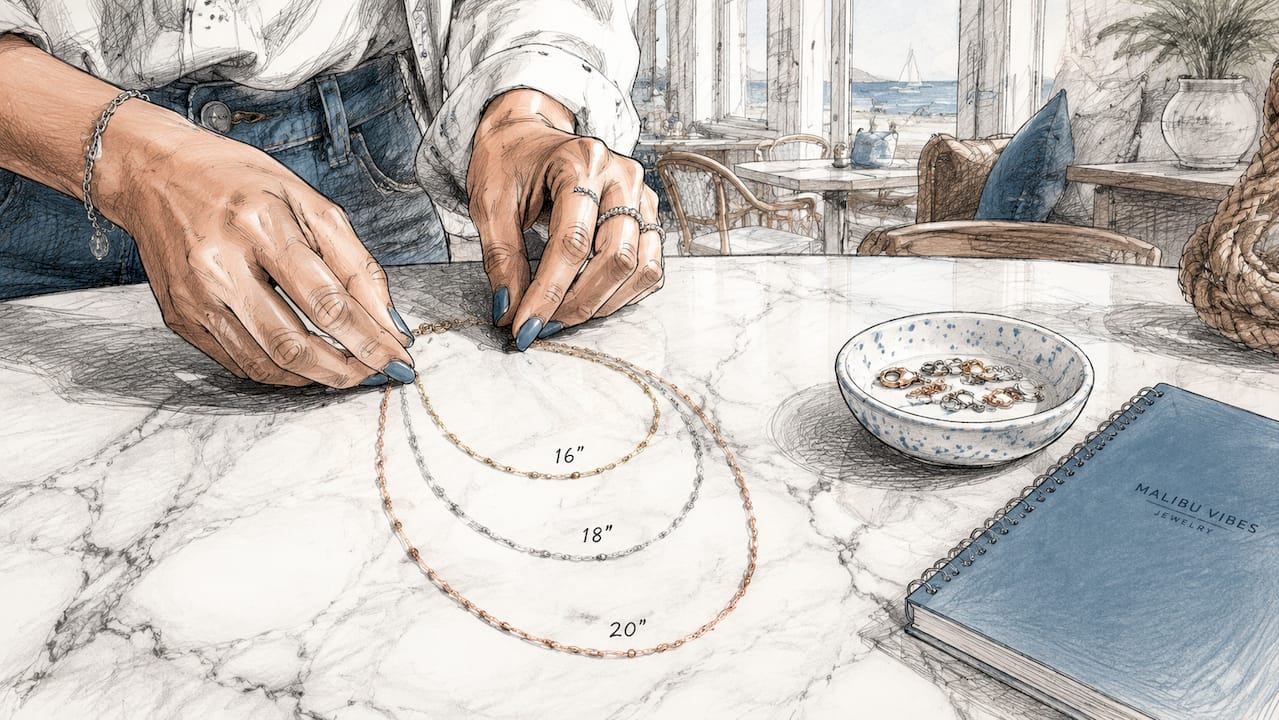
Texture is the second variable that separates a great layer from a flat one. Mixing a delicate cable chain with a herringbone or paperclip chain within the same metal family creates visual rhythm without visual noise. Staying within one metal family, such as yellow gold or white gold, keeps the look cohesive even when the chain styles differ dramatically.
Scale progression matters just as much as length. Start with the shortest, most delicate piece at the collar and increase both length and weight as you move down. This scale and rhythm principle mirrors how professional stylists build outfits from the inside out.
Layering do’s and don’ts:
- Do use the 16, 18, 20 inch spacing rule as your starting point
- Do mix textures within the same metal family for depth
- Do anchor the look with one pendant and keep the rest plain chains
- Don’t mix more than two metal families in a single necklace stack
- Don’t layer more than three necklaces unless the chains are very fine
- Don’t ignore neckline. A V-neck calls for a longer pendant; a crew neck suits a choker
Pro Tip: Add one vintage chain to a stack of contemporary pieces. The slight patina difference creates contrast that looks intentional and collected over time.
2. Mixing metals with style and sophistication
Metal mixing works when you follow one clear rule: your dominant metal should cover 60–70% of the visible surface, with accent metals filling the rest. That ratio keeps the look intentional rather than accidental. Wearing equal amounts of gold and silver reads as indecision; wearing mostly gold with a silver accent reads as confidence.
Finish consistency matters more than most women realize. Pairing polished gold with polished silver looks deliberate. Pairing polished gold with brushed silver looks like a mistake. Matching metal finishes rather than just metal colors is the single most overlooked rule in elegant jewelry combinations.
Rose gold is the most useful bridging tone in your collection. It sits between warm yellow gold and cool silver, making it the natural connector when you want to wear both in the same look. A rose gold ring in a stack of yellow gold and white gold pieces ties the two families together without forcing a choice.
| Finish combination | Visual result |
|---|---|
| Polished gold + polished silver | Intentional, sophisticated contrast |
| Matte gold + matte silver | Modern, editorial, cohesive |
| Polished gold + brushed silver | Mismatched, unintentional |
| Mixed finishes across all pieces | Chaotic, unfocused |
Pro Tip: When mixing metals across your wrists and neckline, keep the dominant metal consistent in both zones. If yellow gold leads at the neck, let it lead on the wrist too.
3. Selecting and styling statement jewelry pieces
Statement jewelry in 2025 means oversized rings, chunky necklaces, and colorful gemstone pendants worn with intention. Stylist Jo Hill describes this year’s direction as “statement everything,” a shift toward bold confidence over quiet minimalism. The key is pairing one strong piece with a restrained outfit so the jewelry does the talking.
Vintage-inspired rings are one of the strongest trends this season. Geometric shapes and stepped settings like baguette side stones and Art Deco silhouettes bring romantic nostalgia into modern wardrobes. A bold vintage-style ring on one hand reads as a statement; the same ring stacked with two plain bands on the same finger reads as a curated collection.
Ring stacking follows a simple visual rule: odd numbers look more balanced than even numbers. Three rings on one finger look polished. Four look crowded. Start with a statement ring as the anchor and build outward with thinner, simpler bands.
Statement piece styling tips:
- Pair one bold piece with a monochrome or neutral outfit
- Let a chunky necklace replace a scarf or collar detail
- Choose a gemstone pendant color that echoes one tone in your outfit
- Avoid stacking statement earrings with a statement necklace on the same look
- Mix one vintage piece with contemporary foundational jewelry for depth
- Keep your diamond rings as the focal point by keeping surrounding pieces simple
4. Ear stacking and bracelet layering for a personalized look
Ear stacking has no strict rules, and that freedom is exactly the point. Jo Hill describes ear stacking as a personal art show, a collection of pieces that grows and changes as your life does. Start with two or three studs and add pieces over time that mark moments: a birthstone, an initial, a shape that means something to you.
The most effective ear stacks mix scale deliberately. A small diamond stud at the lobe, a medium hoop at the second piercing, and a thin cuff at the helix creates a progression that draws the eye upward. Keeping all pieces in the same metal family prevents the stack from looking scattered.
Bracelet layering follows a different logic. Wearing bracelets over sleeves rather than under them turns arm jewelry into a design element instead of hiding it under fabric. A cuff worn over a chunky knit sleeve or a blazer becomes part of the outfit’s structure, not just an accessory.
Bracelet and ear stack tips:
- Start your ear stack with a classic stud before adding statement pieces
- Mix metal cuffs, chain bracelets, and beaded pieces for texture contrast on the wrist
- Layer three to five bracelets of varying widths for a balanced arm stack
- Pull sleeves back slightly to show the full bracelet stack when seated
Pro Tip: Let your bracelet stack echo your necklace metal. If you are wearing a solid gold necklace, anchor your wrist stack with a gold cuff and fill in with mixed textures.
5. How to build a versatile jewelry foundation
A strong jewelry foundation is the base that makes every other styling decision easier. Daily earrings, a signature necklace, and simple rings or bracelets form the core of a wardrobe that works across every occasion. These pieces do not compete with each other or with your outfit. They simply work.
The foundation pieces you choose should prioritize comfort and versatility above all else. A 14K gold chain you wear every day builds more styling value than a dramatic piece you reach for twice a year. DNSK Copenhagen’s everyday styling guide reinforces that a simple jewelry base makes adding trend pieces feel natural rather than forced.
When your foundation is solid, getting dressed becomes faster and more confident. You already know the base works. You are only deciding which accent pieces to add on top.
Steps to build your jewelry foundation:
- Choose one everyday necklace in your dominant metal at a length that suits your most common necklines
- Select daily earrings that are comfortable enough to wear for 12 hours without removing
- Add one simple ring or thin band that you wear on your dominant hand
- Pick one bracelet or cuff that pairs with both casual and dressed-up looks
- Keep all four foundation pieces in the same metal family for maximum interchangeability
- Rotate trend pieces and statement jewelry on top of this base, never replacing it
The everyday jewelry guide from Malibuvibesjewelry expands on how to select pieces that genuinely work across every outfit in your rotation.
Key takeaways
The most effective approach to jewelry styling in 2025 combines a reliable foundational base with intentional layering, consistent metal finishes, and one bold statement piece per look.
| Point | Details |
|---|---|
| Use the 16, 18, 20 inch rule | Space layered necklaces 2 inches apart to prevent tangling and create visual rhythm. |
| Follow the 60–70% metal ratio | Let one dominant metal lead and use accent metals sparingly for a polished result. |
| Match metal finishes, not just colors | Pairing polished with polished looks deliberate; mixing finishes reads as unintentional. |
| Build a foundational base first | Daily earrings, a signature necklace, and simple rings make trend pieces easier to add. |
| Stack rings in odd numbers | Three rings look balanced and refined; four or more look crowded on a single finger. |
Why balance beats trend-chasing every time
The most common mistake I see is treating jewelry styling as a checklist of current trends. Women buy the chunky chain because it is everywhere, then wear it with a bold earring and a stacked wrist and wonder why the look feels off. The problem is not the pieces. The problem is the absence of a hierarchy.
Every great jewelry look has one focal point. Everything else supports it. That principle does not change regardless of what is trending. In 2025, the layering and metal-mixing trends are genuinely exciting because they reward creativity. But creativity without structure just looks busy.
The advice I find most useful is this: dress your jewelry the way you dress your outfit. You would not wear a statement coat, a printed blouse, and bold trousers at the same time. The same restraint applies to jewelry. Pick your hero piece, then build quietly around it.
The women who wear jewelry best are not the ones with the most pieces. They are the ones who know which three pieces to reach for on any given morning. That clarity comes from a strong foundation and a clear sense of what you want the jewelry to say. The 2025 trends give you excellent raw material. How you edit them is what makes the look yours.
— Ara
Fine jewelry worth building your 2025 wardrobe around
Malibuvibesjewelry designs and handcrafts fine jewelry from its Los Angeles studio, with a focus on quality over quantity. Every piece in the collection is made to become a foundation piece or a statement anchor, not a throwaway trend buy.

The solid gold necklace collection is built for layering, with lengths and chain styles that follow the 16, 18, 20 inch principles covered in this guide. The sterling silver collection gives you the accent metal pieces that complete a mixed-metal look. For women who want to understand the craft behind the jewelry they wear, Malibuvibesjewelry’s fine jewelry making process shows exactly how each piece is made from start to finish.
FAQ
What are the best necklace lengths for layering in 2025?
The classic trio is 16, 18, and 20 inches, with 2 inches of spacing between each chain. This spacing prevents tangling and gives each necklace its own visual lane.
How do you mix metals without looking mismatched?
Keep your dominant metal at 60–70% of the visible surface and match finishes across pieces. Polished gold pairs with polished silver; matte with matte.
How many rings should you stack on one finger?
Stack rings in odd numbers, with three being the most balanced option. An odd-numbered stack looks more refined and intentional than an even-numbered one.
What is ear stacking and how do you start?
Ear stacking is the practice of wearing multiple earrings across the ear at once, mixing studs, hoops, and cuffs. Start with two or three simple pieces and add over time to reflect your personal style.
How do you style statement jewelry without overdoing it?
Pair one bold piece with a minimal outfit and keep surrounding jewelry simple. A statement necklace works best when earrings and bracelets stay understated.