

TL;DR:
- Owning many jewelry pieces often leads to unused items sitting in drawers because they are not suited for daily wear. Selecting durable, versatile pieces like 14K gold, sterling silver, or surgical steel helps ensure longevity and practicality. Building a small, curated collection with the right materials and styles allows for effortless daily styling across various occasions.
Most women own jewelry they rarely wear. The pieces sit in a drawer because they feel too dressy, too casual, or simply wrong for the day. Selecting everyday jewelry that actually gets worn requires more than picking what’s pretty. It means thinking about materials that survive real life, styles that pair with multiple outfits, and a personal signature that feels like you without requiring daily decisions. This guide gives you the practical, style-conscious framework to build a collection that pulls together any look, any day.
Table of Contents
- Key takeaways
- Selecting everyday jewelry: materials that actually hold up
- Jewelry types and styles built for daily wear
- How to build a practical everyday jewelry collection
- Styling your jewelry across different occasions
- Caring for and verifying your jewelry
- My honest take on building an everyday collection
- Find your everyday style at Malibuvibesjewelry
- FAQ
Key takeaways
| Point | Details |
|---|---|
| Choose durable metals | 14K gold and surgical steel handle daily wear far better than plated alternatives. |
| Stick to versatile staples | Studs, simple chains, and slim rings form the backbone of an everyday collection. |
| Apply the 2:1:1 rule | Two statement pieces, one medium, and one small keeps any look balanced and polished. |
| Build a capsule collection | A curated set of 5 to 7 pieces eliminates decision fatigue and covers most occasions. |
| Maintain what you invest in | Regular cleaning and proper storage protect both appearance and long-term value. |
Selecting everyday jewelry: materials that actually hold up
The most common mistake women make when choosing daily accessories is picking a piece based on looks alone without considering what it’s made of. A beautiful gold-toned necklace that turns green after three wears is not a bargain. The material is everything when you plan to wear something daily.
14K gold is the gold standard for a reason. It balances affordability and durability better than any other gold option, containing 58.3% pure gold with enough alloy mixed in to resist scratching during regular activity. Compared to 18K, it holds up better against the friction of daily life while still maintaining that true gold color you want. If you’re committing to fine jewelry for everyday wear, 14K gold is the ideal starting point.
Sterling silver is a classic and accessible choice, though it requires a bit more attention. It tarnishes when exposed to moisture and air, so you’ll want to store it properly and clean it regularly. That said, it pairs beautifully with almost every skin tone and wardrobe palette.
316L surgical-grade stainless steel is an underrated option. It’s highly corrosion resistant and hypoallergenic, which makes it ideal if you have sensitive skin or a nickel allergy. Price points typically range from $44.95 to $149.95, making it one of the most accessible options for building an everyday collection.
| Metal | Durability | Skin sensitivity | Price range |
|---|---|---|---|
| 14K gold | Very high | Low risk (nickel-free available) | $150 and up |
| Sterling silver | Moderate | Low to moderate | $30 to $200 |
| 316L stainless steel | Very high | Very low (hypoallergenic) | $45 to $150 |
| Gold-filled | Moderate | Moderate | $50 to $180 |
| Gold-plated | Low | Higher risk | $10 to $60 |
If you have known metal sensitivities, always look for nickel-free alloys or confirm the composition before purchasing. Many reactions attributed to “gold” jewelry are actually reactions to the nickel in lower-quality gold alloys.
Pro Tip: Always check for purity hallmarks before buying. A “14K” or “585” stamp on a piece confirms the metal is solid 14K gold, not gold-filled or plated. This matters enormously for longevity.
Jewelry types and styles built for daily wear
Once you’ve settled on materials, the next step is understanding which jewelry types translate best from morning coffee to a work meeting to evening plans. Not all styles wear equally well throughout the day.
Earrings are where most women start, and for good reason. Studs are the undisputed workhorse of casual jewelry selection. They stay in place, suit every neckline, and never overpower an outfit. Huggies and small hoops are equally practical. Comfortable daily-wear hoops typically measure 10 to 12 mm in inner diameter, sitting close to the ear without catching on clothing or pulling at the lobe.
Rings deserve careful thought around sizing. Ideal everyday ring bands measure 1.6 mm to 2.0 mm in width for both comfort and the practical reality of future resizing. Bands thinner than 1.6 mm are notoriously difficult to resize. Thicker bands can feel cumbersome if you’re typing, cooking, or exercising throughout the day.
Necklaces and chains offer the most styling flexibility. A delicate chain with a small pendant works alone or layered. A simple chain with no pendant reads as polished in virtually every setting.
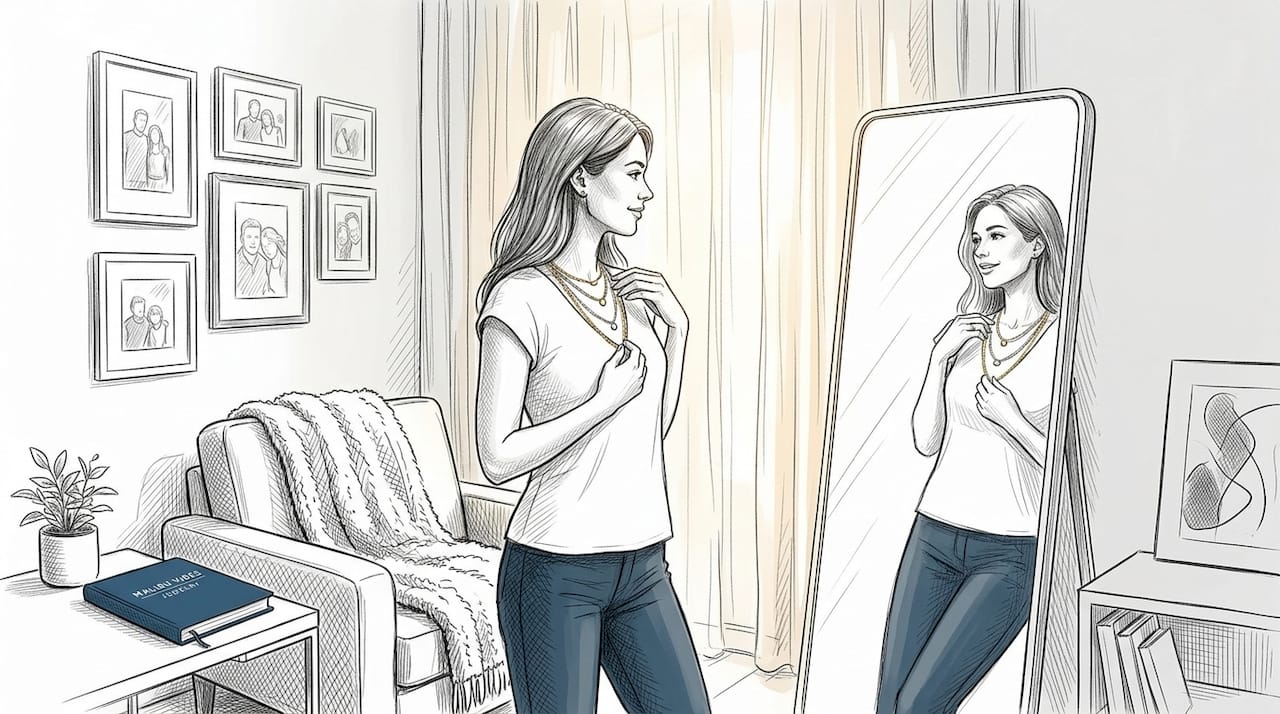
Bracelets should feel like they belong on your wrist rather than an afterthought. Slim bangles and tennis-style bracelets add visual interest without weighing down a look.
| Jewelry type | Recommended style | Best sizing | Occasion range |
|---|---|---|---|
| Earrings | Studs or huggies | 10 to 12 mm hoops | All occasions |
| Rings | Slim bands or simple gemstone | 1.6 to 2.0 mm width | All occasions |
| Necklaces | Fine chains, small pendants | 16 to 18 inch length | Casual to formal |
| Bracelets | Slim bangles, chain bracelets | Snug but not tight | Casual to smart casual |
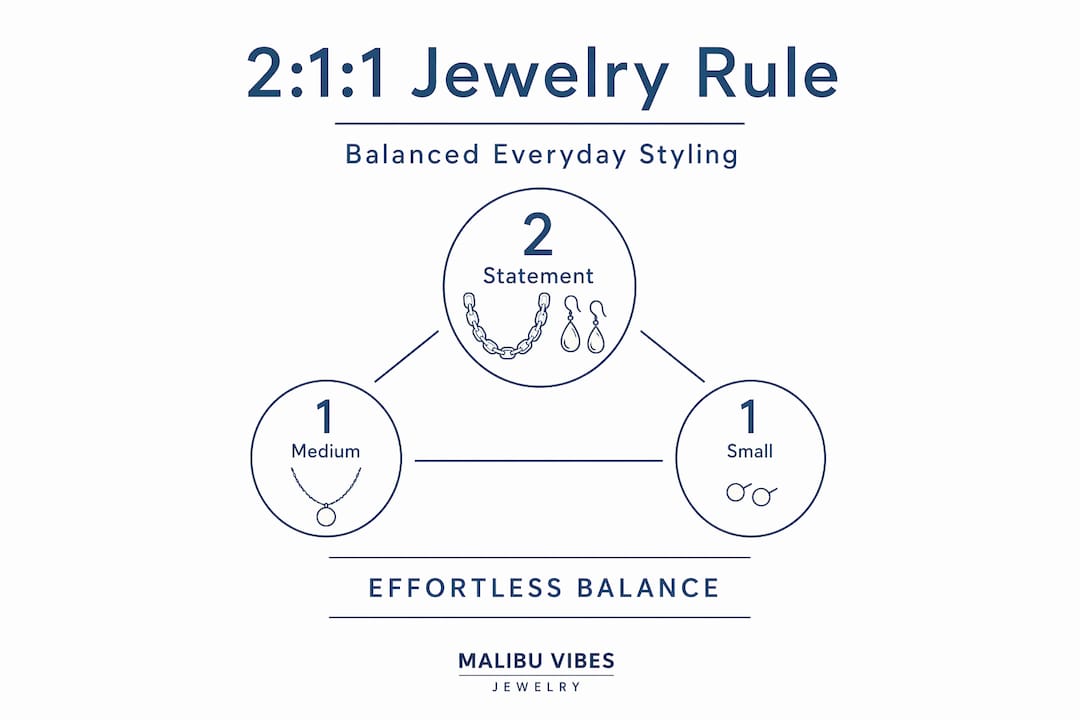
The 2:1:1 jewelry styling rule is the single most useful framework for putting together a balanced look. Wear two statement pieces, one medium piece, and one small piece. This prevents the “too much at once” effect while still giving your outfit dimension. For example: bold hoop earrings and a stacked ring set (two statement pieces), a layered necklace (medium), and a single delicate bracelet (small).
Pro Tip: Match metal tones to your skin’s undertone rather than your clothing. Warm undertones (yellow, peachy) look best with yellow gold. Cool undertones (pink, bluish) shine with white gold or silver. Neutral undertones can carry both.
How to build a practical everyday jewelry collection
Think of your everyday jewelry as a capsule wardrobe. You don’t need 40 pieces. You need 5 to 7 that work together, cover your daily range, and reflect your personal style. A curated accessory rotation makes daily styling genuinely effortless rather than a project. Here’s how to build yours:
- Identify your daily context. Are you mostly in a casual setting, a professional office, or a mix? This shapes which pieces earn a spot in your rotation.
- Choose one or two signature pieces. A meaningful charm, a birthstone ring, or an heirloom necklace that feels like you regardless of what’s trending. Your everyday jewelry as a personal signature is what makes a collection feel authentic rather than assembled.
- Fill in versatile basics. A plain gold or silver chain, small studs, and a simple band ring cover almost every situation.
- Add one or two intentional accent pieces. A layered necklace set, a pair of statement huggies, or a slim bracelet that adds something extra when you want it.
- Verify before you buy. Check for hallmarks, read the return policy, and confirm whether the piece comes with any warranty. Reputable jewelers stand behind their work.
- Check for the everyday fine jewelry balance between style and durability before committing to a purchase.
- Reassess every six months. Pieces you haven’t worn in six months are probably not actually serving you. Rotate them out.
Pro Tip: When mixing metals, stick to one dominant tone and let the other play a supporting role. An all-gold look with one white gold accent reads as intentional. A 50/50 split of gold and silver often reads as unplanned.
If you want to organize your collection so the right pieces are always accessible, invest in a simple tray or small jewelry stand. When you can see everything at once, you actually wear it all.
Styling your jewelry across different occasions
Knowing how to wear your pieces matters as much as owning the right ones. The best everyday jewelry tips aren’t about what to buy. They’re about how to combine what you have so the result feels intentional.
For casual days, lean into simplicity. A plain chain, small studs, and a single ring read as effortlessly pulled together. The temptation to add more is usually worth resisting. Elegant jewelry styling relies on deliberate restraint, using simpler pieces like fine chains, small pendants, and subtle motifs rather than piling on sparkle.
For professional settings, balance is the priority. One or two understated pieces keep the focus on you and your work, not your accessories. Avoid anything that makes noise, catches light dramatically, or draws excessive attention.
For evenings or special occasions, this is where your one or two statement pieces earn their keep. Swap the small studs for your statement huggies, or layer an extra necklace over your daily chain.
Layering necklaces is a skill that pays off fast. Space chain lengths 5 to 8 cm apart to avoid tangling and create genuine dimension. Mixing textures, such as a herringbone chain with a simple cable chain, adds visual interest without overwhelming. For a deeper look at this technique, the jewelry layering guide from Malibuvibesjewelry covers the specifics well.
Common styling mistakes to avoid:
- Wearing every piece you own at once because you can’t decide
- Matching jewelry so precisely to an outfit that it disappears entirely
- Ignoring neckline when choosing a necklace length (V-necks suit pendants; crew necks call for longer chains)
- Wearing the same exact stack every single day and never rotating for freshness
- Choosing oversized or overly trendy pieces that date your look within a season
Pro Tip: In warmer months, go lighter. Minimal gold chains and small studs suit the ease of summer. When temperatures drop and you’re layering clothing, layer jewelry too. Heavier textures and stacked rings work beautifully with cozy, layered outfits.
Caring for and verifying your jewelry
Buying quality means nothing if you don’t maintain it. Good care extends the life of your pieces and keeps them looking like new. The best jewelry for everyday wear still needs attention.
Jewelry care includes regular cleaning, professional servicing, and proper storage to maintain appearance and value over time. Valuable pieces benefit from an annual professional inspection, which catches prong wear and metal fatigue before you lose a stone.
For at-home cleaning:
- Gold and diamond pieces: Soak briefly in warm water with a drop of dish soap, then gently scrub with a soft toothbrush and rinse well.
- Sterling silver: Use a soft polishing cloth regularly to prevent tarnish buildup. Avoid harsh chemical dips unless tarnish is severe.
- Gemstones: Check the stone type first. Porous gems like pearls or opals need dry care. Hard stones like sapphires and rubies handle gentle wet cleaning.
For storage, keep pieces separated to prevent scratching. Small pouches, a divided tray, or individual zip-lock bags all work. Sterling silver stored in anti-tarnish pouches stays bright far longer.
When buying, always look for hallmarks and purity stamps to confirm authenticity. A “14K” or “585” stamp confirms solid gold. European pieces often use fineness numbers. If a seller can’t tell you the metal composition, that’s worth questioning.
| Maintenance action | Frequency | Why it matters |
|---|---|---|
| At-home cleaning | Weekly to bi-weekly | Removes buildup that dulls appearance |
| Professional inspection | Annually | Catches loose prongs and metal wear |
| Storage in separated pouches | Daily | Prevents scratches and tarnish |
| Insurance review | Every 1 to 2 years | Reflects current replacement value |
Insuring fine jewelry is a step many women skip until something goes wrong. Experts consistently advise updating coverage regularly and developing safe wearing habits, such as removing rings before heavy lifting or taking off necklaces before swimming.
My honest take on building an everyday collection
I’ve seen a lot of approaches to everyday jewelry, and the one that consistently fails is buying reactively. A trend catches your eye, you purchase something that doesn’t fit your actual wardrobe, and six months later it sits unworn. I’ve done it myself.
What actually works is slowing down and buying with a specific gap in mind. What does your collection not have? Where are you reaching for something and coming up short? Those gaps are your shopping list, not a mood board full of pieces that look beautiful in isolation.
The other thing I’ve learned: don’t underestimate the value of one really good piece over three mediocre ones. A single well-made 14K gold chain that you wear every day is worth more to you than five plated necklaces that fade within months. Fashion jewelry tips from experienced stylists all point in the same direction. Quality over quantity wins every time.
And on trends: follow them loosely. Let a trending silhouette inform a small accent piece, not your foundational items. Your staples should still look current five years from now. Build from the classics, then season with what feels fresh.
— Ara
Find your everyday style at Malibuvibesjewelry

Malibuvibesjewelry is built around exactly this kind of thoughtful, everyday approach to fine jewelry. Every piece is handcrafted in Los Angeles from materials that actually hold up: 14K solid gold, sterling silver, and genuine gemstones set with precision and care. The collections aren’t bloated with trend-chasing styles that won’t survive the season. They’re curated for women who want jewelry that works every day without trying too hard.
If you’re starting with a foundation piece, the sterling silver collection offers minimalist and statement options at an accessible price point. For lasting everyday necklaces, the solid gold necklaces are made to be worn daily and still look new years later. Want to see the craftsmanship behind each piece? The jewelry making process page walks you through exactly how Malibuvibesjewelry creates pieces built for real life.
FAQ
What metals are best for everyday jewelry wear?
14K gold and 316L surgical stainless steel are the top choices. Both resist scratching and corrosion far better than plated alternatives, with 14K gold offering the best balance of durability and genuine gold quality.
How do I select everyday jewelry that suits multiple outfits?
Stick to neutral metal tones (gold or silver, not both at once), simple silhouettes, and pieces sized for comfort. A small stud, a delicate chain, and one slim ring work with virtually every wardrobe scenario.
What is the 2:1:1 jewelry rule?
The 2:1:1 rule means wearing two statement pieces, one medium piece, and one small piece at a time. This prevents your jewelry from competing with itself while still creating a layered, polished look.
How many pieces should an everyday jewelry collection include?
A practical capsule collection covers most daily situations with just 5 to 7 well-chosen pieces, including studs, a chain necklace, a simple ring, and one or two accent items.
How often should I clean my everyday jewelry?
Clean gold and diamond pieces every one to two weeks at home using warm soapy water and a soft brush. Sterling silver benefits from regular polishing to prevent tarnish, and all fine jewelry should receive a professional inspection once a year.
Recommended
- Jewelry Gift Ideas for Every Occasion – Malibu Vibes Jewelry
- 7 Everyday Jewelry Essentials Every Woman Should Own – Malibu Vibes Jewelry
- Your guide to everyday jewelry: style, essentials, and care – Malibu Vibes Jewelry
- 7 Essential Fashion Jewelry Tips for Elegant Everyday Style – Malibu Vibes Jewelry