

Many couples assume solitaire engagement rings are too simple or outdated, yet solitaire rings hold about 40% of the US engagement ring market. This enduring popularity stems from their ability to showcase a single diamond’s brilliance while adapting to modern design preferences. Whether you prefer classic six-prong settings or contemporary bezel styles, solitaire rings blend timeless elegance with handcrafted artistry. This guide explores the styles, craftsmanship, and personalized choices that make solitaire rings the perfect symbol for meaningful proposals.
Table of Contents
- Introduction To Solitaire Engagement Rings
- Classic Solitaire Settings And Their Evolution
- Modern Solitaire Ring Styles And Trends
- Craftsmanship And Quality In Handcrafted Solitaire Rings
- Diamond Cuts And Their Effect On Solitaire Design
- Common Misconceptions About Solitaire Engagement Rings
- Metal Choices And Their Style Impact
- Choosing The Perfect Solitaire Engagement Ring
- Discover Handcrafted Solitaire Engagement Rings At Malibu Vibes Jewelry
- Frequently Asked Questions About Solitaire Engagement Rings
Key Takeaways
| Point | Details |
|---|---|
| Market Dominance | Solitaire rings capture 40% of US engagement ring sales, proving their timeless appeal across generations. |
| Setting Evolution | Classic six-prong and four-prong styles now share space with protective bezel and architectural cathedral designs. |
| Modern Trends | Wider bands, East-West diamond orientations, and bezel settings redefine solitaire aesthetics for active lifestyles. |
| Craftsmanship Value | Handcrafted rings deliver superior metalwork, structural integrity, and unique personalization unavailable in mass production. |
| Metal Resurgence | Yellow gold accounts for nearly half of 2026 preferences, complementing both vintage and contemporary styles. |
Introduction to Solitaire Engagement Rings
A solitaire engagement ring features a single diamond set alone on a band, creating an uninterrupted focal point that maximizes the stone’s visual impact. This minimalist design philosophy emphasizes purity and elegance, allowing the diamond’s natural beauty to command attention without competing elements. Solitaire engagement rings remain the most popular style in the US, combining timeless elegance with maximal focus on the center diamond.
The enduring popularity of solitaire rings stems from their symbolic simplicity and versatile styling. They represent undivided commitment, with the solitary stone reflecting the singular bond between partners. Modern interpretations honor this tradition while incorporating contemporary materials and architectural innovations that suit today’s lifestyles.
Several factors drive the sustained market dominance of solitaire designs:
- Classic aesthetics that transcend temporary fashion cycles and remain elegant across decades
- Flexibility to showcase various diamond shapes, from traditional round brilliants to elongated marquise cuts
- Adaptability to different metal choices and band widths, enabling personalized expression
- Timeless investment value that maintains appeal for future generations and potential heirloom status
- Clean lines that complement both formal occasions and everyday wear without visual overwhelm
This foundational understanding sets the stage for exploring how traditional solitaire settings have evolved into modern variations that balance heritage craftsmanship with practical durability.
Classic Solitaire Settings and Their Evolution
Traditional solitaire settings established design principles that continue to influence modern ring architecture. The traditional Tiffany six-prong solitaire setting maximizes diamond brilliance by lifting the stone above the band, creating space for light to enter from multiple angles. This elevation enhances sparkle while the six prongs provide secure diamond mounting that withstands daily wear.
Four-prong settings offer a minimalist alternative that increases the diamond’s visible surface area. By using fewer prongs, this design creates an unobstructed view of the stone’s facets while maintaining adequate security. The streamlined appearance suits contemporary preferences for clean, architectural lines that emphasize the diamond rather than the metalwork.
Cathedral and bezel settings provide architectural and protective benefits that appeal to practical wearers. Cathedral settings feature arched metalwork that elevates the diamond, creating graceful lines that add vertical interest. Bezel settings encircle the diamond’s girdle with a protective metal rim, shielding the stone’s edges from impact while creating a sleek, modern silhouette.
These classic foundations have evolved through subtle refinements:
- Prong styles now include pointed, rounded, and flat options that alter visual weight and security profiles
- Band integration techniques create seamless transitions between the setting and shank for structural continuity
- Metal thickness variations balance durability requirements with aesthetic preferences for delicate or substantial appearances
- Hidden halo additions beneath the center stone boost sparkle without disrupting the solitaire’s clean profile
These evolutionary adaptations preserve the solitaire’s essential character while addressing modern lifestyle demands for durability and versatility.
Modern Solitaire Ring Styles and Trends
Contemporary solitaire designs push beyond traditional proportions to create bold statements that reflect evolving aesthetic preferences. Wide ‘cigar band’ styles create bold impact and stability, with band widths reaching 4mm to 6mm compared to traditional 2mm to 3mm standards. These substantial bands provide increased structural support for larger diamonds while making a confident visual statement that suits bold personal styles.
Bezel settings have transitioned from purely protective choices to fashion-forward options that define modern minimalism. The continuous metal frame creates a smooth, contemporary silhouette that prevents prong snagging on clothing or surfaces. This practical advantage makes bezel style solitaire rings ideal for healthcare professionals, athletes, and active individuals who need secure, low-profile designs.
East-West diamond orientation represents an architectural innovation that rotates traditional stone positioning. By setting diamonds horizontally across the finger rather than vertically, this orientation creates wider visual spread and unexpected geometric interest. The unconventional placement suits elongated cuts like marquise, oval, and emerald shapes that emphasize horizontal dimension.
Pro Tip: If you maintain an active lifestyle involving frequent hand use, prioritize bezel or cathedral settings with bands at least 3mm wide. These combinations provide diamond protection and structural stability that withstand daily impacts without compromising elegance.
Additional modern trends reshaping solitaire aesthetics include:
- Mixed metal combinations pairing rose gold bands with white gold prongs for subtle contrast
- Asymmetric prong placement creating intentional visual tension and contemporary edge
- Textured band finishes like hammered, brushed, or matte surfaces adding tactile dimension
- Split shank designs that separate the band as it approaches the setting, creating negative space
These innovations demonstrate how solitaire rings continue evolving while maintaining their core emphasis on diamond prominence and elegant simplicity.
Craftsmanship and Quality in Handcrafted Solitaire Rings
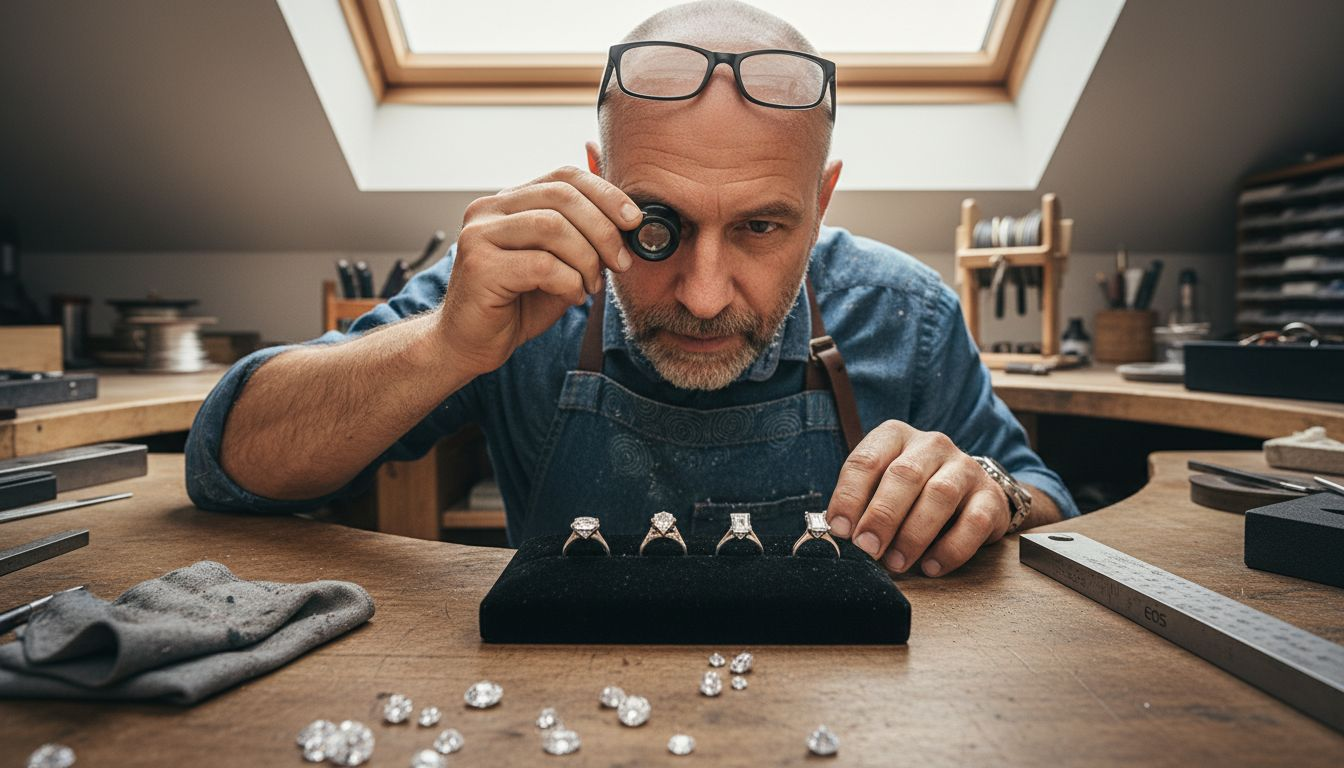
Handcrafted artisan rings deliver metalwork precision and structural integrity that mass production cannot replicate. Skilled jewelers shape, forge, and finish each component individually, ensuring prong symmetry, smooth interior surfaces, and secure stone settings. This attention to detail produces rings that withstand decades of wear without loosening stones or developing structural weaknesses.
Local production enables rigorous quality control at every fabrication stage. Artisans inspect metal purity, verify stone security, and test structural integrity before completion. This hands-on oversight eliminates the quality variations common in factory production, where automated processes lack human judgment for subtle imperfections.
The uniqueness inherent in handcrafted rings adds meaningful value beyond technical specifications. Slight variations in metalwork texture, prong shaping, and finishing details make each ring genuinely one of a kind. This individuality transforms the ring from a commodity into a personal artifact that carries the maker’s signature style and your unique love story.
Pro Tip: When evaluating ring quality, examine prong tips for smooth, rounded edges without sharp points that could catch on fabric. Check band interior for uniform thickness and polished surfaces that prevent skin irritation. Verify the diamond sits level in its setting without tilting, indicating proper prong placement and tension.
Handcrafted advantages extend to customization possibilities:
- Metal composition adjustments to accommodate specific allergy sensitivities or color preferences
- Band width and thickness modifications matching finger proportions and comfort requirements
- Prong style selection balancing security needs with desired visual weight
- Engraving placement options including hidden messages inside the band or visible dates on exterior surfaces
These bespoke opportunities create rings that reflect personal values around craftsmanship, uniqueness, and meaningful symbolism. Discover more about handcrafted solitaire ring benefits and the artisanal processes that ensure lasting quality.
Diamond Cuts and Their Effect on Solitaire Design
Diamond shape selection fundamentally influences a solitaire ring’s overall aesthetic and light performance. Round brilliant cuts remain the most popular choice for maximum sparkle and universal appeal. Their 58-facet arrangement optimizes light return, creating the intense fire and brilliance that defines diamond beauty. The circular symmetry suits any setting style and finger shape without bias.
Solitaire rings commonly feature round brilliant, oval, emerald, and marquise diamond cuts in 2026, chosen for their complement to minimalist metal settings. Oval cuts provide elongation that makes fingers appear more slender while delivering brilliance approaching round diamonds. Emerald cuts showcase clarity through large, open facets that create hall-of-mirrors reflections rather than sparkle, suiting sophisticated tastes.
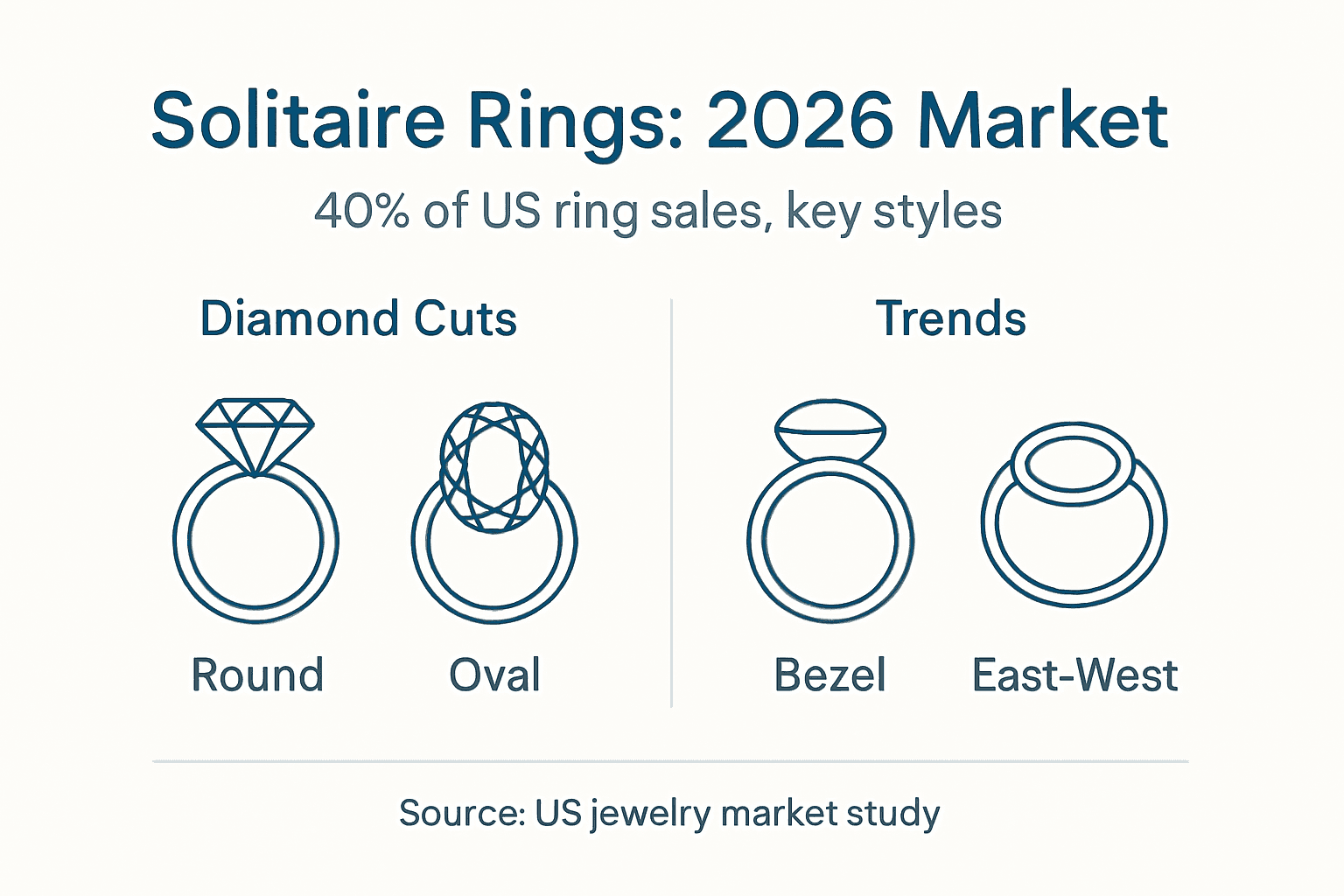
Marquise cuts maximize visual size per carat weight through their elongated pointed ends. This dramatic shape creates strong vertical lines that emphasize finger length. The unique silhouette makes bold statements particularly effective in East-West orientations that emphasize width rather than length.
| Diamond Cut | Style Character | Sparkle Level | Solitaire Application |
|---|---|---|---|
| Round Brilliant | Classic, versatile, timeless | Maximum fire and brilliance | Universal fit for all setting styles and finger shapes |
| Oval | Elegant, elongating, modern | High brilliance with softer lines | Flatters shorter fingers, suits cathedral and bezel settings |
| Emerald | Sophisticated, vintage-inspired | Subtle hall-of-mirrors effect | Best in four-prong or bezel settings emphasizing clarity |
| Marquise | Dramatic, eye-catching, unique | Moderate brilliance with strong presence | Striking in East-West orientations and cathedral settings |
| Princess | Contemporary, geometric, brilliant | Intense sparkle with modern edge | Requires protective prongs at corners, suits minimalist bands |
Diamond cut also affects finger coverage and visual balance. Elongated shapes like oval and marquise maximize surface area, creating larger appearance than round diamonds of equal carat weight. Step-cut faceting in emerald shapes requires higher clarity grades since large facets reveal inclusions more readily than brilliant cuts.
Explore comprehensive diamond cut guide details to understand how facet arrangement influences light performance and which cuts complement specific hand shapes and personal style preferences.
Common Misconceptions About Solitaire Engagement Rings
Several persistent myths create unnecessary confusion during solitaire ring selection. Understanding the facts enables confident decisions based on actual performance rather than misconceptions.
Myth: Four-prong settings are less secure than six-prong designs. Expert jewelers confirm that properly crafted four-prong solitaire settings are as secure as six-prong ones while enhancing diamond visibility. Security depends on prong thickness, metal hardness, and proper tension rather than prong quantity. Well-constructed four-prong settings distribute pressure evenly across the diamond’s girdle, preventing movement while maximizing the stone’s visible surface area.
Myth: Bezel settings reduce diamond sparkle significantly. Bezel settings maintain excellent light performance by leaving the diamond’s table and pavilion fully exposed. Light enters through the top and reflects through the bottom facets just as effectively as prong settings. The metal rim only covers the thin girdle edge, which contributes minimally to sparkle. This protective design actually preserves brilliance long-term by preventing edge chips that could diminish light performance.
Myth: Wider bands look bulky and reduce ring elegance. Contemporary wide band designs create sophisticated, modern aesthetics that complement bold personal styles. The increased metal surface provides canvas for interesting textures, mixed metals, and architectural details impossible on thin bands. Proper proportioning ensures wide bands enhance rather than overwhelm the center diamond, particularly when paired with larger stones that balance the visual weight.
Additional clarifications include:
- Yellow gold does not make diamonds appear more yellow when properly matched to diamond color grades
- Solitaire rings work beautifully with smaller diamonds, emphasizing quality over size
- Simple designs require equal or greater craftsmanship precision since flaws have nowhere to hide
- Cathedral settings provide excellent diamond security despite appearing delicate and elevated
Read more myth corrections and detailed explanations at this solitaire ring myths explanation resource.
Metal Choices and Their Style Impact
Metal selection profoundly influences a solitaire ring’s color palette, durability profile, and maintenance requirements. Yellow gold is regaining popularity for its warmth and classic appeal in 2026, creating rich contrast with white diamonds. The metal’s natural luster requires minimal maintenance beyond occasional cleaning, and its softness allows easy resizing. Yellow gold complements warmer skin tones and vintage-inspired aesthetics while adding timeless character.
White gold provides bright, neutral backgrounds that maximize diamond whiteness and create modern, clean aesthetics. The rhodium plating that gives white gold its bright finish requires periodic reapplication every few years as daily wear gradually exposes the underlying yellowish metal. This maintenance preserves the crisp white appearance that suits contemporary minimalist preferences.
Platinum offers superior durability and natural white color that never requires plating. The dense metal resists scratching better than gold alloys, though it develops a patina finish over time that many wearers appreciate for its vintage character. Platinum’s weight creates substantial hand feel, and its hypoallergenic properties suit sensitive skin. The higher price reflects both rarity and the increased metal weight required for equivalent designs.
Pro Tip: Consider how metal choice interacts with your lifestyle and aesthetic preferences. Active wearers benefit from platinum’s scratch resistance, while those preferring warm tones should explore yellow or rose gold options. Match metal color to your existing jewelry collection for cohesive personal style.
Metal comparison factors include:
- Durability: Platinum exceeds white gold, which surpasses yellow gold in hardness and wear resistance
- Maintenance: Yellow gold requires least upkeep, white gold needs periodic replating, platinum develops natural patina
- Hypoallergenic properties: Platinum offers best nickel-free option for sensitive skin
- Price range: Platinum costs most, followed by white gold, then yellow gold at similar purity levels
- Resizing ease: Yellow gold resizes most easily, platinum requires specialized techniques
Learn detailed comparisons between gold vs white gold metals to understand how alloy composition affects color, durability, and long-term appearance.
Choosing the Perfect Solitaire Engagement Ring
Selecting your ideal solitaire ring requires systematic evaluation of style preferences, practical needs, and personal values. Follow this sequential approach to narrow options and make confident decisions.
-
Identify your style preference between classic and contemporary aesthetics. Classic styles emphasize traditional six-prong or four-prong settings with round brilliant diamonds on medium-width bands. Contemporary preferences favor bezel settings, wider bands, alternative diamond shapes, or East-West orientations. Review ring images across both categories to clarify which resonates with your personal aesthetic and long-term wearability.
-
Assess daily activities to determine appropriate setting and band specifications. Careers involving frequent hand use, contact with hard surfaces, or equipment operation benefit from protective bezel settings and bands at least 3mm wide. Office environments and less physically demanding lifestyles accommodate delicate prong settings and thinner bands. Consider hobbies, exercise routines, and sleep preferences when evaluating comfort and durability requirements.
-
Select metal type balancing budget constraints, skin tone harmony, and maintenance willingness. Yellow gold suits warm undertones and offers lowest maintenance, white gold provides modern brightness with periodic replating needs, and platinum delivers maximum durability at higher cost. Request metal samples to evaluate color against your skin and existing jewelry for cohesive coordination.
-
Pick diamond cut that complements finger shape and enhances setting architecture. Elongated cuts like oval and marquise flatter shorter fingers, while round brilliants suit any hand shape universally. Emerald cuts require higher clarity grades and pair beautifully with four-prong or bezel settings that emphasize clean lines. Consider how diamond shape interacts with chosen setting style for harmonious overall design.
-
Prioritize handcrafted rings to ensure superior quality and meaningful uniqueness. Artisan jewelers deliver metalwork precision, structural integrity, and customization options unavailable in mass production. The investment in craftsmanship yields rings that withstand decades of wear while carrying personal significance through their one-of-a-kind character.
This systematic evaluation ensures your final selection aligns with practical lifestyle needs, aesthetic preferences, and symbolic values that make the ring truly yours. Explore choosing unique solitaire rings for additional guidance on personalization options and decision factors.
Discover Handcrafted Solitaire Engagement Rings at Malibu Vibes Jewelry
Now that you understand what makes a solitaire ring timeless and how to choose the perfect style, it’s time to explore rings that embody these principles. Malibu Vibes Jewelry specializes in handcrafted solitaire engagement rings that blend classic elegance with modern design innovation. Each piece reflects expert metalwork and attention to detail that ensures structural integrity and lasting beauty.

Our Los Angeles-based artisans create rings featuring the protective bezel settings, architectural cathedral designs, and customizable options discussed throughout this guide. Whether you prefer traditional six-prong brilliance or contemporary wide band statements, our collection offers styles that suit diverse preferences and active lifestyles. Explore our handcrafted ring quality process to see how we ensure each ring meets exacting standards, then browse our solitaire ring collection to find the perfect expression of your commitment.
Frequently Asked Questions About Solitaire Engagement Rings
What makes a solitaire ring timeless?
Solitaire rings achieve timeless status through their minimalist design that emphasizes the diamond rather than competing decorative elements. The single-stone focus creates clean lines that transcend temporary fashion trends, ensuring the ring remains elegant across decades. This simplicity also allows the ring to complement any personal style evolution or fashion preference changes throughout your life.
Are four-prong settings secure for daily wear?
Properly constructed four-prong settings provide excellent security for daily wear when crafted with appropriate prong thickness and metal hardness. The four points distribute pressure evenly across the diamond’s girdle, preventing movement while maximizing stone visibility. Regular inspections every six months ensure prongs maintain proper tension and catch any wear before it becomes problematic.
How does band width affect comfort and style?
Band width influences both physical comfort and visual proportion in important ways. Wider bands (4mm to 6mm) distribute pressure across more finger surface, reducing the tight feeling some wearers experience with thin bands. They also create bold, contemporary aesthetics and provide structural stability for larger diamonds. Narrower bands (2mm to 3mm) suit those preferring delicate, traditional looks and work well on smaller fingers where wide bands might overwhelm proportions.
Which metal requires the least maintenance?
Yellow gold requires the least maintenance among popular engagement ring metals. Its natural color never needs replating, and its warm luster returns easily with simple soap and water cleaning. The metal develops a subtle patina over time that many wearers appreciate for adding character. Occasional professional polishing restores original shine when desired, but yellow gold maintains beautiful appearance with minimal intervention.
Can I customize a handcrafted solitaire ring?
Handcrafted solitaire rings offer extensive customization possibilities that mass-produced options cannot match. Artisan jewelers can adjust band width, modify prong styles, combine different metals, alter diamond orientation, and incorporate personalized engraving. These modifications ensure your ring reflects your unique preferences while maintaining the structural integrity and craftsmanship quality that define handcrafted jewelry. Discuss your vision with experienced jewelers to explore feasible customization options that bring your ideal ring to life.
Recommended
- Simple Solitaire Engagement Rings: Style and Value – Malibu Vibes Jewelry
- Unique Solitaire Engagement Rings for Modern Proposals – Malibu Vibes Jewelry
- Solitaire Ring Explained: Styles, Diamonds, and Value – Malibu Vibes Jewelry
- 7 Essential Types of Engagement Rings Explained Clearly – Malibu Vibes Jewelry