

Choosing an engagement ring should feel exciting, not confusing. For style-driven women in California drawn to handcrafted details, understanding the difference between gold and white gold goes far beyond color preference. The metals blended with pure gold define how each ring looks, feels, and handles daily wear. Discover how alloy choices transform both beauty and durability so you can celebrate your love with confidence in every detail.
Table of Contents
- Gold And White Gold Explained Clearly
- Color, Alloys, And Unique Properties Compared
- Durability, Care, And Maintenance Tips
- Cost Differences And Long-Term Value
- Choosing The Best Metal For Your Style
Key Takeaways
| Point | Details |
|---|---|
| Gold Content is Consistent | Both yellow and white gold with a “14K” stamp contain the same 58.3% pure gold, but differ in the alloy metals mixed in. |
| Maintenance Requirements Differ | Yellow gold requires minimal maintenance, while white gold needs periodic rhodium replating every 5-10 years to maintain its shine. |
| Allergens in White Gold | Some white gold alloys may contain nickel, which could pose sensitivity issues; palladium-based options are available to circumvent this. |
| Style and Skin Tone Considerations | Yellow gold suits warm skin tones, while white gold complements cool tones, influencing your best choice based on personal style preferences. |
Gold and White Gold Explained Clearly
Both yellow and white gold start with the same foundation: pure gold. The difference lies in what metals get mixed into that pure gold to create the final piece you wear.
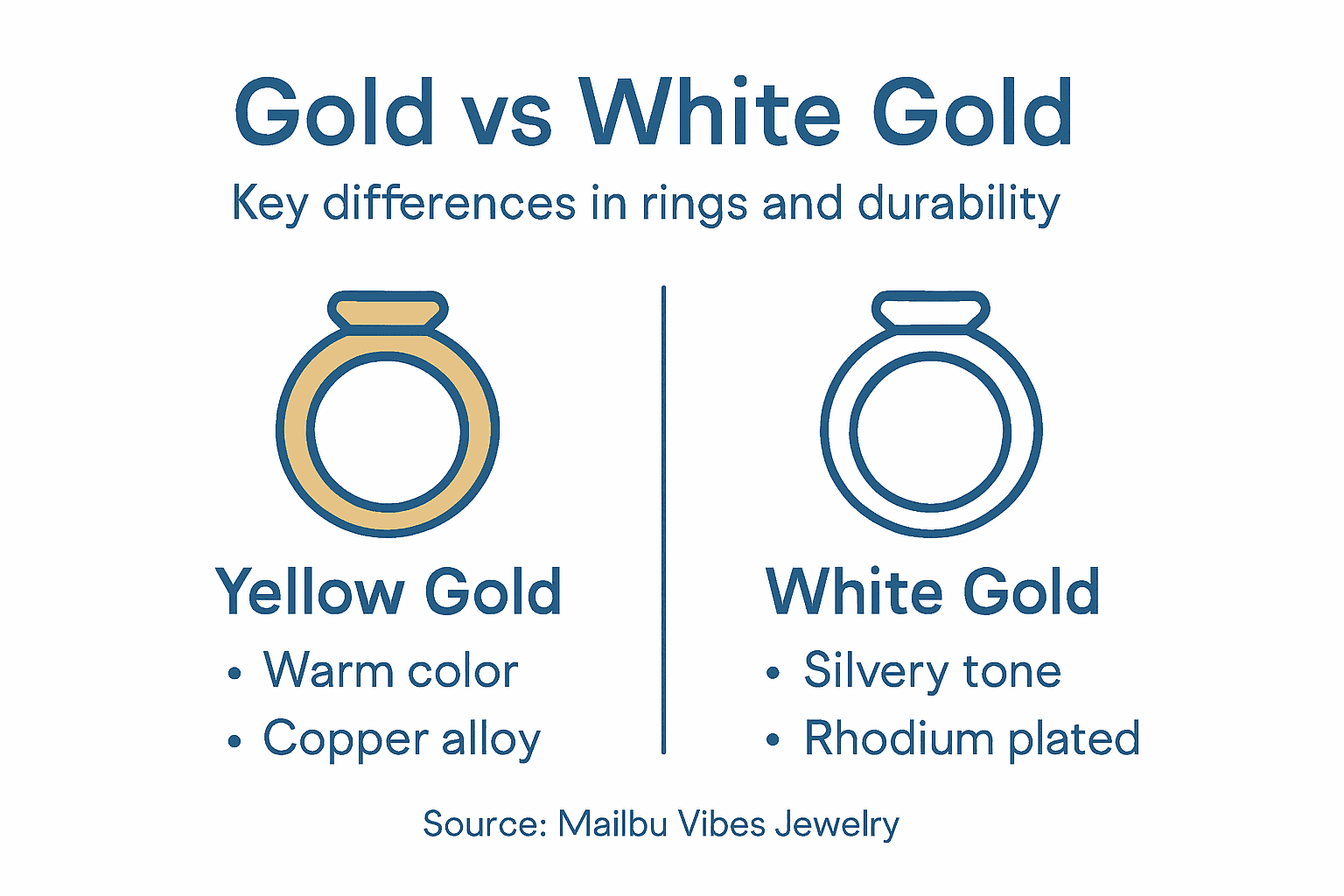
Yellow gold keeps its warm, traditional color because it’s alloyed with copper, silver, or other metals that maintain that iconic look. White gold takes a completely different approach—it’s alloyed with white metals like nickel, palladium, or platinum to achieve that cool, silvery tone.
Here’s what matters for your ring choice:
Gold Content Stays the Same
When you see “14K” stamped on a yellow gold ring versus a white gold ring, that number means the same thing for both. Fourteen karats equals 58.3% pure gold in either metal. The difference isn’t the gold content—it’s the alloy metals mixed in.
The Whiteness Comes from Plating
White gold often gets a finish you should know about. Jewelers apply a thin layer of rhodium or platinum plating on top to enhance that bright, white shine. This plating protects the underlying alloy and creates the lustrous finish you see in stores.
That plating matters because it wears down over time with daily wear.
Potential Nickel Sensitivity
Some white gold alloys contain nickel to achieve their color. If you have sensitive skin or a nickel allergy, this becomes important. Palladium-based white gold offers an alternative if nickel is a concern for you.
Understanding these basics shapes everything about how your ring looks, feels, and lasts.
Pro tip: Ask your jeweler which white metals are in their white gold alloys—if nickel sensitivity is a concern, request palladium-based white gold instead.
Color, Alloys, and Unique Properties Compared
Color is the most visible difference between yellow and white gold, but it’s really just the beginning. The metals mixed into pure gold completely transform how your ring looks, feels, and performs over years of wear.
Yellow Gold’s Warm Tone
Yellow gold gets its signature warmth from copper and silver alloys. These metals blend seamlessly with pure gold, creating that classic appearance that never goes out of style. The ratio of copper to silver affects the exact shade—more copper produces a deeper, richer yellow.
Yellow gold is naturally durable without extra finishing work.
White Gold’s Cool Appearance
White gold achieves its silvery tone through alloys with metals like palladium and nickel. These metals substitute for gold atoms in the crystal structure, changing the entire color profile. The choice of alloy metal matters significantly—palladium creates a more neutral white, while nickel produces a cooler tone.
How Alloys Impact Durability

The specific metals mixed into your ring affect hardness and scratch resistance. Metal alloy composition directly influences how well your ring withstands daily contact, impacts, and abrasion.
Key properties affected by alloys:
- Hardness – determines resistance to scratching and denting
- Corrosion resistance – how well the metal resists tarnishing and oxidation
- Color stability – whether the ring’s appearance fades or changes over time
- Strength – ability to hold stones securely and maintain its shape
The Rhodium Plating Factor
White gold typically receives rhodium plating to enhance brightness and reflectivity. This thin protective layer makes white gold shimmer beautifully when new. However, this plating wears away with regular wear, requiring re-plating every 1-3 years depending on wear patterns.
Yellow gold skips this step entirely—no plating needed.
The real difference isn’t which is better—it’s which properties matter most to your lifestyle and preferences.
If you wear your ring daily and want minimal maintenance, yellow gold’s durability without plating appeals to many. If you love that bright white sparkle and don’t mind occasional re-plating, white gold delivers that visual impact.
Pro tip: When choosing between the two, consider your daily activities—if your hands are constantly in water or around harsh chemicals, yellow gold’s simpler composition requires less specialized care.
Durability, Care, and Maintenance Tips
Yellow and white gold require different maintenance approaches, and knowing these differences keeps your ring looking stunning for decades. The key is understanding what each metal needs to stay protected.
Yellow Gold’s Low-Maintenance Appeal
Yellow gold is your lower-maintenance option. It doesn’t need replating or specialized treatments to maintain its appearance. Daily wear doesn’t diminish its color or shine the way it does with white gold.
This simplicity makes yellow gold practical for active lifestyles.
White Gold Needs Periodic Replating
White gold demands more attention because rhodium plating wears off with regular use. That bright, reflective finish you admired when your ring was new gradually fades as the plating thins. Most jewelers recommend replating every 5-10 years, though heavy daily wear may require it sooner.
Replating is straightforward and restores that luminous white appearance.
Daily Care for Both Types
Regardless of which metal you choose, gentle handling prevents damage:
- Remove rings during physical activities – sports, gardening, or heavy lifting can scratch and ding the metal
- Avoid harsh chemicals – chlorine, bleach, and abrasive cleaners damage both metals and can loosen stones
- Clean regularly with mild soap – warm water and soft brush keep them brilliant without causing wear
- Store separately – gold rings scratch each other when stored together; use individual pouches or compartments
The Durability Factor
Both yellow and white gold are durable metals suitable for daily wear. The difference lies in maintenance frequency, not overall strength. White gold’s replating requirement protects the underlying metal from scratches and tarnish, making periodic maintenance actually extend the ring’s lifespan.
Yellow gold skips this step and ages naturally, developing a subtle patina some people love.
Here’s a quick comparison of yellow gold and white gold based on wear, maintenance, and care:
| Property | Yellow Gold | White Gold |
|---|---|---|
| Maintenance Level | Minimal, no recoating needed | Requires periodic rhodium replating |
| Resistance to Fading | Keeps natural color over time | Bright finish fades without upkeep |
| Allergen Risks | Rare, nickel-free | Possible if nickel alloy used |
| Ease of Cleaning | Simple soap and water | Simple, but avoid abrasion |
Your choice between them comes down to comfort with maintenance, not durability—both last a lifetime with proper care.
If you prefer a hands-off approach, yellow gold wins. If you love keeping that pristine white sparkle and don’t mind visiting your jeweler occasionally, white gold delivers exactly what you want.
Pro tip: Store your ring in a soft cloth pouch away from humidity and temperature fluctuations—this simple step prevents unnecessary wear regardless of which metal you choose.
Cost Differences and Long-Term Value
When you’re comparing prices on yellow and white gold rings, the numbers can seem confusing. Both metals contain the same amount of pure gold, so why does one sometimes cost more? The answer lies in the extras.
The Base Gold Content is Identical
A 14k yellow gold ring and a 14k white gold ring contain exactly the same percentage of pure gold—58.3%. That means their intrinsic gold value is virtually the same. The price difference comes from everything else added to that pure gold.
Where White Gold Costs More
White gold typically runs higher because of additional expenses:
- Alloy metals – palladium and nickel add to the material cost
- Rhodium plating – the initial bright white finish requires specialized finishing
- Labor-intensive processing – creating the white tone requires more technical work
- Future maintenance – replating costs factor into long-term ownership
Yellow gold skips most of these steps, making it generally more affordable upfront.
Market Prices Impact Both Equally
Gold’s value fluctuates with market conditions, affecting both metals proportionally. When gold prices rise, both yellow and white gold rings become more expensive. However, rising gold costs have driven jewelry manufacturers to innovate with more efficient designs and processing techniques, sometimes offsetting price increases.
Both metals retain their value over time.
Long-Term Investment Perspective
Gold jewelry holds its worth remarkably well. Unlike fashion items that depreciate, gold maintains purchasing power and often appreciates. A quality ring purchased ten years ago is worth similar or greater value today, regardless of whether it’s yellow or white gold.
This durability makes either choice a smart long-term investment.
Total Cost of Ownership
Consider the complete financial picture:
- Yellow gold – lower initial cost, zero maintenance expenses
- White gold – higher initial cost, plus replating expenses every 5-10 years
Replating typically costs $50-150 per ring, depending on complexity. Over twenty years, you might spend $200-400 on maintenance for white gold, while yellow gold stays pristine without additional investment.
To help your decision, see how cost and value factors stack up for each metal:
| Factor | Yellow Gold | White Gold |
|---|---|---|
| Upfront Cost | Typically lower | Usually higher due to plating |
| Long-Term Expenses | Little to none | Replating every 5-10 years |
| Value Retention | Strong, gold value stable | Strong, gold value stable |
| Maintenance Impact | None, ages gracefully | Ongoing cost balances appearance |
Both metals represent genuine value—the difference is whether you factor maintenance costs into your long-term budget.
If budget is your primary concern, yellow gold offers better economics. If you prioritize that white sparkle and can accommodate periodic maintenance costs, white gold delivers visual impact worth the investment.
Pro tip: When shopping, ask jewelers about their replating pricing upfront and factor this into your total cost comparison—it sometimes surprises buyers and influences their final choice.
Choosing the Best Metal for Your Style
Your ring choice comes down to what makes you feel confident and beautiful. Style matters as much as durability, and the metal you select should reflect your personality and everyday life.
Yellow Gold for Classic Appeal
Yellow gold never goes out of style. It complements warm skin tones beautifully and works with virtually every gemstone and setting design. The warm, traditional glow suits engagement rings, wedding bands, and everyday pieces equally well.
Yellow gold also pairs seamlessly with other jewelry in your collection.
White Gold for Modern Sophistication
White gold offers a sleek, contemporary look that dominates current trends. White gold has become increasingly popular for wedding bands in the United States, especially among younger buyers. That bright, silvery sparkle creates a stunning backdrop for diamonds and works beautifully with cooler skin tones.
The modern aesthetic appeals to anyone wanting a contemporary edge.
Skin Tone Considerations
Your complexion influences which metal flatters you most:
- Warm skin tones – yellow gold enhances natural warmth and creates harmony
- Cool skin tones – white gold amplifies undertones and creates brightness
- Neutral skin tones – both metals work equally well; choose by preference
This isn’t a hard rule, but it’s a helpful starting point for your decision.
Allergies and Sensitivities
Choosing between metals requires considering potential allergic reactions from nickel in some white gold alloys. If you have sensitive skin or known nickel allergies, yellow gold eliminates this concern entirely. For white gold, request palladium-based alloys from your jeweler to avoid nickel exposure.
Your comfort matters more than any trend.
Lifestyle and Maintenance Willingness
Consider your daily reality:
- Active lifestyle – yellow gold’s no-maintenance appeal wins
- Prefer minimal upkeep – yellow gold stays pristine without intervention
- Love that white sparkle – white gold is worth the occasional replating
- Willing to maintain appearance – white gold delivers visual payoff
Honest assessment prevents buyer’s remorse later.
The best metal is the one you’ll love wearing every single day for the next fifty years.
Don’t let trends override your personal preference. Your ring should make you smile when you catch it glinting in sunlight—that feeling matters more than any practical consideration.
Pro tip: Visit a jeweler with both yellow and white gold samples; wear them side-by-side for a full day to see which feels right on your hand and matches your skin tone under different lighting conditions.
Discover Your Perfect Gold Ring at Malibu Vibes Jewelry
Choosing between yellow gold and white gold rings can feel overwhelming when you consider style, maintenance, and durability. Whether you want the warm, timeless glow of yellow gold or the modern, bright luster of white gold, understanding their unique qualities is key. At Malibu Vibes Jewelry, we help you turn that knowledge into the perfect ring that fits your style and lifestyle with ease.

Explore our carefully curated collections like the 14k Color Gemstone Ring and the 14k Diamond Stacking Ring for designs crafted to highlight the best of both yellow and white gold. Our handcrafted pieces combine expert Los Angeles production with enduring quality to bring you luxurious jewelry that lasts. Act now and find a ring that fits your everyday wear needs and personal expression at Malibu Vibes Jewelry. Your perfect gold ring awaits.
Frequently Asked Questions
What is the difference between yellow gold and white gold rings?
Yellow gold is alloyed with copper and silver, giving it a warm tone, while white gold is mixed with white metals like nickel or palladium to achieve a cooler, silvery appearance.
Does both yellow gold and white gold have the same gold content?
Yes, both yellow gold and white gold can have the same gold content, such as 14K, which means 58.3% pure gold in both types.
How often does white gold need to be replated compared to yellow gold?
White gold typically requires rhodium replating every 5-10 years, while yellow gold does not need replating and maintains its appearance without any additional treatments.
Which is more durable, yellow gold or white gold, for daily wear?
Both yellow and white gold are durable options for daily wear, but yellow gold is lower maintenance as it doesn’t require replating, while white gold’s durability can be enhanced with periodic replating.