

Over 60% of couples now choose handcrafted solitaire engagement rings with diamond bands, seeking a balance between timeless elegance and personalized style. This surprising preference shift reflects a deeper desire for quality craftsmanship and meaningful symbolism. Choosing the right ring involves navigating style options, understanding handcrafted quality, and planning for long-term care. This guide gives you a clear framework to confidently select a solitaire engagement ring with a diamond band that matches your vision and values.
Table of Contents
- Understanding Solitaire Engagement Rings and Diamond Bands
- The Impact of Handcrafted Quality on Solitaire Rings
- Exploring Diamond Band Styles and Their Effects
- Common Misconceptions About Solitaire Engagement Rings with Diamond Bands
- Making the Right Choice: A Decision Framework for Couples
- Caring for Your Solitaire Engagement Ring with a Diamond Band
- Explore Handcrafted Solitaire Rings with Diamond Bands at Malibu Vibes Jewelry
- Frequently Asked Questions
Key Takeaways
| Point | Details |
|---|---|
| Solitaire rings offer versatile style | Diamond bands add sparkle and design flair beyond minimalist looks. |
| Handcrafted quality matters | Artisan techniques deliver superior durability, detail, and emotional value. |
| Band styles vary significantly | Pavé, channel, and bezel settings differ in sparkle, maintenance, and protection. |
| Common myths mislead buyers | Many believe solitaire rings lack design options or require high maintenance. |
| A clear framework guides selection | Follow five steps covering style, craftsmanship, materials, budget, and care. |
Understanding Solitaire Engagement Rings and Diamond Bands
A solitaire engagement ring features a single center diamond set prominently on a band, creating a focal point that captures light and attention. This classic design symbolizes commitment through simplicity and elegance. When you pair a solitaire with a diamond band, you add subtle sparkle and intricate detail without overshadowing the center stone.
Diamond bands complement solitaire rings by enhancing visual interest along the band itself. These bands can feature small diamonds set in various patterns, creating a harmonious balance between the bold center stone and delicate side details. This combination has become increasingly popular across the United States, appealing to couples who want both tradition and personalization.
Common styling combinations in the US market include:
- Pavé diamond bands paired with round brilliant solitaires for maximum sparkle
- Channel-set bands matched with princess cut centers for modern elegance
- Bezel-accented bands combined with vintage-inspired solitaire settings
- Mixed metal bands featuring diamonds alongside rose or white gold accents
The harmony between band and center stone depends on proportion, metal choice, and setting style. A well-matched combination ensures the diamond band elevates rather than competes with the solitaire. This versatility makes solitaire rings with diamond bands a classic yet customizable choice for couples seeking both timeless appeal and individual expression.
The Impact of Handcrafted Quality on Solitaire Rings
Handcrafted rings stand apart from mass-produced alternatives through superior attention to detail and construction quality. Artisan jewelers invest time in each piece, ensuring precise diamond placement and structural integrity. Handcrafted rings have higher precision in diamond setting and better durability than mass-produced rings, translating to enhanced security for your stones and longer-lasting beauty.
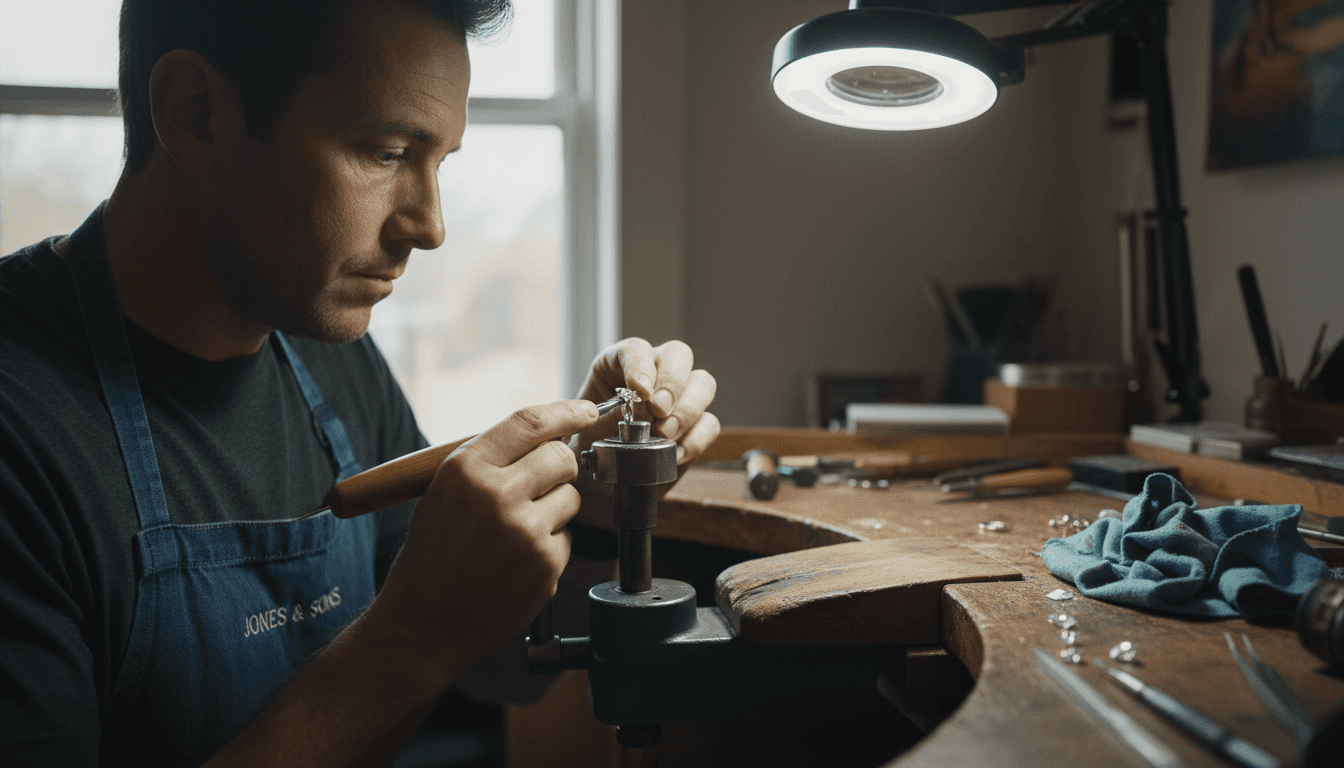
The benefits of handcrafted quality extend beyond technical precision. Each ring carries unique characteristics from the maker’s hand, creating subtle variations that make your piece truly one of a kind. This individuality adds emotional significance, knowing your ring was crafted specifically rather than stamped from a template.
Key advantages of handcrafted solitaire rings include:
- More secure prong settings that hold center diamonds firmly in place
- Smoother metal finishing that reduces skin irritation and wear
- Better proportioned bands that balance comfort with visual appeal
- Ethical sourcing transparency through direct artisan relationships
- Customization options that adapt designs to your specific preferences
Mass-produced rings often compromise on these details to meet production quotas and cost targets. Machine-made settings may appear uniform but lack the refined adjustments artisans make for each stone’s unique characteristics. Over years of wear, these differences become apparent through loose stones, worn prongs, and diminished sparkle.
Pro Tip: When choosing diamond rings, ask about the maker’s process and examine close-up photos showing setting details to verify handcrafted quality.
Investing in handcrafted options maximizes your ring’s lasting beauty and sentimental worth. The enhanced durability means fewer repairs and better long-term value. This commitment to quality reflects the same care you bring to your relationship, making handcrafted solitaire rings with diamond bands a meaningful choice for your engagement.
Exploring Diamond Band Styles and Their Effects
Diamond band styles significantly affect both visual impact and practical maintenance needs. Understanding the three main setting types helps you match your ring to your lifestyle and aesthetic preferences. Each style offers distinct advantages in sparkle, protection, and care requirements.
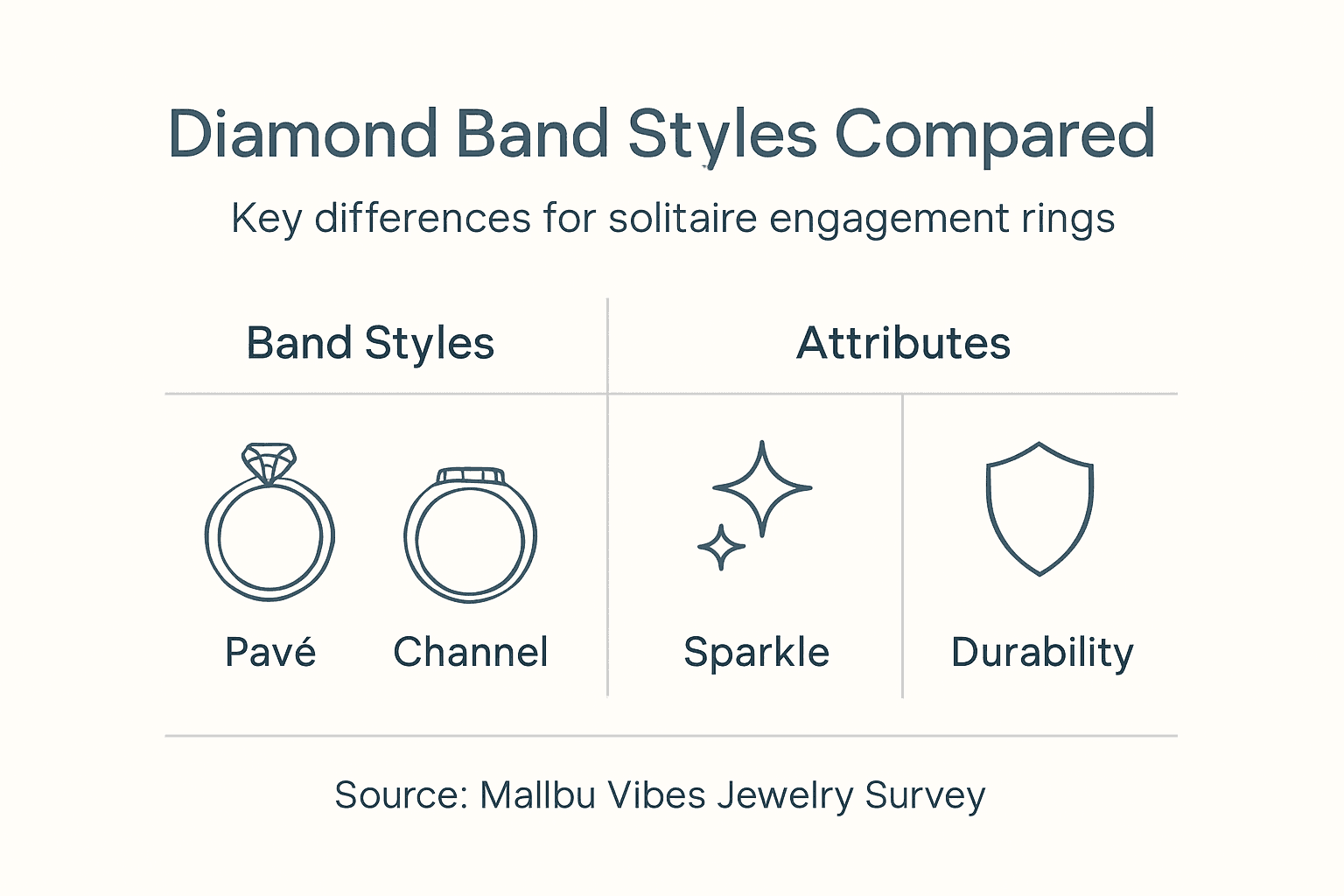
Pavé bands feature small diamonds set closely together using tiny metal beads, creating a continuous sparkle along the band. This style delivers maximum brilliance and catches light from every angle. However, the exposed setting means diamonds require frequent professional cleaning to maintain their fire. Pavé bands suit those who prioritize glamour and don’t mind regular maintenance visits.
Channel settings place diamonds within a groove cut into the band’s metal, with walls on each side protecting the stones. This design offers moderate sparkle while significantly reducing maintenance needs. The protected placement makes channel bands ideal for daily wear, as the metal guards against impacts and debris accumulation. Couples seeking balance between beauty and practicality often choose channel settings.
Bezel styles surround each diamond completely with a thin metal rim, offering maximum protection and easiest care. While this setting provides less sparkle than pavé or channel designs, it excels in durability and low maintenance. Bezel bands work perfectly for active individuals who need a ring that withstands demanding conditions without constant attention.
| Band Style | Sparkle Level | Durability | Maintenance Frequency | Best For |
|---|---|---|---|---|
| Pavé | Highest | Moderate | Every 3-6 months | Formal occasions, sparkle lovers |
| Channel | High | High | Every 6-12 months | Daily wear, balanced style |
| Bezel | Moderate | Highest | Annual checkups | Active lifestyles, minimal care |
Matching band style to lifestyle balances beauty with practical care needs. Consider your daily activities and maintenance commitment when selecting your diamond band design.
Pro Tip: If you work with your hands frequently or engage in sports, channel or bezel bands provide durability and ease of upkeep without sacrificing elegance.
Your chosen band style should complement the solitaire center stone while fitting seamlessly into your routine. Visit diamond band style inspirations to see how different settings pair with various center stones and metal choices.
Common Misconceptions About Solitaire Engagement Rings with Diamond Bands
Several persistent myths surround solitaire rings and diamond bands, often leading to confusion during the selection process. Clearing these misunderstandings helps you make informed decisions based on facts rather than assumptions. Let’s address the most common misconceptions directly.
Myth: Solitaire rings are always plain and lack design variety. Reality: Diamond bands add intricate style through pavé, channel, or bezel settings without overshadowing the center stone. 45% of consumers believed solitaire rings lacked design options prior to learning about diamond band integrations, highlighting how widespread this misconception remains. The combination of solitaire and diamond band offers extensive customization through metal choice, diamond size, and setting patterns.
Myth: Diamond bands are fragile and demand excessive maintenance. Reality: Proper care keeps diamond bands brilliant and durable for decades. The fragility myth stems from confusion between exposed pavé settings and protected channel or bezel designs. Regular professional cleaning maintains sparkle, but well-constructed bands withstand normal daily wear without issue.
Myth: Mass-produced rings match handcrafted quality at lower prices. Reality: Handcrafted rings offer superior durability and finish through artisan attention to detail. Machine-made rings may look similar initially but often show premature wear through loose settings and diminished structural integrity. The initial cost difference reflects long-term value through reduced repair needs and better stone security.
Key clarifications about solitaire ring design options include:
- Diamond bands range from subtle to dramatic based on stone size and placement
- Setting style determines maintenance needs more than diamond quantity
- Quality construction matters more than production method alone
- Lifestyle considerations guide appropriate band style selection
Design and maintenance choices depend on informed selection rather than assumptions about solitaire rings. Understanding these realities empowers you to choose confidently based on your priorities for style, durability, and care commitment.
Making the Right Choice: A Decision Framework for Couples
Selecting the perfect solitaire engagement ring with a diamond band requires a systematic approach covering style, quality, materials, budget, and maintenance. This five-step framework guides you through each decision point clearly.
-
Define your style preference to ensure visual harmony between solitaire and band. Consider whether you prefer maximum sparkle through pavé settings, balanced elegance via channel designs, or streamlined durability with bezel styles. Your aesthetic vision should align with the ring’s proportions and the center stone’s characteristics.
-
Opt for handcrafted rings for superior quality and durability. Artisan-made pieces deliver better diamond security, refined finishing, and personalized details that mass production cannot match. This investment pays dividends through reduced long-term maintenance and enhanced sentimental value.
-
Match metal type for aesthetic consistency and wear resistance. Pairing your solitaire setting metal with the diamond band metal creates visual cohesion. Popular combinations include white gold solitaires with white gold diamond bands, or rose gold throughout for warm elegance. Consistent metal choice also ensures even wear patterns over time.
-
Set a realistic budget encompassing diamond quality, metal weight, and design complexity. Center stone quality typically consumes 60-70% of your budget, with the diamond band and setting accounting for the remainder. Factor in certification costs and any customization fees when planning your investment.
-
Plan for regular maintenance to prolong ring brilliance and structure. Different band styles require varying care schedules, so understand your chosen design’s needs before purchase. Budget for annual professional cleanings and periodic inspections to catch potential issues early.
Bonus considerations for lifestyle compatibility:
- Active occupations favor channel or bezel bands over exposed pavé settings
- Frequent hand washing suggests choosing metals resistant to soap buildup
- Travel-heavy lifestyles benefit from durable settings requiring less frequent professional care
- Climate extremes may affect certain metal choices and require adjusted care routines
Explore comprehensive guidance through the diamond ring selection guide and diamond buying guide for detailed information on quality assessment and value optimization.
This framework ensures your selection balances emotional significance with practical considerations. Take time with each step, consulting with jewelers about specific options that meet your criteria across all five areas.
Caring for Your Solitaire Engagement Ring with a Diamond Band
Proper maintenance preserves your ring’s beauty and structural integrity for generations. Different diamond band styles require varying care approaches, so tailor your routine to your specific setting type. Consistent attention prevents costly repairs and maintains optimal sparkle.
Professional cleaning should occur every 6-12 months depending on your band style and lifestyle factors. Pavé settings benefit from quarterly professional attention due to their exposed diamonds and tendency to collect debris. Channel and bezel settings typically need professional care annually, though more frequent visits help if you work in dusty or chemical-heavy environments.
Daily care practices protect your ring between professional cleanings:
- Remove your ring during heavy manual work, exercise, or household cleaning to prevent impact damage
- Avoid exposure to harsh chemicals including bleach, chlorine, and abrasive cleaners that can damage metal and loosen settings
- Store your ring separately in a fabric-lined box to prevent scratching from contact with other jewelry
- Inspect prongs and settings monthly for signs of wear or loosening stones
Inspect your ring’s setting for loose stones and structural integrity every few weeks. Gently wiggle the center stone and check for unusual movement. Listen for rattling sounds when you shake the ring near your ear. Any detected issues require immediate professional evaluation to prevent stone loss.
Proper care and periodic maintenance preserve diamond band brilliance effectively, debunking myths of fragility. Well-maintained rings withstand decades of wear while maintaining their original beauty and security.
Pro Tip: Between professional cleanings, soak your ring in warm water with mild dish soap for 20 minutes, then gently brush with a soft toothbrush to maintain sparkle without risking damage.
Seek professional appraisal or repair immediately if you notice loose stones, bent prongs, or structural damage. Delaying repairs often leads to more extensive and expensive fixes. Insurance appraisals should occur every 3-5 years to ensure adequate coverage reflects current replacement costs.
Explore Handcrafted Solitaire Rings with Diamond Bands at Malibu Vibes Jewelry
Now that you understand how to select and care for solitaire engagement rings with diamond bands, discover pieces that embody these principles. Malibu Vibes Jewelry specializes in handcrafted solitaire engagement rings featuring diamond bands that balance timeless elegance with personalized style.

Each ring showcases the artisan attention to detail discussed throughout this guide. Explore the fine jewelry making process to see how skilled craftspeople in Los Angeles create pieces with superior diamond settings and refined finishing. This transparency ensures you understand exactly what differentiates handcrafted quality from mass production.
The curated 14K gold diamond jewelry collection features solitaire rings paired with various diamond band styles. Whether you prefer the maximum sparkle of pavé settings or the durability of channel designs, you’ll find options built for both beauty and longevity. Each piece uses quality materials and construction techniques that align with the selection framework outlined above.
Visit Malibu Vibes Jewelry to explore rings that reflect your values for quality craftsmanship and elegant design. Find the perfect solitaire engagement ring with a diamond band that will mark your commitment with lasting beauty.
Frequently Asked Questions
Can a solitaire ring still have intricate design?
Yes, absolutely. Diamond bands add intricate patterns and sparkle while keeping the center stone as the focal point. You can choose from pavé, channel, or bezel settings to achieve varying levels of detail without overwhelming the solitaire’s elegant simplicity.
How often should I professionally clean my diamond band?
Cleaning frequency depends on your band’s setting style and daily activities. Pavé bands typically need professional attention every 3-6 months due to exposed settings, while channel and bezel designs can go 6-12 months between cleanings. Active lifestyles or chemical exposure may require more frequent care.
Are handcrafted rings more expensive than mass-produced options?
Handcrafted rings generally cost more initially due to the time and skill invested in each piece. However, they offer better long-term value through superior durability, reduced repair needs, and unique character that mass production cannot replicate. The price difference reflects lasting quality rather than just production method.
What metal works best with a diamond solitaire band?
Matching metals create the most cohesive look and even wear patterns. Popular choices include white gold throughout for modern elegance, yellow gold for traditional warmth, or platinum for maximum durability. Consistency between the solitaire setting and diamond band ensures visual harmony and prevents uneven aging.
How can I verify a ring is truly handcrafted?
Ask the jeweler about their specific making process and request to see photos or videos showing production stages. Look for artisan signatures or maker’s marks inside the band. Genuine handcrafted pieces often show subtle variations and refined details that machine production cannot achieve. Reputable jewelers provide transparency about their craftsmanship methods.
Recommended
- Solitaire Engagement Rings 2026: 40% US Market Share – Malibu Vibes Jewelry
- Unique Solitaire Engagement Rings for Modern Proposals – Malibu Vibes Jewelry
- Simple Solitaire Engagement Rings: Style and Value – Malibu Vibes Jewelry
- Solitaire Ring Explained: Styles, Diamonds, and Value – Malibu Vibes Jewelry