

TL;DR:
- Vintage style wedding rings feature intricate details like milgrain and filigree, reflecting historical craftsmanship. They differ across eras in metal choice, motifs, and diamond cuts, with platinum offering better durability for fine details. Buyers should differentiate authentic vintage pieces from reproductions and ensure proper appraisal, condition, and matching era signals for an authentic look.
Vintage style wedding rings are jewelry pieces defined by intricate detailing such as milgrain edging and filigree metalwork that reflect the craftsmanship and aesthetics of specific historical periods. The industry term for these pieces is “vintage-inspired” or “antique style” rings, which covers both authentic estate pieces and modern reproductions. Engaged couples choose them because no two look exactly alike. The details that define these rings, including hand-engraved surfaces, lace-like metalwork, and bead-set stone borders, create visual depth that minimalist modern bands simply cannot replicate. This guide covers the defining design features, the three major eras that shaped them, and exactly what to look for when buying one today.
What are the defining design features of vintage style wedding rings?
Milgrain is the signature detail of vintage-inspired rings. The word comes from the French “mille-grain,” meaning “a thousand grains,” and describes the row of tiny bead-like metal granules applied along edges, prong bases, and stone settings. This detail originated in Edwardian and Art Deco jewelry and adds textured antique character without requiring an authentic antique piece.
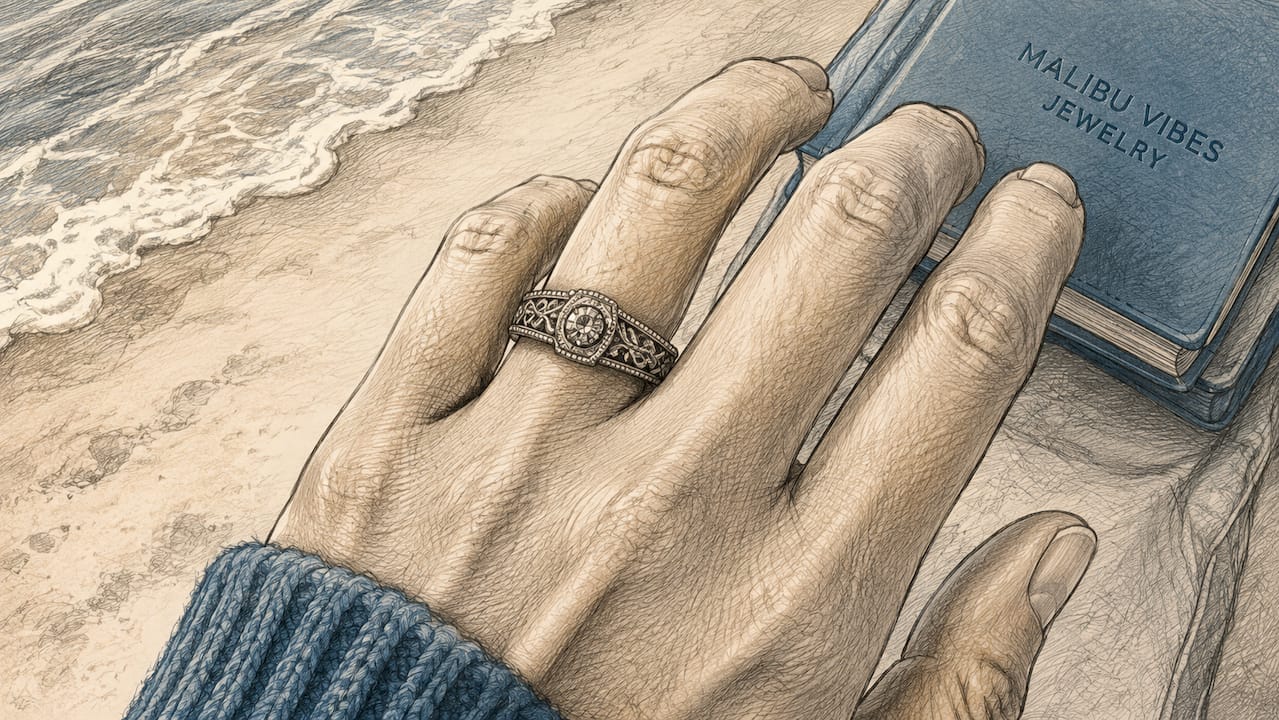
Filigree is the second defining technique. Jewelers twist and curl fine wire into lace-like open patterns, then solder them onto the ring’s surface or shank. The result looks delicate but is structurally sound when executed in platinum or high-karat gold. Filigree appears most prominently in Edwardian rings, where the goal was to make the metal nearly disappear and let the stones take center stage.
Beyond milgrain and filigree, antique style wedding rings share a recognizable vocabulary of motifs:
- Engraving: Hand-cut or machine-engraved scrollwork, florals, and geometric patterns on the band
- Old mine and old European diamond cuts: Rounded, high-crown cuts with smaller tables that catch light differently than modern brilliant cuts
- Halo settings: A center stone surrounded by a ring of smaller pavé or bead-set diamonds
- Floral and botanical motifs: Roses, leaves, and vines common in Victorian and Edwardian pieces
- Geometric patterns: Chevrons, sunbursts, and step patterns associated with Art Deco design
Metal choice directly affects how well these details hold up. Platinum holds fine edges and intricate detailing like milgrain and filigree better over time compared to softer metals. Identical designs in platinum versus gold age differently, with platinum maintaining sharper, crisper detail longer.
Pro Tip: If you want milgrain or filigree to look as sharp in ten years as it does today, choose platinum or 18K white gold over 14K yellow gold. The higher the gold karat, the softer the metal, and the faster fine details wear down.
How do Victorian, Edwardian, and Art Deco styles differ?
The three eras that define vintage-inspired bridal jewelry each have a distinct design philosophy. Victorian rings span 1837–1901, Edwardian rings cover roughly 1901–1920, and Art Deco rings belong to the 1920s and 1930s. Knowing the difference helps you choose a ring that feels cohesive rather than generically “old-fashioned.”
The table below compares the key design signals across all three eras.
| Feature | Victorian (1837–1901) | Edwardian (1901–1920) | Art Deco (1920s–1930s) |
|---|---|---|---|
| Primary metal | Yellow gold | Platinum | Platinum, white gold |
| Dominant motifs | Florals, hearts, snakes, mourning symbols | Lace filigree, bows, garlands | Geometric shapes, sunbursts, chevrons |
| Diamond cut | Old mine cut | Old European cut | Old European, early transitional cut |
| Overall character | Romantic, sentimental, ornate | Delicate, airy, feminine | Bold, graphic, architectural |
| Typical setting style | Bezel, prong, closed-back | Open milgrain, filigree basket | Channel, pavé, geometric cluster |
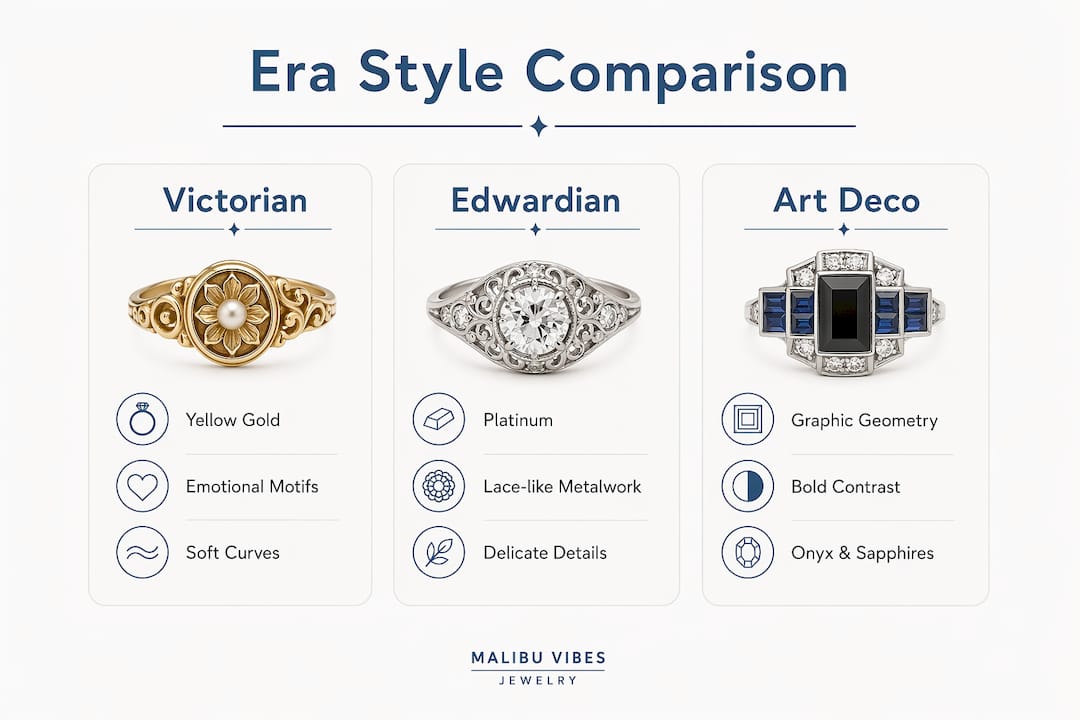
The difference between these eras lies in metal choices, motifs, and diamond cuts. Each era brings a distinct visual character, and matching metal and motifs is the key to an authentic vintage look.
Victorian rings feel the most emotionally loaded. Yellow gold was the standard, and motifs often carried symbolic meaning. Serpent rings represented eternal love. Mourning rings incorporated black enamel or hair. The overall effect is rich and warm.
Edwardian rings feel the lightest. Platinum allowed jewelers to create settings so fine they resembled lace. The goal was maximum light and minimum visible metal. These rings pair naturally with heirloom engagement rings from the same period.
Art Deco rings are the most graphic. Symmetry, contrast, and geometry replaced the soft curves of earlier eras. Onyx, sapphire, and emerald accents alongside diamonds created high-contrast color combinations that still look current today. If you want a vintage looking engagement ring that reads as bold rather than delicate, Art Deco is the right era to draw from.
For couples pairing a wedding band with an existing engagement ring, matching period metal and technique signals produces authentic harmony. Mixing a platinum Edwardian engagement ring with a yellow gold Victorian-style band creates a “vintage-ish” look that feels unresolved rather than intentional.
What should you consider when buying vintage style wedding rings today?
The first decision is whether you want an authentic vintage piece, an estate ring, or a vintage-inspired reproduction. These are not the same thing. An authentic vintage ring was made in the period it represents. An estate ring is any previously owned ring, regardless of age. A vintage-inspired ring is a new piece made to evoke a historical style.
Estate and antique ring values depend on metal type, maker, age, design, condition, and certification. A plain gold band approaches its material value. A certified diamond piece from a named maker requires a full appraisal. Condition checks and certifications directly influence pricing, so never skip a professional appraisal when buying an authentic antique engagement ring.
Practical factors to evaluate before purchasing:
- Condition of the metalwork: Check milgrain and filigree under magnification. Worn or flattened beads are expensive to restore.
- Stone security: Older settings were not designed for daily modern wear. Have a jeweler inspect prong integrity before wearing regularly.
- Ring sizing: Resizing vintage rings with intricate shanks is difficult. Some designs cannot be sized at all without damaging the pattern.
- Metal compatibility: If you already own an engagement ring, match the metal type to avoid galvanic corrosion where dissimilar metals meet.
- Certification: For diamond pieces, request a GIA or AGS certificate to confirm stone quality and authenticity.
Pro Tip: Before buying any authentic vintage ring, ask for a written condition report from an independent appraiser, not the seller. A $50–$150 appraisal fee can save you thousands in unexpected repair costs.
Matching antique style wedding rings with heirloom engagement rings requires attention to metal type, cut, and stylistic coherence. A ring that looks right on its own can look wrong next to an heirloom piece if the era signals conflict. Study the metalwork technique of your existing ring first, then shop for a band that mirrors those same construction details.
How do modern jewelers blend vintage style with contemporary design?
Modern jewelers recreate vintage style wedding rings using contemporary techniques to balance vintage aesthetics with durability and wearability. This includes modern diamond cuts, reliable setting methods, and customizable vintage motifs applied with precision tools that were not available to original craftspeople.
The practical advantages of a vintage-inspired reproduction over an authentic antique are significant:
- Consistent sizing: New rings are made to your exact finger size from the start.
- Modern prong engineering: Contemporary settings hold stones more securely than century-old prong work.
- Metal options: You can request milgrain and filigree in 14K gold, 18K gold, or platinum rather than accepting whatever metal the original was made in.
- Customization: Many jewelers let you combine motifs from different eras, such as Art Deco geometry on an Edwardian filigree shank.
The 14K Gold Vintage Stackable Wedding Ring from Malibuvibesjewelry is a strong example of this approach. It applies milgrain edging and a slim profile to a modern 14K gold construction, giving couples the vintage aesthetic without the fragility of an authentic antique.
Care for vintage-inspired rings follows the same rules as any fine jewelry. Avoid ultrasonic cleaners on filigree settings, as the vibration can loosen stones in open metalwork. Clean with a soft brush, warm water, and mild dish soap. Have a jeweler check prong integrity annually, especially if the ring features multiple small stones in pavé or bead settings.
For couples who want to see how vintage-inspired rings compare to other current styles, the modern engagement ring trends guide at Malibuvibesjewelry covers the full spectrum from minimalist solitaires to ornate vintage reproductions.
Key takeaways
Vintage style wedding rings are best chosen by matching era-specific metal and technique signals, not just surface motifs, to achieve a cohesive and lasting look.
| Point | Details |
|---|---|
| Milgrain and filigree define the style | These two techniques create the textured, antique character that separates vintage rings from modern minimalist designs. |
| Era choice shapes the entire ring | Victorian, Edwardian, and Art Deco each use distinct metals, motifs, and cuts that must align for a coherent look. |
| Metal choice affects longevity | Platinum holds intricate details sharper over time than softer metals like 14K yellow gold. |
| Authentic vs. inspired requires different due diligence | Authentic antique rings need independent appraisals; vintage-inspired reproductions offer modern durability and sizing flexibility. |
| Match your band to your engagement ring’s era signals | Mixing period metals and techniques produces a “vintage-ish” look; matching them produces authentic harmony. |
Why I think most couples shop for vintage rings the wrong way
Most people shopping for antique style wedding rings start with a mood board. They save images of rings that look vaguely old and romantic, then walk into a jeweler expecting to find something that matches the feeling. The problem is that feeling is not a design brief.
What actually produces a cohesive vintage ring is understanding the construction logic of the era you are drawn to. Edwardian rings look the way they do because platinum allowed jewelers to create structures that yellow gold could not support. Art Deco rings look the way they do because the 1920s were a reaction against Victorian sentimentality. When you understand the “why” behind the design, you stop shopping for surface details and start shopping for the right combination of metal, cut, and motif.
The other mistake I see constantly is prioritizing appearance over wearability. A heavily filigree’d ring looks extraordinary in a display case. On an active hand, it collects soap, catches on fabric, and requires more maintenance than most people expect. That is not a reason to avoid filigree. It is a reason to go in with realistic expectations and a good jeweler relationship.
The rings that hold up best are the ones where the owner understood what they were choosing. A vintage ring that tells a real story, whether it is an authentic estate piece with a documented history or a reproduction made to honor a specific era, will always feel more meaningful than one chosen purely for its photograph.
— Ara
Vintage-inspired fine jewelry at Malibuvibesjewelry
Malibuvibesjewelry crafts vintage-inspired bridal jewelry from its Los Angeles studio using 14K gold and platinum-finish metals, with milgrain edging and filigree details applied to modern construction standards.
The diamond rings collection includes pieces with vintage motifs built on contemporary settings, giving you the antique aesthetic with the durability of new fine jewelry. For couples who want to understand exactly how each piece is made before purchasing, the fine jewelry process page details the craftsmanship methods behind every ring. Malibuvibesjewelry also offers a broader diamond jewelry collection for couples building a complete vintage-inspired bridal set.
FAQ
What makes a ring “vintage style” vs. genuinely antique?
A vintage style or vintage-inspired ring is a new piece made to evoke historical design elements like milgrain and filigree. A genuinely antique ring was produced in the period it represents, typically 100 or more years ago.
Which vintage era is best for a wedding band?
Edwardian style suits couples who want delicate, lace-like metalwork in platinum. Art Deco suits those who prefer bold geometry. Victorian suits those drawn to romantic, yellow-gold warmth. The best era matches your existing engagement ring’s metal and motifs.
Does milgrain wear down over time?
Yes. Milgrain detail wears faster on softer metals like 14K yellow gold than on platinum or 18K white gold. Platinum maintains sharper milgrain edges longer, making it the preferred metal for preserving intricate vintage detailing.
How do I value an authentic antique engagement ring?
Antique ring value depends on metal, maker, age, design, condition, and certification. Always get an independent appraisal from a certified gemologist before purchasing or insuring an estate piece.
Can vintage style wedding rings be resized?
Vintage-inspired reproductions can usually be resized by a skilled jeweler. Authentic antique rings with intricate filigree shanks are often difficult or impossible to resize without damaging the pattern, so confirming your exact size before purchase is critical.