

TL;DR:
- Over 50% of millennial women now buy fine jewelry for themselves, up 15% since 2021.
- Fine jewelry uses precious metals and genuine gemstones, ensuring durability and value.
- Buying with intent, focusing on quality, timeless design, and ethical sourcing makes jewelry a meaningful investment.
More than half of millennial women now buy fine jewelry for themselves, and self-purchasing is up 15% since 2021. That shift says something important: fine jewelry is no longer just a gift waiting to happen. It is a personal statement, a quiet investment, and sometimes a piece you plan to pass down one day. This article walks you through what truly separates fine jewelry from the rest, why women aged 25 to 40 are leading the charge on self-purchase, how to think about value and sustainability, and what smart buying actually looks like in practice.
Table of Contents
- What makes fine jewelry different?
- Emotional meaning and self-expression
- Fine jewelry as an investment and heirloom
- Sustainability and ethical choices
- Smart ways to buy fine jewelry
- A fresh perspective: Why buying fine jewelry is about more than money
- Discover handcrafted fine jewelry that fits your style
- Frequently asked questions
Key Takeaways
| Point | Details |
|---|---|
| Beyond status or trend | Fine jewelry is about meaning, self-expression, and joy, not only fashion or prestige. |
| Potential as investment | Certain branded or classic pieces can hold or grow value, but emotional rewards matter most. |
| Sustainability matters | Choosing ethical, eco-friendly fine jewelry is a top priority for today’s buyers. |
| Smart shopping pays off | Research, ask questions, and build your collection slowly for maximum style and value. |
What makes fine jewelry different?
Fine jewelry is not just prettier costume jewelry with a higher price tag. The difference runs all the way through the materials, the making, and the staying power.
At its core, fine jewelry uses precious metals like 14k or 18k gold, platinum, or sterling silver, and features genuine gemstones such as diamonds, sapphires, or emeralds. Every piece goes through a skilled craftsmanship process that fashion jewelry simply cannot replicate. Settings are secure, finishes are lasting, and the weight in your hand feels intentional.
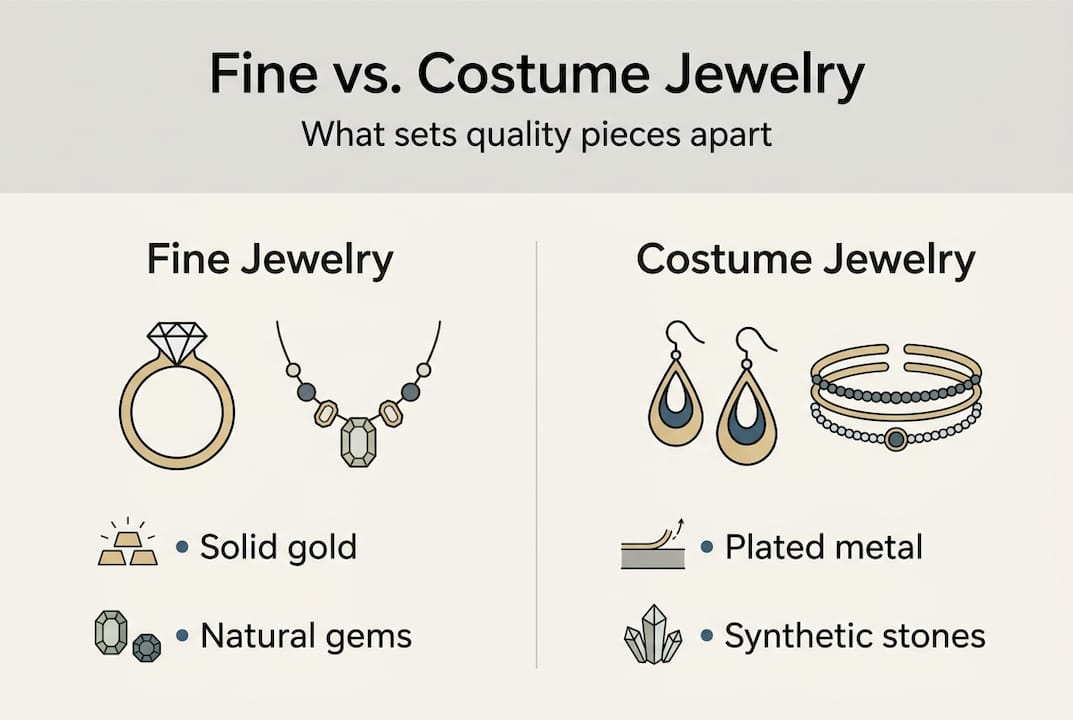
Fashion or costume jewelry, by contrast, uses base metals, plating, and synthetic stones. It looks great for a season. But it tarnishes, bends, and cannot be repaired the way a fine piece can. Fine jewelry can be resized, re-polished, and handed down in excellent condition decades later.
Here is a quick comparison:
| Feature | Fine jewelry | Fashion/costume jewelry |
|---|---|---|
| Metals used | 14k/18k gold, platinum, sterling silver | Base metals, plated alloys |
| Gemstones | Natural or lab-grown diamonds, genuine gems | Glass, synthetic, plastic |
| Durability | Decades with proper care | Months to a few years |
| Repairability | Yes, by a skilled jeweler | Rarely worth repairing |
| Resale value | Holds or grows | Minimal to none |
What quality markers should you look for? Start here:
- Hallmarks: Look for stamps like 14K, 925 (sterling silver), or PT950 (platinum) on the metal itself.
- Prong and bezel settings: These secure stones properly and signal skilled workmanship.
- Weight and finish: Quality pieces feel solid and show clean, even finishes with no rough edges.
- Maker transparency: Reputable brands tell you exactly where and how pieces are made.
The luxury jewelry segment is growing at a 5.8% CAGR, which reflects how many people are recognizing this difference and choosing to invest in pieces that last. When you buy fine jewelry, you are not just buying something beautiful. You are buying something built to endure.
Emotional meaning and self-expression
Numbers tell part of the story, but the emotional pull of fine jewelry is what actually drives most purchases. 51% of millennial women buy jewelry for themselves, and personalized pieces rank among the most valued.
Women aged 25 to 40 are in a unique life phase. Careers are building, identities are solidifying, and the desire to mark milestones in a tangible way is strong. A ring bought to celebrate a promotion. A necklace chosen because it matches exactly who you are right now. These are not frivolous purchases. They are anchors.
The reasons women buy fine jewelry for themselves span a wide range:
- Celebrating personal milestones (promotions, birthdays, new chapters)
- Expressing a specific aesthetic or personal style
- Self-reward after a period of hard work
- Building a curated collection that grows with them
- Honoring relationships, places, or memories through custom pieces
There is something quietly powerful about self-expression through jewelry. A piece you chose for yourself carries a different energy than one you received. It reflects your taste, your moment, your story.
“The right piece of jewelry does not just complete an outfit. It communicates something about who you are without saying a word.”
Personalized and custom jewelry takes this even further. A birthstone set in a design you helped create, or a necklace engraved with coordinates that mean something only to you, these are the pieces that never feel like clutter. If you want to explore what personalized jewelry trends look like right now, the options have never been more exciting or accessible.
Pro Tip: When choosing a piece for yourself, ask whether you would still love it in ten years. If the answer is yes, it is worth the investment. Pieces that feel deeply personal tend to bring daily joy in a way that trendy picks simply do not.
Fine jewelry as an investment and heirloom
Fine jewelry occupies a fascinating space in personal finance. It is not a stock or a savings account, but wealthy consumers are turning to jewelry as a hedge against inflation and market volatility, and for good reason.
Certain pieces hold value remarkably well. Iconic branded jewelry, pieces set with high-quality natural diamonds, and classic designs in precious metals tend to retain or even grow in value over time. The key word is certain. Not every fine jewelry purchase is a financial winner, and understanding the nuances matters.
Here is how different categories compare for investment potential:
| Category | Value retention | Resale ease | Notes |
|---|---|---|---|
| Branded iconic pieces | High | Moderate to high | Brand premium adds value |
| Natural diamond jewelry | Moderate to high | Moderate | Quality and cut matter most |
| Lab-grown diamond pieces | Lower | Harder | Depreciating faster currently |
| Custom or personalized | Variable | Difficult | Emotional value exceeds market value |
| Vintage/antique fine jewelry | High | Moderate | Rarity drives demand |
If you are thinking about investing in fine jewelry, here are the steps that make the most sense:
- Prioritize timeless over trendy. Classic cuts and clean designs outlast fashion cycles.
- Choose reputable makers. Provenance and brand recognition affect resale value.
- Understand the resale landscape. Auction houses, estate jewelers, and platforms like jewelry resale all come with different fees and timelines.
- Keep documentation. Certificates, appraisals, and receipts protect your investment.
- Think in decades. Fine jewelry as a financial asset rewards patience, not quick flips.
For a deeper look at jewelry as an investment, the picture is nuanced but genuinely compelling for the right buyer.
Pro Tip: The best fine jewelry investments combine quality materials, timeless design, and a reputable maker. If all three align, you have something worth keeping and potentially passing on.
Sustainability and ethical choices
Modern fine jewelry buyers are asking harder questions, and that is a good thing. Millennial women increasingly prefer sustainable, ethically sourced, and personalized pieces. The industry is responding, but not every brand is moving at the same pace.
Sustainability in fine jewelry is not just about recycled metals or lab-grown stones. It covers the full picture: where materials come from, how workers are treated, what happens to waste, and whether the brand is transparent about all of it.
Here is what to look for when evaluating a jeweler’s ethics:
- Recycled or responsibly mined metals: Ask whether gold or silver is recycled or certified through programs like the Responsible Jewellery Council.
- Conflict-free gemstones: Look for Kimberley Process certification for diamonds, and ask about sourcing for colored stones.
- Transparent supply chains: Ethical brands can tell you where their materials come from. Vague answers are a red flag.
- Local or small-batch production: Jewelry made closer to home often has a lower carbon footprint and better labor standards.
- Eco-friendly packaging: Small detail, but it signals broader values.
For a closer look at what eco-friendly fine jewelry actually looks like in practice, the differences between brands can be striking. Some are genuinely committed. Others use sustainability as a marketing phrase without the practices to back it up.
The practical steps for responsible buying are straightforward. Research the brand before you buy. Ask direct questions about sourcing. Look for third-party certifications. And choose makers who treat transparency as a feature, not an afterthought. Your purchase is a vote for the kind of industry you want to support.
Smart ways to buy fine jewelry
With all this context, the actual buying decision becomes much clearer. The self-purchase trend is rising fast, and the US jewelry market is projected to grow from $78.4 billion in 2024 to $97.62 billion by 2030. More selection and innovation are coming, which makes knowing how to shop even more valuable.
Here is a step-by-step approach for buying fine jewelry wisely:
- Set a real budget. Fine jewelry spans a huge price range. Know your number before you start browsing.
- Research the maker. Read about their process, materials, and customer reviews. Transparency is a strong signal of quality.
- Ask the right questions. What metal is this? What is the stone quality? Does this come with a warranty or return policy?
- Check for certifications. GIA-certified diamonds and hallmarked metals give you objective quality assurance.
- Think about versatility. Pieces that work dressed up or down give you far more value per wear.
- Buy from reputable platforms. Whether local boutique or online, choose sellers who stand behind their work.
Stay current with fine jewelry trends to know what is gaining momentum without chasing every micro-trend. And if you are curious about why shopping online for jewelry has become such a strong option, the range and access to unique pieces is genuinely hard to match in a single local store.
Pro Tip: Build your collection slowly. Start with one or two versatile anchor pieces in quality metals, then add intentionally over time. A well-chosen stack of rings or a layered necklace set built over years feels far more personal than a rushed haul.
A fresh perspective: Why buying fine jewelry is about more than money
Most conversations about fine jewelry end up in one of two places: how beautiful it looks, or whether it holds its value. Both matter. But there is a third dimension that rarely gets enough attention.
Fine jewelry is what financial analysts sometimes call a passion investment, wearable, emotional, and valuable in ways that go beyond a balance sheet. You can wear it. You can feel it. It can remind you of who you were when you bought it and who you have become since.
At Malibu Vibes Jewelry, we think the daily confidence that comes from wearing a piece you truly love is underrated. A ring that fits your life right now, a necklace that catches light in a meeting, earrings that make you feel like yourself on a hard day. These are real returns. For more on what investing with meaning actually looks like, the answer is less about spreadsheets and more about intention. Wear it now. Pass it on later. That is the full value of fine jewelry.
Discover handcrafted fine jewelry that fits your style
If this article has sparked something, we would love for you to see what we make. At Malibu Vibes Jewelry, every piece comes from a thoughtful handcrafted process rooted in Los Angeles craftsmanship and a genuine commitment to quality over quantity.
Whether you are drawn to the sparkle of gold diamond earrings or the understated elegance of solid gold necklaces, our collections are built for women who want pieces that mean something. Explore what resonates with you, ask us anything about sourcing or design, and start building a collection that is genuinely yours.
Frequently asked questions
Is fine jewelry really worth the investment?
Fine jewelry can hold or grow in value, especially iconic branded pieces, but the smartest approach is to buy for love and longevity first, with financial upside as a bonus rather than the primary goal.
How do I know if a jeweler uses ethical and sustainable practices?
Look for clear sourcing information, third-party certifications, and transparent production stories. Since millennial women prefer sustainable and ethically sourced pieces, reputable brands increasingly make this information easy to find.
Are lab-grown diamonds a good choice for fine jewelry?
Lab-grown diamonds offer real affordability and ethical advantages, but they depreciate faster than natural diamonds and carry lower resale value, so weigh those trade-offs based on your priorities.
What should I prioritize as a first-time fine jewelry buyer?
Focus on quality materials, timeless design, and a maker you trust. With self-purchasing up 15% since 2021, there are more excellent options than ever, so take your time and start with one versatile piece you will reach for constantly.
Recommended
- Fine Jewelry Buying Tips for High-Quality Selections – Malibu Vibes Jewelry
- Why quality matters in jewelry: lasting style in 2026 – Malibu Vibes Jewelry
- What is Fine Jewelry? Understanding Luxury and Craftsmanship – Malibu Vibes Jewelry
- Complete Guide to Why Invest in Fine Jewelry – Malibu Vibes Jewelry
- Luxury vs. Sophisticated