

Over 39% of tested jewelry items release nickel, triggering allergic reactions that leave wearers frustrated and uncomfortable. Many shoppers discover too late that their beautiful new pieces tarnish within months, break unexpectedly, or cause painful skin irritation. Understanding jewelry quality transforms these disappointments into confident purchases. This guide reveals how handcrafted jewelry using solid precious metals delivers lasting durability, comfort, and style that mass-produced alternatives simply cannot match. You will learn to identify authentic quality markers, avoid common pitfalls, and select pieces that maintain their beauty for years.
Table of Contents
- How Low Quality Affects Jewelry Durability And Comfort
- Understanding Hallmarking And Certified Metal Purity
- Handcrafted Vs Mass-Produced Jewelry: Durability, Style, And Investment
- Choosing Quality Jewelry: Practical Tips For Fashion-Conscious Women
- Explore High-Quality Handcrafted Jewelry Collections
Key takeaways
| Point | Details |
|---|---|
| Quality prevents common problems | Solid metals eliminate tarnishing, breakage, and allergic reactions that plague cheap jewelry. |
| Hallmarks guarantee authenticity | Official stamps certify metal purity and protect buyers from counterfeit or substandard pieces. |
| Handcrafted offers lasting value | Superior materials and craftsmanship create heirloom pieces that outlast mass-produced alternatives. |
| Smart selection saves money | Investing in quality reduces replacement costs and ensures comfortable, stylish wear. |
How low quality affects jewelry durability and comfort
Mass-produced jewelry uses thin plating measuring just 0.5 to 1 micron that lasts only 2 to 6 months with occasional wear. This microscopic layer wears away quickly, exposing base metals that oxidize and discolor skin. The contrast becomes stark when you examine handcrafted pieces made from solid precious metals and real gemstones. These materials maintain their appearance and structural integrity through years of regular use.
Skin reactions represent one of the most frustrating consequences of poor quality jewelry. Low-quality metals release nickel and cobalt, causing frequent irritation especially in earrings. Research reveals alarming statistics: 39.2% of tested items showed nickel release, while 37.4% released cobalt. The problem intensifies with pierced jewelry, where direct metal contact creates an 81.3% allergy prevalence rate.
Manufacturing shortcuts create multiple durability issues that become apparent within months:
- Thin plating wears through to reveal discolored base metal underneath
- Weak solder joints break under normal stress from daily activities
- Poorly set gemstones loosen and fall out without warning
- Hollow construction collapses or dents from minor impacts
- Surface treatments fade or peel away irregularly
Handcrafted jewelry using solid precious metals avoids these common failures entirely. The material extends throughout the piece rather than existing as a surface coating. This construction method distributes stress evenly and resists the wear patterns that destroy plated items.
Studies show that pierced earrings account for the majority of metal allergy cases, with nickel and cobalt release causing inflammation in over 80% of affected individuals.
Pro Tip: Choose jewelry labeled hypoallergenic and verify metal purity through hallmarks to avoid allergic reactions and premature deterioration. Check seller specifications for solid metal construction rather than plated alternatives.
The cost difference between quality and cheap jewelry becomes misleading when you factor in replacement frequency. A $30 plated necklace requiring replacement every six months costs more over two years than a $150 solid metal piece lasting decades. Learn more about making informed choices through our fine jewelry buying tips.
Understanding these quality markers helps you evaluate pieces before purchase. Examine clasps and findings for solid construction. Check gemstone settings for secure prongs. Ask sellers direct questions about metal content and manufacturing methods. These simple verification steps prevent disappointing purchases.
Understanding hallmarking and certified metal purity
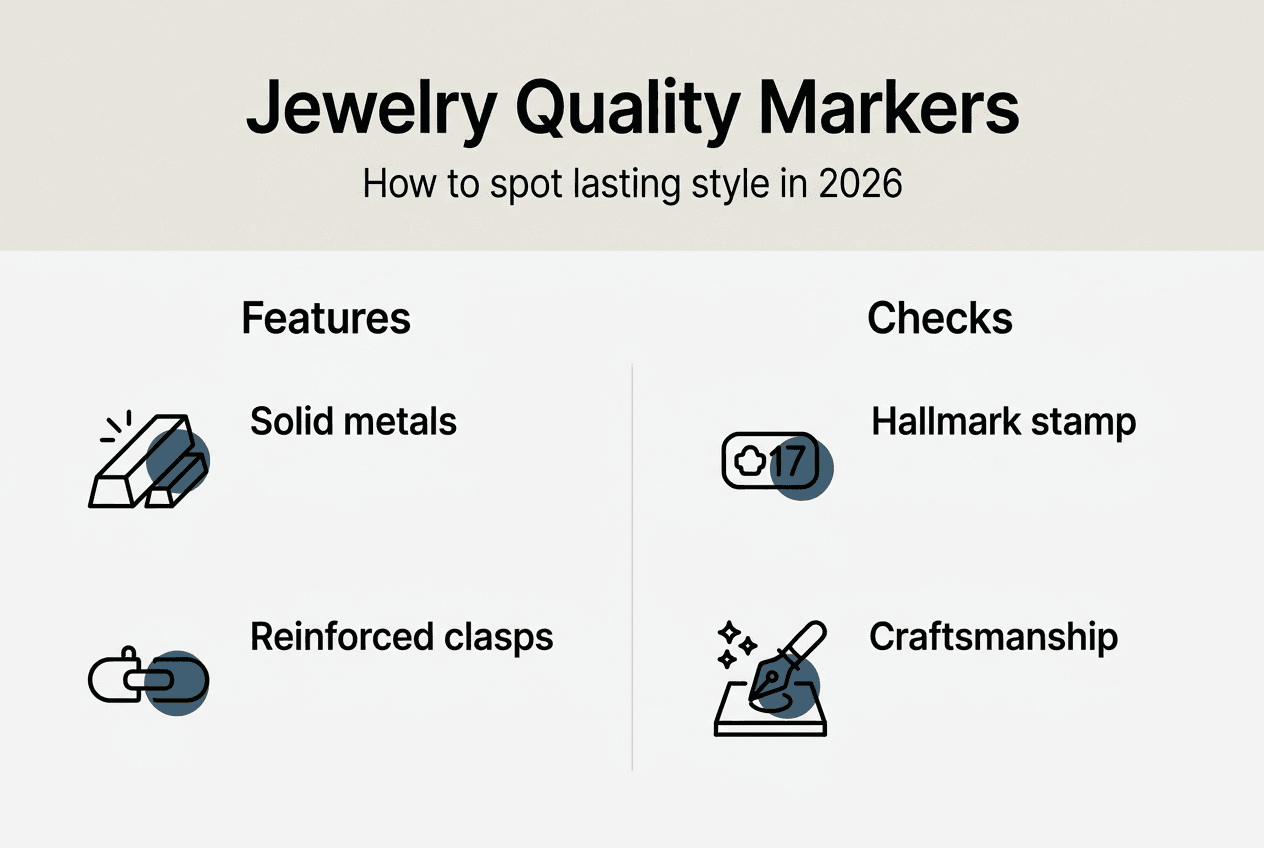
Hallmarks function as official certifications stamped directly onto precious metal jewelry. These tiny marks confirm that independent assay testing verified metal purity using XRF technology. The system protects buyers from counterfeit items and substandard materials while giving reputable manufacturers a way to prove their quality claims.
Every hallmark contains specific symbols that communicate essential information. The sponsor’s mark identifies the manufacturer or retailer responsible for the piece. The fineness number states exact metal purity as a percentage or parts per thousand. The assay office mark shows which independent testing facility verified the metal content. Together, these marks create an unbreakable chain of accountability.
| Metal Type | Fineness Mark | Purity Percentage | Common Uses |
|---|---|---|---|
| Gold | 375 | 37.5% (9k) | Affordable everyday pieces |
| Gold | 585 | 58.5% (14k) | Durable fine jewelry |
| Gold | 750 | 75% (18k) | Luxury high-end items |
| Silver | 925 | 92.5% (Sterling) | Classic silver jewelry |
The hallmarking process involves submitting jewelry to an independent assay office for testing. Technicians use XRF spectrometry to measure exact metal composition without damaging the piece. Items meeting purity standards receive official stamps. This third-party verification eliminates guesswork and manufacturer bias from quality assessment.
Mandatory hallmarking applies to items exceeding minimum weights in regulated markets. UK law requires hallmarks on gold items over 1 gram, silver over 7.78 grams, and platinum over 0.5 grams. These thresholds ensure significant pieces carry verified quality information. Smaller items like earring studs may lack hallmarks due to size constraints, making seller reputation crucial.
Hallmarks deliver multiple benefits to jewelry buyers:
- Consumer protection through verified metal content claims
- Quality assurance backed by independent testing facilities
- Value retention since hallmarked pieces maintain resale worth
- Legal recourse if sellers misrepresent metal purity
- International recognition across major jewelry markets
Pro Tip: Always look for hallmarked jewelry when purchasing precious metal pieces, and avoid unmarked items unless you can verify authenticity through other reliable means like X-ray fluorescence testing.
Counterfeit hallmarks do exist, making it important to purchase from established retailers. Examine marks under magnification to verify crisp, clear stamping. Blurry or shallow marks suggest forgery. Cross-reference the sponsor’s mark against registered databases when buying high-value pieces. Understanding metal purity in jewelry helps you interpret these marks correctly.
The absence of hallmarks does not automatically indicate poor quality in all cases. Vintage pieces may predate hallmarking requirements. Imported jewelry from countries without hallmarking systems might use alternative purity marks. However, modern pieces sold in regulated markets should carry proper hallmarks. Their presence provides immediate verification that saves you from expensive mistakes.
Handcrafted vs mass-produced jewelry: durability, style, and investment
The manufacturing method fundamentally shapes jewelry performance and value. Handcrafted pieces receive individual attention throughout creation, while mass-produced items follow automated processes prioritizing speed over precision. This difference manifests in durability, uniqueness, and long-term cost effectiveness.
| Factor | Handcrafted Jewelry | Mass-Produced Jewelry |
|---|---|---|
| Durability | Solid metals, reinforced joints, decades of wear | Thin plating, weak points, 6-24 months typical lifespan |
| Style uniqueness | One-of-a-kind or limited designs with artistic details | Identical copies, generic trending styles |
| Lifespan value | Heirloom quality, passes through generations | Disposable fashion, frequent replacement needed |
| Initial cost | Higher upfront investment | Lower immediate price point |
| Allergen risk | Hypoallergenic solid precious metals | High nickel and cobalt content |
Mass-produced jewelry offers affordability and consistency for simple or trendy designs, but lacks uniqueness and durability for complex or heirloom pieces. The production shortcuts necessary for low prices create the quality issues discussed earlier. Automated casting produces weaker metal structures than hand-formed techniques. Bulk stone setting leads to loose gems. Surface treatments substitute for solid precious metals.
Handcrafted jewelry delivers distinct advantages:
- Quality materials throughout the entire piece, not just surface layers
- Precise craftsmanship ensuring secure settings and reinforced stress points
- Heirloom potential with construction designed for multi-generational wear
- Hypoallergenic metals eliminating skin reaction concerns
- Artistic details and finishing impossible to replicate through automation
The long-term cost calculation reveals surprising economics. A $200 handcrafted sterling silver bracelet worn for 20 years costs $10 annually. Three $40 mass-produced bracelets replaced every two years over the same period total $1,200, or $60 per year. Factor in the frustration of dealing with tarnish, breakage, and skin reactions, and quality becomes the economical choice.
Pro Tip: Consider your lifestyle and jewelry use frequency when choosing between handmade and mass-produced options. Daily-wear pieces justify quality investment, while experimental trendy items might suit mass-produced alternatives.
Fashion-conscious shoppers increasingly recognize that mass-produced items cannot replicate the distinctive style handcrafted pieces provide. When everyone can purchase identical necklaces from the same retailer, individual expression suffers. Handcrafted jewelry offers exclusivity through limited production runs and artistic variations. Each piece carries subtle differences that make it uniquely yours.
The investment perspective extends beyond financial considerations. Handcrafted jewelry becomes part of your personal story. The necklace you wore on important occasions accumulates sentimental value impossible to replicate. Quality construction ensures these meaningful pieces survive to pass down. Explore how jewelry functions as an investment in both emotional and financial terms.
Complex designs particularly benefit from handcrafted methods. Intricate metalwork, detailed stone settings, and custom modifications require skilled artisan attention. Automated processes cannot achieve the precision needed for elaborate pieces. This limitation explains why mass-produced jewelry tends toward simple, generic designs while handcrafted work showcases artistic ambition.
Choosing quality jewelry: practical tips for fashion-conscious women
Applying quality knowledge to actual purchases requires systematic evaluation. Follow this checklist when examining jewelry pieces:
- Verify hallmarks using magnification to confirm metal purity stamps are present and legible
- Identify metal type through hallmarks or seller specifications, ensuring solid precious metal construction
- Examine gemstone authenticity by checking for secure prong settings and natural stone characteristics
- Assess craftsmanship details including smooth finishes, aligned patterns, and reinforced stress points
- Research seller reputation through reviews, return policies, and business history
- Compare pricing against similar quality pieces to identify suspiciously low offers
- Request documentation for high-value items including certificates and appraisals
Hypoallergenic solid metal pieces feature specific characteristics distinguishing them from plated alternatives. Weight provides an immediate clue since solid metal feels substantially heavier than hollow or plated construction. Examine edges and findings where plating commonly wears thin first. Quality pieces maintain consistent color and finish across all surfaces. Ask sellers directly about metal content, as reputable retailers clearly specify solid construction versus plating.
Online jewelry shopping demands extra verification steps. Read detailed product descriptions noting metal type, weight, and gemstone specifications. Examine multiple photos showing different angles and close-ups of settings. Check return policies allowing inspection before final commitment. Verify seller credentials through business registration, customer reviews, and industry affiliations. Established retailers provide transparent information and stand behind their quality claims.
Pro Tip: Test for skin reactions by wearing new pieces for short periods before long-term use, especially with earrings and rings that contact skin continuously.
Gift selection requires considering both immediate appeal and lasting value. Fashion-conscious women aged 25 to 40 prioritize hypoallergenic solid metals and precise settings for comfort and style. Heirloom potential transforms jewelry gifts into meaningful family treasures. Choose classic designs that transcend temporary trends while reflecting the recipient’s personal style. Quality construction ensures gifts maintain beauty through years of wear.
Timeless style elements include:
- Classic metal choices like 14k gold or sterling silver that never go out of fashion
- Versatile designs suitable for both casual and formal occasions
- Proportions that complement rather than overwhelm the wearer
- Secure, comfortable settings that feel good during extended wear
- Neutral gemstone selections or birthstones with personal significance
Skin sensitivity considerations become crucial for comfortable wear. Solid precious metals like gold, platinum, and sterling silver rarely cause reactions. Avoid pieces containing nickel, cobalt, or other common allergens. When trying new metals, start with short wearing periods. Remove jewelry before activities involving moisture, chemicals, or physical stress to prevent irritation and damage.
Use our comprehensive jewelry buying checklist to ensure you evaluate all critical quality factors before purchasing. This systematic approach prevents impulse buys based solely on appearance. Quality jewelry represents a significant investment deserving careful consideration. Taking time to verify authenticity, assess construction, and confirm seller reputation protects you from disappointing purchases.
Price alone does not determine quality, but extremely low prices signal problems. Precious metals and genuine gemstones cost specific amounts based on market rates. Sellers offering prices far below competitors likely use inferior materials or deceptive descriptions. Balance cost considerations with quality verification to find pieces offering genuine value.
Explore high-quality handcrafted jewelry collections
Malibu Vibes Jewelry specializes in handcrafted fine jewelry using solid precious metals and real gemstones. Our Los Angeles-based production emphasizes quality over quantity, creating pieces designed for lasting beauty and comfort. Each item receives individual attention from skilled artisans who understand how superior materials and precise craftsmanship deliver the durability and style you deserve.
Our curated collections embody the quality principles discussed throughout this guide:
- Solid gold necklaces crafted from 14k gold for everyday elegance
- Sterling silver jewelry featuring hypoallergenic 925 silver construction
- Signature designs combining timeless style with modern sensibility
- Heirloom-quality pieces built to pass through generations
Discover our detailed jewelry making process to understand the craftsmanship behind each piece. We prioritize secure settings, reinforced construction, and finishes that maintain their beauty through years of wear. Our commitment to quality means you receive jewelry that delivers lasting value rather than temporary satisfaction. Explore collections designed for fashion-conscious women who refuse to compromise on craftsmanship, comfort, or style.
FAQ
How can I tell if jewelry is made with high-quality materials?
Look for hallmarks certifying metal purity and authenticity stamped directly on the piece. Examine craftsmanship details like secure gemstone settings, smooth finishes, and consistent color throughout. Quality pieces feel substantial due to solid metal construction rather than hollow or plated alternatives. Reputable sellers provide detailed specifications about metal content and manufacturing methods.
Why does some inexpensive jewelry cause skin irritation?
Cheap jewelry often contains nickel and cobalt causing allergic reactions in sensitive individuals. Research shows 39.2% of tested items released nickel, while pierced earrings made from these metals lead to inflammation in over 80% of allergy cases. Thin plating wears away quickly, exposing base metals that oxidize and irritate skin. Solid precious metals like gold, platinum, and sterling silver eliminate these reactions.
Is handcrafted jewelry always a better investment than mass-produced?
Handcrafted jewelry offers longer lifespan and heirloom value, reducing replacement costs compared to mass-produced pieces. Investment quality depends on metal purity, gemstone authenticity, and construction care. While handcrafted pieces cost more initially, their durability and timeless style provide better long-term value. Mass-produced items suit temporary trends, but quality handcrafted jewelry maintains worth across decades.
What hallmarks should I look for when buying precious metal jewelry?
Verify fineness marks indicating metal purity: 585 or 14k for gold, 925 for sterling silver. Check for sponsor’s marks identifying the manufacturer and assay office stamps confirming independent testing. UK regulations require hallmarks on gold over 1 gram and silver over 7.78 grams. These marks guarantee the metal content matches seller claims and protect you from counterfeit or substandard materials.
How do I choose jewelry that will last for years?
Select pieces made from solid precious metals with secure gemstone settings and reinforced construction at stress points. Avoid thin plating and hollow designs that fail quickly. Choose classic styles that transcend temporary trends while reflecting your personal taste. Verify seller reputation and return policies before purchasing. Proper care including regular cleaning and safe storage extends jewelry lifespan significantly.
Recommended
- 2025 jewelry style trends: Elevate your luxury look – Malibu Vibes Jewelry
- Determine jewelry quality with expert tips in 2026 – Malibu Vibes Jewelry
- Jewelry buying checklist: essential tips for 2026 – Malibu Vibes Jewelry
- 7 Jewelry Trends for 2025 You Need to Know – Malibu Vibes Jewelry
- 7 Key Advantages of Australian Opals for Jewelry Lovers - Australian Opal Direct