

TL;DR:
- Jewelry trends are driven by economic, emotional, and social factors, shifting from mere adornment to investment and storytelling. Personal meaning, provenance, and craftsmanship now determine a piece’s longevity, with social media accelerating trend cycles. Different buyers respond to distinct signals: luxury emphasizes rarity and heritage, while aspirational consumers focus on style and accessibility.
Most people assume jewelry trends shift because a designer debuts a bold new collection or a celebrity steps onto the red carpet wearing something unexpected. That’s the easy answer. The reality is layered, driven by economic forces, emotional psychology, material costs, social media acceleration, and a fundamental reimagining of what jewelry even means to the modern buyer. Understanding these deeper forces doesn’t just satisfy curiosity; it changes how you shop, what you choose to invest in, and why certain pieces end up feeling timeless while others fade in a season.
Table of Contents
- The evolving meaning of jewelry: From adornment to asset
- How material costs and economics reshape what’s “in”
- Storytelling, personalization, and the power of narrative
- The role of social media and the fast fashion effect
- Different buyers, different trends: Why style shifts aren’t universal
- Why “trendless jewelry” is a myth—And what really matters
- Explore handcrafted jewelry with lasting meaning
- Frequently asked questions
Key Takeaways
| Point | Details |
|---|---|
| Invest meaningfully | Choosing jewelry for emotional connection or investment value gives your pieces longevity beyond trends. |
| Follow the economics | Changes in material costs like gold or gemstones often set the stage for what designs become popular. |
| Narrative drives style | Personal stories and customization now play a major role in shaping jewelry trends. |
| Trends move fast | Social media can make style cycles shorter, requiring smarter, more intentional buying choices. |
| Not one size fits all | Different buyer segments experience trend shifts in uniquely personal ways, so lasting style is individual. |
The evolving meaning of jewelry: From adornment to asset
Now that we’ve set the stage for why trend changes aren’t simple, let’s dig into the shifting role of jewelry in our lives.
For a long time, jewelry was primarily about looking good. A necklace complemented an outfit. Earrings finished a look. But something significant changed over the last decade. Jewelry became a vehicle for story, identity, and increasingly, financial consideration. You’re no longer just buying a bracelet. You’re buying a piece of your own narrative.
“Growing consumer interest in jewelry as an investment asset, plus brands prioritizing experience and ‘once-in-a-lifetime moments’ to deepen emotional connection, represents a structural shift shaping the next five years of the industry.” Vogue, citing Bain & Co.
This reframing changes everything. When buyers approach jewelry as an investment, they stop chasing what’s trending this season and start asking: will this hold its meaning and value in five years? That question alone reshapes which styles gain momentum and which ones quietly disappear.
The psychology of jewelry also plays a massive role here. Pieces tied to a life milestone, a relationship, or a deeply personal symbol carry weight that mass-produced seasonal items simply can’t replicate. As consumers become more intentional, brands respond by creating designs with provenance, heritage, and emotional layers built in.
Here’s what actually signals lasting trend potential today:
- Provenance and heritage: Where and how a piece was made
- Rarity of materials: Uncommon gemstones or limited production runs
- Emotional narrative: Pieces connected to a story or milestone
- Resale or heirloom value: Designs that appreciate or hold meaning over generations
- Unique craftsmanship: Handmade details that set pieces apart from factory output
Pro Tip: When evaluating a jewelry purchase, ask yourself whether this piece would still feel meaningful to you in ten years. If the answer is yes, you’re likely looking at something with real staying power rather than a fast cycle item.
How material costs and economics reshape what’s “in”
With the evolving meaning of jewelry in mind, let’s lift the curtain on price pressures and economic realities that shape the trends you see.
Here’s something most fashion coverage glosses over: the trends you see in stores and editorials are often dictated by what raw materials cost, not what designers dream up in isolation. When gold prices spike, brands respond. When diamond supply tightens, design priorities shift. The consumer rarely sees this happening in real time, but the effect shows up everywhere.
As gold costs rise, designers naturally gravitate toward gold-heavy collections that educate consumers on value and potential future worth. Simultaneously, you’ll notice a surge in alternative stones, mixed metals, and minimalist forms that use precious materials more efficiently. This isn’t coincidence. It’s an economic response dressed up as aesthetic evolution.
Here’s how this plays out across recent years:
| Period | Material pressure | Trend response |
|---|---|---|
| 2015 to 2017 | Stable gold prices | Bold statement pieces, heavy gold designs |
| 2018 to 2020 | Rising gold prices | Mixed metals, rose gold alternatives, thin bands |
| 2021 to 2022 | Diamond supply disruption | Lab-grown popularity surge, colored gemstone focus |
| 2023 to 2024 | Gold near historic highs | Minimalist silhouettes, layered delicate chains |
| 2025 to 2026 | Continued volatility | Emphasis on colored stones, heritage craftsmanship |
When quality matters in jewelry, it becomes especially clear why understanding material economics benefits you as a buyer. A brand committed to superior metalwork and genuine gemstones can’t pivot cheaply. Their choices reflect real market conditions, not just trend forecasting.
The steps leading jewelry brands take in response to material pricing typically follow this pattern:
- Price analysis: Brands track commodity pricing for gold, platinum, and key gemstones quarterly
- Material selection: Designers adapt collections to feature materials that maintain quality at viable price points
- Motif and silhouette adjustment: Simpler forms reduce material usage while maintaining appeal
- Consumer messaging: Marketing shifts to emphasize the value story behind the chosen materials
- Collection rollout: New pieces enter the market positioned as both stylish and smart purchasing decisions
Pro Tip: Pay attention when brands start emphasizing alternative stones or minimalist profiles. That often signals a materials cost shift behind the scenes. Buying during these pivots can mean getting exceptional quality at a moment when brands are competing harder for your attention.
Storytelling, personalization, and the power of narrative
Beyond economics, emotional connections and storytelling impact why a piece becomes “trendy.”
The biggest story in fine jewelry over the last decade isn’t a specific style. It’s the rise of meaning as a purchase driver. From 2015 to 2025, consumers gravitated to jewelry designs that told a story and showed personality, with industry experts describing a new wave of “storytellers” shaping the direction of fine jewelry design.
This shift created an entirely new category of trend: the personalized piece. Not one-size-fits-all seasonal motifs, but jewelry built around your identity, your milestones, your symbols.
| Feature | Mass-produced jewelry | Narrative-driven handcrafted jewelry |
|---|---|---|
| Design origin | Trend forecasting reports | Personal stories and custom commissions |
| Emotional value | Moderate, surface level | Deep, tied to specific meaning |
| Longevity of appeal | Seasonal, fades quickly | Multi-decade, often heirloom quality |
| Resale or sentimentality | Low to moderate | High, especially for custom pieces |
| Price point justification | Brand recognition | Craftsmanship and personal narrative |
Custom jewelry trends now dominate conversations in fine jewelry because personalization directly competes with the disposability of fast fashion. When a piece carries your initials, your birthstone, or a motif tied to a chapter of your life, it becomes nearly impossible to replace with whatever’s trending next quarter.
Popular personalization options driving this shift right now include:
- Initial and monogram pendants that feel timeless yet distinctly personal
- Birthstone rings combining color play with personal meaning
- Symbolic charm bracelets that evolve over time as new pieces are added
- Color-story necklaces pairing gemstones with personal or emotional significance
- Custom engraving on bands, lockets, and tags with dates, coordinates, or phrases
Understanding how personal style and jewelry intersect explains why generic seasonal pieces often feel unsatisfying even when they look beautiful. Without a story, they remain decorative. With one, they become part of who you are.
The role of social media and the fast fashion effect
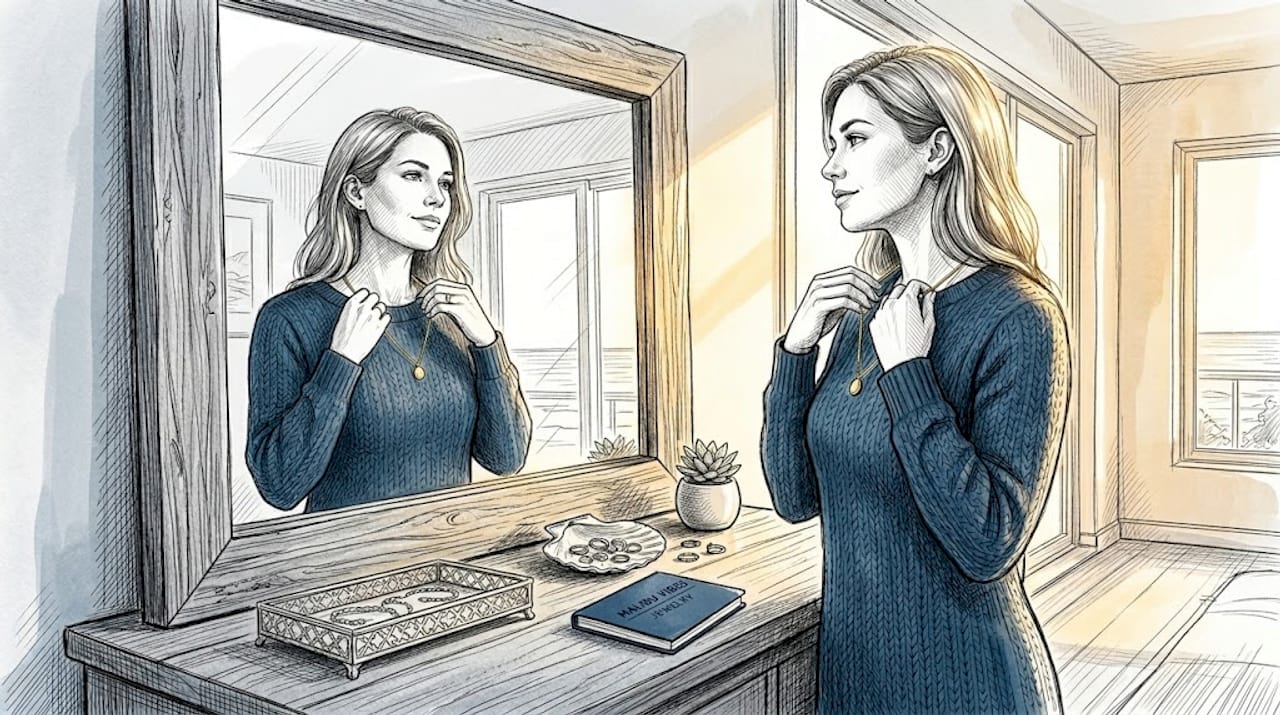
While narratives strengthen personal meaning, platform culture shapes collective experience, often at lightning speed.
Social media didn’t invent jewelry trends. But it supercharged them. A motif that might have taken three years to move from a design studio to mainstream awareness can now peak and fade in under twelve months. Social platforms accelerate jewelry trend adoption, making certain motifs go viral before they’ve even had time to develop cultural depth.
The data is striking. Year over year, social media shortens the rise and fall of certain jewelry trends by up to 40%. What this means practically: a style you love today may feel overexposed by the time you’ve saved up for it, unless you’re buying for meaning rather than momentum.
Trends that have ridden and crashed the social media wave in recent cycles include:
- Pearls reinterpreted as edgy, modern pieces rather than traditional accessories
- Statement earrings in oversized sculptural forms
- Zodiac motifs tied to astrology’s broader cultural moment
- Chunky gold chains moving from streetwear into fine jewelry
- Dainty stacking rings popularized through flat-lay content formats
None of these trends are “bad.” Many are genuinely beautiful. But buying into them at peak virality is different from discovering them because they resonate with your personal style. Smart buyers treat social media’s influence on jewelry as a discovery tool rather than a purchasing directive. See something you love? Wait six weeks. If you still want it, it’s probably more than a moment.
For a broader view of where styles are heading right now, the 2025 jewelry trends overview provides useful context on which movements carry substance versus which are driven purely by platform algorithms.
Different buyers, different trends: Why style shifts aren’t universal
As trends move faster than ever, it’s important to note that not every buyer is swept up at the same pace or for the same reasons.
One of the most underappreciated facts about jewelry trend cycles is that they don’t affect everyone equally. The market is deeply polarized. Vogue, citing Bernstein analyst Luca Solca, describes a K-shaped economy in jewelry: entry-price pieces for aspirational buyers at one end, and high jewelry defined by rarity and uniqueness at the top, each responding to completely different signals.
This means a trend that sweeps through accessible price points may barely register at the luxury tier, and vice versa. What drives each segment looks like this:
High-net-worth and luxury buyers:
- Rarity of design and materials above all else
- Heritage and brand provenance as markers of value
- Investment return potential over time
- Exclusivity and limited production runs
- Access to one-of-a-kind custom commissions
Aspirational and entry-level buyers:
- Accessibility and price point flexibility
- Current pop culture and platform visibility
- Uniqueness within an affordable range
- Strong aesthetic appeal and trend alignment
- Discovery through social platforms and influencers
Understanding which category you primarily shop from doesn’t limit you. It helps you shop more intentionally. Luxury fashion jewelry designed for longevity operates on different principles than trend-led costume pieces, and recognizing that distinction saves you both money and disappointment.
Why “trendless jewelry” is a myth—And what really matters
Stepping back, let’s challenge a common myth and reframe what it really means for jewelry to have staying power.
You’ve probably heard the phrase “classic jewelry is trendless.” It sounds reassuring. Buy the right things and you’re immune to trend cycles. We’d push back on that firmly. According to Vogue UK’s analysis of 2026 jewelry movements, “jewelry is trendless” is a misunderstanding. There are macro cycles in silhouette, material, and style themes, but micro-trends move fast, and the overall narrative of what jewelry means to the buyer is actually what changes first.
The idea of “trendless” jewelry often leads buyers toward the safest, most generic option available, a thin gold band, a simple diamond stud, because they fear getting it wrong. But those choices can feel hollow precisely because they lack narrative. The most resilient pieces in your collection are almost certainly ones tied to a moment, a person, or a version of yourself you were proud of.
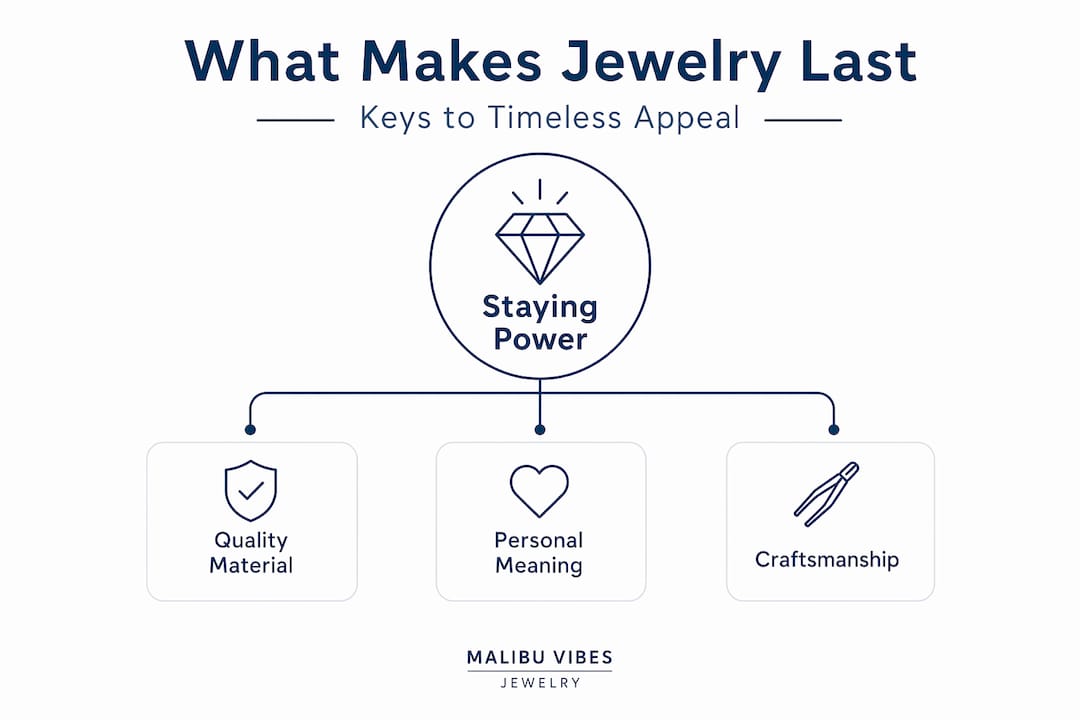
What actually gives jewelry staying power isn’t neutrality. It’s a combination of three things: genuine quality in materials and construction, design versatility that doesn’t depend on a single trend moment, and a personal story that you carry with the piece. Remove any one of those, and longevity becomes harder to guarantee.
The most interesting observation from our experience is this: the pieces people reach for year after year are rarely the “safe” purchases. They’re the ones that felt slightly bold at the time, the ones with a specific meaning, the ones made by someone who cared about the details. That’s not a formula for following trends. It’s a formula for transcending them.
Pro Tip: When building a jewelry wardrobe meant to last, seek out pieces where the narrative is built in through handcraftsmanship, symbolic design, or a brand story that reflects real values. These 2025 jewelry style trends show how the most enduring looks share exactly that quality.
Explore handcrafted jewelry with lasting meaning
Ready to put these insights into practice? See how Malibu Vibes Jewelry interprets these shifting trends with collections that balance meaning, investment, and timelessness.
At Malibu Vibes Jewelry, every piece starts with a commitment to craftsmanship over quantity. Our Los Angeles-based designs are built to outlast fast trend cycles, made from 14k gold and sterling silver, set with diamonds and genuine gemstones, and crafted with the kind of care that shows in every detail.
Explore our sterling silver jewelry collection for pieces that balance accessibility with real quality, or learn more about how our fine jewelry is crafted to understand the intentionality behind every design decision. If you’re looking for something that makes a statement with genuine substance, our diamond earrings collection showcases how a single well-crafted piece can anchor your style for years. We design for women who buy with intention, not impulse.
Frequently asked questions
Are jewelry trends changing faster than before?
Yes, social media now accelerates jewelry trend cycles significantly, compressing what used to be multi-year movements into months, making intentional purchasing more important than ever.
What influences jewelry trends more: fashion designers or material costs?
Both are powerful forces, but precious metal and diamond price shifts often influence what designers even have the option to create each season, making economics a quieter but very real driver.
How can I choose jewelry that stays stylish despite changing trends?
Prioritize pieces with personal meaning and genuine craftsmanship, since structural consumer shifts toward investment value confirm that emotionally resonant jewelry holds its relevance far longer than seasonal styling choices.
Do different buyers follow different jewelry trends?
Absolutely. The jewelry market is K-shaped, meaning luxury buyers respond to rarity and heritage while aspirational buyers are driven by accessibility and pop culture visibility, so the trends each group follows rarely overlap directly.