

TL;DR:
- The choice of gemstone setting is crucial to protecting the stone and enhancing its beauty, impacting daily wearability and style. Different styles like prong, bezel, and pavé serve specific aesthetic and practical needs, fitting various lifestyles and tastes. Selecting the right setting involves considering durability, personal style, gemstone type, and maintenance preferences to create a timeless, meaningful jewelry piece.
The gemstone you choose tells a story. But the setting? That’s what keeps that story safe and makes it shine. Choosing the wrong setting can dull a spectacular stone, leave it vulnerable to damage, or simply feel out of sync with who you are. Whether you’re treating yourself to a milestone piece or searching for a gift that will be remembered for decades, understanding gemstone settings is the single most important factor that separates a beautiful purchase from a truly extraordinary one.
Table of Contents
- What makes a beautiful gemstone setting?
- Classic gemstone setting styles: Prong, bezel, and beyond
- Real-world examples: Luxury gemstone rings and necklaces
- Comparison table: Which gemstone setting is right for you?
- How to choose: Matching settings to your lifestyle and taste
- Why the perfect setting makes all the difference
- Find your new favorite gemstone jewelry
- Frequently asked questions
Key Takeaways
| Point | Details |
|---|---|
| Setting defines style | The setting often shapes the look and impact of your gemstone jewelry. |
| Security is crucial | Choose a setting that matches your lifestyle to protect your gems. |
| Sparkle vs. protection | Prong settings boost brilliance; bezel types offer maximum safety. |
| Real-life inspiration | Explore real jewelry examples for practical ideas before you buy. |
What makes a beautiful gemstone setting?
Before falling in love with a piece, it helps to know what you’re actually looking at. A gemstone setting is the metal framework that holds your stone in place. It determines how much of the gem is visible, how much light can reach it, and how protected it will be over time. As gemstone setting techniques experts explain, jewelry settings influence both design and daily wearability, meaning your choice affects far more than appearances.
Here are the four key criteria that define a great setting:
- Aesthetics: The setting should complement the stone, not compete with it. A delicate round diamond looks breathtaking in a simple prong setting, while a bold colored gemstone might demand a more sculptural surround.
- Security: Some settings grip the stone tightly from all sides, while others leave it more exposed. For a ring you plan to wear every day, security matters enormously.
- Maintenance: Open settings let light flood in but also collect dust and lotion. Closed settings are easier to clean but may require professional polishing to stay brilliant.
- Occasion and lifestyle fit: A statement cocktail ring calls for something dramatic. A ring you wear to the gym, the beach, and the office needs to be practical and protective.
Understanding the types of gemstone settings available gives you a real advantage when shopping, because you stop reacting to how something looks and start asking whether it actually fits your life.
Pro Tip: Consider your lifestyle honestly before choosing a setting. If you work with your hands, exercise often, or tend to forget to remove your jewelry, choose a low-profile setting with maximum protection over one that simply looks stunning in the store.
Classic gemstone setting styles: Prong, bezel, and beyond
Now that you know the criteria, let’s break down the most iconic gemstone setting styles and see what makes each one unique.
The major gemstone settings include prong, bezel, channel, pavé, and tension, each with its own personality and practical strengths. Here’s how each one works and who it suits best:
-
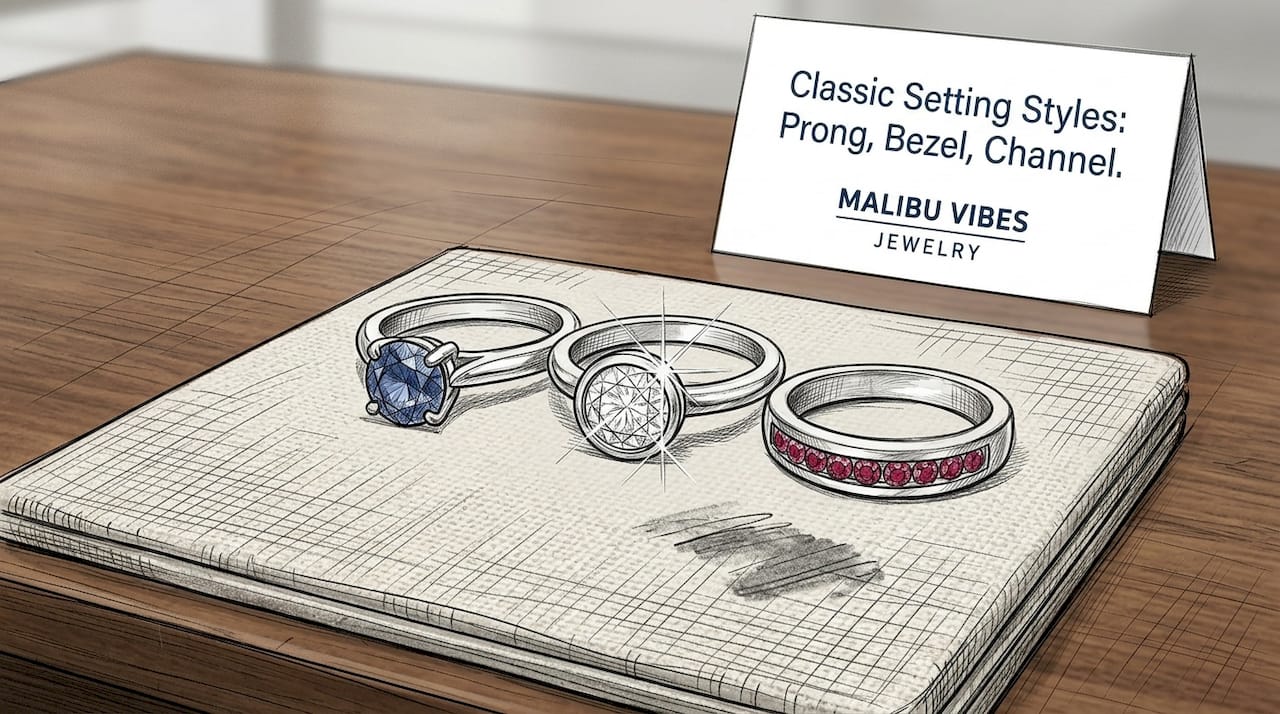
Prong setting: Metal claws, usually four or six, reach up from the band to grip the stone at its edges. This exposes the maximum amount of the gem to light, which means dazzling brilliance and fire. It’s the classic choice for solitaire diamond engagement rings and high-end sapphire pieces. The tradeoff is that the prongs can catch on fabric and the gem is slightly more exposed to impact.
-
Bezel setting: A continuous metal rim wraps fully around the stone’s perimeter, securing it from all sides. This setting has a clean, modern look and offers superior protection. Check out the bezel setting guide for a deep look at why jewelers recommend it for active wearers.
-
Channel setting: Stones are set in a row between two parallel strips of metal, with no prongs separating them. The result is a sleek, continuous sparkle along the band. Channel settings are popular for wedding bands and anniversary rings because they look polished and keep stones firmly in place.
-
Pavé setting: Small diamonds or gemstones are set close together across a metal surface, held by tiny prongs or beads. The effect is a carpet of light. Pavé rings and necklace pendants look impossibly glamorous, and the technique works beautifully as an accent alongside a center stone.
-
Tension setting: The stone appears to float between the two ends of the band, held only by the pressure of the metal. It’s a bold, architectural choice that shows off every angle of the gem. The visual impact is dramatic and intensely modern.
“The setting you choose isn’t just about style; it’s your gem’s best defense.”
Pro Tip: If you’re shopping for a ring to wear daily without removing it, a bezel or channel setting will serve you far better than prongs, which can weaken or snag over time with constant wear.
Real-world examples: Luxury gemstone rings and necklaces
With the basics in mind, here’s how these styles come alive in actual high-end jewelry pieces. As stunning gemstone rings show, both rings and necklaces often combine several setting styles for effect and function, layering security with visual drama.
| Jewelry piece | Setting style | Best occasion | Standout feature |
|---|---|---|---|
| Solitaire sapphire ring | Prong (6-claw) | Engagement, milestone | Maximum light exposure, brilliant color |
| Emerald band | Bezel | Daily wear, travel | Full stone protection, sleek silhouette |
| Diamond wedding band | Channel | Everyday, formal | Flush fit, continuous sparkle |
| Ruby halo necklace | Pavé surround | Evening, cocktail events | Intense glamour, layered shimmer |
| Amethyst solitaire ring | Tension | Statement, fashion-forward | Floating stone effect, ultra-modern |
Browsing the color gemstone ring collection reveals just how dramatically a setting can change the character of a piece. The same oval ruby looks entirely different set in a six-prong yellow gold mount versus a sleek white gold bezel.
Key benefits to look for in each style:
- Prong rings: Maximize brilliance in natural and artificial light; great for photographs and formal settings.
- Bezel necklaces and rings: Travel-friendly, snag-proof, and ideal for layering with other pieces.
- Channel bands: Work beautifully as stackers or standalone anniversary rings.
- Pavé pendants: Add a high-glamour finishing touch to any neckline; pairs well with gemstone necklaces in simple prong or bezel settings.
- Tension rings: Best suited to those who want their jewelry to start conversations.
When a ring or necklace combines two or more setting styles, the result is usually a piece that balances sparkle with practicality. A center stone in a four-prong setting surrounded by a pavé halo gives you the brilliance of an open setting plus the visual density of closely set accent stones.
Comparison table: Which gemstone setting is right for you?
After seeing these styles in action, a direct comparison can help you pinpoint which is best for your needs. Choosing the right setting techniques explained side by side makes the decision much easier.
| Setting type | Best occasion | Everyday durability | Level of sparkle | Ease of care |
|---|---|---|---|---|
| Prong | Formal, evening, engagement | Moderate | Very high | Moderate (needs regular prong checks) |
| Bezel | Daily wear, active lifestyle | Very high | Moderate | Easy (smooth edges, no prong traps) |
| Channel | Everyday, wedding bands | High | High | Easy (stones flush with metal) |
| Pavé | Cocktail, red carpet | Moderate | Extremely high | Harder (small crevices trap residue) |
| Tension | Statement, fashion events | Low to moderate | Very high | Moderate (no prong maintenance) |
Bezel settings are the most secure choice for active lifestyles, offering full perimeter protection that no other setting can match.
A few quick decision tips to keep in mind:
- If your priority is brilliance and the ring is mostly for special occasions, go with a prong or tension setting.
- If you’re choosing a piece to wear every single day without thinking about it, bezel or channel is your answer.
- If you want a piece that doubles as an heirloom, prioritize security. A bezel-set emerald passed down through generations will retain its stone far more reliably than an heirloom with delicate prongs.
- For gifts, consider the recipient’s daily routine. An active, outdoorsy woman will appreciate a bezel far more than a pavé ring she has to constantly worry about.
How to choose: Matching settings to your lifestyle and taste
With the options compared, here’s how to select a setting that truly suits how you live and express yourself. As retail jewelers recommend, matching settings to lifestyle and personal taste is the most reliable way to ensure lasting satisfaction with a purchase.
Follow these steps to make your choice with confidence:
-
Assess how active you are. If you work with your hands, cook often, garden, or exercise while wearing jewelry, skip the prong and tension settings. Choose bezel or channel.
-
Define your style identity. Are you drawn to minimalist, clean lines? Bezel and tension settings will feel like home. Do you love vintage, layered, ornate looks? Prong settings with halo accents or pavé detailing are made for you.
-
Identify the intended use. A daily ring needs durability. A cocktail piece worn twice a year can prioritize drama over practicality. A gift for a special occasion should reflect the recipient’s actual wardrobe.
-
Think about the gemstone itself. Softer stones like opals and turquoise need the protection of a bezel. Hard stones like diamonds and sapphires can handle the exposure of prong settings. Understanding gemstone cut and style also helps you select the best setting to show off your stone’s specific shape and faceting.
-
Plan your maintenance routine. Pavé settings need ultrasonic cleaners or professional cleaning more often than bezel rings you can simply rinse. Be honest about how much care you’ll realistically give your jewelry.
-
Consider customization. Less common settings like flush, gypsy, or star settings give you a truly one-of-a-kind look. If you want something that stands apart from mass-market designs, ask about these options.
Pro Tip: Don’t dismiss vintage-inspired settings just because they look old-fashioned. Milgrain bezel settings and Art Deco-style cutwork surrounds are experiencing a serious resurgence in luxury jewelry right now, and they offer exceptional character that no trend-driven piece can replicate.
Why the perfect setting makes all the difference
Here’s something most jewelry guides won’t say directly: the stone is almost secondary. A mediocre stone in a masterfully crafted setting looks extraordinary. A stunning stone in a poorly matched setting looks confused, even cheap.
We’ve seen this play out repeatedly with our Los Angeles-made pieces. Customers come in with a clear idea of the gemstone they want, usually a sapphire or an emerald, and leave surprised by how much the setting reshaped their entire vision. A deep blue sapphire that looked heavy and dark in a bezel display stone became luminous and alive the moment it was shown in a four-prong white gold mount that let light travel through from every angle.
The problem with following jewelry trends is that they optimize for what photographs well, not what wears well or what grows in meaning over time. Trends chase novelty. A well-chosen setting chases permanence. The pieces people treasure most, the ones that get passed down and pointed to in old photographs, are rarely the trendiest designs of their era. They’re the pieces where someone took the time to match stone, setting, metal, and purpose into a unified whole.
Browsing see inspiring gemstone rings reveals this truth clearly. The rings that feel timeless are the ones where every decision was intentional.
As we believe it at Malibu Vibes Jewelry: “A well-chosen setting turns a beautiful stone into a treasured story.” That’s not just poetic language. It’s the practical difference between jewelry you wear and jewelry you keep forever.
Find your new favorite gemstone jewelry
You’ve spent time learning what separates a good setting from a great one. Now it’s time to put that knowledge to work.

At Malibu Vibes Jewelry, every piece in our handcrafted Los Angeles collections is designed with exactly this balance in mind: brilliant stones, settings chosen for both beauty and longevity, and 14k gold and sterling silver metalwork that holds up to real life. Whether you’re drawn to the drama of a pavé halo ring or the clean confidence of a bezel-set pendant, you’ll find it here. Start with the gemstone ring collection to explore rings across every major setting style, or shop the full gemstone necklace collection for pendants and layering pieces that bring the same level of craft to every neckline. Free shipping is available, and new arrivals are added regularly.
Frequently asked questions
Which gemstone setting is most secure for everyday wear?
Bezel settings are usually the most secure, as the metal rim fully protects the stone from damage and accidental loss, making them ideal for active daily wear.
What setting style maximizes gemstone sparkle?
Prong settings hold the gemstone with minimal metal, and prong settings showcase brilliance by allowing light to enter the stone from all angles, producing maximum fire and sparkle.
How can I tell if a setting matches my style?
Match the setting to your fashion preferences: delicate prong or tension for understated elegance, bold pavé or vintage-inspired milgrain for statement looks. Each setting style pairs best with certain tastes and fashion sensibilities.
Can I combine different gemstone settings in one piece of jewelry?
Yes, mixing settings adds both style and functionality. As many modern designs show, rings and necklaces combine several setting styles to balance maximum sparkle with structural security.