

Shopping for fine jewelry can feel overwhelming when you’re unsure if you’re getting genuine quality or overpaying for poor craftsmanship. Many women hesitate at checkout, wondering if the hallmarks are real, if gemstones are secure, or if the seller is trustworthy. This guide walks you through clear, actionable steps to verify metal purity, assess craftsmanship, confirm gemstone authenticity, and evaluate seller credibility so you can buy luxury handcrafted jewelry with complete confidence.
Table of Contents
- Prerequisites: What You Need To Know Before Evaluating Jewelry Quality
- Step 1: Verify Metal Purity And Hallmarks
- Step 2: Evaluate Craftsmanship Quality
- Step 3: Confirm Gemstone Security And Authenticity
- Step 4: Assess Seller Credibility And Proof Of Authenticity
- Common Buyer Mistakes And Troubleshooting Tips
- Expected Results And Longevity Benchmarks
- Discover Malibu Vibes Jewelry Craftsmanship
Key takeaways
| Point | Details |
|---|---|
| Metal purity verification | Hallmark stamps like 14K, 925, or PLAT confirm genuine precious metals and prevent counterfeit purchases. |
| Craftsmanship quality | Smooth finishes, secure settings, and fluid mechanics distinguish durable luxury pieces from mass-produced items. |
| Gemstone security | Firmly set stones with recognized certifications protect your investment and prevent costly losses. |
| Seller credibility | Researching reputation, return policies, and certifications reduces fraud risks and ensures trustworthy transactions. |
| Professional appraisals | Expert evaluations provide final confirmation for high-value purchases using non-destructive testing methods. |
Prerequisites: what you need to know before evaluating jewelry quality
Before you start inspecting jewelry pieces, familiarize yourself with essential terminology and tools that make quality assessment straightforward. Understanding basic terms like karat, which measures gold purity, and hallmark, the stamped mark indicating metal content, helps you decode what you’re actually buying. A jeweler’s loupe or magnifying glass is your best friend for spotting tiny details like engraving and setting flaws that reveal true quality.
You’ll also want to recognize trusted seller certifications and generous return policies that protect your purchase. High-quality handcrafted fine jewelry typically features precious metals like 14k or 18k gold, sterling silver marked 925, or platinum, often paired with diamonds or gemstones like sapphires and emeralds. Learning about metal purity in jewelry gives you the foundation to spot authentic materials versus plated or filled alternatives.
Familiarity with authenticity certificates and appraisals prepares you to request and verify documentation that confirms your jewelry’s value. Knowing these basics transforms you from an uncertain shopper into an informed buyer who can confidently evaluate any piece.
Pro Tip: Keep a small jeweler’s loupe in your purse when shopping in person. This $10 tool instantly reveals hallmarks, setting details, and finish quality that are invisible to the naked eye.
- Basic jewelry vocabulary decoded for quick reference
- Essential inspection tools like loupes and magnifying glasses
- Recognition of trusted certifications and return policies
- Common precious metals and gemstones used in fine jewelry
- How preparation empowers accurate quality assessment
Step 1: verify metal purity and hallmarks
Your first quality checkpoint is confirming the metal’s authenticity through hallmark stamps, which are legally required marks indicating metal content and purity. Look for stamps like 14K or 585 (58.5% gold), 18K or 750 (75% gold), 925 (92.5% silver), or PLAT (platinum) usually located on the inner band of rings or clasp areas of necklaces and bracelets. Authentic Made in USA stainless steel jewelry uses 316L surgical-grade stainless steel known for corrosion resistance, verified by laser-etched markings like ‘316L USA’.
Weight and density provide crucial clues about whether a piece is solid metal or hollow and plated. Solid gold and platinum pieces feel substantial and heavy for their size, while counterfeit jewelry frequently uses lighter metals or hollow designs and lacks appropriate hallmarks. Pick up similar-sized pieces to compare their weight. If a chunky bracelet feels surprisingly light, it’s likely hollow or gold-filled rather than solid.
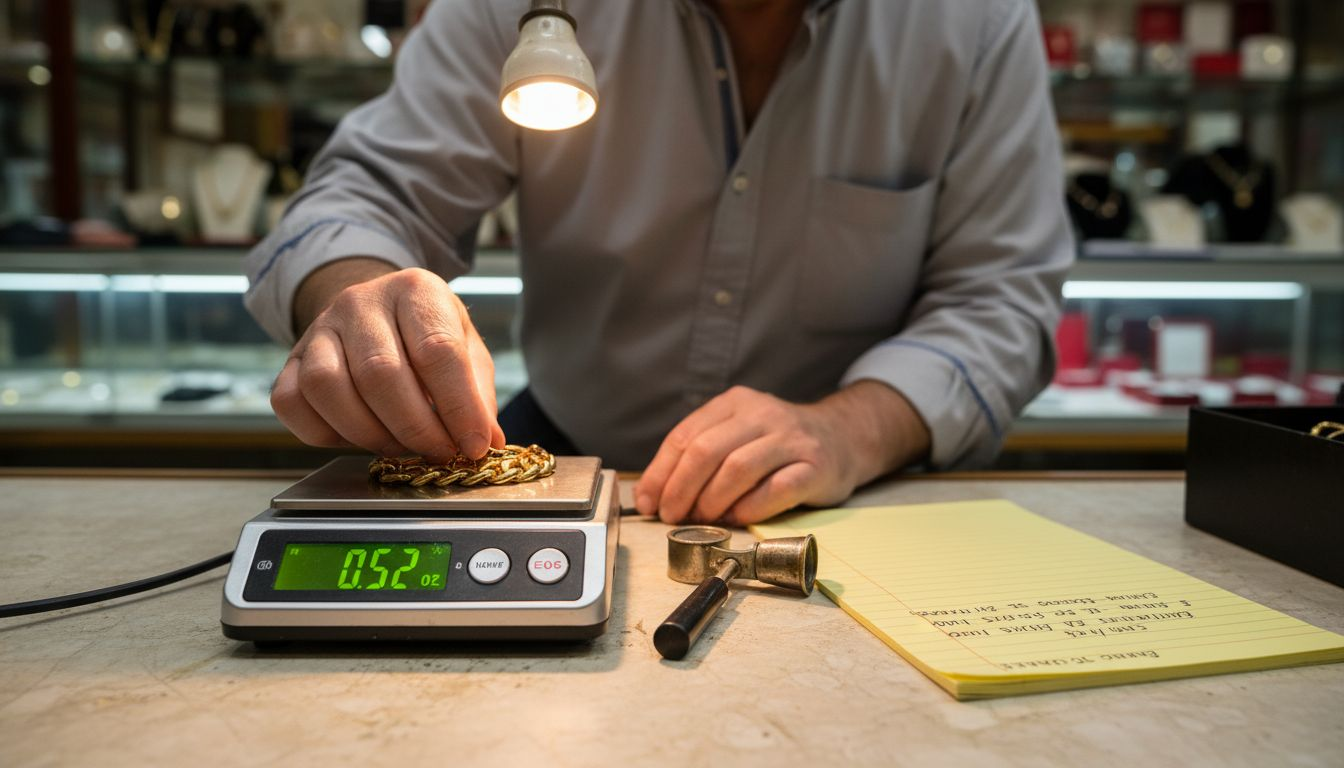
Understanding precious metals in jewelry helps you cross-check hallmarks against trusted references to catch inconsistencies. Use your loupe to examine hallmarks closely. Genuine stamps appear crisp and evenly impressed, while fake marks look blurry or unevenly stamped.
| Metal Type | Durability | Hallmark Presence | Weight Characteristics |
|---|---|---|---|
| Solid 14K Gold | Excellent, resists tarnish | Always stamped 14K or 585 | Heavy, substantial feel |
| Gold Plated | Poor, wears off quickly | May lack hallmark or say GP | Light, thin base metal |
| Hollow Gold | Moderate, dents easily | Stamped but feels light | Noticeably lighter than solid |
| Sterling Silver | Good, requires polishing | Stamped 925 or Sterling | Moderate weight, cool touch |
| Platinum | Exceptional, hypoallergenic | Stamped PLAT or 950 | Very heavy, dense |
Pro Tip: Bring a small scale when shopping for high-value pieces. Compare the weight of the jewelry against published density standards for the claimed metal to catch hollow or plated fakes instantly.
- Recognize common hallmark stamps and their meanings
- Assess weight and density to confirm solid metal construction
- Avoid gold-plated or gold-filled pieces lacking proper hallmarks
- Cross-check hallmarks using trusted references and guides
- Use magnification to spot laser markings on surgical-grade steel
Step 2: evaluate craftsmanship quality
Once you’ve verified the metal, turn your attention to the craftsmanship details that separate luxury pieces from mass-produced jewelry. Run your fingers slowly over all surfaces, feeling for sharp edges, rough spots, or uneven finishes that indicate rushed or poor workmanship. High-quality handcrafted jewelry should feel smooth and polished everywhere, with no bumps or scratches.
Inspect stone settings carefully using your loupe. Prongs should be evenly sized, symmetrically placed, and bent securely over each gemstone without gaps. Bezel settings, where metal encircles the stone, should sit flush against the gem with no visible space underneath. Understanding jewelry craftsmanship reveals how these details directly impact durability and beauty.
Examine chain links by gently flexing them to ensure they move fluidly without catching or stiffness. Test clasps by opening and closing them several times. They should engage smoothly and hold firmly without feeling loose or requiring excessive force. Visible solder marks or polish residue trapped in crevices signal lower-quality production methods.
Exploring the fine jewelry making process shows you how expert artisans achieve superior finishes and secure settings. Fine craftsmanship extends your jewelry’s life significantly and maintains its aesthetic appeal through years of wear. Learning what makes jewelry luxury helps you recognize these quality markers instantly.
- Smooth finishes with no sharp or rough edges
- Precise, even stone settings without gaps or looseness
- Fluid chain links and secure, easy-operating clasps
- Absence of visible solder marks or polish residue
- How superior craftsmanship ensures lasting beauty
Step 3: confirm gemstone security and authenticity
With the metal and craftsmanship verified, focus on ensuring gemstones are securely set and genuinely valuable. Gently shake the piece near your ear, listening for any rattling sounds that indicate loose stones ready to fall out. This simple test catches setting problems before they become costly losses.
Inspect each prong and bezel under magnification to confirm uniformity and secure fastening. Prongs should grip the stone firmly at consistent angles, with no bent or missing tips. Look for gemstone certification from recognized laboratories like GIA or AGS when purchasing pieces with valuable stones. These certificates verify authenticity, grade quality, and provide documentation for insurance.
Use magnification and bright light to assess clarity, color uniformity, and the presence of inclusions or flaws. Natural gemstones typically show some minor inclusions, while synthetic or treated stones may appear suspiciously perfect or have unusual patterns. Browsing 14k gold gemstone rings shows you examples of securely set, certified stones.
Learning how to identify quality gemstones empowers you to spot authenticity markers and avoid treated or synthetic stones sold as natural.
- Gently shake the piece to detect any loose stones
- Inspect prongs and bezels for uniform, secure fastening
- Request gemstone certification from recognized labs
- Use magnification to assess clarity and color consistency
- Check for natural inclusions versus synthetic perfection
- Test stone security by gentle shaking and visual inspection
- Verify prong and bezel uniformity and tightness
- Prioritize pieces with GIA or AGS certification
- Examine stones under light for authenticity markers
- Recognize natural inclusions as authenticity indicators
Step 4: assess seller credibility and proof of authenticity
Even perfect jewelry loses value if purchased from an untrustworthy seller who won’t stand behind their products. Start by researching seller reviews, ratings, and online reputation thoroughly across multiple platforms. Look for consistent positive feedback about product quality, accurate descriptions, and responsive customer service.
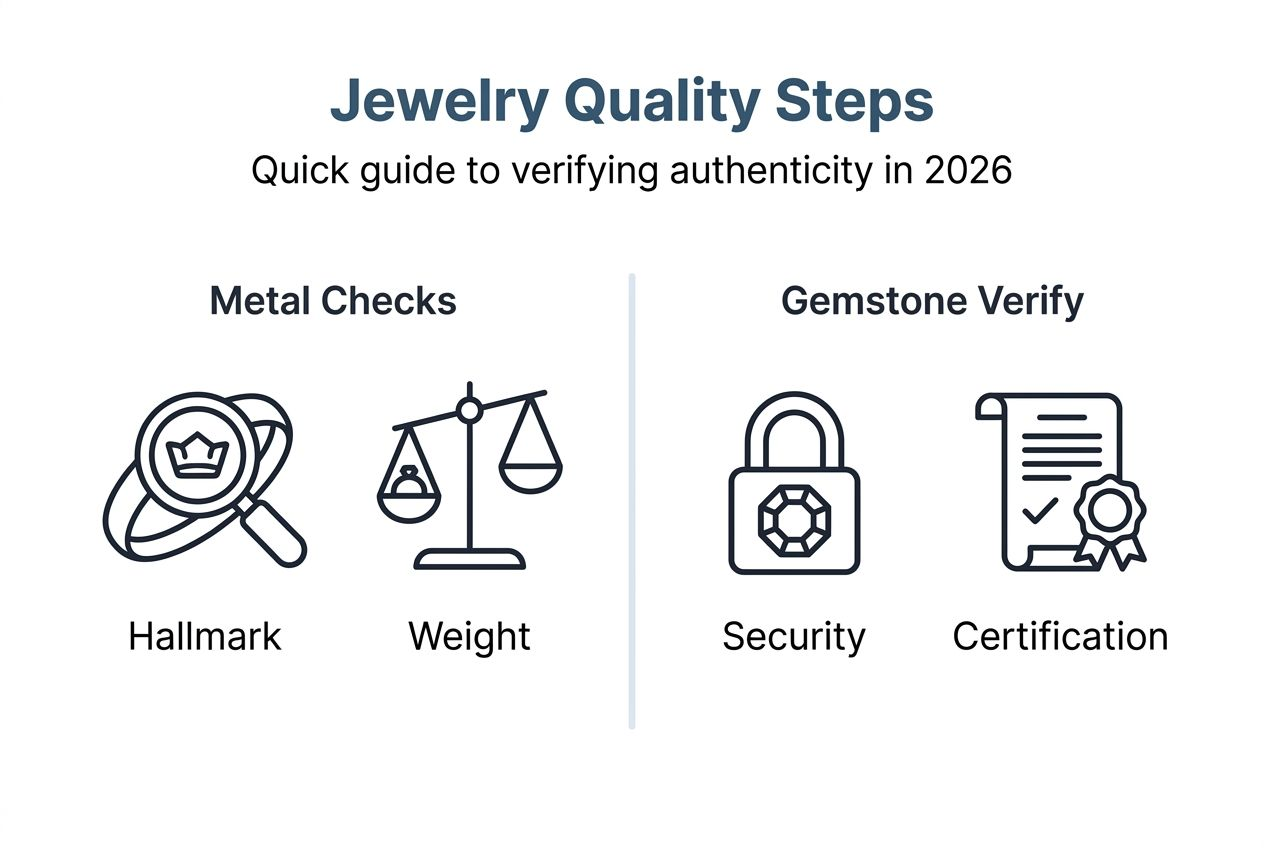
Request detailed product descriptions that specify metal purity, gemstone types, and any available certifications before purchasing. Legitimate sellers provide this information transparently and welcome questions. Examine return, exchange, and repair policies carefully. Generous policies signal confidence in product quality, while restrictive terms may indicate problems.
Be extremely wary of suspiciously low prices that seem too good to be true. Quality handcrafted fine jewelry has inherent material and labor costs that sellers cannot drastically undercut without compromising authenticity. For high-value purchases, consider professional appraisals using methods like acid testing and X-ray fluorescence that verify metal purity without damage.
Understanding the importance of authenticity certificates and appraisals protects your investment. Following fine jewelry buying tips ensures you work with credible sellers who enhance your confidence and satisfaction.
- Research seller reviews and ratings across platforms
- Request detailed descriptions with certifications
- Examine return, exchange, and repair policies
- Question suspiciously low prices on luxury items
- Consider professional appraisals for expensive pieces
- Choose sellers with transparent credentials and guarantees
Common buyer mistakes and troubleshooting tips
Even informed shoppers sometimes make errors that lead to disappointing purchases or lost investments. Ignoring hallmark verification or relying only on appearance opens the door to counterfeit metals and overpaying for plated pieces. Always verify stamps before considering other quality factors.
Buying lightweight or hollow pieces labeled as solid metal results in poor durability and rapid wear. Compare similar pieces to establish baseline weights, and don’t hesitate to ask sellers about construction methods. Neglecting to check stone security often causes lost gemstones and expensive repairs that could have been prevented with a simple shake test.
Failing to confirm seller credibility exposes you to fraud with no recourse for refunds or replacements. Spend time researching before purchasing, especially for high-value items. Review fine jewelry buying tips and quality gemstone identification to avoid these pitfalls.
Always physically inspect pieces yourself when possible, and verify all certifications directly with issuing laboratories. Understanding quality indicators for investments helps you recognize red flags early.
Pro Tip: Always request written product guarantees and flexible return options before finalizing your purchase. This simple step protects your investment and signals seller confidence in their jewelry quality.
- Verify hallmarks instead of trusting appearance alone
- Compare weights to avoid hollow or plated metals
- Test stone security before purchase to prevent losses
- Research seller credibility thoroughly before buying
- Inspect pieces yourself and verify certifications independently
- Request guarantees and return options for protection
Expected results and longevity benchmarks
Understanding realistic durability expectations helps you care for your fine jewelry properly and recognize when quality meets professional standards. Secure gemstone settings in high-quality pieces should remain tight for 5+ years under normal daily wear without requiring retightening or repair. This longevity reflects superior craftsmanship and materials.
High metal purity, particularly 14K or 18K gold and platinum, resists tarnish and physical wear effectively over decades. Sterling silver requires occasional polishing but maintains structural integrity indefinitely when properly cared for. Understanding metal purity in jewelry helps you set appropriate maintenance expectations.
Superior craftsmanship significantly reduces the frequency of needed repairs and extends jewelry life well beyond mass-produced alternatives. Well-made pieces withstand daily activities, occasional bumps, and regular cleaning without losing stones or developing structural issues. Proper care practices like removing jewelry during exercise, storing pieces separately, and scheduling occasional professional maintenance preserve finish quality and setting security.
Reputable sellers often provide guarantees or warranties covering manufacturing defects, which improves long-term satisfaction and protects your investment. Setting realistic durability expectations ensures you provide appropriate care and maintain your jewelry’s value retention over time.
- Secure settings last 5+ years under normal wear
- High purity metals resist tarnish and wear effectively
- Superior craftsmanship reduces repair frequency significantly
- Proper care and maintenance preserve finish and security
- Seller guarantees improve long-term satisfaction
- Realistic expectations enable better care and value retention
Discover Malibu Vibes jewelry craftsmanship
Now that you understand how to evaluate jewelry quality, explore Malibu Vibes Jewelry’s expertly handcrafted collections that embody every quality marker discussed in this guide.
Our Los Angeles-based artisans create each piece with verified metal purity, secure stone settings, and meticulous attention to craftsmanship details. Explore our fine jewelry making process to see firsthand how we achieve superior quality through traditional techniques and modern precision. Our sterling silver jewelry collection and 14k color gemstone rings showcase the beautiful results of expert craftsmanship and authentic materials. Shop confidently knowing every piece meets the highest standards you’ve learned to recognize, backed by transparent certifications and generous guarantees.
Frequently asked questions
What does a ‘925’ hallmark mean on silver jewelry?
The 925 hallmark indicates sterling silver, which contains 92.5% pure silver and 7.5% other metals, usually copper, for added strength. This is the standard purity for quality silver jewelry worldwide.
How can I tell if a gold necklace is solid gold or plated?
Check for hallmarks like 14K or 18K indicating solid gold, and compare the weight to similar pieces since solid gold feels noticeably heavier. Gold-plated jewelry often lacks hallmarks or says GP, and feels much lighter because it’s a thin gold layer over base metal.
Why is gemstone certification important?
Certification from recognized labs like GIA verifies a gemstone’s authenticity, quality grade, and characteristics, protecting you from paying premium prices for synthetic or treated stones. It also provides essential documentation for insurance purposes.
What questions should I ask the jewelry seller before buying?
Ask about metal purity and hallmarks, gemstone certifications, return and exchange policies, and whether they provide written guarantees. Request details about the craftsmanship process and ask to see the piece under magnification if shopping in person.
How often should I get my fine jewelry professionally appraised?
Get high-value pieces appraised every 3 to 5 years to update insurance coverage and verify ongoing authenticity and condition. Schedule appraisals sooner if you notice loose settings or plan to sell the jewelry.
Can I verify metal purity at home without professional equipment?
While home testing is limited, you can check for proper hallmarks, compare weight to known authentic pieces, and look for wear patterns that reveal base metal underneath plating. For definitive verification of expensive pieces, professional appraisals using acid testing or X-ray fluorescence are recommended.
Recommended
- How to Identify Quality Gemstones for Fine Jewelry Online – Malibu Vibes Jewelry
- Fine Jewelry Buying Tips for High-Quality Selections – Malibu Vibes Jewelry
- Luxury Jewelry Explained: Key Qualities and Value – Malibu Vibes Jewelry
- Top Diamond Earrings 2025 – Expert Comparison – Malibu Vibes Jewelry
- How to Get High-Quality Embroidery: Pro Tips from Pulse Merch - Custom T-Shirts and Embroidery in Utah | Pulse Merch