

TL;DR:
- Understanding the 4Cs—cut, color, clarity, and carat—helps buyers evaluate diamond quality, with cut being the most critical for brilliance. Verifying grading reports via laser inscriptions and online tools ensures trust and authenticity in your purchase. Focusing on cut quality and systematic comparison guarantees a more radiant, valuable diamond suited to your preferences.
A guide diamond is any diamond evaluated through the 4Cs framework: cut, color, clarity, and carat weight. These four characteristics, standardized by the Gemological Institute of America (GIA), determine every diamond’s beauty, rarity, and price. Whether you’re shopping for an engagement ring, a gift, or a long-term investment, understanding the 4Cs gives you the foundation to buy with confidence. This guide covers grading reports, lab-grown diamond changes, and practical strategies to help you spend your money wisely.
What is the diamond quality guide and why does cut come first?
The 4Cs are the universal language of diamond grading, and cut is the most important of the four. Cut controls light return, which is what creates the sparkle and brilliance you see when a diamond catches the light. A poorly cut diamond with excellent color and clarity will still look dull. A well-cut diamond with modest color and clarity will outshine it every time.
Understanding each of the 4Cs
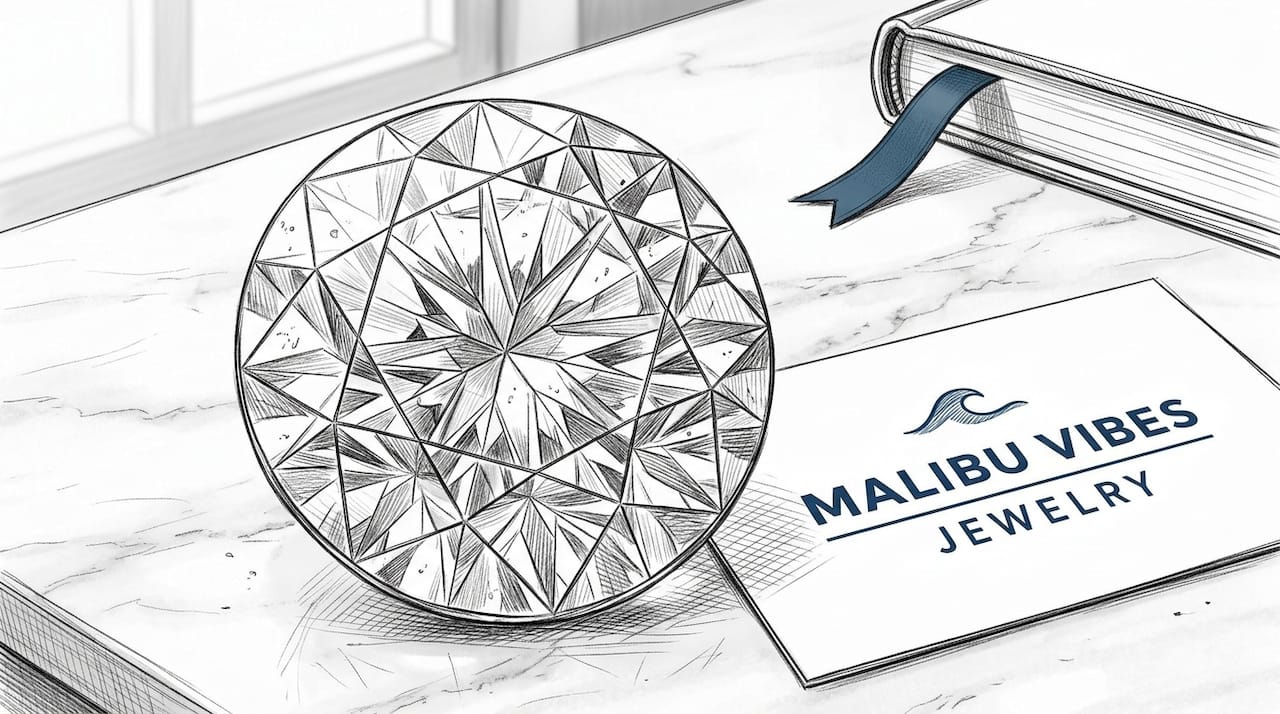
Cut refers to how well a diamond’s facets interact with light. GIA grades round brilliant cuts on a scale from Excellent to Poor. Excellent and Very Good grades are the ones worth buying. Even within the Excellent category, two diamonds can differ in sparkle based on proportions like table percentage, depth percentage, and crown angles. This is why videos matter more than grades alone.
Color measures how colorless a diamond appears. The GIA scale runs from D (perfectly colorless) to Z (visibly yellow or brown). G and H color grades deliver a near-colorless appearance at a noticeably lower price than D through F stones. For most buyers, the difference between a D and a G is invisible to the naked eye once the diamond is set in a ring.
Clarity grades the presence of internal inclusions and surface blemishes. VS2 and SI1 diamonds are eye-clean for most buyers, meaning no inclusions are visible without magnification. Paying for a flawless or internally flawless grade is rarely worth it unless the diamond is a collector’s piece.
Carat is a unit of weight, not size. One carat equals 0.2 grams. Larger carat weights cost exponentially more, especially at round-number thresholds like 1.0ct and 1.5ct.
Pro Tip: Prioritize cut first, then color, then clarity, then carat. A smaller, well-cut diamond will always look better than a larger, poorly cut one at the same price.
- Excellent or Very Good cut: non-negotiable for maximum brilliance
- G or H color: near-colorless, strong value
- VS2 or SI1 clarity: eye-clean without overpaying
- Carat: buy just under major thresholds for the best price-to-size ratio
How to read diamond grading reports from GIA, AGS, and IGI
A diamond grading report is the document that independently verifies a diamond’s quality. Without one, you’re taking the seller’s word for everything. GIA, AGS, and IGI are the three most recognized labs. GIA is the gold standard for natural diamonds. IGI is widely accepted and commonly used for lab-grown diamonds. AGS is respected for its cut grading precision.
Key elements on any grading report
Every report worth trusting includes the following:
- The 4Cs grades: Cut, color, clarity, and carat weight as assessed by the lab
- Table and depth percentages: Critical for evaluating cut quality beyond the grade
- Polish and symmetry: Both should be Excellent or Very Good
- Fluorescence: Strong blue fluorescence can make some diamonds look hazy in sunlight
- Plotting diagram: A map of inclusions showing their type and location inside the stone
- Report number: A unique identifier tied to that specific diamond
Here is how to use the report when buying:
- Match the report number to the laser inscription on the diamond’s girdle. This is the single most reliable way to confirm you’re getting the diamond the certificate describes.
- Visit GIA’s official report check tool online and enter the report number to verify the document is authentic.
- Cross-reference the plotting diagram with the actual diamond using a loupe or by requesting a magnified video from the seller.
- Check fluorescence notes. Strong fluorescence is not always a problem, but it can affect appearance in certain lighting conditions.
- Confirm polish and symmetry grades are at least Very Good before finalizing any purchase.
The laser inscription matching the report number is your only physical proof that the stone in front of you is the stone on the certificate. Skipping this step is the single most common buyer mistake.
Natural vs. lab-grown diamonds: what changed in grading and how to buy smart
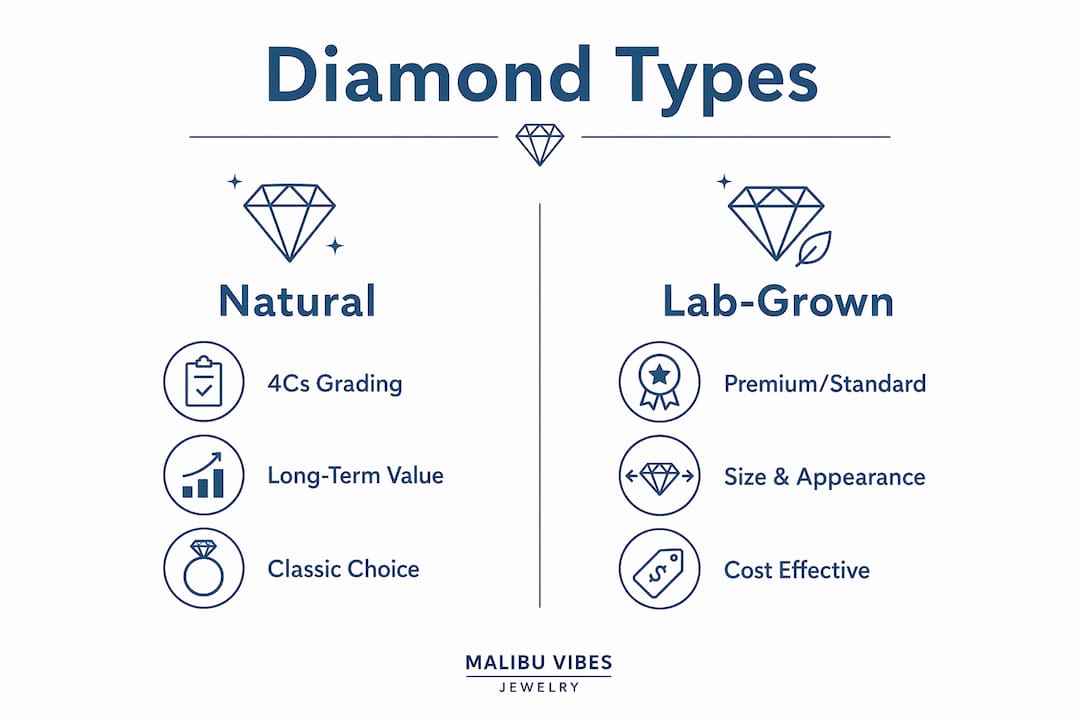
Natural diamonds and lab-grown diamonds are chemically identical, but they are not graded the same way in 2026. In late 2025, GIA replaced its traditional 4Cs reports for lab-grown diamonds with a new Premium/Standard framework. This change reflects GIA’s position that lab-grown diamonds, being mass-produced, lack the natural rarity that justifies the same detailed grading scale used for natural stones.
| Factor | Natural diamond | Lab-grown diamond |
|---|---|---|
| Grading system | Full 4Cs (GIA, AGS, IGI) | Premium/Standard (GIA 2025+); 4Cs still used by IGI |
| Rarity | Finite, geologically formed | Mass-produced in weeks |
| Resale value | Holds value better over time | Depreciates faster due to supply growth |
| Price per carat | Higher | 50–80% lower than natural equivalents |
| Best lab for grading | GIA or AGS | IGI for detailed 4Cs report |
The grading change matters practically. Not all lab-grown reports follow the 4Cs format anymore, so you need to read the specific report type carefully before comparing stones. A GIA Premium grade and an IGI Excellent cut grade are not directly equivalent. When buying lab-grown, request an IGI report if you want the familiar 4Cs breakdown.
Pro Tip: If you’re buying a lab-grown diamond for an engagement ring and want detailed grading, request an IGI certificate. IGI still issues full 4Cs reports for lab-grown stones, giving you more data to compare.
Lab-grown diamonds are an excellent choice for buyers who prioritize size and appearance over long-term investment value. Natural diamonds remain the better choice if resale value or sentimental rarity matters to you.
Practical buying strategies: budgeting, shape, and finding the best value
Smart diamond buying starts with a clear budget and a willingness to make strategic trade-offs. The goal is to maximize visual impact per dollar, not to chase the highest grades across every category.
Here is a step-by-step approach that works:
- Set your budget before you start shopping. Decide on a firm number. Diamond prices vary enormously, and having a ceiling prevents emotional overspending.
- Choose your shape based on style and sparkle preference. Round brilliants produce the most light return and are the most popular for engagement rings. Oval, cushion, and pear shapes offer a larger visual footprint per carat. Princess cuts are geometric and modern. Each shape suits a different aesthetic.
- Buy just under major carat thresholds. A 0.90ct diamond costs 15 to 20% less than a 1.00ct stone with no visible size difference to the naked eye. The same logic applies at 1.50ct and 2.00ct thresholds.
- Compare prices online before visiting any store. Online retailers offer 20 to 40% lower prices than physical stores, with larger inventories and full grading reports included. Most reputable online sellers also offer 30-day return windows.
- Always request a video. Visual judgment and videos are the most reliable way to assess how a diamond actually looks. Photos are static and often flattering. A 360-degree video under magnification reveals inclusions, light performance, and any color tint that grades alone won’t tell you.
For shape selection, consider the setting style too. A bezel setting works beautifully with round, oval, and cushion shapes, protecting the stone while adding a modern edge. A prong setting maximizes light exposure for any shape. The diamond jewelry buying process involves both the stone and the setting working together, so evaluate them as a pair.
How to verify and protect your purchase
Verification is not optional. It is the step that separates a confident buyer from someone who discovers a problem six months later.
- Match the laser inscription to the report number before accepting any diamond. Use a jeweler’s loupe (10x magnification) or ask the seller to confirm it on camera.
- Use GIA’s online report check tool to verify the certificate is authentic and has not been altered. The report number verification process takes under two minutes and is free.
- Inspect the diamond immediately upon delivery if buying online. Check for chips, scratches, or any discrepancy between the stone and the certificate.
- Understand the return policy before you buy. A 30-day return window is the industry standard for reputable online retailers. Shorter windows or restocking fees are red flags.
- Ask about warranties. Some retailers offer lifetime warranties covering prong tightening, cleaning, and minor repairs. This matters more for rings than for loose stones.
Pro Tip: When buying online, record an unboxing video the moment the package arrives. This protects you if you need to file a return or dispute claim, since it proves the condition of the stone at delivery.
The girdle laser inscription is your only physical proof of identity. No inscription match means no purchase.
Key takeaways
Buying a diamond well means prioritizing cut above all other factors, reading grading reports carefully, and verifying the physical stone against its certificate before any money changes hands.
| Point | Details |
|---|---|
| Cut comes first | Excellent or Very Good cut grades maximize brilliance more than any other factor. |
| G–H color is the sweet spot | Near-colorless appearance at a significantly lower price than D–F grades. |
| VS2 or SI1 clarity is enough | Both grades are eye-clean for most buyers and save money without sacrificing appearance. |
| Buy under carat thresholds | A 0.90ct diamond saves 15 to 20% over a 1.00ct stone with no visible size difference. |
| Always verify the inscription | Match the girdle laser inscription to the report number before accepting any diamond. |
Why cut-first thinking changed how I see diamond buying
Most buyers walk into a diamond purchase focused on carat weight. They want the biggest stone their budget allows. I’ve watched this approach lead to disappointment more times than I can count, because a large, poorly cut diamond looks flat and lifeless compared to a smaller stone with an Excellent cut grade.
The shift to cut-first thinking is the single most impactful change a buyer can make. When you allocate more of your budget to cut quality and pull back slightly on carat or color, the diamond you end up with looks noticeably better in real life. The science behind this is straightforward. Cut directly controls light return, and light return is what makes a diamond look alive.
The lab-grown grading changes are causing real confusion right now. Buyers are comparing GIA Premium grades to IGI Excellent grades as if they’re equivalent, and they’re not. My advice is to read the specific report type on every stone you consider, not just the grade. Transparency from the seller on which grading system applies is non-negotiable.
The buyers who walk away most satisfied are the ones who use a systematic checklist: cut grade first, then color, then clarity, then carat, then certificate verification. They also watch videos of every stone before buying. That combination eliminates most of the regret I see from buyers who relied on specs alone.
— Ara
Discover Malibuvibesjewelry’s handcrafted diamond collections
Malibuvibesjewelry brings the same cut-first philosophy to every piece it creates. Handcrafted in Los Angeles from 14k gold and set with certified diamonds, each piece in the diamond jewelry collection reflects a commitment to light performance and lasting quality. The brand’s fine jewelry making process is fully transparent, so you understand exactly what goes into every setting before you buy. From classic solitaires to modern bezel-set designs, Malibuvibesjewelry offers pieces built for both everyday wear and milestone moments. If you’ve done the research, this is where quality meets craftsmanship.
FAQ
What does “guide diamond” mean?
A guide diamond refers to a diamond evaluated using the 4Cs framework: cut, color, clarity, and carat weight. These four factors, standardized by GIA, define every diamond’s quality and price.
Which of the 4Cs matters most when buying a diamond?
Cut is the most important factor because it controls how much light the diamond reflects. An Excellent or Very Good cut grade produces the most brilliance regardless of color or clarity grade.
What is the difference between GIA and IGI grading reports?
GIA is the most trusted lab for natural diamonds and uses the full 4Cs scale. IGI is widely accepted and still issues detailed 4Cs reports for lab-grown diamonds, making it the preferred lab for that category in 2026.
Are lab-grown diamonds graded the same way as natural diamonds?
No. GIA replaced its traditional 4Cs reports for lab-grown diamonds in late 2025 with a Premium/Standard framework. IGI still uses the 4Cs for lab-grown stones, so report type matters when comparing stones.
How do I verify a diamond certificate is authentic?
Enter the report number on GIA’s official report check tool online. Then confirm the number matches the laser inscription on the diamond’s girdle using a 10x loupe or a magnified video from the seller.