

You’ve found the perfect necklace online, but how do you know if it’s genuinely high quality or just convincingly marketed? Many women struggle to distinguish authentic fine jewelry from imitations, often relying on price or appearance alone. Understanding key identifiers like hallmarks, metal purity, and gemstone authenticity empowers you to shop confidently for luxury pieces that truly last. This guide provides clear, actionable steps to recognize quality craftsmanship and materials, ensuring your investment delivers both beauty and value.
Table of Contents
- What You Need To Identify Quality Jewelry: Tools And Knowledge
- Step-By-Step Guide To Examining Jewelry For Quality And Authenticity
- Common Pitfalls And Tips To Avoid Buying Low-Quality Or Fake Jewelry
- Confirming Your Purchase: Verifying Authenticity And Quality With Certifications And Expert Help
- Discover Handcrafted Luxury Jewelry At Malibu Vibes
- Frequently Asked Questions
Key takeaways
| Point | Details |
|---|---|
| Hallmarks reveal authenticity | Metal purity stamps like 750 or 925 indicate genuine materials and quality standards. |
| Gemstone inspection matters | Natural stones show inclusions under magnification, while perfect clarity often signals fakes. |
| Proper tools improve accuracy | A 10x loupe and clean lighting help verify hallmark crispness and detect quality issues. |
| Certifications provide confidence | Professional appraisals and gem certificates remove guesswork from high-value purchases. |
| Warning signs prevent mistakes | Faint stamps, uneven finishing, and unrealistic prices indicate low-quality or counterfeit jewelry. |
What you need to identify quality jewelry: tools and knowledge
Before examining any piece, gather essential tools that reveal what the naked eye misses. A 10x jeweler’s loupe is non-negotiable for inspecting hallmarks and gemstone details. Pair it with a clean microfiber cloth to remove oils and debris that obscure markings. Strong, focused lighting, preferably LED, illuminates the fine details that separate authentic pieces from clever fakes.
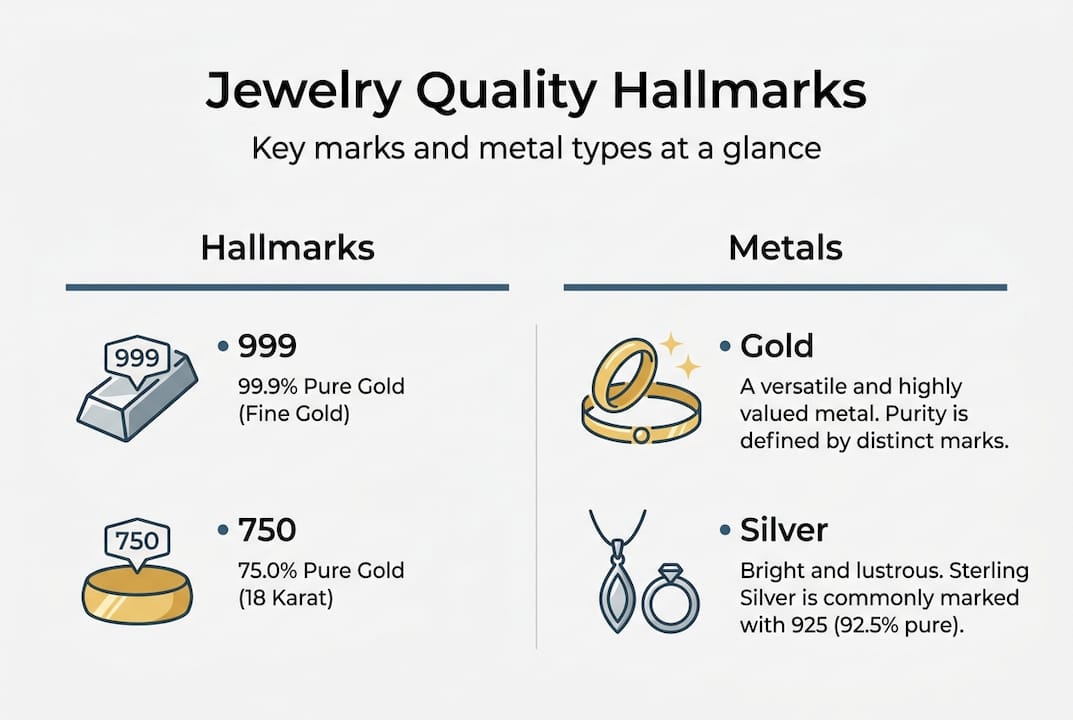
Understanding jewelry hallmarks indicates metal purity and origin, best viewed with proper magnification. These tiny stamps communicate critical information about composition and manufacturer. For example, 750 signifies 18k gold (75% pure gold), while 925 denotes sterling silver (92.5% pure silver). Familiarizing yourself with these numbers before shopping prevents costly mistakes and builds buyer confidence.
Metal types carry distinct characteristics beyond their hallmarks. Gold comes in various karats, each with different durability and color properties. The difference between 14k and 18k gold affects both price and wearability, with 14k offering greater strength for everyday pieces. Platinum typically bears marks like PT950 or PLAT, while white gold may show 14KWG or similar stamps.
Prepare by learning common terminology that appears on quality pieces. Understanding metal purity in jewelry helps you decode markings quickly and assess value accurately. Study the table below to recognize standard purity indicators at a glance.
| Hallmark | Metal Type | Purity Percentage | Common Uses |
|---|---|---|---|
| 999 | Gold/Silver | 99.9% pure | Investment pieces, bullion |
| 950 | Platinum | 95% pure | High-end rings, luxury items |
| 750 | Gold | 75% pure (18k) | Fine jewelry, designer pieces |
| 585 | Gold | 58.5% pure (14k) | Everyday jewelry, durability |
| 925 | Silver | 92.5% pure | Sterling silver jewelry |
Pro Tip: Position your loupe under strong lighting and examine hallmarks at multiple angles. Crisp, deeply stamped markings indicate authentic manufacturing, while blurry or shallow impressions suggest lower quality or potential counterfeits.
Knowing your tools and terminology transforms you from uncertain shopper to informed buyer. This foundation makes the inspection process systematic rather than guesswork, letting you evaluate pieces with professional-level insight.
Step-by-step guide to examining jewelry for quality and authenticity
Start by locating and verifying hallmarks using your 10x loupe. Position the piece under bright lighting and search common stamp locations: inside ring bands, clasp areas on necklaces and bracelets, or earring posts. Authentic hallmarks appear crisp and deeply impressed, with clean edges and consistent depth. Examine the stamp carefully for correct formatting, as counterfeiters often create blurry or incorrectly formatted marks.
Next, assess metal weight and color uniformity to detect plating or inferior alloys. Genuine solid gold or platinum pieces feel substantial in your hand, with weight proportional to size. Run your fingers along surfaces, checking for color consistency throughout. Plated jewelry often shows wear at high-friction points like ring undersides or clasp edges, revealing base metal underneath. Real precious metals maintain uniform color even in worn areas.
Inspect gemstones under magnification, looking for natural inclusions that authenticate origin. Gem testing tools like refractometers offer 99% accuracy, but visual inspection provides valuable initial screening. Natural stones contain tiny internal characteristics called inclusions, visible under 10x magnification. These imperfections actually prove authenticity, as lab-created or fake stones often appear suspiciously flawless. Learn how to identify quality gemstones by studying inclusion patterns specific to different gem types.
Perform a fog test on diamonds to quickly separate real from fake. Breathe directly onto the stone’s surface, creating a light fog. Genuine diamonds disperse heat instantly, clearing fog within one to two seconds. Fake diamonds or simulants like cubic zirconia retain moisture longer, staying foggy for four seconds or more. This simple test works because diamond’s exceptional thermal conductivity prevents condensation buildup.
Request certifications or professional appraisals for pieces exceeding $500 or containing significant gemstones. Reputable sellers provide documentation from recognized laboratories like GIA, IGI, or AGS. These certificates detail exact specifications including carat weight, clarity grade, color grade, and cut quality. For vintage or estate pieces lacking original certificates, invest in an independent appraisal before purchase.
Avoid common inspection mistakes that compromise accuracy:
- Relying solely on visual appeal without verifying materials
- Skipping hallmark verification because a piece “looks expensive”
- Accepting seller descriptions without independent confirmation
- Judging quality by price alone rather than physical characteristics
- Overlooking gemstone inclusions as defects instead of authenticity markers
- Failing to test metal weight and density
Quick visual checks reveal quality indicators before detailed inspection. Examine clasps and closures for smooth operation and secure mechanisms. Inspect prong settings for uniformity and proper gemstone security. Check chain links for consistent sizing and solid construction. Quality pieces show meticulous finishing with no rough edges, uneven surfaces, or visible solder marks.
Common pitfalls and tips to avoid buying low-quality or fake jewelry
Trusting unclear or absent hallmarks represents the most frequent buyer mistake. Some sellers claim pieces are “unmarked antiques” or “too delicate for stamps,” but legitimate fine jewelry almost always carries proper hallmarks. Missing stamps should trigger immediate skepticism, prompting requests for certification or professional testing. Even genuinely old pieces typically bear manufacturer marks or purity indicators from their era.
Buying gemstones without checking for natural inclusions or demanding certifications invites disappointment and financial loss. Synthetic stones and simulants flood the market at prices mimicking natural gems. Without magnification and knowledge, distinguishing treatments, enhancements, or complete fakes becomes nearly impossible. Always request gem certificates for stones exceeding half a carat, and personally verify inclusion patterns match certificate descriptions.
Neglecting to understand metal purity markings leads to overpayment for plated or low-karat pieces marketed as fine jewelry. A piece stamped “gold” without karat specification likely contains minimal gold content or uses gold plating over base metal. Similarly, “silver” without 925 or sterling designation may be silver-plated or contain high percentages of other metals. Learning to determine jewelry quality expert tips 2026 prevents these costly misunderstandings.
Pro Tip: Purchase exclusively from established sources offering transparent material disclosures and return policies. Reputable jewelers willingly provide detailed information about craftsmanship, metal content, and gemstone origins, understanding that educated customers become loyal customers.
Recognize warning signs that indicate poor quality or counterfeit jewelry:
- Hallmarks appearing blurry, shallow, or inconsistently stamped
- Uneven finishing with visible tool marks or rough edges
- Prices dramatically below market value for claimed materials
- Sellers refusing magnified inspection or certification requests
- Gemstones with zero inclusions claiming natural origin
- Color variations suggesting plating wear over base metal
- Lightweight feel inconsistent with precious metal density
- Clasps or closures operating roughly or insecurely
“Inspecting hallmark crispness with tools helps avoid fake markings and low-quality metals. A crisp hallmark under magnification is your best early safeguard against fakes.”
Price serves as a useful reality check but never as sole quality confirmation. Genuine precious metals and natural gemstones carry minimum production costs that sellers cannot ignore while remaining profitable. When prices seem impossibly low for claimed materials, they probably are. Research current precious metal spot prices and typical retail markups to establish realistic price expectations for different jewelry categories.
Beware of high-pressure sales tactics emphasizing limited availability or expiring discounts. Quality jewelry remains valuable regardless of artificial urgency, and reputable sellers respect your need for careful consideration. Take time to verify claims, compare options, and consult experts before committing to significant purchases. Rushed decisions often lead to regret and financial loss.
Confirming your purchase: verifying authenticity and quality with certifications and expert help
Professional certifications provide definitive authentication that personal inspection cannot match. Gem testing instruments like refractometers and spectroscopes ensure 99% accuracy in authenticating gemstones, removing all guesswork from quality assessment. Understanding different certification bodies and their standards helps you evaluate documentation credibility.
| Certification Body | Specialization | Reliability | What It Guarantees |
|---|---|---|---|
| GIA (Gemological Institute of America) | Diamonds, colored stones | Industry gold standard | Precise grading of cut, clarity, color, carat |
| IGI (International Gemological Institute) | Diamonds, lab-grown gems | Highly respected | Detailed gem characteristics and origin |
| AGS (American Gem Society) | Diamond cut quality | Premium for cut grading | Superior cut analysis and light performance |
| EGL (European Gemological Laboratory) | Diamonds, jewelry | Variable by location | Basic grading, less stringent than GIA |
Request these essential authenticity documents before finalizing any significant jewelry purchase:
- Gemstone grading certificates from recognized laboratories
- Metal purity assay reports for precious metal content
- Appraisal documents stating current replacement value
- Provenance records for antique or estate pieces
- Manufacturer warranties covering defects and craftsmanship
- Care and maintenance guidelines specific to materials used
Professional appraisals serve multiple critical functions beyond initial purchase verification. Insurance companies require current appraisals to establish coverage limits and replacement values. Appraisals document condition and authenticity for estate planning and inheritance purposes. They also provide baseline valuations for future resale, helping you understand appreciation or depreciation over time. Understanding the importance of authenticity certificates appraisals jewelry protects both your investment and peace of mind.
Pro Tip: Schedule an independent appraisal within 30 days of purchase, while return windows remain open. This timing allows you to address any discrepancies between seller claims and expert findings, potentially returning pieces that don’t meet promised specifications.
Gem testing tools used by professionals eliminate uncertainty through scientific measurement. Refractometers measure how light bends through gemstones, producing unique readings for each gem type. Spectroscopes analyze light absorption patterns, revealing treatments, enhancements, or synthetic origins. Thermal conductivity testers instantly distinguish diamonds from simulants based on heat transfer properties. These instruments provide objective data that subjective visual assessment cannot match.
Choose appraisers carefully, seeking credentials from recognized organizations like the American Society of Appraisers or National Association of Jewelry Appraisers. Independent appraisers with no sales interest provide unbiased evaluations, unlike jewelers who may inflate values to encourage purchases. Expect to pay $50 to $150 per hour for thorough appraisal services, a worthwhile investment for pieces valued above $1,000.
Maintain updated documentation throughout ownership. Photograph your jewelry from multiple angles under good lighting, capturing hallmarks and distinctive features. Store certificates, appraisals, and receipts in a secure location separate from the jewelry itself. Update appraisals every three to five years to reflect current market values and any condition changes, ensuring insurance coverage remains adequate.
Discover handcrafted luxury jewelry at Malibu Vibes
Now that you understand how to identify quality jewelry, experience pieces crafted with the authenticity and excellence you’ve learned to recognize. Malibu Vibes Jewelry specializes in handcrafted fine jewelry made from genuine precious metals and natural gemstones, with every piece meeting the quality standards outlined in this guide.

Explore our fine jewelry making process to see how Los Angeles artisans create each piece with meticulous attention to detail and proper hallmarking. Our 14k gold color gemstone rings feature natural stones with visible inclusions that authenticate their origin, while our solid gold necklaces carry clear purity stamps you can verify with confidence. Every piece comes with detailed material disclosures and authenticity documentation, ensuring your investment delivers lasting luxury.
Frequently asked questions
How can I tell if my jewelry is real gold or just gold-plated?
Look for hallmark stamps indicating purity, such as 750 for 18k gold or 585 for 14k gold, typically found inside ring bands or near clasps. Real gold feels noticeably heavier than plated pieces of similar size and resists tarnishing, while plated jewelry shows base metal at wear points. Use a loupe to verify stamp crispness and check for color consistency throughout the piece.
What’s the easiest way to spot fake gemstones?
Examine stones under 10x magnification for natural inclusions, as perfect clarity usually indicates synthetic or fake gems. Perform a fog test on diamonds by breathing on the surface; real diamonds clear fog within two seconds, while fakes stay foggy longer. Request certification from recognized laboratories for any significant gemstone purchase.
Do I need professional certification for every jewelry purchase?
High-value pieces exceeding $500 or containing significant gemstones should always come with professional certifications from GIA, IGI, or similar laboratories. Everyday fashion jewelry under $200 may not require certificates, but you should still verify metal purity stamps and perform basic quality checks. Certifications provide insurance documentation and resale confidence for investment pieces.
How often should I have my jewelry appraised?
Schedule professional appraisals every three to five years to maintain accurate insurance coverage and track market value changes. Appraise immediately after purchase to verify seller claims, then update whenever you make significant modifications like resizing or stone replacement. Keep appraisal documents current for estate planning and potential resale purposes.