

Choosing jewelry should feel personal, not like picking the same piece as everyone else. For many American women who want a look as unique as their story, the allure of a hammered finish stands out. This artisan technique delivers intentional texture and visual depth that polished jewelry cannot match, adding character and luxury to every ring or necklace. Discover how a true hammered finish reflects craftsmanship, individuality, and enduring style for your sophisticated collection or as an unforgettable gift.
Table of Contents
- Hammered Finish Definition And Misconceptions
- Distinct Types And Textures In Hammered Finish
- How Hammered Finish Is Created By Artisans
- Key Characteristics And Aesthetic Appeal
- Maintenance, Durability, And Common Mistakes
Key Takeaways
| Point | Details |
|---|---|
| Hammered Finish Significance | A hammered finish offers visual depth and unique character, making each piece one-of-a-kind. |
| Artisan Craftsmanship | The complexity of creating a hammered finish requires skilled techniques, distinguishing quality handcrafted pieces from mass-produced ones. |
| Maintenance Awareness | Proper maintenance is crucial; avoid harsh chemicals and treat hammered jewelry gently to preserve its texture and appearance. |
| Investment Value | Handcrafted hammered jewelry retains its appeal over time, developing character with wear rather than showing flaws like polished finishes. |
Hammered finish definition and misconceptions
A hammered finish is created when metal is intentionally struck with a hammer to produce a deliberately textured, uneven surface. This isn’t random damage—it’s a calculated artisan technique that transforms smooth metal into something with character and depth.
The texture you see on a hammered piece results from careful, repeated strikes. Each blow creates a small depression or raised area, building a unique pattern across the surface. Think of it like controlled fingerprints—no two pieces are exactly alike.
What Hammered Finish Actually Does
This technique delivers both visual and tactile appeal that smooth jewelry simply can’t match. When you run your fingers across a hammered ring or bracelet, you feel the intentional texture. The surface catches light differently at each angle, creating movement and dimension.
Here’s what makes it valuable:
- Adds visual depth that appears sophisticated and artisanal
- Creates unique patterns since each hammer strike varies slightly
- Masks wear over time better than polished finishes, which show every scratch
- Enhances light play with multiple angles and shadows
- Connects you to traditional metalsmithing heritage
Common Misconceptions About Hammered Jewelry
Most people assume hammered means damaged. That’s the biggest myth. Someone might look at your hammered gold necklace and ask, “Didn’t you drop it?” The answer is no—that texture was planned.
Another misconception is that it’s an inferior finish. The reality? Crafting a proper hammered surface requires more skill than simply polishing metal smooth. It’s actually a mark of quality when done correctly.
People also think all hammer marks look the same. False. A skilled artisan creates intentional patterns and depth variations. Mass-produced hammered pieces look flat and uniform by comparison.
A properly executed hammered finish is a deliberate artistic choice that requires craftsmanship, not a sign of flawed or damaged metal.
Why This Matters for Your Jewelry
Understanding the difference between true artisan hammering and cheap production methods protects your investment. Handcrafted hammered pieces from Los Angeles makers develop character as they age. Scratches and patina blend seamlessly into the existing texture rather than standing out as flaws.
Your hammered jewelry tells a story. It says you appreciate handmade quality over mass production, texture over sterile polish, and timeless craftsmanship over trendy uniformity.
Pro tip: When examining hammered jewelry in person, run your fingers across the surface—if it feels genuinely varied and organic rather than uniform or too shallow, you’re looking at quality artisan work.
Distinct types and textures in hammered finish
Not all hammered finishes look the same. The texture depends on which hammer you use, how hard you strike, and what pattern you follow. A ball-peen hammer creates tiny, uniform dimples across the surface, while a chasing hammer produces deeper, more dramatic indentations that catch light beautifully.
Think of it like handwriting—each artisan’s technique produces signature results. One maker might favor tight, precise patterns, while another creates loose, organic textures. This variation is what makes each piece genuinely unique.
Common Hammered Textures You’ll See
Different tools and techniques create a spectrum of surface textures that range from subtle to bold. Here’s what you might encounter:
- Fine pitted surfaces from small ball-peen hammers, creating delicate, refined looks
- Large indentations from chasing hammers, producing dramatic shadow play
- Uniform patterns struck with consistent force and spacing
- Random textures that feel organic and naturally unstructured
- Directional effects where hammer strikes follow specific lines or angles
Technique Matters More Than You’d Think
Artisans use specialized metalsmithing methods to achieve these different results. Planishing smooths and refines the surface while maintaining subtle texture. Chasing creates detailed depressions by striking a chisel with precision. Repoussé pushes metal from the back to create raised, three-dimensional textures.
Each technique requires different skill levels and tools. A true artisan understands when to use which method to achieve the desired effect.
The table below summarizes common artisan hammering techniques and their distinctive results:
| Technique | Tools Used | Typical Texture | Skill Level |
|---|---|---|---|
| Planishing | Planishing hammer | Smooth with subtle pattern | Intermediate |
| Chasing | Chasing hammer, chisel | Deep, precise depressions | Advanced |
| Ball-peen | Ball-peen hammer | Fine dimples and pits | Beginner |
| Repoussé | Various, incl. punches | Raised, 3D relief surfaces | Expert |
What This Means for Your Purchase
When you’re shopping for hammered jewelry, pay attention to texture consistency and depth. Quality handcrafted pieces show intentional variation—no two areas look exactly identical. The marks should feel deliberate, not rushed or uneven.
During the jewelry-making process, artisans spend considerable time perfecting their hammering technique. This attention to detail is reflected in the final piece’s texture and overall appeal.
The texture of hammered jewelry reveals whether it was crafted with care or mass-produced with minimal effort.
Pro tip: Look at how light reflects across the hammered surface—varied, interesting reflections indicate quality artisan work, while flat or monotonous reflections suggest mass production.
How hammered finish is created by artisans
Creating a hammered finish requires skill, patience, and the right tools. An artisan begins by placing a metal sheet on a sturdy steel bench block, which serves as the foundation for the entire process. This solid surface allows the hammer strikes to transfer force evenly without damaging the metal underneath.
The real work happens next. The artisan selects either a ball-peen hammer or chasing hammer and begins striking the metal surface repeatedly. Each strike creates a small depression, and by rotating the hammer face and adjusting the angle, the artisan builds up a complex texture across the entire piece.
The Step-by-Step Process
Here’s how artisans actually create that beautiful texture you see on handcrafted jewelry:
- Prepare the metal on a steel bench block with proper support
- Strike repeatedly with consistent or varied pressure depending on desired effect
- Rotate the hammer face to create different depths and patterns
- Adjust angle and force throughout the process for texture variation
- Anneal the metal periodically to restore malleability
- Repeat until the desired texture covers the entire piece
Why Annealing Matters
This is where many people don’t realize the complexity involved. As an artisan hammers metal repeatedly, the material becomes work-hardened and brittle. Without periodic annealing—heating the metal to a specific temperature and cooling it slowly—the metal would crack and shatter.
Annealing restores the metal’s malleability, allowing the artisan to continue hammering without damaging the piece. This heating process must be done carefully to maintain the metal’s integrity and purity.
The Skill Behind the Texture
What separates handcrafted pieces from mass-produced ones? Control. A skilled artisan understands exactly how much force creates which depth, how angle changes the mark’s shape, and when the metal needs rest.
Mass production uses machines that strike with uniform force and spacing. Handcrafted pieces show intentional variation because human hands and eyes guide every decision. The artisan responds to what they’re seeing and feeling, creating unique results each time.
True artisan hammering combines technical knowledge of metalworking with artistic vision and years of practice.
Pro tip: When examining handcrafted hammered pieces, look for varying depths and mark sizes—this variation indicates the artisan took time to create intentional texture rather than rushing through uniform strikes.
Key characteristics and aesthetic appeal
Hammered finish jewelry stands out because of what you can see and feel. The textured surface catches light in constantly changing ways, creating movement and depth that smooth, polished pieces simply cannot match. As you shift the piece in your hand, the texture reflects light differently, giving it a living, dynamic quality.
This dimensionality is what makes hammered jewelry so visually interesting. Unlike flat, reflective surfaces, the irregular texture adds complexity. Each tiny indentation creates its own shadow and highlight, building a rich visual experience that engages both the wearer and anyone admiring the piece.
What Makes Hammered Finish Special
Hammered jewelry possesses distinct qualities that distinguish it from other finishes:
- Textured surface that engages touch and sight simultaneously
- Enhanced light reflection through multiple angles and depths
- Hides minor imperfections like small scratches and daily wear marks
- Conveys artisanal craftsmanship that mass production cannot replicate
- Organic, rustic aesthetic that feels authentic and intentional
- Unique character since no two handcrafted pieces are identical
The Tactile Experience
One thing people don’t expect is how a hammered finish feels different from a polished one. When you wear a hammered ring or bracelet, your fingers naturally trace the texture. This enhanced sensory experience creates an emotional connection to the piece that smooth jewelry rarely achieves.

The texture also tells a story about craftsmanship. It signals that someone spent time creating intentional marks rather than letting a machine do the work in seconds. This visible effort translates into perceived value and meaning.
Practicality Meets Beauty
Hammered finishes offer a genuine advantage for everyday wear. Because the surface is already textured, small scratches and minor dings blend seamlessly into the existing pattern. A polished gold ring shows every mark; a hammered one develops character as it ages.
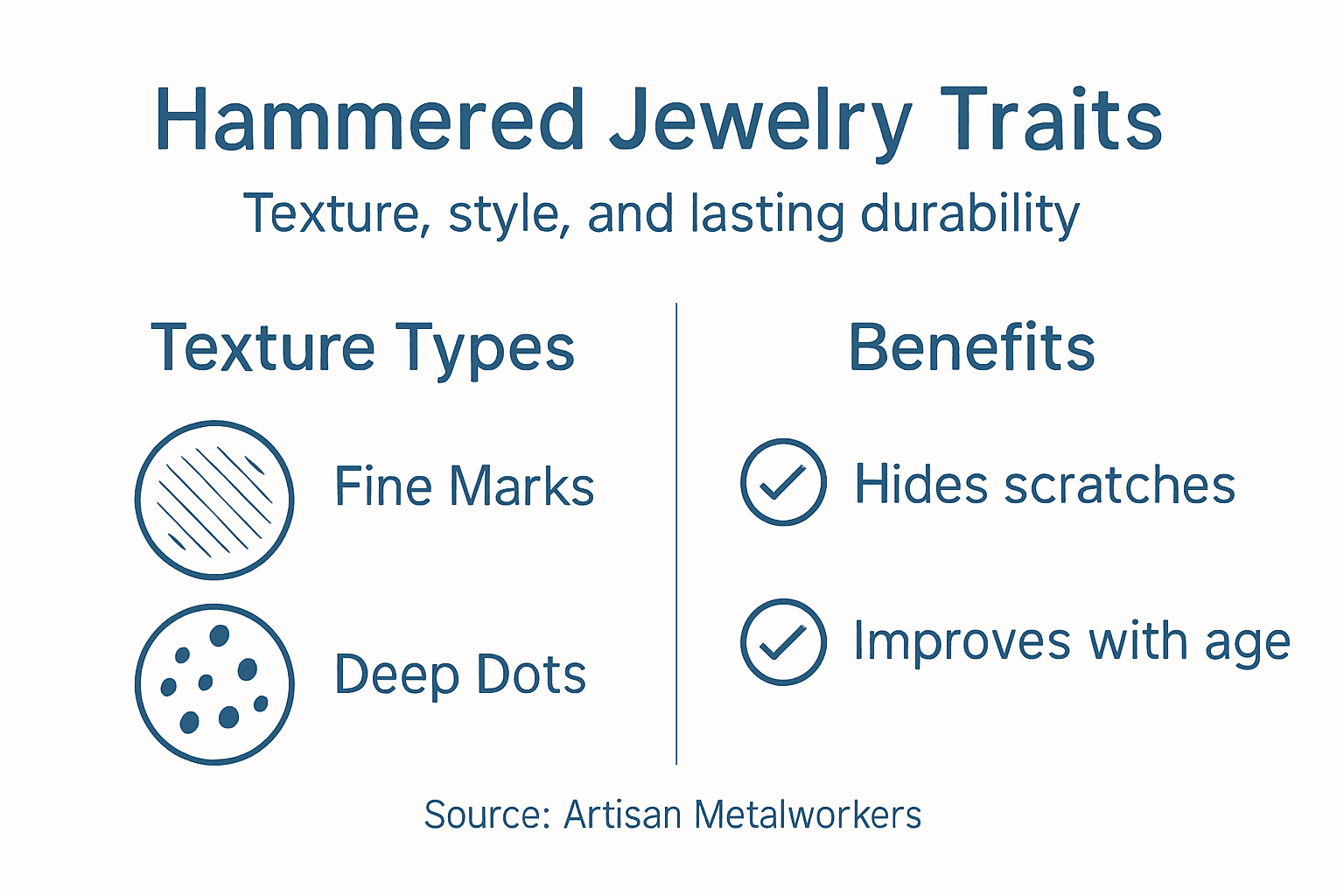
This durability factor means your hammered jewelry actually improves with time. Patina and wear become part of the finish’s story rather than signs of damage.
Here’s a quick comparison of hammered vs. polished jewelry finishes:
| Feature | Hammered Finish | Polished Finish |
|---|---|---|
| Visual Appearance | Textured, dynamic, artisanal look | Smooth, reflective, sleek |
| Tactile Experience | Noticeable, organic texture | Flat, uniform surface |
| Durability | Hides minor scratches, ages well | Shows marks and wear easily |
| Maintenance Needs | Gentle cleaning, avoid abrasives | Regular polishing, less delicate |
| Unique Qualities | No two pieces identical | Highly uniform, standardized |
Hammered finish jewelry combines aesthetic beauty with practical durability, making it ideal for pieces you’ll wear and love for years.
Pro tip: Choose hammered finishes for pieces you plan to wear daily—the texture hides wear patterns that would be obvious on polished surfaces, so your jewelry maintains its attractive appearance longer.
Maintenance, durability, and common mistakes
Hammered finish jewelry is durable, but it’s not indestructible. The textured surface that makes it beautiful also requires thoughtful care. Unlike polished pieces, hammered finishes need specific cleaning methods to preserve both the texture and the underlying metal.
The good news? Maintenance is straightforward when you follow basic guidelines. The challenging part is avoiding the common mistakes that can damage your investment or diminish its beauty over time.
How to Clean Hammered Jewelry Properly
Start with the gentlest approach. Soft cloth cleaning with warm water and mild soap removes everyday dirt without damaging the finish. Gently wipe the piece and pat it dry immediately—moisture left sitting can eventually cause tarnishing.
Here’s what to avoid:
- Harsh chemicals like chlorine and salt water that corrode metals
- Abrasive cleaners that scratch or flatten the textured surface
- Ultrasonic machines that can deform delicate metals or loosen stones
- Commercial dip cleaners designed for polished jewelry, not textured finishes
- Aggressive polishing cloths that wear away the artisanal texture
Common Maintenance Mistakes
The biggest error? Treating hammered jewelry like polished pieces. People often assume all jewelry needs the same aggressive cleaning methods, but that’s wrong. Your hammered ring isn’t a polished band—its texture requires a completely different approach.
Another frequent mistake is wearing hammered jewelry during activities that cause repeated impacts. While the texture hides minor scratches beautifully, heavy impacts can deform the metal. Remove your hammered pieces during workouts, gardening, or any physical activity.
Neglecting professional care is the third major error. Your hammered jewelry benefits from occasional professional inspection and maintenance by a skilled artisan who understands the original craftsmanship.
Understanding Durability
The durability of your hammered jewelry depends on the metal type and the hammering technique used. Sterling silver hammered pieces require more regular polishing than gold. Delicate, finely-hammered surfaces need more care than boldly-hammered ones.
The texture itself actually protects against visible wear. Small scratches blend into the existing pattern instead of creating obvious flaws like they would on a polished surface.
Proper maintenance means treating your hammered jewelry with care appropriate to its artisanal nature, not the aggressive methods designed for mass-produced pieces.
Pro tip: Store your hammered jewelry in a soft pouch away from other pieces to prevent scratching, and have a professional artisan inspect and gently re-polish it every 2–3 years to maintain its original character and luster.
Discover the Beauty and Durability of Handcrafted Hammered Jewelry
If you appreciate the unique artistry behind a hammered finish and want jewelry that blends timeless style with lasting durability Malibu Vibes Jewelry has the perfect selection for you. Our collection features expertly handcrafted pieces from Los Angeles artisans who carefully create varied textures and organic patterns that catch light beautifully and wear gracefully over time. You can find rings necklaces earrings and bracelets made with 14k gold and sterling silver offering both practical wearability and rich artistic character.

Experience the difference that a genuine artisan hammered finish brings by exploring our curated range at Malibu Vibes Jewelry. Enjoy the emotional connection and sensory richness that handcrafted texture delivers while benefiting from pieces designed to withstand everyday life. Elevate your jewelry collection today with handcrafted hammered pieces that reveal a story of craftsmanship and care. Start browsing now and find your new favorite piece to cherish for years.
Frequently Asked Questions
What is a hammered finish in jewelry?
A hammered finish is a texture created by striking metal with a hammer, resulting in deliberate depressions and raised areas that add character and depth to the piece.
How does a hammered finish compare to a polished finish?
Hammered finishes offer a textured, dynamic look that catches light differently and hides minor scratches better than polished finishes, which are smooth and can show wear more prominently.
What maintenance is required for hammered finish jewelry?
To maintain hammered jewelry, clean it with a soft cloth and mild soap, avoiding harsh chemicals and abrasive cleaners. Store it in a soft pouch to prevent scratches and have it professionally inspected every few years.
Why is the texture important in hammered jewelry?
The texture of hammered jewelry enhances visual appeal and tactile experience, reflecting light in unique ways and telling a story of artisanal craftsmanship, making each piece truly one-of-a-kind.
Recommended
- Fine Jewelry Making Process – Malibu Vibes Jewelry
- Gold vs White Gold Rings: Style and Durability Impact – Malibu Vibes Jewelry
- What Is Jewelry Craftsmanship? Complete Overview – Malibu Vibes Jewelry
- Crafting Your Own Fine Jewelry: A Beginner’s Guide – Malibu Vibes Jewelry
- Ρόλος των Υλικών στα Ρούχα – Πώς Επηρεάζουν Ποιότητα και Στυλ