

TL;DR:
- Proper gold jewelry care involves gentle cleaning, individual storage, and avoiding chemicals that can corrode its alloys. Regularly wiping with mild soap and water, along with correct storage practices, prevents tarnish, scratches, and damage. Consistent habits are essential to preserve the jewelry’s beauty and longevity over time.
Maintaining gold jewelry means applying regular gentle cleaning, careful storage, and smart daily habits to preserve its shine and structural integrity. Gold is a soft metal, and 14K and 18K alloys contain copper or silver that reacts to sweat, chemicals, and humidity over time. The real work of care targets those alloy metals, not the gold itself. Malibuvibesjewelry builds every piece with that reality in mind, using handcrafted construction that rewards consistent upkeep with lasting brilliance.
What tools and products do you need for maintaining gold jewelry?
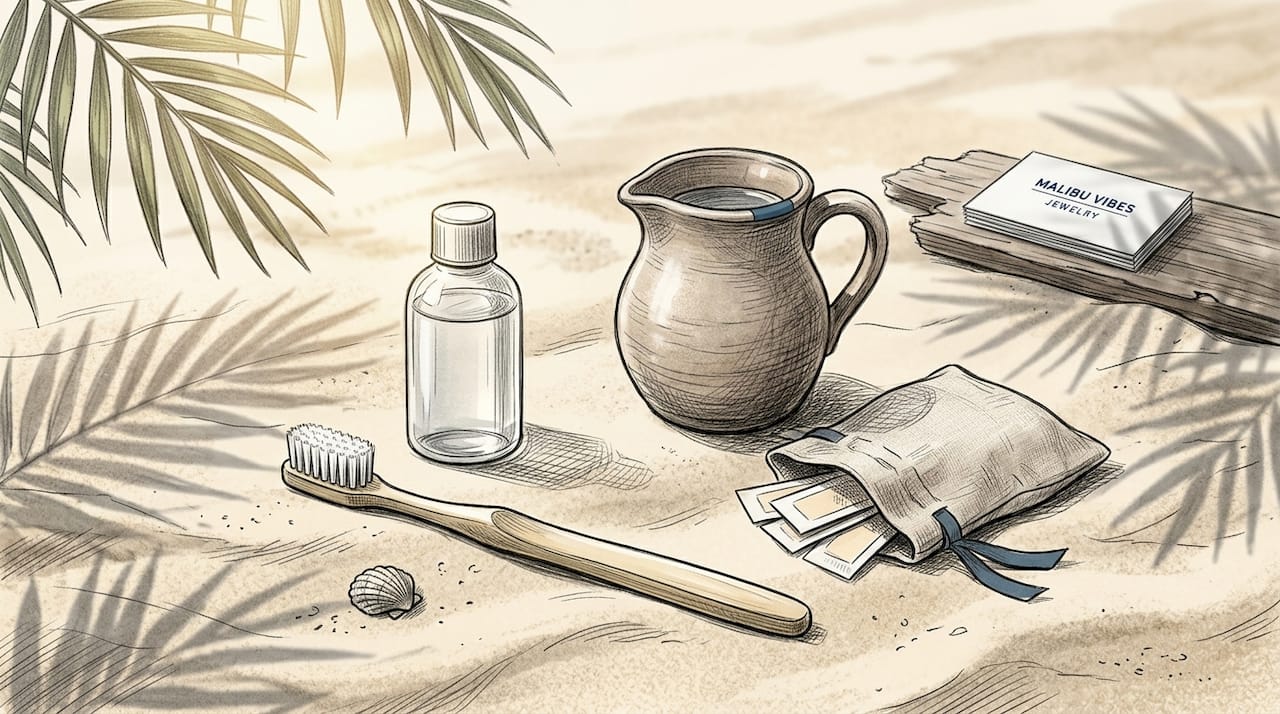
The right supplies make the difference between a safe clean and accidental damage. You need mild dish soap, warm water, a soft microfiber cloth, a soft-bristle toothbrush, and individual storage pouches or a compartmentalized jewelry box. That short list covers nearly every routine care task.
Harsh chemicals destroy gold faster than everyday wear does. Chlorine, bleach, acetone, and ammonia-based cleaners all weaken gold’s crystalline structure over time. Abrasive materials like paper towels, rough cloths, and baking soda scratch the surface and dull the finish. Ultrasonic cleaners can loosen stone settings and should only be used when a professional jeweler recommends them for your specific piece.
| Recommended | Avoid |
|---|---|
| Mild dish soap | Bleach or chlorine-based cleaners |
| Warm (not hot) water | Ammonia or acetone solutions |
| Soft microfiber cloth | Paper towels or rough fabrics |
| Soft-bristle toothbrush | Stiff brushes or abrasive pads |
| Individual fabric pouches | Storing multiple pieces together |
| Anti-tarnish strips | Bathroom or humid storage areas |
Pro Tip: Place anti-tarnish strips inside your storage box or pouch. They absorb airborne compounds that cause tarnishing and cut down how often you need to clean.
How do you clean gold jewelry safely, step by step?
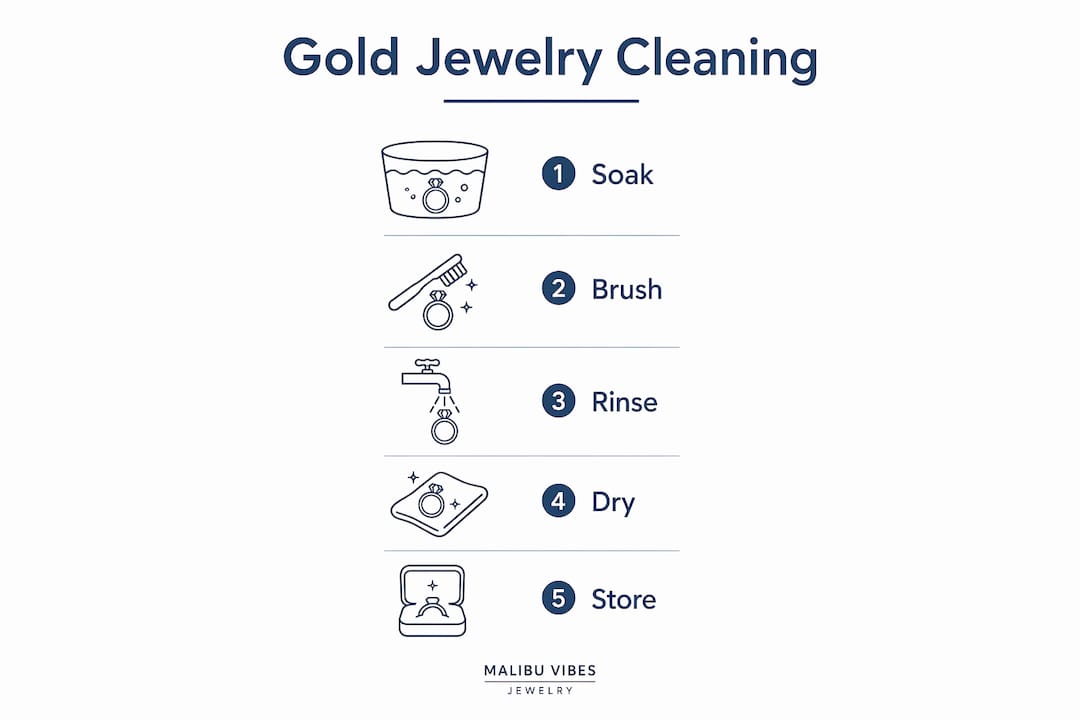
Mild soap and warm water is the universally safe cleaning method for most gold pieces. It removes oils, lotion residue, and everyday buildup without risking damage to the metal or settings. Follow these steps for a safe, effective clean.
- Mix your solution. Add a few drops of mild dish soap to a bowl of warm water. Avoid hot water, which can loosen adhesive in settings.
- Soak the piece. Submerge the jewelry for about 20 minutes. This loosens dirt and oils from crevices without any scrubbing force.
- Brush gently. Use a soft-bristle toothbrush to work through crevices, chain links, and around stone settings. Use light, short strokes.
- Rinse thoroughly. Hold the piece under clean, lukewarm running water. Make sure all soap residue is gone, since dried soap leaves a dull film.
- Dry completely. Pat dry with a soft microfiber cloth, then let the piece air dry fully before storing. Trapped moisture causes tarnish.
Cleaning frequency depends on how often you wear the piece and what type of gold it is. Solid 14K or 18K pieces worn daily benefit from a gentle clean every two to four weeks. Plated gold jewelry needs less frequent cleaning because repeated scrubbing wears off the plating faster. For plated pieces, a light wipe with a damp cloth after each wear is enough for routine upkeep.
Over-cleaning is a real risk. Scrubbing too hard or too often strips surface finishes and loosens prong settings. If you own pieces with delicate gemstones, check with a jeweler before using any liquid method. For a deeper look at natural cleaning options, Malibuvibesjewelry’s guide on natural gold cleaning covers DIY approaches that skip harsh products entirely.
Pro Tip: Always clean over a soft towel or bowl, never directly over a drain. Small stones and clasps can come loose during cleaning and disappear instantly.
What are the best storage practices to protect gold jewelry?
Proper storage prevents the majority of scratches, tangles, and tarnish that degrade gold over time. Gold scratches easily when it contacts harder stones or other metals, so individual storage is not optional. It is the single most overlooked step in long-term preservation.
The ideal storage environment is cool, dry, and away from direct sunlight. Here is what that looks like in practice:
- Store each piece in its own soft fabric pouch or a compartmentalized jewelry box lined with velvet or suede. These linings cushion the metal and prevent surface contact.
- Keep your storage location away from windows. UV exposure fades gemstone colors and dulls gold finishes over months of indirect light.
- Avoid storing gold in bathrooms. Steam and temperature swings from showers accelerate tarnishing and can loosen stone settings.
- For necklaces, hang them individually on a jewelry stand or hook to prevent chain tangling. A tangled chain is difficult to undo without stretching or breaking links.
- Add anti-tarnish strips to your storage box. They work passively and require no effort beyond replacing them every few months.
- Wipe off skin oils and lotion residue with a soft cloth before putting any piece away. Residue left on the surface accelerates dullness.
For more detail on safe storage solutions, Malibuvibesjewelry’s storage guide covers box types, pouch materials, and scratch prevention by piece type.
What common mistakes cause damage and how to avoid them?
The most damaging habits are also the most common ones. Wearing gold jewelry in a chlorinated pool, applying perfume or lotion while wearing a necklace, and tossing multiple pieces into the same drawer all cause measurable harm over time. Each of these is easy to stop once you know the pattern.
| Damaging behavior | Recommended action |
|---|---|
| Wearing jewelry in pools or hot tubs | Remove all gold before entering chlorinated water |
| Applying perfume or lotion while wearing jewelry | Put jewelry on last, after all products have dried |
| Storing different metals together | Use individual pouches or compartments for each piece |
| Scrubbing plated pieces aggressively | Wipe gently with a damp cloth; limit brush use |
| Leaving oils and residue on before storage | Wipe each piece with a soft cloth before storing |
| Skipping regular inspection | Inspect every few months for loose settings or dullness |
Perfume and lotion are especially problematic because people rarely connect them to jewelry damage. The alcohol in fragrance strips gold plating. The oils in moisturizers coat stone settings and attract grime. The fix is simple: put your jewelry on after your skincare and fragrance routine, not before.
Storing different metals together causes scratches that no amount of polishing can fully reverse. A diamond-set ring stored next to a plain gold band will scratch that band. Separate storage costs almost nothing and prevents permanent surface damage. For a full breakdown of preventing gold tarnish, Malibuvibesjewelry’s tarnish prevention guide covers everyday habits that keep pieces looking new.
Key Takeaways
Consistent daily habits, not occasional deep cleans, are what keep gold jewelry brilliant and structurally sound over years of wear.
| Point | Details |
|---|---|
| Clean with mild soap and warm water | Soak for 20 minutes, brush gently, and dry fully before storing. |
| Store each piece individually | Use soft pouches or compartmentalized boxes to prevent scratches and tangling. |
| Avoid chemicals and humidity | Remove gold before pools, and keep storage away from bathrooms and sunlight. |
| Wipe before storing | Removing oils and residue before storage slows tarnish development significantly. |
| Inspect every few months | Regular checks catch loose settings and dullness before they become costly repairs. |
What I’ve learned from years of watching gold jewelry age
Most people treat gold care as a once-in-a-while task. They clean a piece when it looks dull, then put it back in the same drawer with everything else. That cycle is exactly why so many gold pieces look worn within a few years of purchase.
What I’ve found is that the storage decision matters more than the cleaning method. You can have a perfect cleaning routine and still scratch a ring beyond recovery by dropping it into a pile of other jewelry every night. The physical contact between pieces does more cumulative damage than any chemical exposure. Individual pouches feel like a small detail, but they are the single habit that separates jewelry that lasts decades from jewelry that looks tired in three years.
The other thing I’ve noticed is that plated gold pieces get over-cleaned far more often than solid gold. People see a dull finish and scrub harder, which removes the plating and makes the problem permanent. For plated pieces, less is genuinely more. A soft wipe after wearing is almost always enough.
Malibuvibesjewelry’s pieces are built with the kind of craftsmanship that holds up to real life. But even the best construction benefits from a simple routine. The jewelry that still looks stunning after ten years is almost always the jewelry that got put away properly every single time.
— Ara
Fine gold jewelry worth caring for

Proper care starts with pieces worth caring for. Malibuvibesjewelry crafts its solid gold necklaces in Los Angeles using 14K gold, diamonds, and genuine gemstones, built to last when treated well. The brand’s fine jewelry process explains how each piece is made, which helps you understand exactly what you’re maintaining and why the right care routine matters. Browse the full collection to find pieces that reward the habits you’ve just built.
FAQ
How often should I clean my gold jewelry?
Solid 14K or 18K gold worn daily benefits from a gentle clean every two to four weeks. Plated gold pieces need only a soft wipe after each wear to avoid stripping the plating.
Can I use toothpaste to clean gold jewelry?
Toothpaste is abrasive and scratches gold surfaces. Use mild dish soap and warm water instead, which cleans effectively without damaging the metal or finish.
Why does my gold jewelry tarnish if gold doesn’t rust?
Gold alloys in 14K and 18K contain copper or silver that reacts to air, sweat, and chemicals. The tarnish comes from those alloy metals, not the gold itself.
Is it safe to store gold jewelry in a bathroom?
No. Bathroom humidity and temperature swings accelerate tarnishing and can loosen stone settings. Store gold in a cool, dry location away from steam.
What is the best way to store gold necklaces to prevent tangling?
Hang each necklace individually on a jewelry stand or hook. If you use a box, lay each chain in its own compartment or pouch to prevent links from catching on each other.
Recommended
- How to Store Gold Jewelry: Keep It Safe and Sparkling – Malibu Vibes Jewelry
- How to Care for Gold Jewelry: Your Ultimate Guide – Malibu Vibes Jewelry
- How to Clean Gold Jewelry Naturally: A Step-by-Step Guide – Malibu Vibes Jewelry
- How to Prevent Jewelry Tarnish Naturally: Easy Steps – Malibu Vibes Jewelry