

TL;DR:
- Jewelry resizing involves cutting, reshaping, and soldering metal, requiring skill from a trained professional. Most rings can only be safely resized by one to two sizes, depending on metal type and design complexity. DIY attempts risk damaging the jewelry, and choosing an experienced jeweler ensures a seamless, durable result.
Most people assume resizing a ring is as straightforward as swapping a watch battery. Hand it over, pick it up later, done. The reality is far more layered. To properly explain jewelry resizing, you need to understand that it involves cutting precious metal, reshaping structure, and in some cases risking the integrity of stones and settings. This article walks you through the full process, from the first cut to the final polish, plus what limits exist, when to do it, and when to leave well enough alone.
Table of Contents
- Key takeaways
- Explaining the jewelry resizing process, step by step
- What affects whether resizing is possible
- When to actually resize your jewelry
- Caring for your jewelry after resizing
- DIY resizing: what to know before you try
- My take on what people get wrong about resizing
- Find the right ring, sized to fit perfectly
- FAQ
Key takeaways
| Point | Details |
|---|---|
| Resizing is a technical skill | The jewelry resizing process involves cutting, adding or removing metal, and soldering by a trained professional. |
| Size range matters | Most rings can only be safely resized 1 to 2 sizes to avoid structural damage. |
| Not all metals resize | Hard metals like tungsten and titanium cannot be resized and often require a full remake. |
| Fit changes are normal | Finger size fluctuates daily with temperature and diet, so confirm a permanent change before resizing. |
| Alternatives exist | Sizing beads and ring guards can improve fit without permanently altering the band. |
Explaining the jewelry resizing process, step by step
Understanding how to resize jewelry starts with knowing what actually happens to the metal. It is not just stretching or squeezing. A jeweler performs a precise sequence of steps that require both skill and proper equipment.
Here is how the process typically works for a ring, which is the most commonly resized piece of jewelry:
- Assessment. The jeweler examines the ring’s metal type, setting style, band thickness, and any engravings or stones. This determines whether resizing is even possible and which method to use.
- Cutting. For most resizing jobs, the jeweler cuts the band at the back center, which is the thinnest and structurally least critical point.
- Adding or removing metal. To size up, a small strip of matching metal is added and shaped to fit. To size down, a sliver of metal is removed and the band ends are brought together. Engagement ring resizing involves precise cutting at the band’s back center, adding or removing metal, then laser soldering to fuse the ring seamlessly.
- Soldering. The jeweler uses laser soldering or traditional torch soldering to fuse the metal. Laser soldering is more precise and reduces heat exposure to delicate stones.
- Shaping. The ring is placed on a mandrel (a tapered metal rod) and hammered or pressed back into a perfect circle.
- Finishing. The join is filed, buffed, and polished until it is nearly invisible. Laser soldering and polishing techniques mask resize marks, though the join point can remain a structural weak spot.
Sizing up and sizing down are not mirror images of each other. Sizing down is generally simpler because it only involves removing material. Sizing up requires sourcing matching metal, which can be tricky with older or custom alloys.
Pro Tip: Always ask your jeweler to save any metal removed during sizing down. That scrap is your exact alloy match and can be used if you ever need to resize up again later.
Beyond rings, bracelets and necklaces can also be resized. Bracelets are adjusted by adding or removing links or altering the clasp position. Necklaces can have length modified by adding or removing chain segments. Both require the same core skills: cutting, soldering, and finishing cleanly.
What affects whether resizing is possible
Not every ring can be resized, and not every resizing job is equal. Several factors determine what is realistic.
Metal type matters most
| Metal | Resizability | Notes |
|---|---|---|
| 14k gold | Easy | Most forgiving; widely compatible with standard soldering |
| 18k gold | Easy | Slightly softer; works well |
| Platinum | Moderate | Requires specialized equipment and higher heat |
| Sterling silver | Easy | Affordable and flexible, but can oxidize at solder points |
| Tungsten | Not possible | Tungsten and titanium are difficult or impossible to resize due to hardness |
| Titanium | Not possible | Requires a full remake |
Design complexity
Some ring styles create resizing obstacles regardless of metal. Eternity bands, where stones run continuously around the full band, are a major example. Eternity bands have stones around the entire band, making resizing complex or impossible. Adding or removing metal would disrupt the stone placement, often requiring the piece to be completely remade.
Tension settings, where the stone is held in place by the pressure of the band itself, are equally problematic. Changing the band diameter changes the tension, which can cause the stone to loosen or fall out entirely.
Other design factors that complicate resizing include:
- Deep engravings or milgrain detailing near the cut zone
- Channel-set stones close to the back of the band
- Multiple metal types in the same piece (two-tone rings)
- Very thin or very thick bands, both of which respond differently to heat and shaping
Pro Tip: If your ring has any engraving on the inner band, tell your jeweler before they begin. A good technician can work around it, but they need to know it is there.
How many sizes you need to go
The safe adjustment range for most rings is 1 to 2 sizes up or down to avoid compromising structural integrity. Going beyond that stresses prongs and can cause stones to loosen. It also means either adding a large amount of new metal or removing so much that the proportions of the ring shift noticeably. A good jeweler evaluates the design and structure before committing to any approach. If a ring needs more than 2 sizes of adjustment, a full remake is often the safer and better-looking outcome.
When to actually resize your jewelry
Knowing why jewelry resizing is needed is just as important as knowing how it is done. Not every uncomfortable ring needs to go to a jeweler immediately.
Finger size fluctuates daily due to temperature, diet, and activity, affecting ring fit. Your fingers are typically largest in the heat of summer and smallest in cold winter months. They also swell after exercise and shrink in the morning before you have eaten. Because of this, the best time to measure your finger for sizing is when your hands are at a normal body temperature, relaxed, and later in the afternoon rather than first thing in the morning. Malibuvibesjewelry has a ring size guide that walks through how to measure accurately at home before making any decisions.
Physical signs that a resize may genuinely be needed include:
- The ring spins freely and consistently turns to face down during normal activity
- The ring leaves a visible indentation or mark on your skin after a few hours of wear
- You cannot remove the ring without significant effort or discomfort
- The ring slides off your finger without any resistance
Before booking a resizing appointment, try wearing the ring for several weeks in different seasons. If the fit problem is consistent across varying temperatures and conditions, that is a reliable indicator the size is genuinely wrong rather than temporarily off.
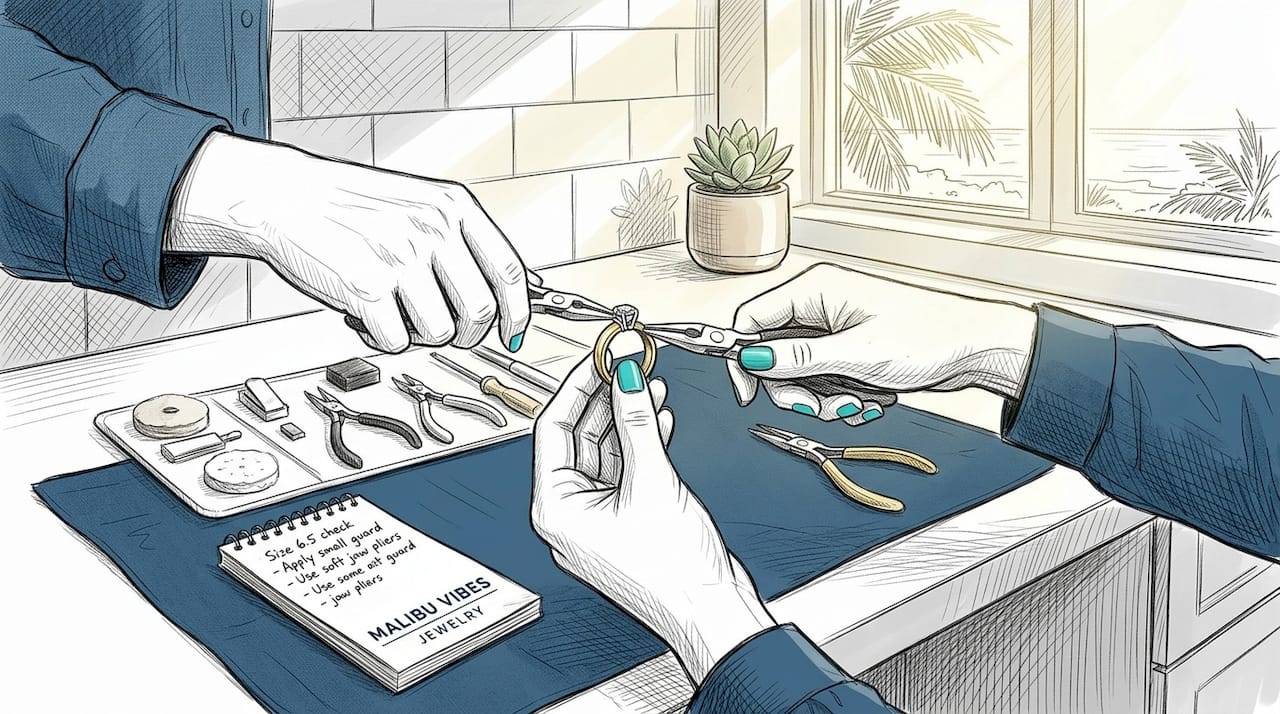
Sizing beads and ring guards can be temporary or partial alternatives to resizing for better fit. Sizing beads are small metal balls soldered to the inside of the band, reducing the interior diameter slightly without permanently altering the metal structure. Ring guards are plastic or metal inserts that slip onto the band and take up space. Both options adjust comfort without modifying the ring itself, making them good choices for seasonal fit issues or inherited pieces you do not want to alter.
Caring for your jewelry after resizing
Once resizing is done, the work is not finished on your end. The piece needs some extra attention in the weeks that follow.
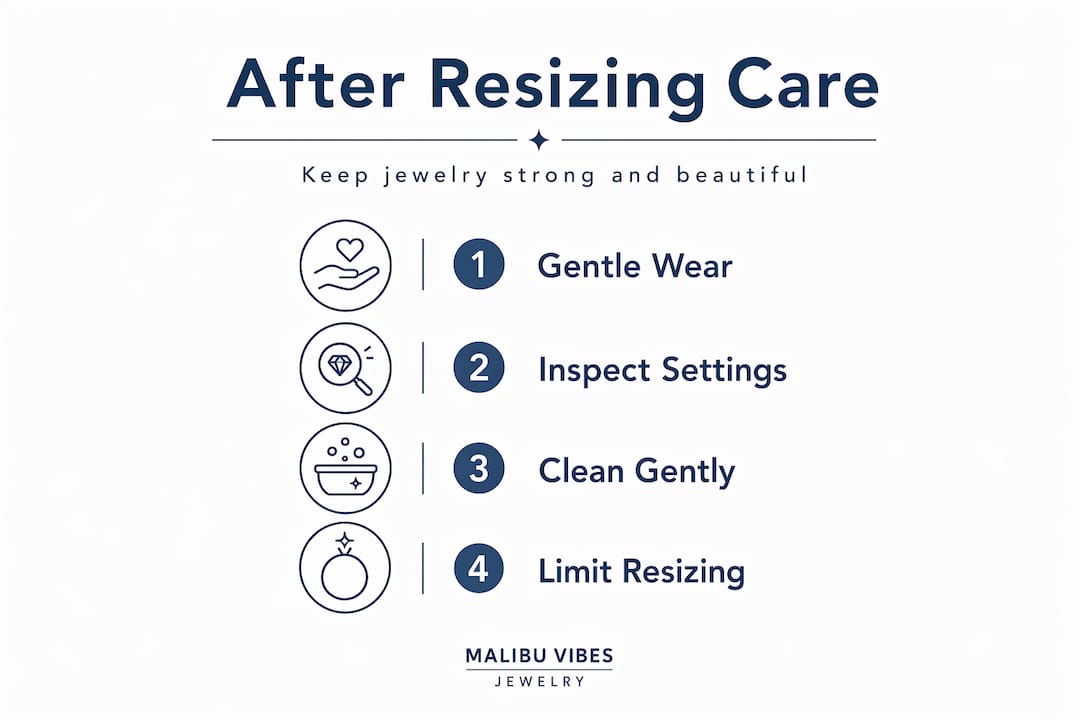
The solder join, even when polished to invisibility, is a structural change to the metal. Treat the ring gently for at least two weeks after resizing. Avoid heavy impact activities like weightlifting or moving furniture while wearing it. The metal needs time to settle, and the join point is slightly more vulnerable during that period.
Repeated resizing weakens metal due to cutting, soldering, and polishing over time. Experts recommend limiting resizing frequency to maintain long-term durability. If you have had a ring resized more than twice, talk to your jeweler about a thorough inspection before any additional work is done.
Pro Tip: After resizing, have your jeweler inspect all stone settings under magnification. The heat and mechanical stress of resizing can slightly shift prongs, and catching that early prevents losing a stone later.
For ongoing care, clean resized pieces with a jewelry cleaning kit designed for the specific metal. Avoid ultrasonic cleaners on recently resized pieces until the join has been confirmed solid by a professional. Schedule a checkup with your jeweler every 12 months, or sooner if you notice any roughness, discoloration near the join, or a stone that moves when touched.
For detailed guidance on how Malibuvibesjewelry approaches ongoing care, the jewelry maintenance tips page covers cleaning, storage, and when to seek professional service.
DIY resizing: what to know before you try
The internet is full of tutorials on how to resize a ring at home. Some involve rubber sizing tape, plastic inserts, or even DIY soldering kits. Here is the honest picture.
DIY resizing attempts risk damaging your jewelry, especially complex or valuable pieces. Amateur attempts can weaken bands or loosen stones. The risks include:
- Uneven heating that warps the band shape permanently
- Applying solder that does not match the ring’s metal composition, creating visible color differences
- Loosening stones through excessive mechanical pressure or heat
- Creating joins that look clean on the surface but fail structurally within months
At-home methods like sizing tape and ring guards are low-risk and reasonable for temporary adjustments. Anything involving tools, heat, or cutting is a different category entirely.
The line is clear: temporary comfort fixes at home are fine. Any work that involves altering the metal itself belongs with a trained jeweler. The cost of jewelry resizing by a professional typically ranges from $20 for a simple sizing down to $150 or more for complex work involving stone settings or metal additions. That is a small price compared to replacing a damaged ring or a lost stone.
My take on what people get wrong about resizing
I have seen a lot of rings come in for resizing after a DIY attempt or after going to someone who was not qualified for the job. The pattern is almost always the same. The person underestimated what the process involves and prioritized speed or cost savings over the long-term health of the piece.
What strikes me most is how people treat resizing as a correction rather than a craft. The best resizing work is invisible. You should not be able to find the join even if you look for it. That level of finish takes time, proper tools, and a jeweler who takes the work seriously.
My strongest piece of advice is this: ask to see examples of past resizing work before you hand over a valuable ring. Any professional who is confident in their skill will show you. And if someone quotes you a price that seems too low for the complexity of your piece, that is information worth taking seriously.
The other thing I have learned is that people wait too long to resize. A ring that spins constantly or cuts off circulation is not just uncomfortable. It is at risk of being lost or causing injury. Resizing when the problem is small is always easier and less expensive than waiting until the fit is dramatically wrong.
— Ara
Find the right ring, sized to fit perfectly

At Malibuvibesjewelry, every piece is handcrafted in Los Angeles with the kind of attention that makes resizing, when needed, straightforward and clean. The fine jewelry making process at Malibuvibesjewelry is built around quality from the start, using 14k gold, sterling silver, and precious stones that are suited to professional resizing when life calls for an adjustment. Whether you are shopping for a new ring or looking for pieces that will stand up to years of wear, the 14k gold gemstone rings collection includes styles that balance beauty with structural integrity. Browse the full selection of rings for women and find something worth wearing for decades.
FAQ
What does jewelry resizing actually involve?
Jewelry resizing is the process of adjusting the size of a piece, most commonly a ring, by cutting the band, adding or removing metal, and soldering the piece back together. A trained jeweler then shapes and polishes the ring until the alteration is invisible.
How many sizes can a ring safely be resized?
Most rings can be safely resized 1 to 2 sizes in either direction. Going beyond that range risks distorting the shape, stressing the prongs, or loosening stones.
Can all metals be resized?
No. Gold, platinum, and sterling silver are the most resizable metals. Tungsten and titanium cannot be resized due to their hardness and typically require the ring to be remade entirely.
What are alternatives to full resizing?
Sizing beads and ring guards are the most common alternatives. They adjust the fit without permanently altering the band and work well for seasonal size changes or heirloom pieces.
How much does professional jewelry resizing cost?
The cost of jewelry resizing varies based on complexity and metal type. Simple resizing of a gold band typically starts around $20 to $50, while more involved work involving stone settings, platinum, or significant size changes can run $100 to $150 or more.