

Selecting the perfect engagement ring metal is a statement about your personal style and how you want your love story to shine. For many stylish American women, the debate between the classic warmth of yellow gold and the sleek sophistication of white gold comes down to more than just color. Each metal is crafted through distinctive alloy blends and finishing methods, giving them unique personalities and care needs that shape your ring’s look for years to come.
Table of Contents
- Defining Yellow Gold And White Gold
- Key Differences In Composition And Appearance
- Style Impact And Diamond Pairing Tips
- Durability, Maintenance, And Resale Value
- Cost Comparison And Smart Selection Advice
Key Takeaways
| Point | Details |
|---|---|
| Metal Composition | Yellow gold is an alloy of gold with copper and silver, while white gold combines gold with palladium or nickel. |
| Maintenance Differences | Yellow gold requires only occasional polishing, whereas white gold needs rhodium replating every 2-3 years. |
| Aesthetic Considerations | Yellow gold complements warm skin tones and vintage styles, while white gold enhances diamond brilliance and suits modern designs. |
| Cost Implications | While initial prices may be similar, white gold incurs higher lifetime costs due to maintenance requirements. |
Defining Yellow Gold and White Gold
Yellow gold and white gold are both precious metals, but they’re fundamentally different mixtures designed for distinct looks and purposes. Understanding what makes each unique helps you choose the right metal for your engagement ring style.
Yellow Gold: The Classic Warm Choice
Yellow gold is created by mixing pure gold with copper and silver alloys, which preserve the warm, golden hue we associate with traditional jewelry. Pure gold alone is too soft for everyday wear, so these metals strengthen it while maintaining that signature yellow tone.
The percentage of pure gold in your ring is marked by karat rating. A 14k yellow gold ring contains 58.3% pure gold, while 18k contains 75%. Higher karat means more gold but slightly less durability due to the softer pure metal content.
Yellow gold’s warm glow pairs beautifully with certain skin tones and complements vintage or classic engagement ring designs. It’s timeless in a way that feels both elegant and approachable.
White Gold: The Modern Silver Aesthetic
White gold achieves its silvery-white appearance by combining pure gold with metals like palladium, nickel, or titanium. This blend dilutes the yellow shade and creates the bright, modern look many contemporary brides prefer.
Here’s the key detail: white gold typically receives a rhodium plating, a thin layer of protective metal applied to the surface. This rhodium coating gives white gold its distinctive bright white shine and enhanced scratch resistance.
Key Differences at a Glance
- Yellow gold: Pure gold + copper/silver = warm yellow tone, no plating needed
- White gold: Pure gold + palladium/nickel/titanium = silvery tone, rhodium plated for brightness
- Durability: Both 14k and 18k versions offer similar everyday wearability when properly alloyed
- Maintenance: White gold requires rhodium replating every 2-3 years; yellow gold needs only occasional polishing
- Cost: White gold typically costs slightly more due to the rhodium plating process
Both metals are precious and valuable—the difference is in the alloy blend and finishing, not the quality of the gold itself.
What “Karat” Really Means
Whether you’re shopping for yellow or white gold, the karat number tells you the percentage of pure gold in the mix. 14k gold contains 58.3% pure gold, while 18k contains 75%. The remaining percentage includes the strengthening alloys (copper and silver in yellow gold, or palladium and other white metals in white gold).
Higher karat doesn’t automatically mean better—it’s about balancing purity with durability for daily wear.
Pro tip: When comparing engagement rings, pay attention to both the metal type (yellow or white gold) and the karat rating, as each affects how the ring looks, feels, and needs to be maintained over time.
Key Differences in Composition and Appearance
The distinction between yellow and white gold goes beyond color—it’s rooted in how each metal is chemically engineered and finished. These differences directly affect how your engagement ring looks on your hand and how it holds up over time.
The Alloy Mix Makes All the Difference
Yellow gold gets its warmth from copper and silver blended with pure gold. These metals maintain the natural yellow hue while strengthening the soft pure gold enough for daily wear.

White gold takes a different approach. It combines pure gold with white metals like palladium or nickel, which completely mask the yellow and create that silvery-white base color you see in modern designs.
Visual Impact on Skin Tone
Yellow gold radiates warmth and tends to flatter warmer complexions, deeper skin tones, and those with golden undertones. The metal actually enhances these natural warmth characteristics on your hand.
White gold provides a cool, bright contrast that can make diamonds appear larger and brighter. It pairs beautifully with cooler undertones and offers a crisp, contemporary aesthetic that feels less traditional than yellow gold.
The Rhodium Plating Factor
Here’s where white gold gets an extra step: the rhodium coating creates that mirror-bright finish. This thin protective layer isn’t permanent—it wears away over 2-3 years and needs replating to maintain that gleaming white appearance.
Yellow gold needs no plating. Its color comes directly from the alloy composition, so there’s nothing to wear off or replace.
How They Age Differently
- Yellow gold: Develops a natural patina over time, actually looking richer and warmer with age
- White gold: Gradually shows the natural yellow undertones of the gold as rhodium plating wears; replating restores the bright white
- Both metals: Scratches appear similarly and can be polished out
- Durability: Equal when using appropriate karats (14k or 18k)
The choice between these metals isn’t about quality—it’s about which aging pattern and maintenance routine matches your lifestyle.
Durability Comparison
Both metals offer the same structural strength when properly alloyed to 14k or 18k. The difference is maintenance, not inherent durability. Yellow gold requires occasional polishing; white gold needs periodic rhodium replating for that signature shine.
Here’s how yellow gold and white gold differ across key aspects:
| Aspect | Yellow Gold | White Gold |
|---|---|---|
| Alloy Composition | Gold, copper, silver | Gold, palladium, nickel |
| Surface Treatment | Natural finish, no plating | Rhodium plated for shine |
| Maintenance | Polishing only | Replating and polishing |
| Long-term Appearance | Develops patina, warms with age | Can reveal gold undertones after plating fades |
| Allergy Risk | Rare, low nickel content | Possible if nickel alloyed |
| Lifetime Maintenance Cost | Lower over decades | Higher due to rhodium upkeep |
Pro tip: Choose yellow gold if you prefer a metal that improves with age and requires minimal maintenance, or white gold if you love that bright, mirror-like finish and don’t mind professional replating every few years.
Style Impact and Diamond Pairing Tips
The metal you choose doesn’t just sit there looking pretty—it actively shapes how your diamond looks and how your entire ring reads stylistically. Pairing the right metal with the right diamond is like matching a frame to a painting.
White Gold: Making Diamonds Pop
White gold is the go-to choice for maximizing diamond brilliance. Its reflective, cool-toned surface acts like a spotlight, making colorless and near-colorless diamonds appear more brilliant. The contrast between the silvery metal and the sparkle of the stone creates visual drama that contemporary brides love.
If you’re investing in a premium colorless diamond, white gold will showcase that investment beautifully. The metal doesn’t compete with the stone—it amplifies it.
Yellow Gold: The Warmer Alternative
Yellow gold brings a completely different energy. Its warm tone creates a softer, more romantic backdrop that flatters diamonds with lower color grades (like K-M colors). The warmth of the metal actually masks slight yellow tints in the diamond, making it appear more colorless than it technically is.
Yellow gold also pairs gorgeously with colored gemstones like sapphires, emeralds, or morganite, offering a vintage-inspired aesthetic that feels distinctly personal.
Key Pairing Strategies
- For D-F colorless diamonds: White gold enhances their brilliance and offers maximum sparkle
- For G-J diamonds: Either metal works; white gold emphasizes brightness, yellow gold adds warmth
- For K+ colored diamonds: Yellow gold is your advantage—it minimizes the visible color
- For colored gemstones: Yellow gold complements rubies, sapphires, and emeralds beautifully
- For modern designs: White gold feels contemporary and crisp
- For vintage designs: Yellow gold evokes timeless elegance
Style Personality Matters
Your personal aesthetic should drive this choice as much as diamond color does. White gold suits minimalist, modern, or statement designs that want the stone to be the undeniable star. Yellow gold works for romantic, vintage, or ornate designs where the metal itself is part of the design story.
The best metal choice enhances your diamond and matches your style—when both align, your ring becomes truly unforgettable.
Beyond the Diamond
Consider how you’ll layer your engagement ring with other jewelry. If you own white gold jewelry already, matching metals creates cohesion. Yellow gold stands alone beautifully or pairs with rose gold for a mixed-metal aesthetic that’s currently very on-trend.
When exploring diamond options and selection criteria, think about how your chosen metal will interact with the specific diamond characteristics you’re considering.
Pro tip: View potential diamonds in both white and yellow gold settings if possible—lighting and metal tone affect how a diamond looks more than you’d expect, and seeing both options helps you choose confidently.
This table highlights how metal choice affects diamond appearance and styling:
| Metal Type | Diamond Impact | Best For |
|---|---|---|
| White Gold | Maximizes brilliance, brightens | D-F colorless diamonds, modern style |
| Yellow Gold | Softens appearance, masks color | K-M diamonds, vintage and warm designs |
| Either Metal | Versatile, dependent on design | G-J diamonds, personal preference |
Durability, Maintenance, and Resale Value
Your engagement ring is a lifetime investment, so understanding how each metal holds up over decades matters. The durability and maintenance profiles of yellow and white gold differ more than you might expect.
Durability: The Hardness Question
White gold has a structural advantage: it’s alloyed to be harder and coated with rhodium for added protection. This makes it more resistant to scratching and denting during everyday wear.
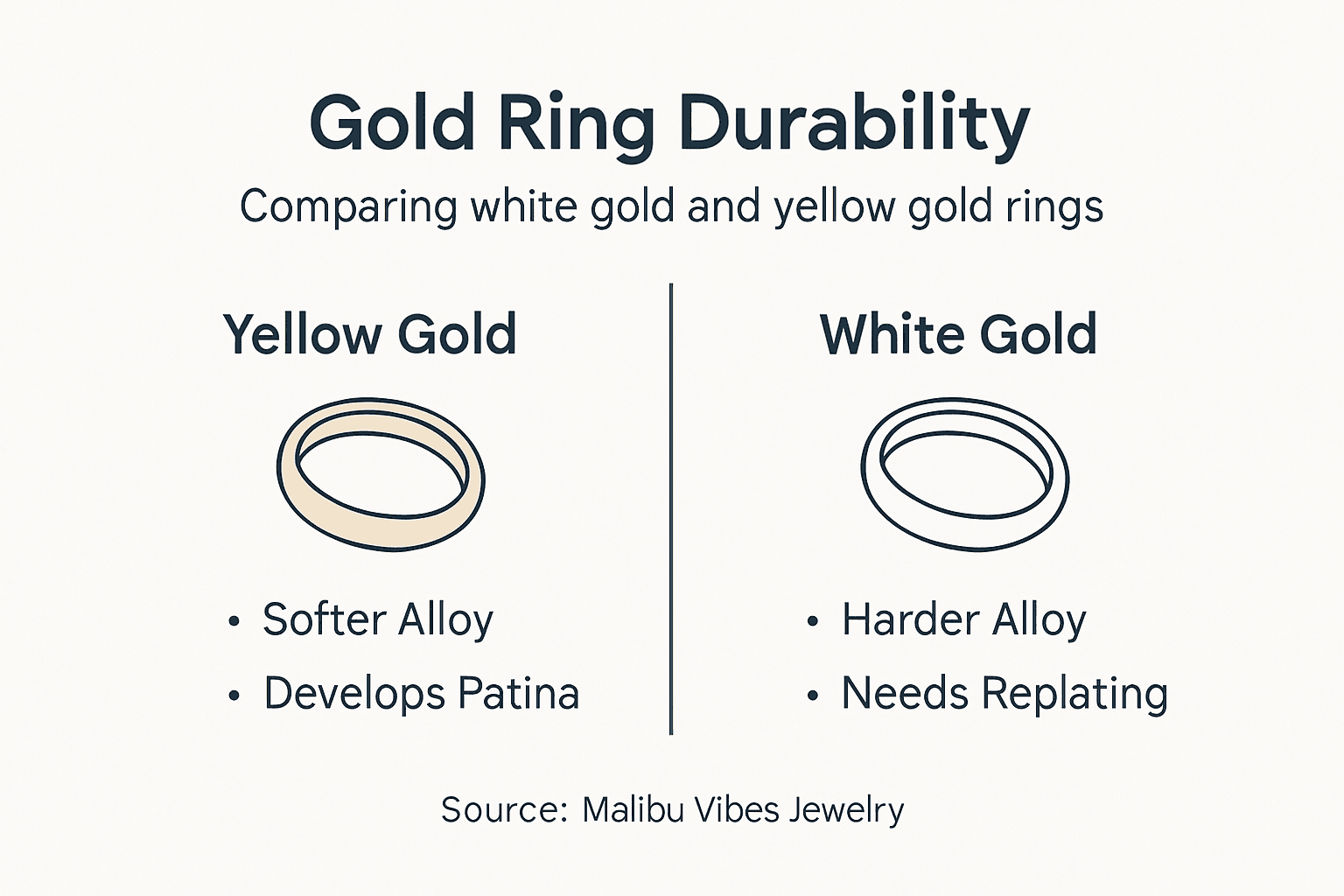
Yellow gold is softer by comparison, which means it scratches more easily. However, these scratches develop a patina that many find appealing—the ring actually looks better as it ages rather than showing obvious wear marks.
Maintenance Requirements
White gold demands more active maintenance. The rhodium plating wears away over 2-3 years of regular wear and needs professional replating to restore that brilliant white finish. This costs around $100-$300 depending on your jeweler.
Yellow gold requires only occasional polishing to remove light scratches and keep it shining. No replating needed. Over the course of 30 years, yellow gold costs significantly less to maintain.
Real Cost of Ownership
- White gold: Initial investment + replating every 2-3 years ($100-$300 per service)
- Yellow gold: Initial investment + occasional polishing ($50-$150, once yearly or as needed)
- Both metals: Professional cleaning and inspection recommended annually
- Both metals: Repairs (sizing, stone setting) cost similarly regardless of metal type
Resale Value Considerations
The resale market treats both metals fairly similarly when karat purity matches. A 14k white gold ring and a 14k yellow gold ring of identical design hold comparable value. However, yellow gold often appeals more to traditional buyers while white gold favors contemporary styles, which can affect how quickly you sell.
Yellow gold rings typically sit on resale markets longer but eventually find buyers who love vintage aesthetics. White gold sells faster because it matches current design trends.
Long-Term Value Retention
Both metals retain their value based on gold content and craftsmanship, not the metal choice itself—but maintenance history affects buyer perception significantly.
A well-maintained yellow gold ring with original patina shows character and proper care. A white gold ring with visible yellow undertones (where rhodium has worn) looks neglected, even if it just needs replating.
The Bottom Line
Choose white gold if you’re willing to budget for replating or prefer a metal that resists scratching. Choose yellow gold if you prefer minimal maintenance and love how metals age naturally. Neither choice hurts your resale value—your maintenance choices do.
Pro tip: Budget $200-$400 for white gold replating over a 10-year period, or choose yellow gold if you’d rather skip this expense and let your ring develop character through natural wear.
Cost Comparison and Smart Selection Advice
When it comes to the actual price tag, yellow and white gold are surprisingly close. The real cost difference emerges over time through maintenance and personal preference factors.
Base Metal Pricing: Nearly Identical
The cost of yellow gold and white gold is largely similar when comparing the same karat value. A 14k yellow gold ring costs roughly the same as a 14k white gold ring of identical weight and design. The precious metal itself is the primary price driver, not the alloy type.
What shifts the price is the craftsmanship, design complexity, and gemstone quality—factors that apply equally to both metals.
Hidden Costs to Factor In
White gold introduces maintenance expenses that yellow gold avoids. Rhodium replating costs $100-$300 every 2-3 years. Over a 30-year marriage, that’s potentially $1,500-$3,000 in additional expenses.
Yellow gold’s maintenance consists of occasional polishing—a $50-$150 service once yearly or as needed. This is where the real financial difference emerges.
Total Cost of Ownership
- Year 1: Both metals cost the same
- Years 2-3: White gold needs first replating ($100-$300)
- Years 5-6: White gold needs second replating ($100-$300)
- Years 10: Yellow gold may need one professional polishing ($50-$150)
- Year 30: White gold has spent $1,500-$3,000 on maintenance; yellow gold spent $250-$450
Smart Selection Beyond Price
Choosing based solely on cost misses the bigger picture. Personal style preferences, skin tone compatibility, and allergy considerations matter more than saving a few hundred dollars over 30 years.
If you’re allergic to nickel (sometimes used in white gold alloys), that choice makes itself. If your skin tone glows in yellow gold but looks washed out in white, that’s $3,000 in maintenance not worth doing.
Making Your Decision
Choose white gold if:
- You love the bright, contemporary aesthetic and can commit to replating
- You prefer durability to minimal maintenance
- Your existing jewelry collection is predominantly white metals
Choose yellow gold if:
- You prefer minimal maintenance and lower lifetime costs
- Your skin tone and style lean warm and traditional
- You love how jewelry develops patina and character with age
Your decision should balance initial cost, lifetime maintenance commitment, personal style, and skin tone—not price alone.
The Allergy Factor
Some white gold alloys contain nickel, which triggers allergic reactions in sensitive individuals. Yellow gold eliminates this concern. If you have sensitive skin, this consideration might tip the scales regardless of cost.
Pro tip: Request nickel-free white gold alloys (using palladium instead) if white gold appeals to you but you have metal sensitivities—the slightly higher cost is worth avoiding allergic reactions.
Discover Your Perfect Gold Ring With Malibu Vibes Jewelry
Choosing between yellow gold and white gold is more than a style decision. It is about matching your lifetime investment with your personal taste, maintenance expectations, and how your ring speaks to your unique story. Whether you want the warm, timeless glow of yellow gold or the sleek, modern shine of white gold, Malibu Vibes Jewelry offers a curated collection crafted to fit your lifestyle and elevate your everyday elegance.

Explore our exquisite 14k Color Gemstone Ring – Malibu Vibes Jewelry collection to find rings that balance the ideal karat clarity and metal blend for long-lasting beauty. Need a radiant complement? Check out our stunning 14k Gold Diamond Necklace – Malibu Vibes Jewelry pieces designed to enhance your chosen ring. Start your journey now by visiting Malibu Vibes Jewelry to experience expert craftsmanship and timeless design made just for you.
Frequently Asked Questions
What are the main differences between yellow gold and white gold rings?
Yellow gold is created by mixing pure gold with copper and silver alloys, giving it a warm golden hue, while white gold combines pure gold with metals like palladium or nickel, resulting in a silvery-white appearance. White gold also typically receives rhodium plating for added shine and scratch resistance.
How do I maintain yellow gold and white gold rings?
Yellow gold requires occasional polishing to remove scratches and maintain its shine, whereas white gold needs rhodium replating every 2-3 years to keep its bright appearance. This means white gold typically involves higher long-term maintenance costs compared to yellow gold.
Which metal is more durable for everyday wear, yellow gold or white gold?
Both yellow gold and white gold have comparable durability when alloyed to appropriate karats (14k or 18k). However, white gold is generally harder due to its alloy composition and rhodium plating, making it more resistant to scratches and dents than yellow gold.
How does the choice of metal affect the appearance of the diamonds set in the rings?
White gold enhances the brilliance of colorless and near-colorless diamonds by providing a reflective surface that amplifies sparkle. Yellow gold, on the other hand, creates a warmer backdrop that can flatter diamonds with lower color grades, making them appear whiter than they are.