

TL;DR:
- The choice of gemstone setting impacts both the appearance and durability of jewelry, requiring careful consideration of lifestyle and stone type. Quality craftsmanship in metalwork ensures better security, longevity, and overall beauty, making maintenance and resizing costs important factors. Selecting the appropriate setting involves balancing design preferences with functional needs for daily wear and long-term value.
The gemstone setting you choose does far more than hold a stone in place. This guide to gemstone settings breaks down every major mounting option so you can buy or design jewelry with real confidence, not guesswork. Whether you’re drawn to the open brilliance of a prong ring or the sleek security of a bezel band, the setting shapes how the stone looks, how long it lasts, and how well it fits your daily life. Most buyers focus entirely on the stone. The setting deserves equal attention.
Table of Contents
- Key takeaways
- A guide to gemstone settings: the core types explained
- Linear and surface settings for continuous sparkle
- Compound and architectural setting styles
- Practical factors to consider before choosing a setting
- My honest take on what most buyers get wrong
- Find your perfect setting at Malibuvibesjewelry
- FAQ
Key takeaways
| Point | Details |
|---|---|
| Settings define function and style | The setting determines sparkle, security, and how the jewelry fits your lifestyle, not just how it looks. |
| Prong settings maximize brilliance | More light reaches the stone, but prongs require regular inspection to stay secure. |
| Bezel settings offer the best protection | Metal encircles the stone fully, making bezels ideal for active wearers and softer gems. |
| Pavé and eternity bands cost more to resize | Continuous stone coverage makes resizing labor-intensive and significantly more expensive. |
| Craftsmanship quality matters most | Even the best design fails if the metalwork is poorly executed. |
A guide to gemstone settings: the core types explained
A gemstone setting is the metalwork technique used to securely mount a stone into jewelry, relying on shaped metal rather than adhesive to hold the gem in place. Understanding the core types gives you a foundation for every decision after this.
Prong settings
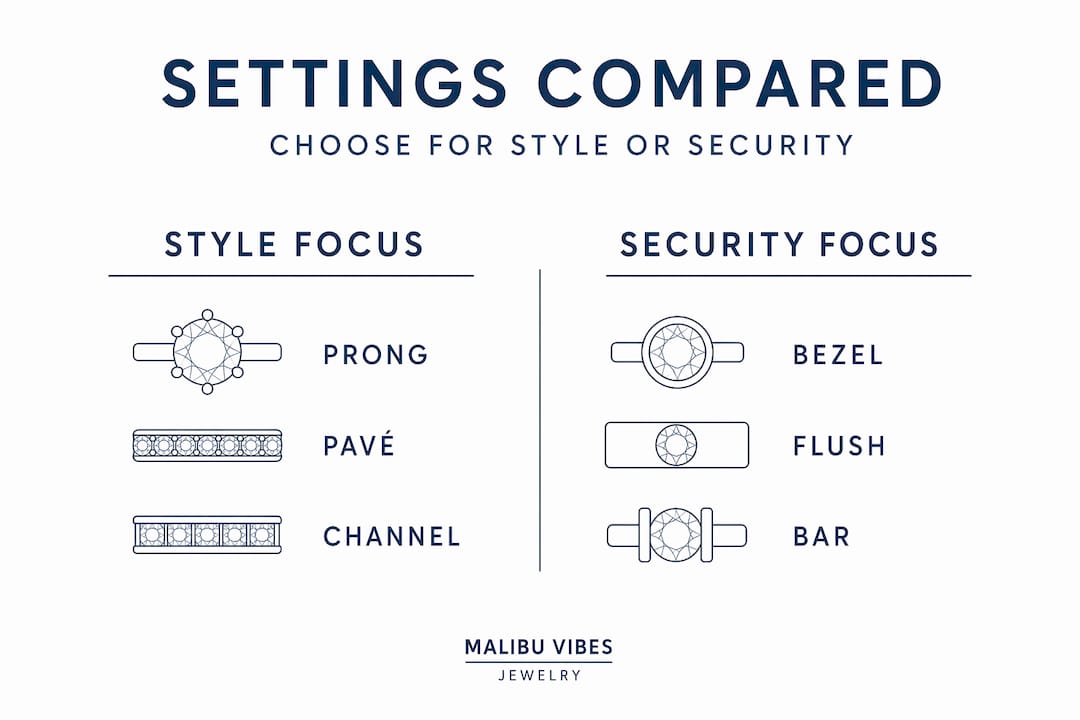
The prong setting is the most recognizable style in fine jewelry. Metal claws, typically four or six, grip the stone at its girdle (the widest point) and hold it elevated above the band. That elevation is the whole point. It allows light to enter from every angle, which maximizes brilliance and fire in faceted stones like diamonds, sapphires, and rubies.
Six-prong settings offer more support than four-prong versions and complement round stones beautifully, while four-prong settings expose more of the stone for a bolder, more open look. V-prong styles are specifically designed to protect pointed corners on princess or marquise cuts, where chips are most likely. Petite prongs reduce metal visibility for a delicate, modern feel.
The trade-off is real. Prong fit and finish directly affect both security and snag risk. Prongs that are too short, improperly angled, or unevenly finished can catch on fabric or allow the stone to shift over time. Quality craftsmanship at this stage is non-negotiable.
Pro Tip: Have a trusted jeweler inspect your prong settings every one to two years. Prong re-tipping, the process of rebuilding worn prong tips, costs far less than replacing a lost stone.
Bezel settings
A bezel setting wraps a continuous band of metal around the circumference of the stone, securing it at the edges. This design offers the highest level of everyday protection of any setting type. There are no prongs to snag, no exposed corners to chip, and the stone sits flush or just slightly above the metal surface.
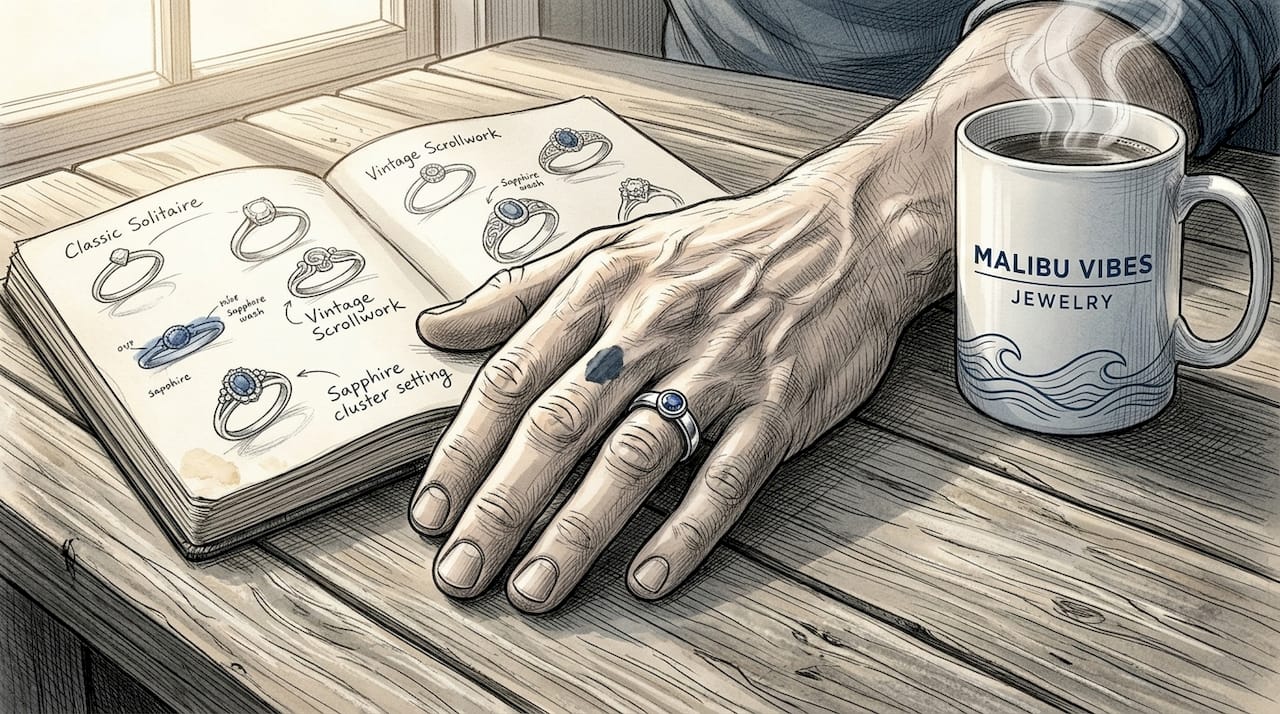
Full bezels encircle the stone completely. Partial bezels (also called half bezels) leave the sides open for a lighter visual effect and slightly more light entry. For translucent stones like moonstone or opal, designers sometimes omit the backing entirely so light can pass through from both sides, creating a glowing, luminous effect you simply cannot get with a prong setting.
Bezels are the go-to recommendation for active wearers who need low-profile protection without sacrificing elegance. They work beautifully with oval, round, and freeform cabochon cuts.
Flush (gypsy) settings
In a flush setting, the stone sits level with the surface of the metal band, recessed into a drilled hole that holds it in place. The result is a completely smooth surface with no raised element at all. This is arguably the most protective setting of all, since the stone has zero exposure above the metal.
Flush settings suit round brilliant cuts and smaller stones particularly well. They appear frequently in men’s jewelry and minimalist fine jewelry for everyday wear.
Basket and tension settings
A basket setting combines multiple prongs with a decorative metal framework beneath the stone, creating a cradle-like structure that adds visual interest while maintaining security. Tension settings take a more architectural approach: the stone is suspended between two sides of the shank, held in place entirely by the spring tension of the metal itself. This creates a striking, almost floating appearance that reads as very contemporary and bold.
Linear and surface settings for continuous sparkle
Some settings are designed not around a single stone but around the visual effect of multiple stones working together. These styles define the look of eternity bands, bracelets, and side-stone engagement rings.
Channel and bar settings
A channel setting cuts a groove into the metal band on both sides, then seats a row of stones inside that groove with no visible metal between them. The stones are secured by the channel walls rather than individual prongs, creating a clean, uninterrupted line of color or brilliance. This setting protects the stones well while delivering a sleek, modern finish.
Bar settings are closely related but use individual vertical metal bars between each stone instead of continuous walls. The slight gap this creates allows more light to enter from the sides, increasing brilliance compared to a full channel. Both styles appear frequently in wedding bands, anniversary rings, and bracelets.
Pro Tip: Channel settings protect stones from above but leave the table (top surface) exposed. For diamonds, this is rarely a concern. For softer gemstones rated below 7 on the Mohs hardness scale, ask your jeweler about stone suitability before committing to a channel design.
Pavé and bead (grain) settings
Pavé (pronounced “pah-VAY”) comes from the French word meaning paved, which is exactly how it looks: a surface covered so tightly with small stones that virtually no metal shows beneath them. Tiny beads or prongs hold each stone in place, creating a continuous carpet of sparkle. Micro-pavé takes this further, using even smaller stones and finer metalwork for an intensely detailed effect.
The visual impact is extraordinary. The practical reality requires attention. Pavé stones can loosen over time due to the fine metal beads used to hold them, and replacing lost melee stones adds up in both cost and complexity. Bead settings, also called grain settings, work on a similar principle but secure each individual stone with small raised metal beads pushed up around its base. The effect is slightly more textured than pavé and works beautifully on colored gemstone rings.
These types of gemstone settings reward buyers who love maximum shimmer and are willing to commit to periodic professional maintenance.
Compound and architectural setting styles
Once you move beyond the core settings, you encounter styles designed as much for symbolism and visual architecture as for function.
-
Halo setting: A center stone is surrounded by a ring of smaller stones, typically pavé or bead-set. The halo creates the illusion of a larger center stone, amplifies brilliance, and adds a distinctly romantic, vintage-adjacent look. Double halos layer this effect twice.
-
Cluster setting: Multiple smaller stones of similar or varied sizes are grouped together to mimic the appearance of a single larger stone or to create decorative floral and geometric patterns. Cluster rings were a signature of Victorian and Edwardian jewelry and have seen a strong revival in contemporary design.
-
Three-stone (trilogy) setting: Three stones sit in a row, traditionally representing the past, present, and future of a relationship. The center stone is usually larger, flanked by two smaller stones that frame and accent it. Side stones can match the center (three diamonds) or contrast it (a sapphire flanked by diamonds).
-
Cathedral setting: Metal arches rise from the band to support the center stone at a height, resembling the arched buttresses of a cathedral. This creates a dramatic, elevated look and leaves space for a wedding band to sit flush underneath.
-
Split shank setting: The band splits into two strands as it approaches the center stone, framing it from both sides. This design adds visual width to the ring and works especially well with large center stones.
-
Trellis setting: The prongs crisscross beneath the stone in a lattice pattern, creating an intricate, open framework that is both decorative and structurally interesting.
Practical factors to consider before choosing a setting
Knowing the setting types is half the work. Applying that knowledge to your actual life is the other half. Use the table below as a quick reference, then read the context beneath it.
| Setting type | Security level | Maintenance needs | Best lifestyle fit | Resizing ease |
|---|---|---|---|---|
| Prong | Moderate | Prong inspection every 1-2 years | Low-impact daily wear | Easy |
| Bezel | High | Minimal | Active, hands-on lifestyles | Easy |
| Flush/gypsy | Very high | Very low | Extremely active wearers | Easy |
| Pavé/micro-pavé | Low to moderate | Stone replacement, regular checks | Occasional or dress wear | Difficult |
| Channel | High | Low | Daily wear, bands | Moderate |
| Eternity band | High | Low | Dress and special occasions | Very difficult |
Full eternity bands with continuous stone coverage require removing and repositioning stones just to resize the ring, which can add significant cost to what seems like a straightforward service. This is one of the most overlooked costs in fine jewelry ownership.
For gemstone-specific protection, the setting must match the stone’s hardness. Emeralds, for example, have natural inclusions that make them brittle. Bezel or three-prong settings with strong metal coverage give them better long-term protection than open four-prong solitaire designs. For everyday colored gemstone rings, you can explore options like 14k gold gemstone rings to see how different setting styles work in practice.
Prong height and angle placement are also factors in long-term security, as the metal must pinch the stone correctly along the girdle to hold it without creating pressure points. This is a detail that separates well-made jewelry from pieces that look identical at first glance but wear very differently over time.
Pro Tip: Before buying any pavé or eternity-style ring, ask the jeweler directly: “What does resizing cost, and how many stones need to be removed to do it?” The answer will tell you more about the true long-term cost of the piece than the price tag will.
My honest take on what most buyers get wrong
I’ve spent years looking at how people choose jewelry, and the same mistake comes up repeatedly. People fall in love with the sparkle of a high-set prong solitaire or a full pavé band without asking whether that setting makes sense for how they actually live. A nurse who wears gloves all day or a rock climber who never takes off their ring needs a bezel or flush setting, not a cathedral prong with six delicate claws catching on everything.
The other thing I keep seeing is buyers surprised by maintenance costs they were never told about. Prong re-tipping is routine and inexpensive if you stay on top of it. Pavé stone replacement is neither. Those small melee stones cost real money to source and reset, and if multiple stones loosen at once (which happens with heavy wear), the repair bill can shock people who thought the purchase price was the whole story.
What I genuinely believe is that craftsmanship quality matters more than setting style. A beautifully executed bezel outperforms a sloppy prong every single time, in security, longevity, and appearance. The best gemstone setting techniques are ones where the metalwork is so clean and precise that you notice the stone, not the structure holding it. Find a jeweler whose work you can inspect closely, because that relationship matters more than any single purchase.
— Ara
Find your perfect setting at Malibuvibesjewelry
Choosing the right setting becomes much easier when you can see the craftsmanship up close.

Malibuvibesjewelry designs and handcrafts fine jewelry in Los Angeles, with every piece built around the idea that setting quality and stone quality should be equal priorities. From diamond rings in 14k gold to curated bezel-set fine jewelry, each collection reflects a deliberate approach to how stones are mounted and protected. If you want to understand exactly how a piece is made before you buy it, the Malibuvibesjewelry fine jewelry process page walks you through every stage from metal selection to finished setting. Browse, compare, and buy with the confidence this guide was built to give you.
FAQ
What is a gemstone setting?
A gemstone setting is the metalwork technique used to secure a stone in jewelry without adhesive. The metal physically grips the stone using prongs, bezels, channels, or other structures.
Which setting is most secure for daily wear?
Bezel and flush settings offer the highest protection for daily wear because they surround or encase the stone with metal, reducing snag risk and exposure significantly.
Why is resizing a pavé ring so expensive?
Resizing rings with continuous stone coverage requires removing and repositioning individual stones to adjust the band size. This makes it far more labor-intensive than resizing a plain metal band.
How many prongs should a gemstone setting have?
Six prongs offer stronger support and suit round stones well, while four prongs expose more of the stone for a more open, modern look. The right choice depends on the stone shape and your security preference.
What setting works best for soft or fragile gemstones?
Bezel settings provide the best protection for softer or more fragile stones like emeralds, opals, and moonstones because the surrounding metal wall shields the edges and reduces the risk of chipping.
Recommended
- Gemstone Setting Explained: 7 Techniques for Quality Jewelry – Malibu Vibes Jewelry
- Best gemstone settings for stunning luxury jewelry – Malibu Vibes Jewelry
- How to Identify Quality Gemstones for Fine Jewelry Online – Malibu Vibes Jewelry
- 7 Types of Gemstone Settings Every Jewelry Lover Should Know – Malibu Vibes Jewelry