

Buying bracelets online can be frustrating when sizing goes wrong. 40% of online bracelet returns are due to improper sizing, costing buyers time and money. Accurate bracelet size ensures comfort, durability, and style that lasts. This guide teaches precise measurement techniques and sizing insights so you confidently select handcrafted bracelets that fit perfectly every time.
Table of Contents
- Introduction To Bracelet Sizing Essentials
- Measuring Your Bracelet Size: Methods And Accuracy
- Understanding Bracelet Fit Types And Their Impact
- Material Considerations And Durability Effects On Sizing
- Common Misconceptions About Bracelet Size
- Comparison Of Sizing Standards And Charts
- Sizing For Gifting: Practical Guidelines And Tips
- Conclusion And Best Practices For Bracelet Sizing
- Discover Perfectly Sized Handcrafted Bracelets At Malibu Vibes Jewelry
- Frequently Asked Questions About Bracelet Sizing
Key Takeaways
| Point | Details |
|---|---|
| Measure at wrist bone | Prevents under-sizing by capturing true wrist circumference including bone protrusions. |
| Choose fit type wisely | Snug, comfortable, or loose fits impact bracelet longevity and daily wearability. |
| Material dictates precision | Rigid metals like 14k gold need sizing within 0.5 cm; adjustables offer flexibility. |
| Use US sizing charts | Translate wrist measurements into standard sizes for confident online purchases. |
| Add extra for gifts | Include 1.5 to 2 cm beyond estimated wrist size to ensure recipient comfort. |
Introduction to Bracelet Sizing Essentials
Correct bracelet sizing balances comfort, style, and durability in ways that transform your jewelry experience. Poor sizing causes painful pinching, increases damage risk to delicate materials, and leads to buyer dissatisfaction. Women aged 18 to 45 seeking handcrafted bracelets prioritize quality and fit, making accurate sizing essential for enjoying fine jewelry investments.
Common bracelet types vary significantly in sizing needs:
- Tennis bracelets require snug fits to prevent stone loss
- Charm bracelets need room for added charms without tightness
- Bangles demand precise diameter measurements for rigid metal styles
- Chain bracelets offer adjustment flexibility but still need proper base sizing
Understanding these differences helps you select bracelets that complement your lifestyle. This guide covers precise measurement methods, fit type selection, material considerations, and practical sizing charts. You’ll learn to avoid common sizing mistakes and confidently choose bracelets for yourself or as thoughtful gifts.
Measuring Your Bracelet Size: Methods and Accuracy
Accurate wrist measurement forms the foundation of perfect bracelet fit. Use these proven techniques to capture your true size.
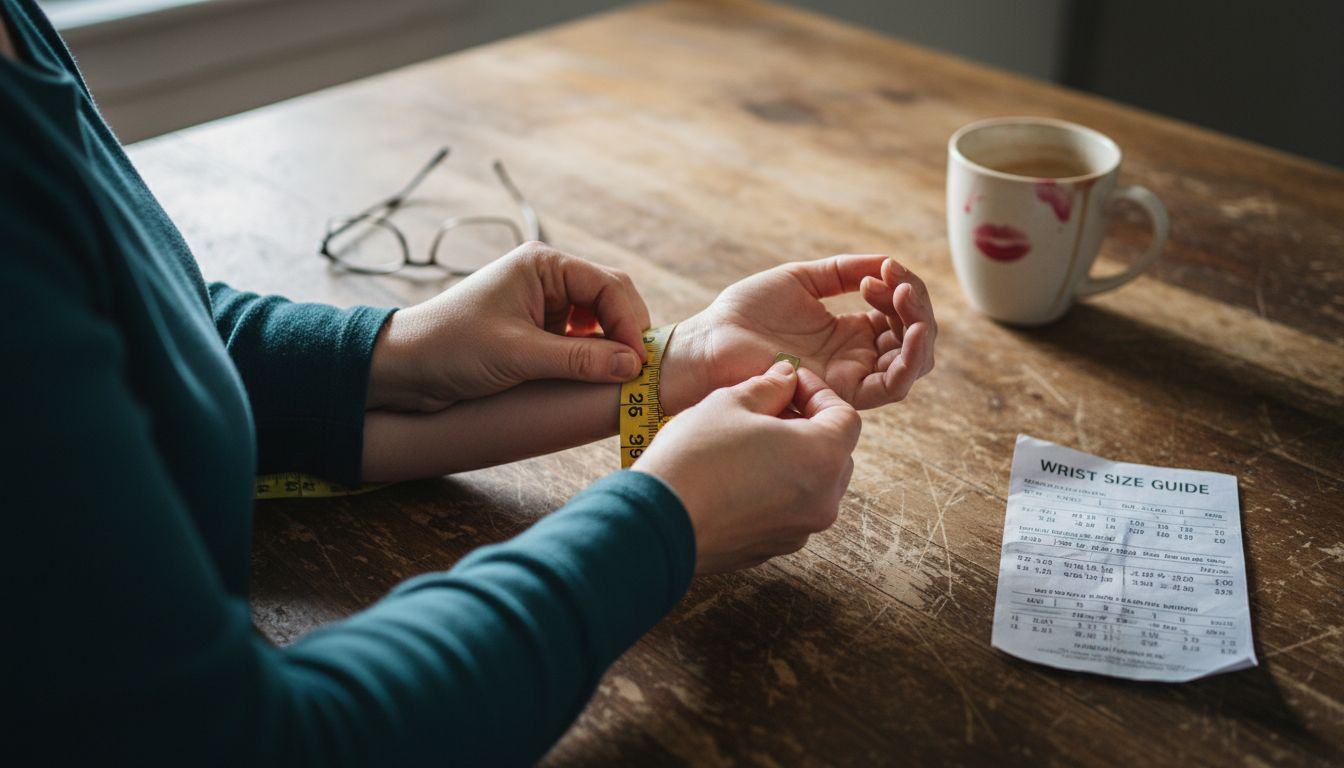
Start with a flexible measuring tape wrapped around your wrist bone, the bony protrusion where your wrist meets your hand. Women measuring their wrists without accounting for bone protrusion often under-measure by 0.7 cm, leading to bracelets that pinch uncomfortably. Keep the tape snug against your skin without compressing it.
Alternative methods include paper strips or string, though these prove less precise. Mark where the material overlaps, then measure against a ruler. This works when you lack a measuring tape but introduces potential error through material stretch or improper marking.
Measure at different times of day because wrist circumference fluctuates up to 1 cm between morning and evening due to fluid retention. Take measurements in the afternoon when swelling peaks to capture your maximum size. Always measure twice and record the larger number in centimeters for accuracy.
Pro Tip: Keep the measuring tape loose enough to slide one finger underneath. This simulates how a bracelet rests on your wrist naturally without creating uncomfortable pressure points during movement.
For detailed visual guides, explore our resources on how to measure wrist for bracelet and learn more about wrist size for bracelet fit. Understanding common measurement errors in wrist size prevents costly sizing mistakes.
Understanding Bracelet Fit Types and Their Impact
Fit type determines how your bracelet feels and performs throughout daily wear. Each style serves different preferences and bracelet types.
Snug fit equals your exact wrist measurement with minimal extra room. The bracelet hugs your wrist closely, ideal for delicate chains or stacked styles where you want minimal movement. However, snug fits risk discomfort during wrist flexion and increase damage potential for rigid bracelets that cannot accommodate natural wrist expansion.
Comfortable fit adds 1 to 1.5 cm beyond wrist measurement, creating the sweet spot for everyday bracelets. This fit allows natural wrist movement without excess sliding or rotation. Most handcrafted fine jewelry performs best at comfortable fit because it balances security with wearability while reducing stress on clasps and links.
Loose fit adds more than 1.5 cm, prioritizing dramatic drape and statement styling. Popular for bangles and bold chain designs, loose fits create visual impact but may reduce security. The bracelet slides freely along your forearm, which some find stylish but others consider impractical for active lifestyles.
Recommended additional length by preference:
- Snug fit: Add 0 to 0.5 cm to wrist measurement
- Comfortable fit: Add 1 to 1.5 cm to wrist measurement
- Loose fit: Add 1.5 to 3 cm to wrist measurement
Fit choice affects long-term durability significantly. Snug bracelets experience more wear at stress points, potentially warping precious metals or breaking delicate clasps. Comfortable fits distribute pressure evenly, extending bracelet lifespan while maintaining security. Loose fits increase movement-related wear but reduce pressure damage.
Learn your ideal measurements with our comprehensive bracelet size guide for ideal fit.
Material Considerations and Durability Effects on Sizing
Bracelet material fundamentally changes sizing requirements and tolerance for error. Understanding these differences protects your jewelry investment.
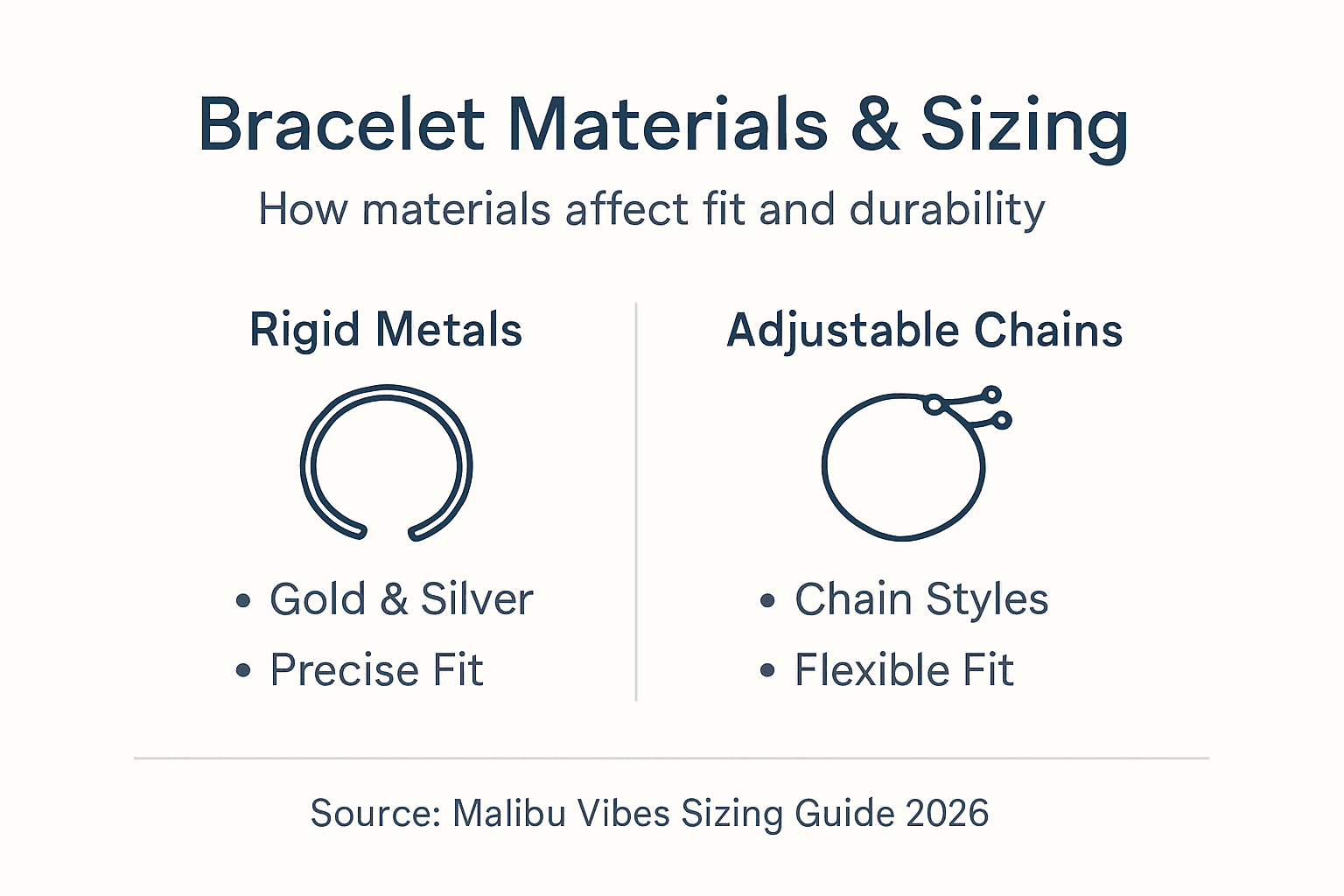
Bracelets made with rigid materials like 14k gold or sterling silver require sizing accuracy within 0.5 cm due to inflexibility and risk of damage from tight fits. Precious metal bangles cannot flex to accommodate wrist movement, so improper sizing causes painful pressure or prevents the bracelet from sliding over your hand entirely. Forcing a too-small rigid bracelet risks permanent warping that destroys both appearance and value.
Adjustable chain bracelets offer greater flexibility with adjustment ranges spanning 1.5 to 3 cm. Extension chains with multiple clasp positions let you fine-tune fit based on daily wrist changes or wearing preferences. However, adjustables still require thoughtful base sizing because maximum extension may create excessive drape while minimum length might pinch.
| Feature | Rigid Metal Bracelets | Adjustable Chain Bracelets |
|---|---|---|
| Sizing Tolerance | ±0.5 cm maximum | ±1.5 to 3 cm range |
| Adjustment Range | None without professional resizing | Multiple positions via extension chain |
| Durability Impact | High risk of warping if undersized | Moderate wear at adjustment points |
| Best Fit Type | Comfortable to loose | Comfortable |
| Material Stress | Cannot accommodate wrist expansion | Distributes pressure across links |
Pro Tip: For precious metal bangles, always select a slightly looser comfortable fit rather than snug. This preserves metal integrity while ensuring you can remove the bracelet easily without forcing it over your hand bones.
Explore our curated bracelets at Malibu Vibes Jewelry featuring both rigid and adjustable styles. Our guide on tennis bracelet sizing considerations addresses specific needs for this popular rigid style. Understanding metal bracelet sizing impact helps you make informed material choices.
Common Misconceptions About Bracelet Size
Sizing myths lead buyers toward uncomfortable, poorly fitting bracelets. Dispelling these misconceptions improves your selection process.
Myth: All bracelets fit universally without size consideration. Reality: Wrist sizes vary dramatically between individuals, typically ranging from 14 cm to 20 cm in circumference. One-size-fits-all claims ignore this diversity and result in poor fit for most buyers.
Myth: Tight bracelet fits enhance style and security. Reality: Overly tight fits increase discomfort during normal wrist flexion and dramatically raise damage risk. Rigid bracelets stressed by tight sizing may warp permanently, while chain links under constant tension break more frequently. Security comes from proper clasp quality, not restrictive sizing.
Myth: Measuring wrist circumference without including bone protrusions gives accurate sizing. Reality: Skipping the wrist bone creates measurements approximately 0.7 cm too small, guaranteeing bracelets that pinch painfully. Always measure at the widest point where bone protrudes.
Myth: All measurement methods produce equally reliable results. Reality: Flexible measuring tapes designed for body measurements provide superior accuracy compared to paper strips or string. Rigid tools cannot conform to wrist curvature, creating measurement gaps that underestimate true size.
Myth: Adjustable bracelets eliminate sizing concerns entirely. Reality: Even adjustable designs require base size consideration because extreme adjustment positions compromise comfort and aesthetics. Minimum length settings may pinch while maximum extension creates excessive movement and tangling.
Understanding accurate sizing principles helps you navigate our bracelet size chart and myths. Learn how bracelet size myths debunked through evidence-based sizing guidance.
Comparison of Sizing Standards and Charts
US sizing conventions translate wrist measurements into standardized categories that simplify online bracelet shopping. Understanding these standards builds purchasing confidence.
US bracelet sizing uses wrist circumference measured in both centimeters and inches as the primary metric. Retailers then group measurements into Small, Medium, Large, and Extra Large categories, though exact ranges vary slightly by brand. Standard categories typically follow these patterns:
| Wrist Circumference (cm) | Wrist Circumference (inches) | US Size | Recommended Fit Type | Bracelet Length Needed |
|---|---|---|---|---|
| 14.0 to 15.5 cm | 5.5 to 6.1 inches | Small | Comfortable | 15.5 to 17.0 cm |
| 15.5 to 17.0 cm | 6.1 to 6.7 inches | Medium | Comfortable | 17.0 to 18.5 cm |
| 17.0 to 18.5 cm | 6.7 to 7.3 inches | Large | Comfortable | 18.5 to 20.0 cm |
| 18.5 to 20.0 cm | 7.3 to 7.9 inches | Extra Large | Comfortable | 20.0 to 21.5 cm |
To select your size from charts, first measure your wrist circumference accurately at the bone. Then add your preferred fit allowance: 1 to 1.5 cm for comfortable fit, 0 to 0.5 cm for snug, or 1.5 to 3 cm for loose. The total determines your needed bracelet length.
For example, a 16 cm wrist seeking comfortable fit needs a 17 to 17.5 cm bracelet, placing you solidly in Medium category. Always consult retailer-specific charts when ordering online because sizing conventions differ between brands. Some use internal diameter for bangles rather than circumference, requiring different calculations.
Our detailed bracelet size chart provides Malibu Vibes specific sizing to ensure perfect fit with our handcrafted collections.
Sizing For Gifting: Practical Guidelines and Tips
Selecting bracelet size as a gift presents unique challenges when you cannot directly measure the recipient. These strategies improve gift success rates.
Add 1.5 to 2 cm extra length beyond your best estimate of recipient wrist size. This buffer accommodates measurement uncertainty while ensuring comfortable rather than tight fit. Most recipients appreciate slightly loose bracelets over uncomfortably snug ones, and excess length poses fewer problems than insufficient size.
Choose adjustable bracelet designs when possible for gift giving. Extension chains spanning 1.5 to 3 cm adjustment range accommodate wide size variations, dramatically reducing the risk of poor fit. Adjustables transform uncertain sizing from dealbreaker to minor detail.
Estimate wrist size through these discreet observation methods:
- Borrow an existing bracelet the recipient wears regularly and measure its internal circumference
- Observe the recipient’s wrist visually and compare to your own known measurement
- Consult close friends or family members who might know jewelry sizes
- Check for jewelry boxes containing sized pieces with manufacturer tags
Consider the recipient’s likely fit preference if you know their style. Fashion-forward individuals often prefer loose, dramatic drapes while practical, active people typically choose comfortable fits for security and ease of movement.
Pro Tip: When doubt remains between two sizes, always choose the larger option for gifts. Professional jewelers can easily shorten bracelets by removing links, but lengthening requires adding expensive materials that may not match perfectly.
Our comprehensive guide on the jewelry gifting process covers additional strategies for successful bracelet gifts including presentation and sizing backup plans.
Conclusion and Best Practices for Bracelet Sizing
Mastering bracelet sizing transforms your jewelry buying experience from guesswork into confident decision making. Apply these consolidated best practices for perfect fit every time.
Always measure at the wrist bone using a flexible measuring tape, accounting for the bone protrusion that adds approximately 0.7 cm to true circumference. Measure twice at different times of day, recording the larger afternoon measurement when wrists naturally swell. This prevents the most common sizing error that causes uncomfortable fit.
Select fit type based on bracelet purpose and material. Rigid precious metal pieces demand comfortable to loose fits that preserve metal integrity, while adjustable chains offer more flexibility. Everyday bracelets benefit from comfortable 1 to 1.5 cm allowance that balances security with ease of wear.
Account for material-specific requirements, particularly with handcrafted fine jewelry. Pieces crafted from 14k gold or sterling silver tolerate minimal sizing error, requiring accuracy within 0.5 cm. Budget extra adjustment room or choose adjustable designs when uncertainty exists.
Post-purchase adjustment options provide safety nets for imperfect sizing:
- Removable links allow professional jewelers to shorten chain bracelets precisely
- Extension chains add length flexibility for undersized pieces
- Professional resizing services can adjust rigid bangles, though this requires metalwork expertise
- Return and exchange policies offer last resort solutions for significant sizing mismatches
Quick reference best practices checklist:
- Measure at wrist bone with flexible tape
- Record measurements in centimeters twice for accuracy
- Add 1 to 1.5 cm for comfortable everyday fit
- Choose larger sizes when gifting with uncertain measurements
- Consult material-specific sizing requirements for precious metals
- Verify retailer sizing charts before purchasing online
- Keep original packaging for potential returns or exchanges
Proper sizing maximizes your handcrafted bracelet investment by ensuring comfortable daily wear and extended durability. You now possess the knowledge to measure accurately, interpret sizing charts, and select fits that match your lifestyle perfectly.
Discover Perfectly Sized Handcrafted Bracelets at Malibu Vibes Jewelry
Now that you understand precise bracelet sizing, explore our expertly handcrafted bracelets collection designed with meticulous attention to fit and comfort. Each piece balances Los Angeles craftsmanship with sizing precision that honors your measurements.

Our curated selection features both rigid precious metal designs and adjustable chain styles that accommodate diverse fit preferences. Discover stunning sterling silver jewelry crafted for lasting durability when sized correctly. Learn about our commitment to quality through our detailed fine jewelry making process where sizing expertise meets artistic vision. Shop confidently using the measurement techniques and sizing knowledge you’ve gained to find bracelets that fit perfectly from the first wear.
Frequently Asked Questions About Bracelet Sizing
What is the best method to measure wrist size for a bracelet?
Use a flexible measuring tape wrapped around your wrist bone where it protrudes most, keeping the tape snug but not compressing your skin. Measure twice at different times of day to capture natural size variation, recording the larger afternoon measurement. This method provides accuracy within 0.2 cm when performed correctly.
How much extra length should I add for a comfortable bracelet fit?
Add 1 to 1.5 cm beyond your wrist circumference measurement for comfortable everyday fit. Snug fits require minimal addition of 0 to 0.5 cm, while loose statement styles need 1.5 to 3 cm extra. The comfortable range balances security with natural wrist movement freedom.
Can adjustable bracelets fit all wrist sizes?
Adjustable bracelets accommodate wide size ranges typically spanning 1.5 to 3 cm through extension chains or sliding mechanisms. However, they work best within manufacturer-specified ranges rather than truly universal sizing. Extreme wrist sizes may still require specific size selection even with adjustable features.
What are common mistakes to avoid when choosing bracelet size?
Avoid measuring above or below the wrist bone, which creates inaccurate readings typically 0.7 cm too small. Never choose overly tight fits that risk discomfort and metal damage. Don’t ignore bracelet material flexibility when selecting sizes, as rigid metals require more precise measurements than adjustable chains. Finally, avoid using inaccurate tools like rigid rulers instead of flexible measuring tapes.
How do I select bracelet size when buying a gift?
Add 1.5 to 2 cm beyond your best estimate of the recipient’s wrist size to ensure comfortable rather than tight fit. Choose adjustable bracelet designs whenever possible to accommodate size uncertainty gracefully. Discreetly borrow an existing bracelet they wear or consult family members who might know their jewelry sizes for better estimation accuracy.