

TL;DR:
- A gold bullion necklace combines high-purity gold with wearable design, offering investment value and aesthetic appeal.
- Choosing 22K or 24K purity ensures better resale value and reflects gold’s intrinsic worth, while proper care preserves its shine.
A gold bullion necklace is jewelry crafted from high-purity gold, valued both for its metal content and its distinctive wearable design. Unlike standard gold jewelry, bullion gold jewelry prioritizes gold purity, typically 22K or 24K, making it a rare intersection of investment-grade metal and personal adornment. Brands like PAMP Suisse and Nebü have formalized this category, while Los Angeles-based makers like Malibuvibesjewelry bring handcrafted precision to the concept. Whether you are buying for yourself or as a gift, understanding what separates a true bullion necklace from a standard gold chain necklace determines whether you get lasting value or just a pretty piece.
What styles and designs define a gold bullion necklace?
The most recognizable form is the bullion bar pendant, a miniature ingot suspended from a fine chain. These pendants range from 1 gram to 1 troy ounce, with the smaller sizes being the most practical for daily wear. PAMP Suisse, the Swiss refinery, produces .999 fine gold ingots mounted in necklace form, complete with mint marks and assay certificates. These pieces function as collectibles and investment-grade jewelry simultaneously.

Beyond the classic bar pendant, designers have expanded the format considerably. Integrated gold bead necklaces string together small bullion-weight spheres on a continuous strand, creating a look closer to traditional jewelry while maintaining high gold content per piece. A gold chain necklace in 22K or 24K with a bullion pendant is another popular hybrid, where the chain itself contributes meaningful gold weight rather than serving as mere decoration.
Bezel settings represent the most design-forward approach. A bezel wraps a thin rim of gold around the bullion bar, securing it to the chain while adding a polished, contemporary frame. This technique, used by fine jewelers including Malibuvibesjewelry in their bezel-set collections, transforms a raw ingot into something you would wear to a dinner or a gallery opening.
Hallmarks and mint marks are not just authentication tools. On a bullion necklace, they function as design elements, adding texture, credibility, and collectible appeal to the surface of the pendant.
- Bar pendants: Classic ingot shape, 1g to 1oz, often with assay card
- Gold bead necklaces: Continuous strand of high-purity spheres, wearable and weighty
- Chain and pendant combos: 22K or 24K chain paired with a bullion bar drop
- Bezel-set bullion: Ingot framed in a gold bezel, polished for fine jewelry appeal
- Coin pendants: Minted gold coins converted to pendants, combining numismatic and bullion value
Pro Tip: When buying a bar pendant style, always confirm the piece comes with an assay certificate. This document verifies gold purity and weight, which matters enormously if you ever want to resell.
How does gold karat level affect value, appearance, and durability?
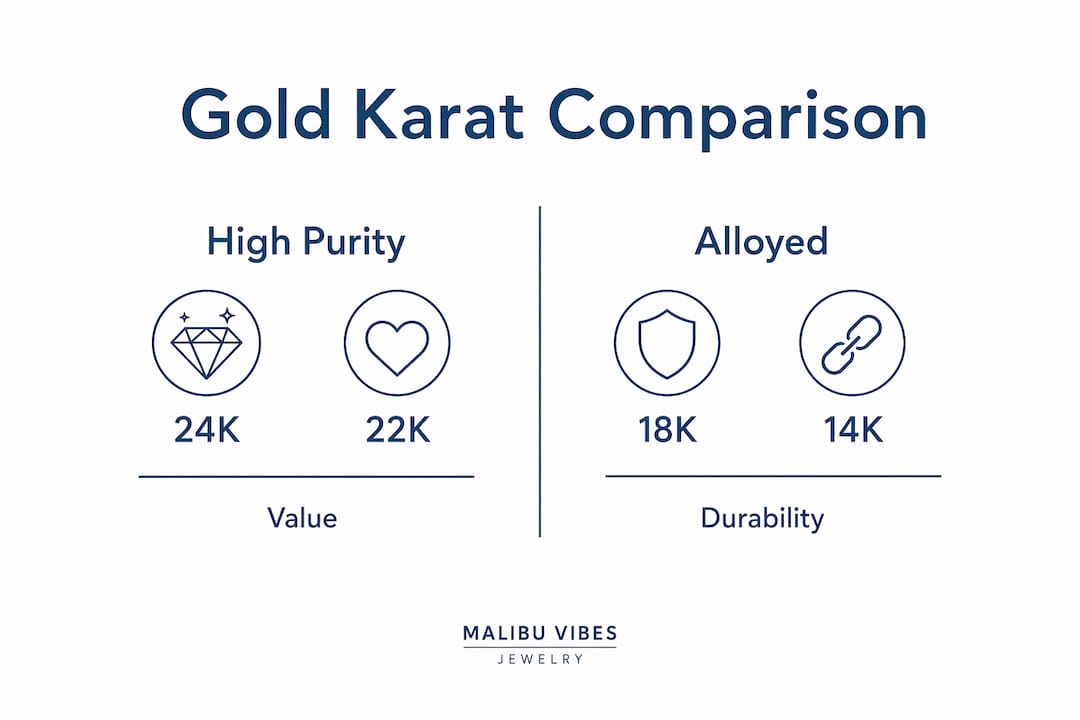
Gold purity is measured in karats, and the karat rating of your bullion necklace directly controls three things: how much the piece is worth per gram, how it looks over time, and how well it holds up to daily wear. Purity stamps like 999, 916, 750, and 585 correspond to 24K, 22K, 18K, and 14K gold respectively, with 999 containing approximately 99.9% pure gold and commanding the highest resale value per gram.
24K (999) gold
24K gold is the purest form available in jewelry. Its color is a deep, saturated yellow that lower karats cannot replicate. The trade-off is physical softness. 24K gold is notably softer than 18K or 14K alloys, meaning it scratches and bends more easily under the friction of daily wear. For a bullion necklace worn occasionally or displayed as a collectible, 24K is ideal. For everyday use, it requires more careful handling.
22K (916) gold
22K gold strikes the most practical balance for bullion necklaces. At 91.6% purity, it retains most of the investment value of 24K while the small alloy addition provides enough structural strength for regular wear. Most PAMP Suisse and Indian-market bullion jewelry uses 22K as the standard, and it remains the most traded purity in global gold jewelry markets.
18K and 14K gold
18K (750) and 14K (585) gold contain more alloy metals, which increases hardness and scratch resistance. The color shifts slightly, appearing less intensely yellow and sometimes with warm or rose tones depending on the alloy mix. These karats are better suited for pieces set with gemstones or worn daily, but they carry less intrinsic gold value per gram. If investment retention matters to you, 18K and 14K are secondary choices for bullion-focused buying.
| Karat | Purity | Best for | Durability | Resale value |
|---|---|---|---|---|
| 24K (999) | 99.9% gold | Collectibles, occasional wear | Lower | Highest per gram |
| 22K (916) | 91.6% gold | Regular wear, investment jewelry | Moderate | High |
| 18K (750) | 75% gold | Daily wear, gemstone settings | High | Moderate |
| 14K (585) | 58.5% gold | Everyday jewelry, active lifestyles | Highest | Lower per gram |
Pro Tip: If you plan to buy a gold bullion necklace as a long-term store of value, prioritize 22K or 24K. The higher purity means the piece tracks gold spot price more closely, making future resale straightforward.
What pricing factors should buyers consider?
Gold bullion pricing is transparent by design. The price of any bullion product combines the current spot price of gold plus a premium that covers refining, minting, and market demand. For pure bullion bars, that premium typically runs 1 to 5% above spot. For bullion necklaces, the premium is higher because manufacturing a wearable piece adds labor and design costs, but it remains far below the markups on standard retail jewelry.
Standard gold jewelry carries retail markups of 50 to 300% above the metal’s melt value. That markup covers branding, retail overhead, and design, none of which you recover when you sell. A bullion necklace, by contrast, prices closer to intrinsic metal value, which means the gap between what you pay and what you could recover is smaller.
Size matters in pricing too. Smaller gold bars carry proportionally higher premiums than larger units because production costs are spread over fewer grams. A 1-gram bullion pendant will cost more per gram than a 10-gram bar. This is a structural reality of the market, not a dealer markup trick.
Here is how to evaluate fair pricing before you buy:
- Check the live gold spot price on a reliable source like Kitco or the London Bullion Market Association before any purchase.
- Calculate the gold weight in grams for the piece you are considering, then multiply by the current spot price per gram.
- Add a reasonable premium of 10 to 25% for a bullion necklace, accounting for craftsmanship and wearability.
- Compare the asking price to that calculated figure. Anything significantly above 25% over melt value is moving into standard jewelry territory.
- Ask the seller for a breakdown of gold weight, purity, and any certification costs included in the price.
“Bullion’s value is closer to intrinsic metal. Gold jewelry marks up costs for design, branding, and retail overhead, which is lost on resale.” Source: goldsilver.com
For guidance on reading gold jewelry pricing before you commit, the buying gold jewelry guide from Malibuvibesjewelry breaks down what to look for at each karat level.
How to care for your gold bullion necklace
Pure gold does not tarnish. What you see as dullness on a high-karat piece is almost always surface oils, skin residue, and environmental grime. Gentle cleaning with mild soap and warm water restores shine without damaging the metal. Use a soft-bristle brush, rinse thoroughly, and pat dry with a lint-free cloth.
What you must avoid is equally clear. Abrasive cleaners, bleach, chlorine, and ultrasonic cleaners set to high intensity can all damage soft 24K surfaces. Aggressive polishing is a particular risk because it physically removes gold material from the surface. For 24K pieces, professional maintenance should avoid aggressive polishing entirely. Ultrasonic cleaning at low settings and steam cleaning are both safe alternatives when done by a trained jeweler.
Storage is where most people make preventable mistakes:
- Store each bullion necklace in its own soft pouch or lined compartment. Contact with other jewelry causes scratches, especially on 24K.
- Keep pieces away from humidity, direct sunlight, and temperature extremes.
- If the necklace came with an assay card or certificate, store that document with the piece. It is part of the value.
- Inspect clasps and chain links every six months. A broken clasp on a 22K bullion pendant is a loss worth preventing.
Pro Tip: A small anti-tarnish strip placed inside the storage pouch protects lower-karat pieces from oxidation without touching the gold surface directly.
What makes a gold bullion necklace a strong gift or personal choice?
A gold bullion necklace works as a gift precisely because it carries dual meaning. It is beautiful to wear and holds real monetary value, which makes it appropriate for milestone occasions like graduations, anniversaries, and significant birthdays. The key is matching the piece to the recipient’s lifestyle and the occasion’s weight.
For personal adornment, consider how often you plan to wear the piece. A 24K bar pendant on a delicate chain suits someone who wears jewelry selectively and stores it carefully between uses. A 22K gold bead necklace or a heavier gold chain necklace in 22K suits someone who wants daily presence without sacrificing too much purity. For men, a gold pendant for men in a clean geometric or bar format reads as both modern and substantial, especially in 22K or 18K.
When buying as a gift with investment intent, prioritize purity over design complexity. A simpler piece in higher karat gold retains more value and communicates thoughtfulness about the recipient’s financial future, not just their style. Pairing a bullion necklace with a complementary piece, such as a 14K gold gemstone necklace, creates a layered look that balances investment metal with color and personality.
Customization options, including engraved mint marks, personalized bezels, or choice of chain length and style, add sentimental value without significantly affecting the gold content. Malibuvibesjewelry offers handcrafted gold necklace options where design elements are added with care for the underlying metal value, not at its expense.
Key takeaways
A gold bullion necklace delivers the most value when purity, pricing transparency, and care practices are understood before purchase.
| Point | Details |
|---|---|
| Purity drives value | Choose 22K or 24K for the strongest alignment between gold content and resale price. |
| Pricing has a formula | Pay spot price plus a reasonable premium of 10 to 25% for a wearable bullion piece. |
| Karat affects durability | 24K scratches easily; 22K balances purity and daily wear better for most buyers. |
| Care is simple but specific | Mild soap, soft brush, and separate storage preserve both appearance and gold weight. |
| Gifting requires lifestyle matching | Match karat and design complexity to how often the recipient will actually wear the piece. |
Why I think most buyers overlook the most important question
When people ask me about buying a gold bullion necklace, they almost always lead with “What looks good?” That is the wrong starting question. The right question is “How often will I actually wear this?”
I have seen buyers spend significantly on a 24K bar pendant, wear it twice, and then store it indefinitely because they were nervous about scratching it. That is not a bad outcome financially, but it is a missed opportunity for daily joy. If you are someone who wears jewelry every day, 22K is your answer. The purity is still high enough to track gold value meaningfully, and the added durability means you are not treating a necklace like a museum piece.
The other thing I would push back on is the assumption that a bullion necklace is either an investment or a fashion piece. The best ones are genuinely both, but only if you buy from a seller who is transparent about gold weight and purity. A beautiful design on a 14K chain with a thin gold-plated pendant is not a bullion necklace. It is a fashion piece priced like one. Ask for the weight in grams, the purity stamp, and the calculation of metal value before you commit.
Market trends in 2026 are moving toward bullion-inspired fine jewelry, where the aesthetic of a bar or ingot pendant is adopted by mainstream jewelers at lower purities. That is fine for style, but do not confuse it with the real thing. When you buy a true bullion necklace from a maker who discloses every detail, you get something that holds its worth across years, not just seasons.
— Ara
Explore Malibuvibesjewelry’s solid gold necklace collection
Malibuvibesjewelry designs and handcrafts solid gold necklaces in Los Angeles, with transparent pricing across multiple karat options. Every piece in the solid gold necklace collection is built with a clear focus on gold content, craftsmanship, and wearability. Whether you are drawn to a clean bar pendant, a layered gold chain necklace, or a bezel-set design that reads as fine jewelry, the collection covers the full range of bullion gold jewelry styles. Pricing reflects actual metal value plus honest craft costs, so you know exactly what you are paying for. Browse the collection and find a piece worth wearing and worth keeping.
FAQ
What is a gold bullion necklace?
A gold bullion necklace is a piece of jewelry made from high-purity gold, typically 22K or 24K, where the gold content itself is the primary source of value. It combines the investment properties of bullion with a wearable, designed form.
Is a gold bullion necklace a good investment?
It depends on purity and pricing. Pieces in 22K or 24K that are priced close to spot value retain value well, while heavily marked-up designs recover only melt value on resale. Buying from transparent sellers with documented gold weight and purity gives you the best investment outcome.
How do I know if a gold bullion necklace is real?
Look for a purity hallmark stamped on the piece, such as 999, 916, or 750, and request an assay certificate if the piece is a bar pendant. Reputable sellers like PAMP Suisse and Malibuvibesjewelry provide documentation confirming gold content and weight.
What karat is best for everyday wear?
22K (916) gold is the best balance for daily wear in a bullion necklace. It is high enough in purity to hold strong resale value while being more resistant to scratching and bending than 24K.
How should I clean a gold bullion necklace at home?
Use mild dish soap mixed with warm water and a soft-bristle brush. Rinse thoroughly and dry with a lint-free cloth. Avoid abrasive cleaners, bleach, and aggressive polishing, especially on 24K pieces, since these can remove gold from the surface.