

TL;DR:
- True jewelry value depends on metal purity, gemstone quality, craftsmanship, and market factors.
- Handcrafted jewelry’s worth is significantly enhanced by artisan skill and finishing quality.
- Different valuation types (retail, fair market, liquidation) serve specific purposes and impact pricing.
Most people assume a piece of jewelry is worth whatever they paid for it, or that value comes down to how much gold or how big a diamond it contains. That’s a costly misconception. True value in handcrafted fine jewelry is shaped by a combination of precious metal purity, gemstone grading, artisan skill, and real market forces that shift over time. Whether you’re buying a statement piece for yourself, choosing a gift for someone you love, or thinking about resale down the road, understanding what actually drives worth puts you in a far stronger position. This guide breaks down every factor that matters.
Table of Contents
- What makes handcrafted fine jewelry valuable?
- How value is measured: Materials, gemstones, and craftsmanship
- Understanding different types of jewelry value
- DIY and professional jewelry appraisals: What to know
- What most people miss about jewelry value: Why craftsmanship is the real secret
- Discover handcrafted fine jewelry worth valuing
- Frequently asked questions
Key Takeaways
| Point | Details |
|---|---|
| Value factors | True value blends material quality, gemstone grading, craftsmanship, brand, and market demand. |
| Types of value | Retail, fair market, and liquidation values serve different needs like insurance or resale. |
| Role of craftsmanship | Handcrafted fine jewelry commands a premium for its artistry and durability. |
| Appraisal approach | DIY research is useful, but professional appraisals are best for accuracy and insurance. |
What makes handcrafted fine jewelry valuable?
Now that you know jewelry’s value goes deeper than materials alone, let’s see what truly sets fine handcrafted pieces apart.
When experts assess a piece, they look at a layered set of criteria. Jewelry valuation involves assessing precious metals by weight, purity, and spot price, gemstones by the 4Cs (carat, cut, color, and clarity), craftsmanship, brand, condition, rarity, and market demand. Each factor interacts with the others, so a beautifully cut diamond in a poorly finished setting will always underperform its potential value.
Here’s what drives worth in a handcrafted fine jewelry piece:
- Precious metal purity: 14k gold contains 58.3% pure gold, while 18k contains 75%. Higher purity means higher melt value, but also a softer metal that requires more skill to work with.
- Gemstone grading: The 4Cs determine a stone’s quality and price. A one-carat diamond with excellent cut and VS1 clarity is worth dramatically more than one with poor cut and SI2 clarity, even at the same carat weight.
- Craftsmanship: Hand-setting stones, precise prong work, and hand-polished finishes all signal quality that machines can’t replicate at scale.
- Brand and maker: A known artisan or jewelry house adds provenance and trust, which markets consistently reward.
- Condition and rarity: Pieces in excellent condition with limited production runs hold value far better over time.
For a deeper look at how metals factor in, our guide on precious metals in jewelry explains purity grades and their real-world impact on durability and price.
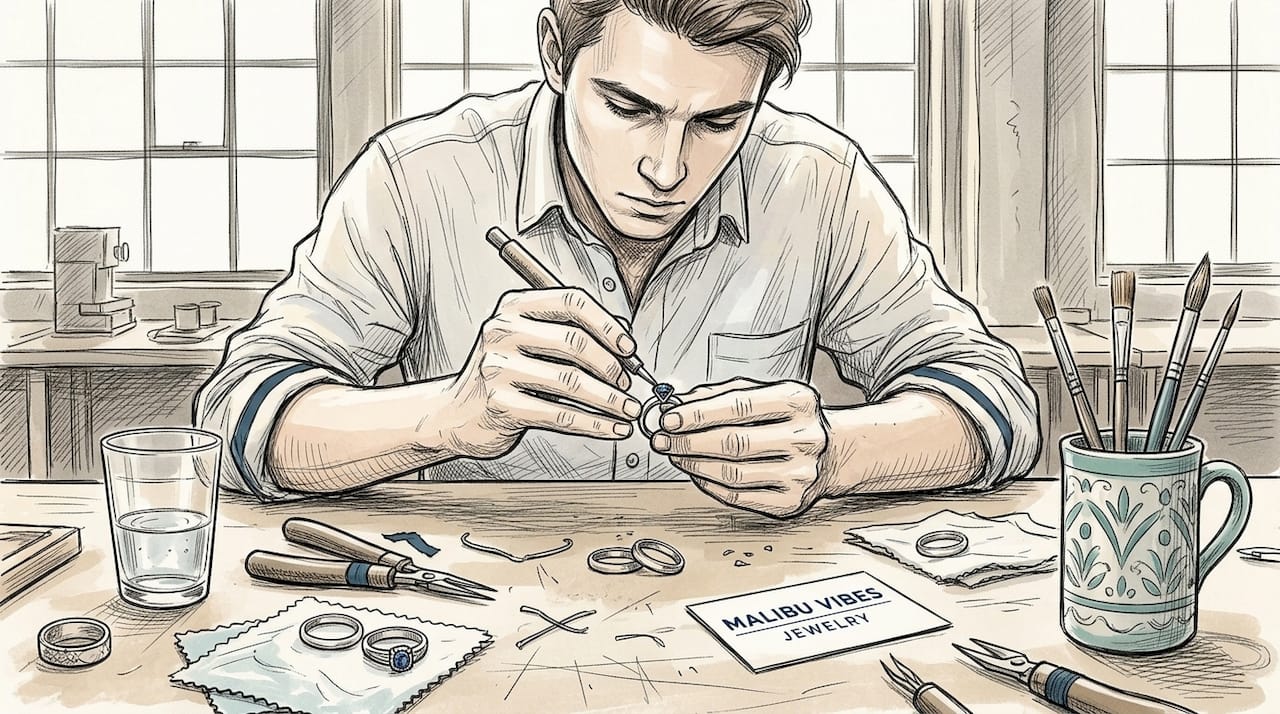
What separates handcrafted fine jewelry from chain-store alternatives isn’t just aesthetics. Hand-fabrication and artistry elevate value beyond material cost. A ring made by an artisan who hand-sets each stone and finishes every surface by hand carries a premium that mass production simply can’t match, even when both pieces use identical metal weight and stone size. The artisan’s time, skill, and attention to detail are baked into the piece’s worth.
“The value of a handcrafted piece isn’t just in what it’s made of. It’s in the hours of skilled labor and the decisions made at every step of creation.”
Pro Tip: Always inspect finishing up close before purchasing. Look at the back of the piece, not just the front. Rough edges, uneven prongs, or visible tool marks are signs of rushed production that will affect both durability and long-term value.
If you’re curious about how artisan work translates into a finished product, our custom jewelry insights piece walks through the process in detail. And if gemstones are your focus, our quality gemstones guide covers exactly what to look for.
How value is measured: Materials, gemstones, and craftsmanship
Once you know which features matter, it’s time to see how experts (and you!) can actually measure that value.
Professional appraisers follow a structured process. They inspect hallmarks, authenticate materials and gemstones using GIA or IGI reports, weigh metals, grade gems via the 4Cs, and compare against auction results and market comps. For high-value pieces, a professional appraisal is always the right call.
Here’s a simple at-home process to get a baseline sense of value:
- Find the hallmark. Look for stamps like “14k,” “585,” “925,” or “750” inside rings or on clasps. These confirm metal purity.
- Research the spot price. Gold was trading at approximately $4,079 per ounce in late 2025. Multiply the metal weight by purity percentage to estimate melt value.
- Check for gemstone certificates. GIA and IGI reports are the gold standard. If a seller can’t provide one for a significant stone, treat the gem’s value as unverified.
- Compare to recent auction results. Sites like Christie’s or Sotheby’s archive sales data that gives you real market comps for similar pieces.
- Assess finishing quality. Smooth bezels, even prongs, and consistent polish all add to appraised value.
To see how these factors combine in dollar terms, here’s a simplified comparison:
| Factor | Lower value example | Higher value example |
|---|---|---|
| Metal type | Sterling silver (.925) | 18k gold (.750) |
| Gemstone grade | SI2 clarity, fair cut | VS1 clarity, excellent cut |
| Production method | Machine cast, mass produced | Hand fabricated, artisan finished |
| Estimated premium | Baseline | 40-80% above baseline |
Handmade features carry a real financial premium. The labor involved in hand-setting stones, hand-finishing surfaces, and making individual design decisions is reflected in both appraised value and resale performance. Our expert jewelry quality tips break this down further, and our lasting style advice explains why quality-built pieces outlast trends.
Understanding different types of jewelry value
But not all jewelry values are used the same way. Here are the key types, and when each one really matters.
There are three distinct value types you’ll encounter, and confusing them is one of the most common mistakes buyers and sellers make. Retail Replacement Value is the highest, used for insurance purposes, and represents the cost to replace the piece new. Fair Market Value reflects what a willing buyer would pay a willing seller in an open market. Liquidation Value is the lowest, representing what you’d receive in a quick or forced sale.
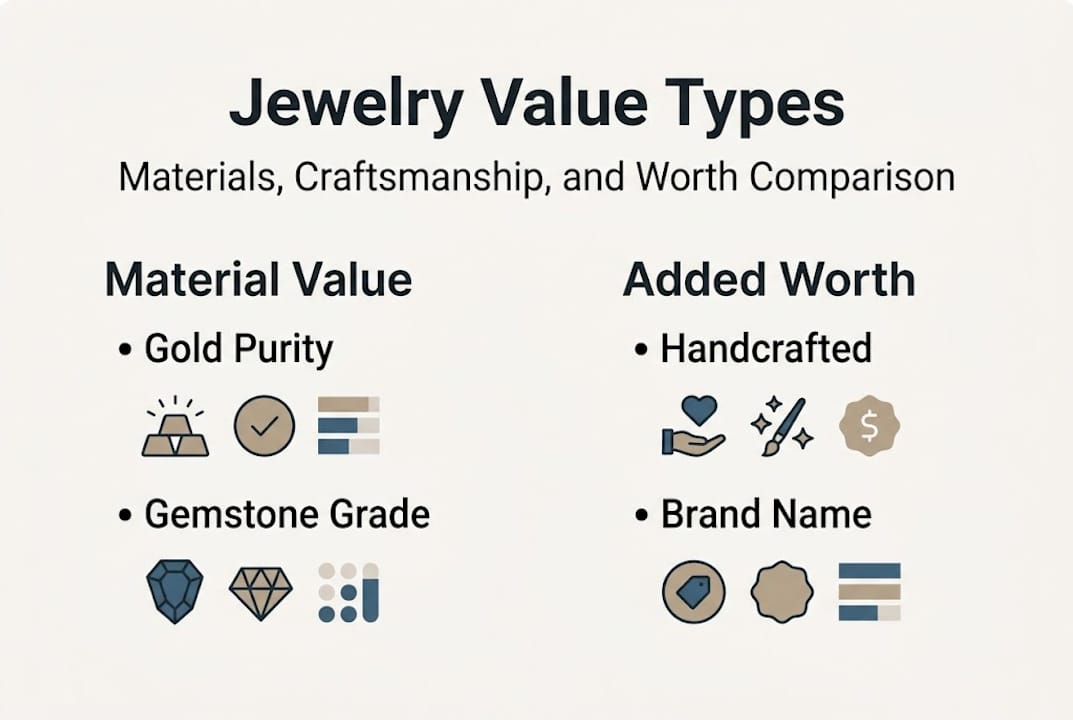
Retail value is often two to three times fair market value. That gap surprises most people, but it exists because retail pricing includes store overhead, marketing, and profit margins that disappear the moment you walk out the door.
| Value type | Purpose | Typical range | How it’s determined |
|---|---|---|---|
| Retail Replacement Value | Insurance coverage | Full retail price | Appraiser + current market retail |
| Fair Market Value | Resale, estate sales | 30-70% of retail | Buyer/seller negotiation, comps |
| Liquidation Value | Quick or forced sale | 10-30% of retail | Pawn, auction, immediate sale |
Knowing which value applies to your situation changes everything:
- For insurance: Always use Retail Replacement Value. Underinsuring means you can’t replace what you lost.
- For resale: Expect Fair Market Value, which typically lands between 30-70% of what you originally paid.
- For quick sales: Liquidation Value is the realistic floor. Knowing this in advance prevents disappointment.
For a full breakdown of how appraisals work in practice, our guide on jewelry appraisal explained covers the process step by step. If you’re thinking longer term, our jewelry investment insights piece is worth reading alongside a retail pricing overview to understand how markups work across the industry.
DIY and professional jewelry appraisals: What to know
Ready to apply your knowledge? This section gives you the tools for evaluating value yourself, plus guidance on getting a pro when it counts.
A basic at-home check is absolutely possible. You can compare your piece to recent auction results, verify hallmarks, and cross-reference gemstone size against online price guides to get a rough sense of worth. But DIY appraisals via comps and auctions have real limits. Professionals are recommended for insurance purposes, high-value pieces, and any planned resale. Market fluctuations also mean appraisals should be updated every two to five years to stay accurate.
Here’s what to prepare before a professional appraisal appointment:
- Gather any existing documentation. Original receipts, prior appraisals, and gemstone certificates all speed up the process and support a higher valuation.
- Clean the piece gently. A clean piece allows the appraiser to inspect every detail without obstruction.
- Note any repairs or modifications. Replaced prongs, resized bands, or stone swaps should be disclosed upfront.
- Research comparable pieces. Bringing auction comps or retail listings for similar items gives you a baseline to discuss.
- Ask specifically about the appraisal type. Confirm whether you’re receiving a Retail Replacement, Fair Market, or Liquidation appraisal, since the number will differ significantly.
Pro Tip: For any piece with a significant gemstone, request a GIA or IGI grading report if one doesn’t already exist. Document your jewelry with clear photographs from multiple angles before the appointment. This protects you and gives the appraiser more context.
Our guide on certificate and appraisal tips covers what to look for in documentation and why it matters for both resale and insurance claims.
What most people miss about jewelry value: Why craftsmanship is the real secret
After learning the mechanics of valuation, consider this: there’s a facet that too many buyers and sellers ignore entirely.
Everyone fixates on karat and carat. Gold weight, stone size, price per gram. These numbers feel objective and safe. But they miss the most durable driver of long-term value: the quality of how a piece was actually made.
Hand-fabrication, stone setting, and finishing elevate a piece’s worth well beyond its material cost, and that premium only grows over time. Mass-produced jewelry depreciates quickly because it’s interchangeable. Handcrafted pieces, especially those made by skilled artisans with documented processes, hold value because they’re genuinely irreplaceable.
We’ve seen this play out repeatedly. Two rings, same 14k gold, same diamond weight. One cast in a factory, one made by hand in a Los Angeles studio. The handcrafted piece consistently outperforms at resale and holds sentimental and market value that the factory piece simply can’t match.
If you want to understand what that process actually looks like, our page on the jewelry making process shows exactly how handcrafted pieces come to life. Prioritize craftsmanship and finishing above all else, and you’ll always make the smarter investment.
Discover handcrafted fine jewelry worth valuing
Now that you understand how true jewelry value is determined, see how Malibu Vibes Jewelry puts these principles into action.
Every piece in our collection is built around the exact factors that drive real, lasting value: precious metal purity, certified gemstones, and genuine handcrafted artistry from our Los Angeles studio. We don’t chase volume. We build pieces that hold up, stand out, and mean something.
Whether you’re treating yourself or finding the perfect gift, our diamond earrings collection and solid gold necklaces are designed to be worn, loved, and valued for years. Want to see exactly how we make them? Explore our fine jewelry process and discover what sets handcrafted quality apart from everything else on the market.
Frequently asked questions
What factors most affect jewelry value?
The key factors are precious metal purity, gemstone quality (graded by the 4Cs), handcrafted artistry, brand, and current market demand. Condition and rarity also play significant roles in final valuation.
How can I check my jewelry’s value at home?
Compare to recent auction prices, check hallmarks for metal purity, and review gemstone quality against published grade charts. For accuracy that holds up to insurance or resale standards, a professional appraisal is always the better choice.
What’s the difference between retail and resale value?
Retail value is what it costs to replace the piece new, used primarily for insurance. Resale, or Fair Market Value, is what you typically receive when selling, which is often 30-70% of the original retail price.
Do handcrafted jewelry pieces hold more value than mass-produced ones?
Yes. Hand-fabricated pieces are valued higher due to their artistry, uniqueness, and durability. Because they’re not interchangeable with factory-made alternatives, they hold stronger resale and sentimental value over time.
Recommended
- Luxury Jewelry Explained: Key Qualities and Value – Malibu Vibes Jewelry
- Why jewelry quality matters: lasting value and beauty – Malibu Vibes Jewelry
- Complete Guide to Why Invest in Fine Jewelry – Malibu Vibes Jewelry
- Why quality matters in jewelry: lasting style in 2026 – Malibu Vibes Jewelry
- Handcraft Your Own Jewelry Ring | Team Building Berlin | TINA