

You’ve probably heard that quality matters when buying jewelry, but what does that really mean? Many shoppers assume all gold or silver pieces are roughly the same, or that price alone signals quality. The truth is more nuanced. Understanding what makes jewelry truly high quality can save you money, prevent allergic reactions, and ensure your favorite pieces last decades instead of months. This guide breaks down the essential factors that separate exceptional jewelry from disappointing purchases, empowering you to make confident choices whether you’re treating yourself or selecting a meaningful gift.
Table of Contents
- Key takeaways
- Understanding jewelry quality: hallmarks and testing methods
- Material quality and durability: what makes jewelry last
- Quality’s impact on value retention and ethical considerations
- Making informed choices: selecting and gifting high-quality jewelry
- Explore high-quality handcrafted jewelry collections
- Why is jewelry quality important?
Key Takeaways
| Point | Details |
|---|---|
| Hallmarks and testing | Hallmarks identify metal type and purity, but reliable verification also requires tests such as acid, XRF, magnet checks, and sometimes professional appraisal. |
| Counterfeit hallmarks | Deep, consistent stamping and correct placement signal legitimacy; shallow or crooked marks, misshapen lines, or unusual locations suggest fakes and warrant scrutiny. |
| Durability sweet spot | 14K gold offers a strong balance of hardness and gold content, making it more scratch resistant for everyday wear than pure 24K gold. |
| Platinum durability edge | Platinum alloys resist abrasion better over time than white gold, which loses its bright finish and may require replating. |
Understanding jewelry quality: hallmarks and testing methods
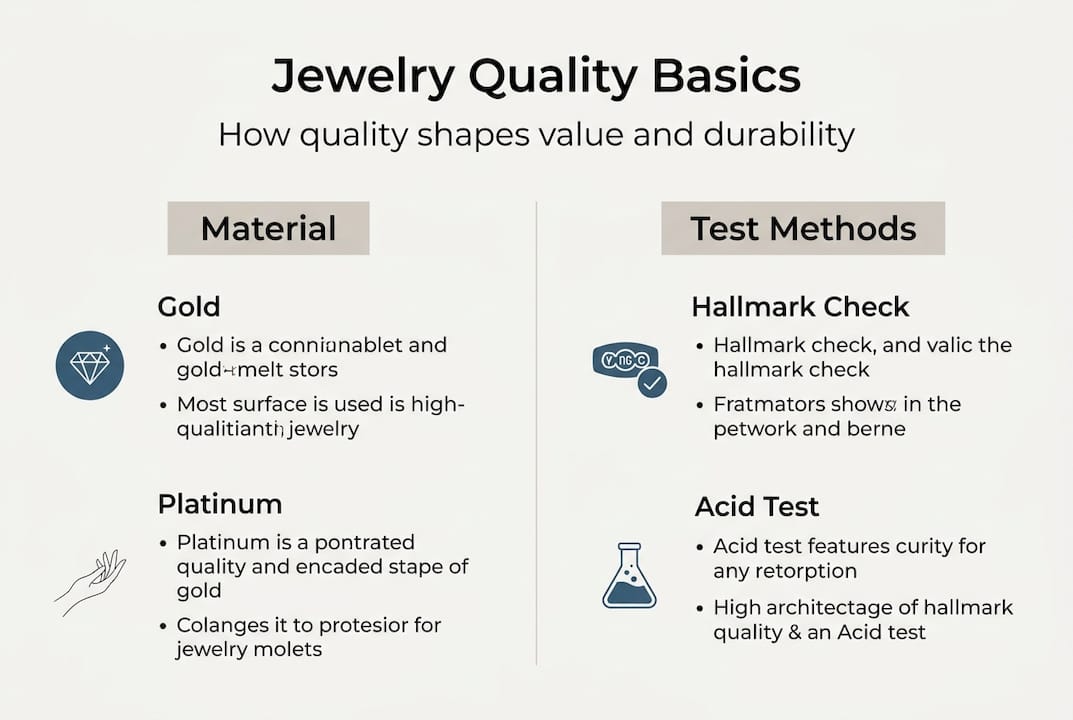
Hallmarks are the tiny stamps on jewelry that tell you exactly what you’re buying. These marks indicate metal type and purity: 14K for 14-karat gold, 925 for sterling silver, Pt950 for 95% platinum. They’re your first line of defense against counterfeits and misrepresented materials. A field guide to hallmarking explains that in the UK, any gold or platinum item over 1 gram must be assayed and hallmarked by an official assay office, creating a legal standard for consumer protection.
But hallmarks alone aren’t foolproof. Sophisticated fakes exist, which is why testing methods matter. The acid test involves applying nitric acid to a small scratch on the metal: genuine gold won’t react, while plated or fake gold will fizz or change color. XRF (X-ray fluorescence) testing offers non-destructive analysis by measuring elemental composition. The magnet test works because real gold, silver, and platinum aren’t magnetic, while many base metals are. Specific gravity testing measures density by weighing the piece in air versus water, since each precious metal has a unique density signature.
Key authentication methods:
- Acid testing for quick field verification
- XRF analysis for precise composition without damage
- Magnet test to rule out ferrous base metals
- Specific gravity calculation for laboratory-grade accuracy
- Professional appraisal combining multiple techniques
Fake hallmarks are surprisingly common. Counterfeiters stamp cheap metals with authentic-looking marks, but you can spot them. Real hallmarks are stamped deep into the metal with consistent depth and sharp edges. Fake stamps often appear shallow, crooked, or fuzzy. Check the mark’s placement too: legitimate hallmarks follow standard positioning conventions. When shopping for expert tips on jewelry quality, always examine hallmarks under magnification and ask sellers about testing documentation.
Pro Tip: Before purchasing any significant jewelry piece, request a written guarantee of metal purity and ask if the seller can demonstrate basic testing. Reputable jewelers welcome this scrutiny and often test pieces in front of customers.
Understanding gold testing techniques transforms you from a hopeful buyer into an informed consumer. You’ll recognize quality instantly and avoid expensive mistakes that plague shoppers who rely solely on appearance or seller claims.
Material quality and durability: what makes jewelry last
Metal hardness directly determines how well your jewelry survives daily wear. Pure 24K gold measures around 25 on the Vickers hardness scale, making it too soft for rings or bracelets that face constant friction. Alloying gold with copper, silver, or palladium creates 14K gold with a hardness exceeding 150 HV. That’s why 14K pieces resist scratches and maintain their shape far better than higher-karat alternatives. The tradeoff is slightly less gold content, but the durability gain makes 14K the sweet spot for everyday jewelry.
Platinum alloys demonstrate even more impressive wear resistance. Research comparing jewelry value over 25 years found that platinum alloys lose less volume to abrasion than white gold, even though both appear similar. White gold requires rhodium plating to achieve its bright finish, and that plating wears away over time, requiring replating every few years. Platinum develops a patina but never needs replating, and its density means even decades of wear remove minimal material.
| Metal Type | Hardness (HV) | Wear Resistance | Maintenance Needs |
|---|---|---|---|
| 24K Gold | ~25 | Poor | Frequent repairs |
| 14K Gold | 150+ | Excellent | Minimal |
| White Gold | 140-170 | Good | Rhodium replating every 2-3 years |
| Platinum 950 | 130-150 | Superior | Polishing only |
| Sterling Silver | 75-90 | Moderate | Regular cleaning, tarnish prevention |
Hypoallergenic properties matter more than most people realize. Pure metals like platinum, high-karat gold, and fine silver rarely cause reactions. Allergies typically stem from alloying metals, especially nickel. Many white gold alloys contain nickel, which triggers contact dermatitis in 10-20% of women. Quality jewelry uses palladium or other hypoallergenic alloys instead. If you have sensitive skin, checking not just the primary metal but the specific alloy composition prevents painful reactions.
Durability factors affecting longevity:
- Alloy composition and hardness ratings
- Prong thickness and setting security for gemstones
- Clasp quality and hinge construction
- Metal thickness (thin pieces wear through faster)
- Surface treatments and their expected lifespan
Maintenance requirements scale inversely with material quality. Cheaper jewelry demands constant attention: tightening loose stones, replating worn finishes, repairing broken clasps. Quality pieces need occasional professional cleaning and inspection, but structural issues remain rare. When comparing gold vs white gold durability, consider not just initial cost but cumulative maintenance expenses over the piece’s lifetime.
Pro Tip: Choose platinum or palladium white gold for rings worn daily, especially engagement rings. The extra upfront cost disappears when you avoid years of replating fees and repair bills that plague cheaper alternatives.
Material quality isn’t about snobbery. It’s about physics. Harder alloys resist deformation. Denser metals lose less volume to wear. Hypoallergenic compositions prevent inflammation. Understanding these relationships helps you select jewelry that matches your lifestyle and wear patterns.
Quality’s impact on value retention and ethical considerations
Resale value tells you everything about true quality. Diamonds typically retain 60-80% of their purchase price when sold, while silver jewelry holds only 20-40% of its original value. This dramatic difference reflects material scarcity, durability, and sustained demand. Gold jewelry has increased in melt value 10-17 times over the past 25 years, meaning quality gold pieces appreciate even without considering craftsmanship or design premiums. The comparison of jewelry value over decades proves that quality materials function as wearable investments.
| Jewelry Type | Typical Resale Value | 25-Year Value Change | Durability Rating |
|---|---|---|---|
| Quality Diamonds | 60-80% | Stable to appreciating | Excellent |
| 14K Gold Pieces | 70-90% of melt | 10-17x increase | Excellent |
| Platinum Jewelry | 65-85% | 8-12x increase | Superior |
| Sterling Silver | 20-40% | 3-5x increase | Moderate |
| Fashion Jewelry | 0-10% | Depreciating | Poor |
Cost per wear provides a more honest assessment than sticker price. A $2,000 platinum ring worn daily for 20 years costs $0.27 per wear. A $200 fashion ring that breaks after two years costs $0.27 per wear if worn daily, but you’ll need to replace it ten times to match the platinum ring’s lifespan, spending $2,000 anyway. Quality jewelry front-loads the investment but delivers superior long-term value. This calculation becomes even more favorable when you factor in the platinum ring’s substantial resale value versus the fashion ring’s zero residual worth.
Ethical sourcing has moved from niche concern to mainstream expectation. Sustainability in fine jewelry research shows consumers increasingly demand transparent supply chains and certified materials. Conflict-free diamonds, recycled precious metals, and fair-trade gemstones aren’t just marketing buzzwords. They represent verifiable standards that ensure your purchase doesn’t fund violence or exploitation. Quality jewelers provide documentation tracing materials from mine to finished piece.
Ethical and sustainability benefits:
- Longer lifespan reduces waste and resource consumption
- Certified sourcing prevents funding of conflict zones
- Recycled metals minimize environmental mining impact
- Fair labor practices ensure artisan welfare
- Transparent supply chains enable informed consumer choices
Environmental impact deserves serious consideration. Mining precious metals and gemstones disturbs ecosystems, but quality pieces worn for decades distribute that impact across many years. Fast fashion jewelry worn briefly then discarded creates far more waste per year of use. The sustainability equation favors buying less frequently but choosing pieces built to last generations.
“High-quality jewelry represents a commitment to longevity that inherently reduces consumption. When a piece lasts 50 years instead of 5, we’ve cut resource demand by 90% while creating an heirloom that carries emotional and financial value across generations.”
Understanding lasting style jewelry quality means recognizing that your purchase decision ripples outward. You’re not just buying an accessory. You’re voting with your wallet for manufacturing practices, environmental stewardship, and labor conditions. Quality jewelry aligns personal satisfaction with broader ethical responsibility.
The financial and moral cases for quality converge. Better materials hold value. Ethical sourcing protects communities. Durable construction reduces waste. These aren’t separate considerations but interconnected facets of a single decision: buy once, buy right, and enjoy decades of wear while supporting responsible practices.
Making informed choices: selecting and gifting high-quality jewelry
Evaluating jewelry quality requires a systematic approach, not guesswork. Start with the hallmark: verify it’s present, properly stamped, and matches the seller’s description. Request testing if you’re spending significant money. Examine construction quality by checking prong security, clasp mechanisms, and solder joints. Quality pieces show consistent metalwork with no visible gaps, rough edges, or misaligned components. Gemstone settings should hold stones firmly with no movement when gently pressed.
Balancing style with quality means understanding that trends fade but craftsmanship endures. A beautifully made classic design outlasts a poorly executed trendy piece every time. Consider whether the design will feel relevant in ten years. Delicate details and intricate work signal skilled craftsmanship, but only if execution is flawless. Sloppy filigree or uneven engraving indicates rushed production regardless of material quality.
Steps to confidently choose quality jewelry gifts:
- Research the recipient’s metal preferences and any known allergies to nickel or other alloys
- Verify hallmarks and request documentation of metal purity and gemstone certifications
- Calculate cost per wear based on expected usage frequency and piece durability
- Examine construction details including setting security, clasp quality, and finish consistency
- Consider long-term value by checking similar pieces’ resale prices and appreciation potential
Cost per wear analysis transforms how you evaluate price. That $500 pair of platinum earrings worn 200 times per year for 15 years costs $0.17 per wear. The $50 fashion earrings that tarnish and break after 50 wears cost $1.00 per wear. Quality jewelry delivers better value when you extend your time horizon beyond the initial purchase moment. This math applies whether you’re buying for yourself or selecting gifts.
Gift considerations add complexity. You’re balancing your budget against the recipient’s taste, lifestyle, and needs. A gym enthusiast needs durable, low-maintenance pieces. Someone with sensitive skin requires hypoallergenic metals. A collector values unique design and craftsmanship. Understanding these factors helps you choose gifts that get worn rather than stored. The essential jewelry buying tips guide walks through matching jewelry characteristics to recipient profiles.
Practical evaluation checklist:
- Hallmark presence and authenticity
- Metal weight appropriate for size
- Smooth edges and consistent finish
- Secure gemstone settings with no movement
- Functional clasps and closures
- Proportional design without weak points
Informed choices stem from knowledge, not price tags. A $300 well-made piece outperforms a $1,000 poorly constructed one. Focus on objective quality markers rather than brand names or retail markup. Ask questions. Request testing. Compare similar pieces across multiple sellers. The fine jewelry buying tips resource provides detailed criteria for evaluating craftsmanship and materials.
Pro Tip: When gifting jewelry, include a quality certificate or appraisal document with your purchase. This adds thoughtfulness while providing the recipient with important information about care, value, and authenticity.
Confidence in jewelry selection comes from understanding what quality looks like in practice. You’ll recognize superior metalwork, identify authentic hallmarks, and calculate true value beyond surface appearance. These skills protect your investment and ensure every piece you buy or gift delivers lasting satisfaction.
Explore high-quality handcrafted jewelry collections
Now that you understand what separates exceptional jewelry from disappointing purchases, you’re ready to explore pieces that embody these quality principles. Malibu Vibes Jewelry specializes in handcrafted fine jewelry made with the durability, authenticity, and ethical sourcing this guide emphasizes. Every piece reflects Los Angeles craftsmanship traditions and commitment to materials that last.
Discover how quality translates into wearable art through the fine jewelry making process, where traditional techniques meet modern design. Browse the sterling silver jewelry collection featuring hypoallergenic pieces perfect for sensitive skin, or explore 14k gold gemstone rings that combine durability with timeless elegance. Each piece carries the hallmarks, construction quality, and material integrity that protect your investment and ensure decades of wear.
Why is jewelry quality important?
What are the main benefits of buying quality jewelry?
Quality jewelry offers superior durability, retaining its appearance and structure through years of wear while cheaper alternatives tarnish, break, or cause skin reactions. Financial benefits include better resale value and lower cost per wear when calculated over the piece’s extended lifetime.
How do hallmarks protect consumers when buying jewelry?
Hallmarks provide legal verification of metal type and purity, creating accountability for sellers and protecting buyers from counterfeit or misrepresented materials. In many countries, official assay offices enforce hallmarking standards, giving consumers confidence in their purchases.
Does jewelry quality affect allergy risks?
Absolutely. Quality jewelry uses hypoallergenic metals and alloys, while cheaper pieces often contain nickel and other allergens that cause contact dermatitis, rashes, and skin discoloration. Choosing platinum, high-karat gold, or nickel-free alloys prevents these reactions.
How can I tell the difference between real and low-quality jewelry?
Examine hallmarks for depth and clarity, check construction details like prong security and solder joints, and verify appropriate weight for the piece’s size. Real quality jewelry shows consistent metalwork, proper finishing, and secure gemstone settings without gaps or rough edges.
Why does investing in quality jewelry save money long term?
Quality pieces require minimal maintenance, retain significant resale value, and last decades without replacement, while cheap jewelry demands frequent repairs, replating, and eventual replacement. When you calculate total cost over 10-20 years, quality jewelry costs less per year of ownership despite higher initial prices.
Recommended
- Why quality matters in jewelry: lasting style in 2026 – Malibu Vibes Jewelry
- Determine jewelry quality with expert tips in 2026 – Malibu Vibes Jewelry
- 7 clear signs of quality jewelry every woman should know – Malibu Vibes Jewelry
- How to identify quality jewelry: a 2026 buyer’s guide – Malibu Vibes Jewelry