

TL;DR:
- Choosing 14K solid gold is the best option for an engagement ring due to its balance of durability, appearance, and value. The gold’s purity and color depend on alloy composition, with white, yellow, and rose gold each offering different maintenance needs and aesthetic qualities. Solid gold outperforms plated and vermeil alternatives by maintaining its appearance indefinitely and requiring no frequent reapplication of surface coatings.
Types of gold for engagement rings refer to two distinct variables: purity level (measured in karats) and color (yellow, white, or rose), each producing a different combination of durability, appearance, and price. Getting this decision right matters more than most buyers realize, because the gold you choose determines how the ring holds up over decades of daily wear, not just how it looks in the store. This guide breaks down every gold alloy engagement ring option, from 10K to 24K, and from solid gold to vermeil, so you can match the metal to your lifestyle before you spend a dollar.
What are the common types of gold for engagement rings?
The karat system measures gold purity in parts per 24. A 24K ring is pure gold at 100%, while lower karats blend gold with alloy metals like copper, silver, zinc, or palladium to increase hardness and reduce cost.
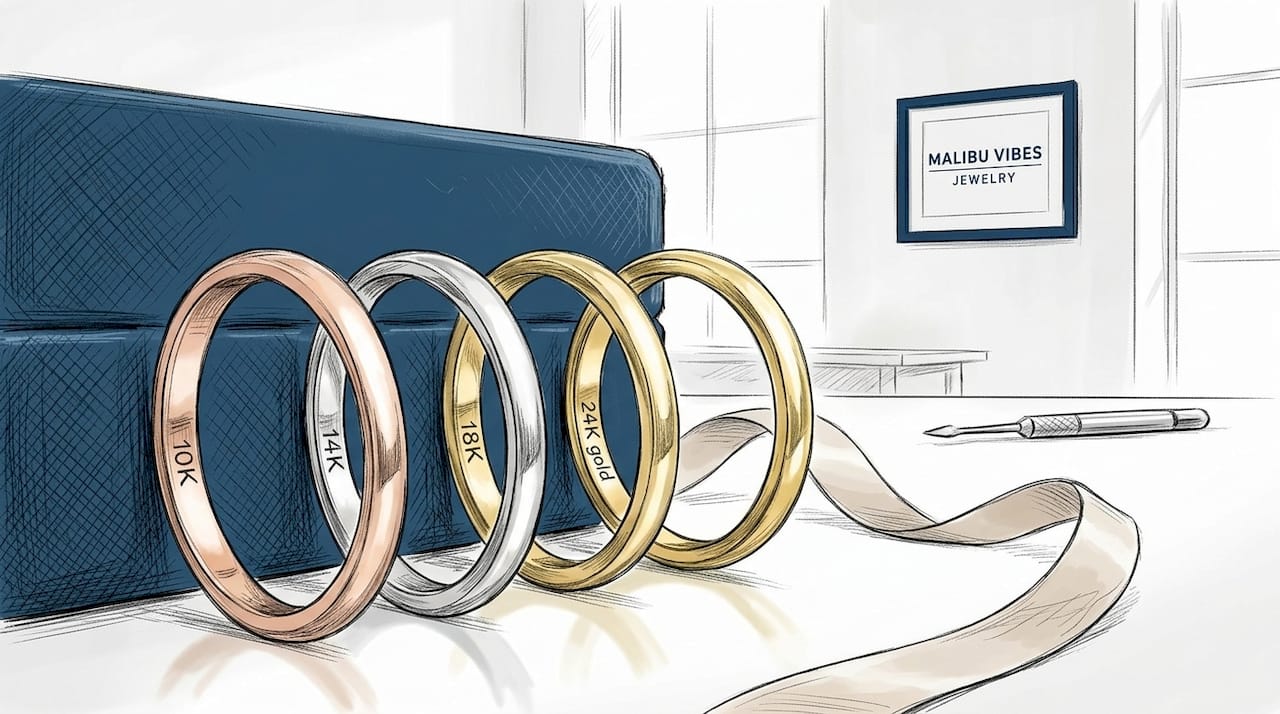
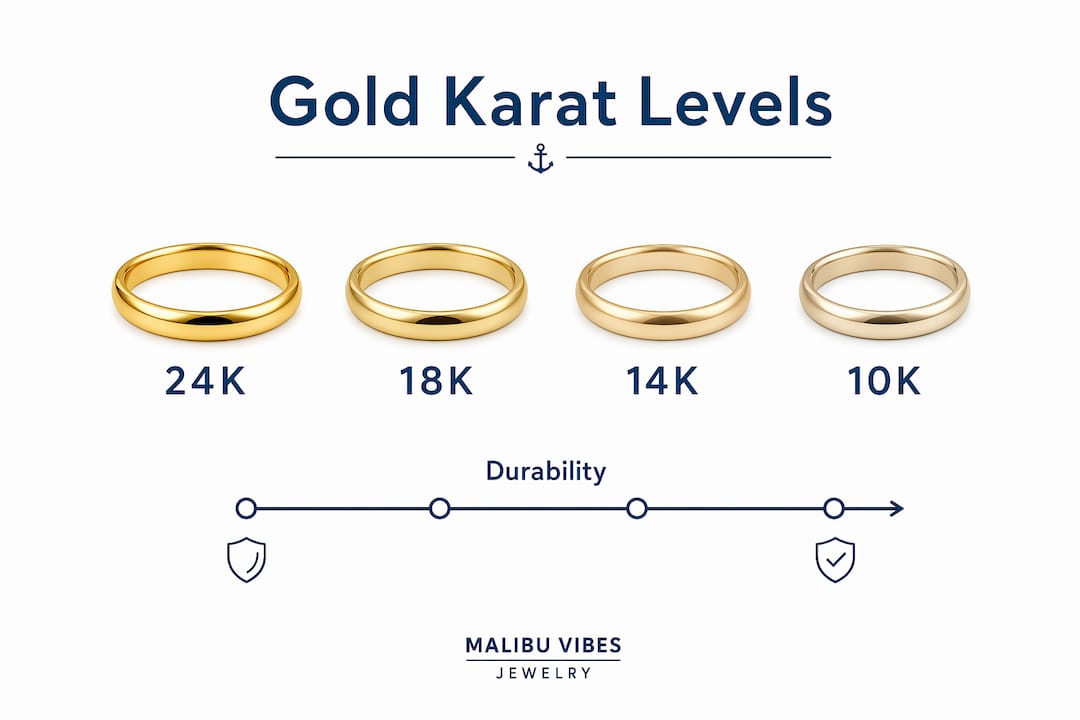
Here is how the four main karat levels compare:
| Karat | Gold content | Key characteristic |
|---|---|---|
| 24K | 99.9% | Too soft for daily wear rings |
| 18K | 75% | Rich color, moderate durability |
| 14K | 58.3% | Best balance of durability and beauty |
| 10K | 41.7% | Most durable, palest color |
14K gold contains 58.3% pure gold and is harder and more scratch resistant than 18K, making it the most recommended karat for engagement rings worn every day. That hardness comes directly from the higher proportion of alloy metals, which reinforce the structure of the ring against the bumps and abrasions of daily life.
18K gold contains 75% pure gold, which gives it a noticeably warmer, richer color but also makes it softer and more prone to scratches over time. Jewelers often recommend 18K for heirloom pieces or rings worn on special occasions rather than every day.
10K gold is the legal minimum karat in the US at 41.7% gold content. It is the hardest and most affordable option, but the higher alloy content gives it a paler, less saturated color that some buyers find less appealing. It works well for buyers with very active lifestyles who prioritize durability above all else.
24K gold is essentially never used for engagement rings. Pure gold is so soft that a ring would bend and scratch within weeks of regular wear. Any ring marketed as “pure gold” for daily wear deserves scrutiny.
Pro Tip: Look for a karat stamp like “14K” or “585” (the European equivalent for 14K) on the inside of the band. Karat stamps verify solid gold content. A ring without any stamp may be plated or vermeil, not solid gold.
How do different gold colors affect engagement ring choices?
Gold color is determined by which alloy metals are mixed into the gold. The three dominant options for engagement ring gold options are yellow, white, and rose, and each has a distinct composition and set of maintenance requirements.
Yellow gold is the most traditional choice. It uses silver and copper as its primary alloys, which preserve the warm, classic gold tone. Yellow gold is hypoallergenic in its higher karat forms and requires the least maintenance of the three colors because there is no surface coating to wear off. It also flatters warmer skin tones and makes diamonds with slightly lower color grades appear whiter by contrast.
White gold is yellow gold alloyed with white metals like palladium or nickel, then coated with rhodium to achieve its bright, silvery finish. White gold requires rhodium plating that wears off over time, meaning the ring will need replating every one to three years depending on wear. This is a real maintenance cost buyers often overlook. White gold pairs exceptionally well with diamonds because the neutral color does not cast any warm tint onto the stone, making it a popular setting choice for solitaire and pavé styles.
One important note: white gold alloys that use nickel instead of palladium can cause skin reactions in people with nickel sensitivities. If you have sensitive skin, ask your jeweler specifically whether the white gold is nickel-free before purchasing.
Rose gold gets its warm, pinkish hue from a higher copper content in the alloy. It has surged in popularity over the past decade and suits a wide range of skin tones. Rose gold does not require any surface plating, so it is lower maintenance than white gold. The copper content also makes rose gold alloys slightly harder than comparable yellow gold karats. For a deeper look at how these two colors compare for engagement rings, the rose gold vs. yellow gold guide from Malibuvibesjewelry covers the practical differences in detail.
Green gold, also called electrum, exists but is extremely rare in commercial jewelry. It uses silver as the primary alloy to create a subtle greenish tint. You are unlikely to encounter it in a standard jewelry store.
Pro Tip: If you are setting a colorless or near-colorless diamond (D through G on the GIA scale), white gold maximizes the stone’s brightness. If your diamond has a slight warm tint (H through J), yellow or rose gold can mask it beautifully and save you money on stone grade.
What is the difference between solid gold, gold vermeil, and gold plated?
This distinction is one of the most misunderstood areas in jewelry buying, and getting it wrong can mean spending money on a ring that looks worn within a year.
Gold plated jewelry has a base metal (usually brass or copper) coated with a very thin layer of gold, often less than 0.5 microns thick. That thin coating wears through within 6 to 24 months under regular wear, exposing the base metal underneath. For a piece worn daily on your hand, that timeline is simply too short. Gold plated rings are fine for fashion jewelry worn occasionally, but they are not suitable for engagement rings.
Gold vermeil (pronounced “ver-MAY”) uses sterling silver as the base metal and requires a minimum gold layer of 2.5 microns by US standards. Vermeil lasts approximately 2 to 5 years with proper care, which is significantly longer than plated jewelry. It represents a middle ground in the demi-fine jewelry category, offering better perceived value and durability than plated pieces at a lower price than solid gold. That said, even 5 years is a short lifespan for an engagement ring meant to last a lifetime.
Solid gold is gold alloy throughout the entire piece, not just on the surface. Solid gold does not tarnish and maintains its appearance indefinitely because there is no coating to wear away. This is the only material genuinely suited to an engagement ring worn every day for decades.
Here is a direct comparison:
| Type | Base metal | Gold layer | Lifespan |
|---|---|---|---|
| Gold plated | Brass or copper | Under 0.5 microns | 6 to 24 months |
| Gold vermeil | Sterling silver | Min. 2.5 microns | 2 to 5 years |
| Solid gold | Gold alloy throughout | N/A | Indefinite |
The price gap between vermeil and solid gold is real, but for an engagement ring, solid gold is the only choice that does not require replacement or significant repair within a few years. If budget is a concern, choosing 14K solid gold over 18K is a smarter tradeoff than choosing vermeil over solid gold.
How to choose the best gold for your engagement ring
Choosing the right gold type comes down to four factors: lifestyle, skin sensitivity, color preference, and budget. Work through them in that order.
-
Assess your daily activity level. If you work with your hands, exercise frequently, or simply forget to remove your ring, 14K gold is the practical choice for daily wear. It resists scratches and dents better than 18K. If you have a desk job and plan to be careful with the ring, 18K is a reasonable upgrade for its richer color.
-
Check for metal sensitivities. Nickel-based white gold alloys cause reactions in a meaningful portion of the population. If you have ever had a reaction to cheap jewelry, ask specifically for palladium-based white gold or consider yellow or rose gold instead.
-
Match color to your style and stone. White gold suits modern, minimalist settings and maximizes diamond brightness. Yellow gold works beautifully with vintage and nature-inspired designs. Rose gold reads as romantic and contemporary. For a thorough side-by-side breakdown, the white gold vs. yellow gold comparison at Malibuvibesjewelry is worth reading before you decide.
-
Allocate budget toward the diamond, not the karat. The tradeoff between 18K and 14K is primarily color richness versus durability. The price difference between the two karats is relatively modest compared to the price difference between diamond grades. Most gemologists recommend spending the savings from choosing 14K over 18K on a better cut or clarity grade in the stone.
Pro Tip: Proper storage extends the life of any gold ring. Keeping rings separated in a lined jewelry box prevents surface scratches from contact with other pieces. Malibuvibesjewelry’s guide on storing gold jewelry covers the specifics for different gold types.
Key takeaways
The best gold for an engagement ring is 14K solid gold, because it delivers the strongest combination of durability, color, and long-term value for a piece worn every day.
| Point | Details |
|---|---|
| 14K is the practical standard | At 58.3% gold, 14K balances scratch resistance and warm color for daily wear. |
| Color is an alloy decision | Yellow, white, and rose gold differ in alloy composition, not just appearance. |
| Solid gold outlasts all alternatives | Plated and vermeil options wear through within months to years; solid gold does not. |
| White gold needs maintenance | Rhodium plating on white gold wears off and requires replating every one to three years. |
| Budget smarter | Choose 14K over 18K and redirect savings toward a better diamond cut or clarity grade. |
Why the karat conversation is more nuanced than most buyers expect
I have spent years looking at engagement ring purchases, and the single most common mistake I see is buyers treating higher karats as automatically better. The logic seems intuitive: more gold equals more value. But for a ring worn on your hand every single day, that reasoning breaks down fast.
18K gold is genuinely beautiful. The color is richer and warmer than 14K, and there are settings where it makes a real visual difference. But I have seen 18K rings come back to jewelers after two or three years of daily wear looking noticeably scratched and dented, while comparable 14K rings still look sharp. The difference is not dramatic, but it is real and cumulative over a lifetime.
The plated versus solid gold confusion bothers me more, because it involves buyers being genuinely misled. A ring listed as “gold” without a karat stamp is almost certainly not solid gold. Jewelers can test metal content on the spot, and any reputable seller will do it without hesitation. If a seller resists that request, walk away.
My honest recommendation: start with 14K solid gold in the color that fits your style, get the karat stamp verified, and put the remaining budget into the stone. The difference between 14K and 18K is worth understanding in detail before you commit, but for most buyers, 14K is the answer.
— Ara
Find your perfect gold ring at Malibuvibesjewelry
Choosing the right gold type is only half the decision. The other half is finding a piece crafted well enough to honor that choice for a lifetime.

Malibuvibesjewelry handcrafts fine jewelry from its Los Angeles studio, with a focus on 14K gold settings that meet the durability standard most engagement ring buyers need. Every piece carries hallmark certification so you know exactly what you are buying. The 14K diamond jewelry collection showcases how 14K gold performs across a range of diamond settings, from solitaires to pavé bands. If you want to see the full range of color and gemstone options in 14K, the 14K color gemstone rings collection is a strong starting point. Quality over quantity is the standard at Malibuvibesjewelry, and it shows in every piece.
FAQ
What karat gold is best for an engagement ring?
14K gold is the most recommended karat for engagement rings worn daily, offering the best balance of durability, color, and cost. 18K is a good choice for buyers who prioritize richer color and wear the ring less intensively.
What is the difference between white gold and yellow gold for rings?
White gold is yellow gold alloyed with palladium or nickel and coated with rhodium for a silvery finish, while yellow gold uses silver and copper alloys to preserve its warm tone. White gold requires periodic rhodium replating; yellow gold does not.
Is gold vermeil good enough for an engagement ring?
Gold vermeil is not recommended for engagement rings. Its gold layer lasts 2 to 5 years before wearing through, which is far too short for a ring meant to last a lifetime. Solid gold is the appropriate choice.
How do I know if a ring is solid gold or just plated?
Look for a karat stamp inside the band, such as 14K, 18K, or the numeric equivalent like 585 or 750. A reputable jeweler can also test the metal content on the spot to confirm it is solid gold throughout.
Does rose gold require more maintenance than yellow gold?
Rose gold requires less maintenance than white gold because it has no rhodium plating to wear off. Its copper alloy composition is stable and does not need any surface treatment to maintain its color over time.
Recommended
- Gold Wedding Rings: Your 2026 Style and Buying Guide – Malibu Vibes Jewelry
- Rose gold vs yellow gold engagement ring guide 2026 – Malibu Vibes Jewelry
- Discover types of gold rings for luxury and craftsmanship – Malibu Vibes Jewelry
- Yellow Gold vs White Gold Rings—Style and Value – Malibu Vibes Jewelry