

TL;DR:
- True heirloom jewelry is defined by premium materials, superior craftsmanship, and timeless design. Age alone does not qualify a piece as an heirloom, only its quality and durability. Investing in solid metals, high-grade gemstones, and classic designs ensures a piece can survive generations.
Most people assume that age alone turns a piece of jewelry into an heirloom. Leave a ring in a drawer for fifty years, and surely it qualifies, right? Not even close. True heirloom quality is earned long before the decades pass. It comes down to three non-negotiable standards: premium materials, superior craftsmanship, and timeless design. A piece that checks all three boxes will survive generations of daily wear, emotional milestones, and changing tastes. One that doesn’t may crumble, tarnish, or simply feel irrelevant by the time it reaches the next set of hands. This guide breaks down exactly what separates a piece worth passing down from one that just happens to be old.
Table of Contents
- The three pillars of heirloom-quality jewelry
- Why materials matter: Gold, platinum, and gemstone durability
- Why craftsmanship counts: Handwork and structural integrity
- Designing for the future: Timeless vs. trendy styles
- Modern nuances: Ethical sourcing and sustainable heirlooms
- What most people get wrong about heirloom jewelry
- How to find (or create) your next heirloom
- Frequently asked questions
Key Takeaways
| Point | Details |
|---|---|
| Premium materials | Only solid 14k+ gold, platinum, and GIA-graded gems endure for generations. |
| Masterful craftsmanship | Handmade, expertly set jewelry outlasts mass-produced pieces and stays wearable over time. |
| Timeless design | Classic, trend-independent styles remain relevant and treasured as family heirlooms. |
| Ethical sourcing | Eco-friendly and Fairmined materials make modern heirlooms meaningful without sacrificing durability. |
The three pillars of heirloom-quality jewelry
Now that we’ve established there’s more to heirloom jewelry than age, let’s break down the fundamental qualities that truly set these pieces apart. When experts define what makes a piece worthy of passing down, they consistently return to the same three pillars.
“Heirloom quality jewelry is defined by premium materials, superior craftsmanship, and timeless design.”
Think of these pillars as a three-legged stool. Remove any one leg, and the whole thing collapses. A stunning design in subpar metal will corrode. Exceptional materials set by a careless hand will loosen and lose stones. A masterfully crafted ring in a style that screams a particular decade will feel dated within a generation.
Here’s a quick comparison of how heirloom-quality jewelry stacks up against standard pieces:
| Feature | Heirloom-quality jewelry | Standard jewelry |
|---|---|---|
| Metal | Solid 14k+ gold or platinum | Gold-filled, plated, or base metal |
| Gemstones | GIA-certified, Mohs 9+ | Synthetic, glass, or untreated |
| Setting technique | Hand-set, prong-checked | Machine-set, minimal inspection |
| Design longevity | Timeless, classic silhouettes | Trend-driven, season-specific |
| Repairability | High, artisan-serviceable | Low, often disposable |
To summarize what true heirlooms require:
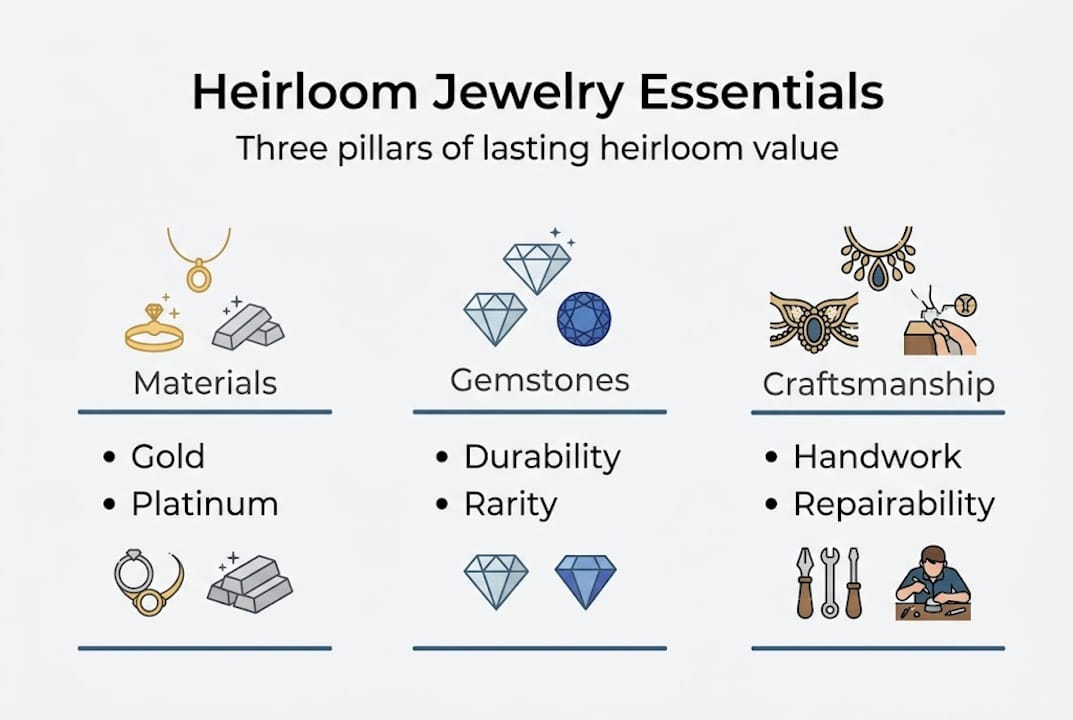
- Premium materials: Solid metals and high-grade gemstones that resist wear, tarnish, and damage over decades
- Superior craftsmanship: Expert hand techniques that create secure, structurally sound pieces, as explored in handcrafted jewelry artistry
- Timeless design: Silhouettes and styles that transcend trends and remain emotionally resonant across generations
When all three are present, a piece delivers lasting value and beauty far beyond its purchase price. That’s the true definition of investment jewelry.
Why materials matter: Gold, platinum, and gemstone durability
Having outlined the three critical pillars, let’s dive deeper into the materials that form the backbone of enduring heirloom jewelry. Not all metals and stones are created equal, and the gap between a piece that lasts and one that fails often comes down to raw material choices.
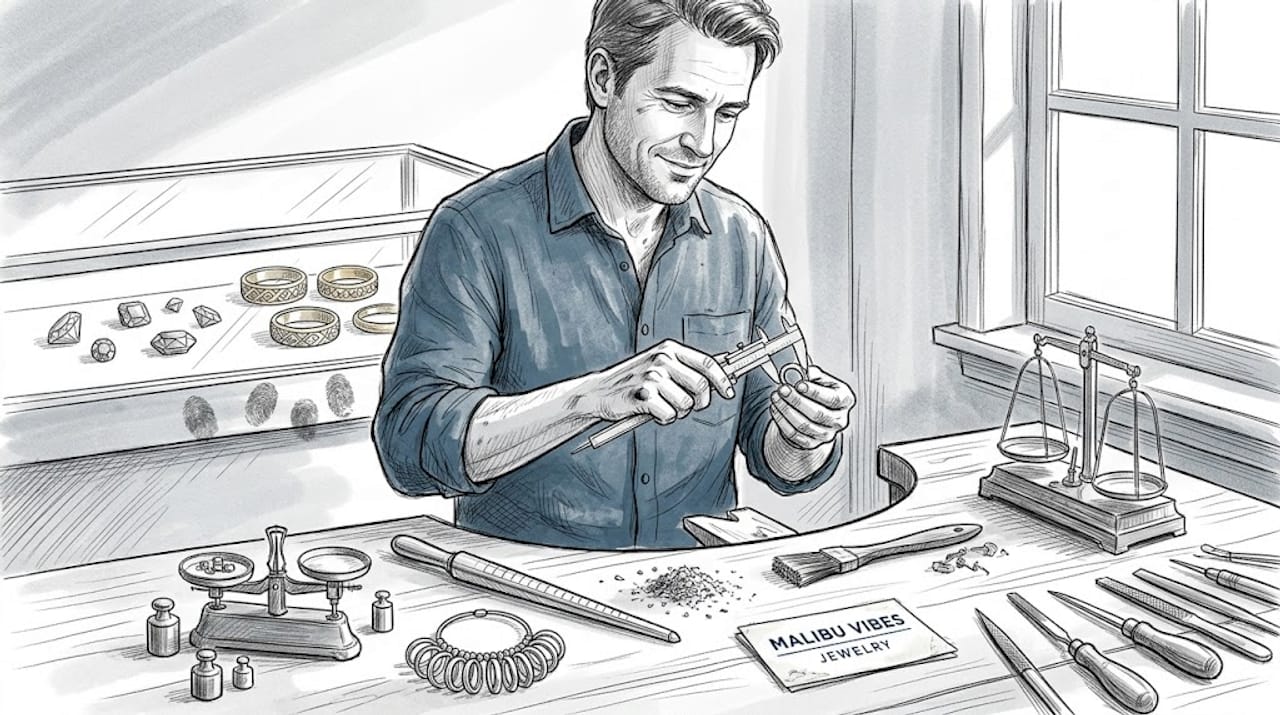
When it comes to metal, solid gold jewelry importance cannot be overstated. Solid gold (14k/18k) does not degrade and high-quality gems rated 9 to 10 on the Mohs scale are ideal for daily wear. Gold-plated pieces, by contrast, can wear through in months. Platinum is even more durable, developing a patina rather than losing metal, making it a preferred choice for settings that hold precious stones.
Gemstone durability is measured on the Mohs hardness scale, which ranks minerals from 1 (softest) to 10 (hardest). For heirloom jewelry meant for everyday wear, you want stones rated 7 or above. Here’s how common heirloom gems stack up:
| Gemstone | Mohs hardness | Heirloom suitability |
|---|---|---|
| Diamond | 10 | Excellent |
| Ruby | 9 | Excellent |
| Sapphire | 9 | Excellent |
| Emerald | 7.5 to 8 | Good (with care) |
| Opal | 5.5 to 6.5 | Low (too soft for daily wear) |
| Pearl | 2.5 to 4.5 | Low (decorative only) |
GIA certification is the gold standard for gemstone quality assurance. A GIA report verifies a stone’s cut, color, clarity, and carat weight, giving you documented proof of its value. This matters enormously when a piece is eventually passed down or appraised.
Metals and gems worth choosing for lasting jewelry style include:
- Solid 14k or 18k yellow, white, or rose gold
- Platinum (especially for prong and bezel settings)
- Diamonds (Mohs 10, the only choice for true everyday heirlooms)
- Rubies and sapphires (Mohs 9, brilliant and enduring)
- Emeralds (beautiful but require protective settings)
Pro Tip: Never buy gold-plated jewelry as an heirloom investment. Plating wears off within one to three years of regular use. Stick to solid metal, always.
Why craftsmanship counts: Handwork and structural integrity
Understanding the importance of elite materials, it’s equally vital to consider the craftsmanship that brings them to life. Even the finest platinum and flawless diamonds become a liability if the setting fails or the construction is weak. Superior craftsmanship ensures structural integrity for decades, and here’s what that actually looks like in practice.
The steps that define expert jewelry craftsmanship:
- Design and wax modeling: A skilled artisan creates a precise model, ensuring proportions are balanced and wearable before any metal is cast
- Metal casting or hand-fabrication: High-quality pieces are often fabricated by hand rather than mass-cast, giving the jeweler full control over thickness and density
- Stone setting: Prongs are hand-set and individually checked under magnification to confirm each stone is secure
- Finishing and polishing: Surfaces are refined by hand to eliminate sharp edges and achieve consistent luster
- Quality inspection: A trained eye checks every joint, prong tip, and surface before the piece leaves the bench
Beyond construction, look for these signs of superior finishing when evaluating a piece: smooth solder joints with no visible seams, prong tips that are rounded (not sharp or uneven), and a consistent polish across all surfaces including the interior of the band.
Repairability is another mark of true craftsmanship. A well-made heirloom can be resized, re-tipped, re-polished, and re-set. Understanding how fine jewelry is made helps you ask the right questions before buying. Visit a jeweler’s jewelry making process page to understand whether their work is in-house or outsourced.
Pro Tip: Ask your jeweler directly whether pieces are bench-made in-house or manufactured overseas. Brands with on-site artisan workshops invest more care in each individual piece.
Designing for the future: Timeless vs. trendy styles
With the foundation of quality materials and craftsmanship, the final key is design, a critical factor many overlook when choosing heirloom jewelry. Style is the element that determines whether a granddaughter will proudly wear a piece or quietly retire it to a box.
Timeless designs are culturally independent and stay relevant across generations. Think solitaire rings, simple gold bands, bezel-set pendants, and pavé eternity bands. These silhouettes have existed for over a century and show no signs of fading. Contrast that with hyper-specific trend pieces tied to a particular era, like novelty shapes or oversized geometric forms, which can feel dated within a decade.
Emotional connection is also shaped by design. A piece that feels meaningful, wearable, and personal will be treasured far longer than one purchased purely for show. Classic, restrained designs tend to carry stories better because they don’t compete with the wearer’s personality.
“Great heirloom design doesn’t announce itself. It simply belongs to whoever is wearing it.”
Characteristics found in true heirloom designs:
- Simple, clean silhouettes with no reliance on trend-specific details
- Proportions that flatter multiple generations of wearers
- Meaningful symbols (solitaires, infinity motifs, birthstone settings) that transcend time
- Neutral metal tones (yellow gold, white gold, platinum) that pair with evolving wardrobes
- Structural balance between stone and metal for visual longevity
Explore timeless fine jewelry to see what these design principles look like in practice. And if you’re torn between buying one statement piece or several trendy items, quality over quantity jewelry is always the smarter long-term investment.
Modern nuances: Ethical sourcing and sustainable heirlooms
Finally, as values evolve, ethical production practices are increasingly important for today’s heritage pieces. Heirloom jewelry isn’t just about what it’s made of. It’s also about where those materials come from and what that says about the person who chose them.
Ethical sourcing (Fairmined, recycled metals) adds modern nuance without compromising durability. Fairmined gold is certified to come from responsible artisanal miners who receive fair wages and work in safe conditions. Recycled gold and platinum use reclaimed precious metals, reducing the environmental footprint of mining without sacrificing material quality.
For many buyers today, a piece’s story matters as much as its sparkle. An heirloom sourced ethically carries an additional layer of meaning, one that future generations can feel proud of, not just aesthetically but morally.
Brands leading in sustainable fine jewelry are transparent about their supply chains and often publish sourcing documentation. This transparency is itself a mark of quality. Read more about the impact of ethical sourcing on fine jewelry value.
When speaking with a jeweler, ask:
- Is the gold Fairmined certified or recycled?
- Are gemstones sourced from conflict-free regions?
- Do you carry documentation on your supply chain?
- Are lab-grown stone options available alongside natural gems?
Pro Tip: Look for the Fairmined certification mark or ask for a Responsible Jewellery Council (RJC) certificate when purchasing. These aren’t just feel-good labels. They signal a brand’s commitment to quality at every level.
What most people get wrong about heirloom jewelry
Here’s the uncomfortable truth: most people confuse sentiment with quality. They hold onto a piece for decades because it belonged to someone they loved, and by the time it’s passed down, the prongs are worn thin, the metal is hollow-filled, or the stone is chipped and unidentifiable. The emotional story survived. The jewelry barely did.
Age is passive. Quality is intentional. A hundred-year-old ring made from low-grade metal and poorly set paste stones is not an heirloom. It’s a fragile antique at best. True heirlooms are built to carry stories precisely because they were constructed to physically endure. The sentiment and the structure are inseparable. As explored in lasting jewelry quality insight, the pieces that survive generations are the ones that were made with intention from day one. Smart collectors and thoughtful gift-givers focus on maker, material, and repairability first. The pedigree follows naturally.
How to find (or create) your next heirloom
After understanding what to look for, here’s how to discover or create an heirloom for generations to come.
At Malibu Vibes Jewelry, every piece is crafted with exactly these standards in mind: solid precious metals, carefully set stones, and designs built to outlast trends. Our Los Angeles-based team approaches each piece with the kind of attention that mass production simply cannot replicate.
Explore our fine jewelry process to see how each piece is brought to life with artisan care. Or shop our diamond rings collection to find a piece that meets every heirloom standard we’ve covered here. Your next family treasure is waiting.
Frequently asked questions
What is the best metal for heirloom jewelry?
Solid 14k or 18k gold and platinum are the best metals for heirloom jewelry since they resist tarnish and last for generations without degrading.
Which gemstones are considered heirloom quality?
Diamonds, rubies, and sapphires rank 9 to 10 on the Mohs scale, making them the most durable and valuable choices for heirloom rings and jewelry.
How can you tell if a piece is heirloom quality?
Look for solid precious metals, GIA-graded gems, hand-set secure settings, and a classic design that doesn’t rely on current trends to feel relevant.
Does ethical sourcing impact heirloom jewelry value?
Fairmined and recycled metals add documented provenance and modern distinction to a piece, increasing both its sentimental and market value over time.
Recommended
- Crafting a Timeless Look: Fine Jewelry for Every Occasion – Malibu Vibes Jewelry
- Why jewelry quality matters: lasting value and beauty – Malibu Vibes Jewelry
- Why quality matters in jewelry: lasting style in 2026 – Malibu Vibes Jewelry
- Why quality over quantity jewelry elevates your style – Malibu Vibes Jewelry