

TL;DR:
- Not all jewelry labeled as “designer” is genuinely from a high-end, authentic brand, and distinguishing between them is crucial.
- Genuine designer jewelry features unique design signatures, premium materials, intentional craftsmanship, and a compelling brand story that adds value over time.
Not all jewelry with a recognizable name attached is truly a designer jewelry label, and that distinction matters more than most shoppers realize. Walk into any department store and you will find pieces marketed as “designer” that are mass-produced, loosely branded, and nowhere close to what the term actually means. Understanding what separates a genuine designer label from a cleverly packaged product changes how you shop, what you choose to invest in, and how much you value what ends up around your neck or on your wrist. This guide breaks down designer jewelry characteristics, authentication, and why the difference is worth knowing.
Table of Contents
- What defines a designer jewelry label?
- The craftsmanship and authenticity behind designer jewelry labels
- High jewelry versus fine jewelry: understanding the designer label spectrum
- How to identify authentic designer jewelry labels when shopping
- The value of designer jewelry labels for special occasions and everyday style
- Why recognizing true designer labels transforms your jewelry experience
- Explore authentic designer jewelry with Malibu Vibes
- Frequently asked questions
What defines a designer jewelry label?
To understand what sets a designer label apart, let’s explore their defining features in detail.
A true designer jewelry label is not just a logo stamped onto metal. It is a recognizable creative identity, a design philosophy expressed consistently across every piece the brand produces. Think of it as a visual signature. The curves of a particular setting style, a recurring motif in the metalwork, the way gemstones are proportioned and placed — these are the fingerprints of a designer label’s authorship. As Vogue notes, many of the most recognizable designer jewelry examples are defined by a signature design language with recurring motifs that consumers recognize as part of the label’s authorship.
Beyond aesthetics, designer labels are defined by several concrete qualities:
- Unique design signatures that repeat across collections and are traceable to a specific creative director or founding designer
- Premium materials, including certified precious metals and conflict-free gemstones with documented sourcing
- Intentional craftsmanship where each piece is produced with attention to finish, weight, and proportion
- Brand narrative and heritage that adds both cultural meaning and long-term investment value
- Limited or controlled production that preserves exclusivity and quality consistency
If you want a deeper grounding in these distinctions before you shop, our designer jewelry guide walks through exactly what separates genuine labels from branded imitations.
Brand reputation also plays a real role. A designer jewelry label carries a story — about its founder, its city of origin, its creative influences. That story is not just marketing. It becomes part of the piece’s identity, which is why certain high-end jewelry labels hold or increase their value over time while others do not.
The craftsmanship and authenticity behind designer jewelry labels
With the design language defined, the next key element is the craftsmanship that proves authenticity.
Craftsmanship is where designer labels prove themselves beyond words. It shows up in the weight of a ring, the smoothness of a prong setting, the invisible joining of links in a chain. These are not things you can photograph in a catalog. You feel them.
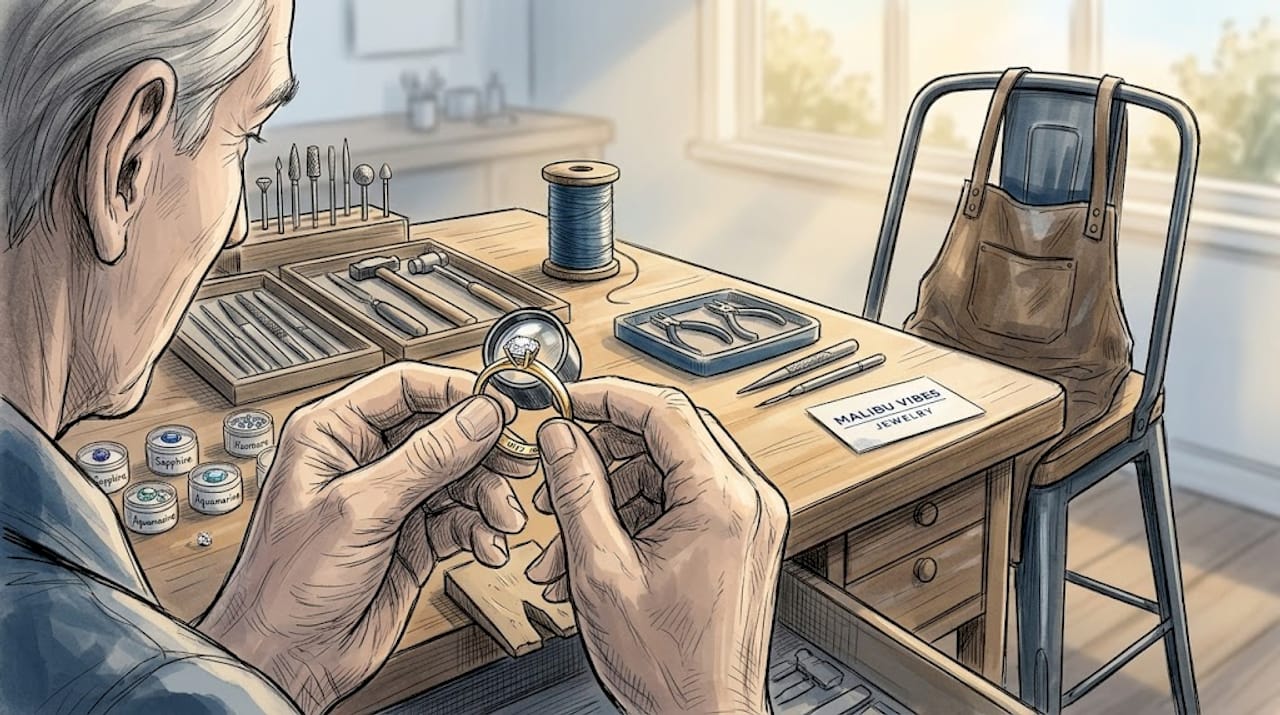
One of the most reliable ways to verify authentic craftsmanship is through hallmarking. Jewelry hallmarks serve as an essential key to understanding the item’s true value by certifying metal purity and craftsmanship integrity. A genuine designer piece will carry hallmarks that precisely match its stated specifications, whether that is 14k gold, 18k gold, sterling silver, or platinum.
What distinguishes designer label craftsmanship includes:
- Hand fabrication techniques such as hand-engraving, granulation, and pavé stone setting that cannot be replicated by machines at the same quality
- Gemstone quality control, where stones are individually selected to meet the label’s grading standards rather than bulk-purchased to price points
- Precise hallmarking with clear, correctly sized stamps in consistent fonts that match the brand’s documented marks
- Artisanal finishing, including hand-polishing and quality inspection at each production stage
Pro Tip: When examining a piece for authenticity, use a jeweler’s loupe to inspect the hallmark. Authentic designer labels use crisp, deeply struck stamps. Blurry, shallow, or misaligned hallmarks are a red flag worth taking seriously.
Mass-produced pieces often skip or oversimplify hallmarking, and their construction shortcuts become visible over time through worn prongs, flaking plating, and loose stone settings. Understanding this helps you spot the difference before you buy. For a full breakdown of why these standards matter, read more about jewelry quality importance.
High jewelry versus fine jewelry: understanding the designer label spectrum
To deepen your understanding, it’s important to differentiate between fine and high jewelry within designer labels.
Not all designer jewelry operates at the same tier. The term “designer label” covers a spectrum, and knowing where a piece sits on that spectrum helps you understand its price, its rarity, and what you are actually getting.
| Feature | High jewelry | Fine jewelry |
|---|---|---|
| Production volume | One-of-a-kind or extremely limited | Limited runs, some production consistency |
| Craftsmanship hours | 1,000+ hours handcrafting | Dozens to hundreds of hours, some machine assistance |
| Gemstone sourcing | Exceptional stones with documented provenance | Quality stones, graded but less rare |
| Accessibility | Museum-level exclusivity and pricing | Premium but purchasable by wider audience |
| Design intent | Statement artistry, wearable sculpture | Wearable luxury for daily and formal occasions |
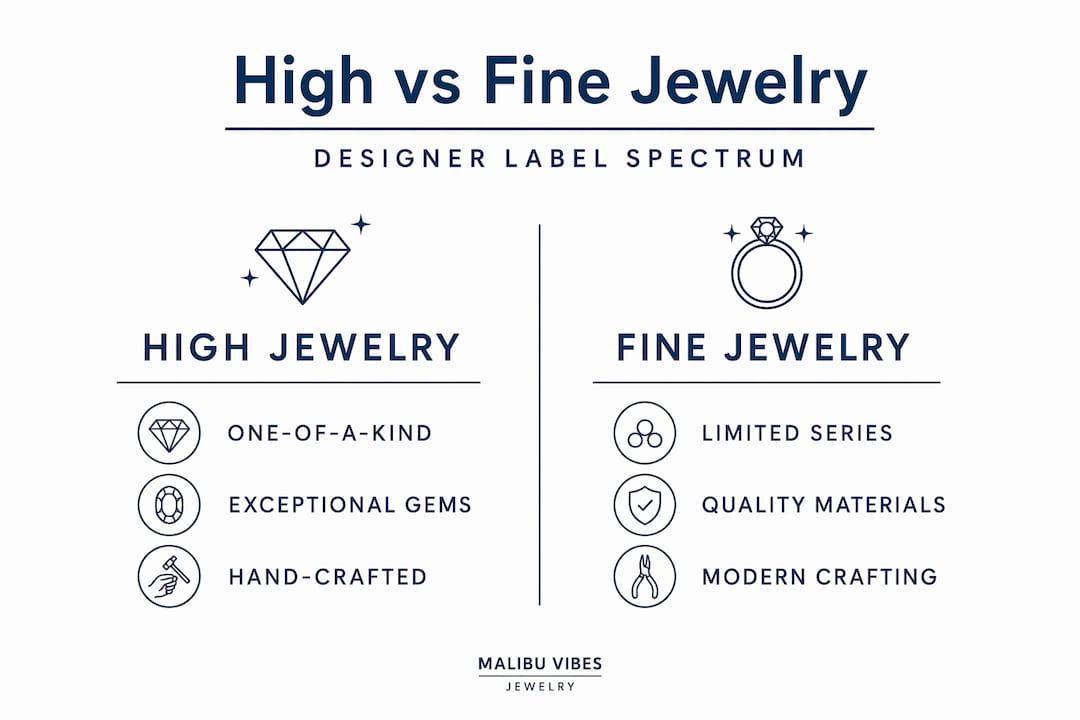
High jewelry represents the absolute top of the designer label spectrum. These are pieces that take an entire year to produce, feature stones acquired at international gem auctions, and are often made for a single specific client or displayed in brand retrospectives. Fine jewelry, while still luxurious, is where most fashion-conscious buyers actually engage with designer labels.
Fine jewelry from a credible designer label uses quality materials and skilled production, but it allows for some modern technology to maintain consistency across a limited run. That is not a compromise — it is a practical approach that makes beautiful, well-made pieces accessible without sacrificing the brand’s design integrity. You can explore the fashion vs fine jewelry differences in more detail to sharpen your ability to shop across price points without losing quality.
How to identify authentic designer jewelry labels when shopping
Armed with knowledge about design and craftsmanship, here is how you can authenticate designer label jewelry yourself.
Knowing what makes a designer label is one thing. Being able to confirm it in the moment of purchase is another. These steps give you a reliable process to follow.
- Check the hallmark first. Look inside the band, on the clasp, or near the jump ring. The hallmark should match the brand’s stated metal purity exactly. A piece sold as 14k gold should carry a “585” or “14k” stamp that is clean, centered, and consistently struck.
- Examine the hallmark font and depth. Authentic pieces carry hallmarks with uniform font and the presence of serial or designer marks. Inconsistency in letter size or depth suggests aftermarket stamping or outright counterfeiting.
- Compare the design to the label’s known motifs. Every credible designer label has documented collections online. Pull them up and compare the proportions, stone placement, and finishing style against what you are holding.
- Ask for provenance documentation. Genuine designer labels provide certificates of authenticity, receipts with serial numbers, or branded packaging that matches the piece. Absence of these is not automatically a dealbreaker for vintage pieces, but it warrants deeper investigation.
- Request a professional appraisal. For significant purchases, a certified gemologist or independent appraiser can verify metal content, stone quality, and hallmark authenticity with tools you do not have at home.
Pro Tip: The resale market for designer jewelry is full of misrepresented pieces. Before buying second-hand, cross-reference the serial number with the brand’s customer service team if that option exists. Many top designer jewelry designers offer verification services for exactly this reason.
For practical style guidance on building your designer jewelry wardrobe, our designer jewelry style guide covers how to integrate authentic pieces into everyday and event looks.
The value of designer jewelry labels for special occasions and everyday style
Understanding the authentic value behind designer labels reveals why they suit both everyday and special moment wardrobes.
Designer jewelry labels earn their place in your collection on two levels: immediate and long-term. On the immediate level, a well-made designer piece elevates any look. There is a confidence that comes from wearing something with real weight, real craft, and a real design story behind it that simply does not translate from fast fashion jewelry.
On the long-term level, luxury designer jewelry is bought not only for its craftsmanship but as investment pieces that increase in resale value and mark special occasions. A 14k gold necklace from a credible designer label bought today can hold its value for decades, especially if you care for it properly.
Here is what genuine designer label value looks like in practice:
- For special occasions, a designer piece becomes part of the memory. It is the necklace you wore at your wedding, the earrings from your milestone birthday. That emotional weight is real and it does not depreciate.
- For everyday wear, a designer label piece in durable precious metal outlasts dozens of fashion jewelry purchases and stays looking sharp year after year.
- As an investment, certain pieces from established labels with strong secondary markets appreciate meaningfully, particularly those with rare stones or a documented design history.
- For personal style, wearing pieces with a clear design language signals taste and intentionality in a way that generic branded jewelry simply cannot match.
To explore how specific collections reflect these values, our piece on jewelry collections fashion luxury is a practical resource.
Why recognizing true designer labels transforms your jewelry experience
Most people shop for jewelry by brand name recognition alone. They see a logo and assume quality. That is the wrong frame, and it costs real money over time.
The shoppers who build genuinely valuable collections are the ones who learn to read design language and craftsmanship directly. They know what a properly executed pavé setting looks like. They understand hallmarks. They can hold a piece and feel whether the metalwork reflects care or corners cut. That knowledge is not just practical — it is empowering. As Vogue observes, signature design languages create emotional connections more impactful than overt logos, proving that authenticity in jewelry is about more than brand names.
Here is an uncomfortable truth: a hefty brand name can mask mediocre execution, and a less-famous label can produce genuinely exceptional work. Some of the best designer jewelry collections in terms of craftsmanship come from smaller studios that do not run full-page advertisements. They let the work speak. Learning to evaluate jewelry quality matters independently of name recognition is what separates a thoughtful collector from a brand-chaser.
The deeper payoff is this: when you buy a piece because you understand its design integrity, its material authenticity, and its craftsmanship story, you develop a personal relationship with it. It becomes a legacy piece. Something you wear with intention, care for deliberately, and eventually pass down. That is the real promise of a true designer jewelry label, and it has nothing to do with a logo.
Explore authentic designer jewelry with Malibu Vibes
Now that you know what makes a designer label authentic, explore Malibu Vibes’ collection that brings this craftsmanship to your jewelry box.
At Malibu Vibes Jewelry, every piece is designed and produced in Los Angeles with the same principles this article describes — hallmark-verified precious metals, hand-set stones, and a design language that is consistent and intentional. You can read about the fine jewelry making process behind each piece to see exactly how craftsmanship standards are maintained from design to delivery.
Whether you are building an everyday stack or searching for a statement piece for a special occasion, the collections at Malibu Vibes offer a clear starting point. Browse the cross jewelry collection for pieces that carry enduring symbolic design, or explore solid gold necklaces in 14k gold for everyday luxury that lasts. Quality you can actually verify, craftsmanship you can see, and style that is anything but generic.
Frequently asked questions
What makes jewelry a ‘designer label’ rather than just branded?
A designer jewelry label is defined by unique recurring design signatures, master craftsmanship, and verified authenticity marks that distinguish it from mass-market branded pieces. As Vogue confirms, recognizable designer jewelry examples are built around signature design language and brand authorship, not just a name.
How can I verify the authenticity of a designer jewelry piece?
Check the jewelry’s hallmark for matching metal purity codes, consistent font, and the presence of designer marks or serial numbers, then consider professional appraisal for confirmation. Jewelry hallmarks are critical when evaluating authenticity and specifications, and are typically found inside rings or on clasps.
What is the difference between high jewelry and fine jewelry?
High jewelry is ultra-limited, fully hand-crafted with exceptional gemstones and commanding museum-level exclusivity, while fine jewelry is produced in limited runs with some machine assistance and more accessible pricing. According to collector resources, high jewelry requires 1,000-plus hours of handcrafting with rare stones, while fine jewelry uses modern techniques and has greater availability.
Why do designer jewelry pieces often cost more than mass-produced pieces?
Designer pieces command higher prices because of superior craftsmanship, rare materials, authentic hallmarking, limited production, and brand legacy that enhance both value and durability over time. As Vogue notes, the price tags on luxury jewelry reflect top-tier quality, craftsmanship, and strong brand recognition that mass production simply cannot replicate.
Recommended
- What Is Designer Jewelry? Complete Luxury Guide – Malibu Vibes Jewelry
- Designer jewelry: everyday luxury and personal style – Malibu Vibes Jewelry
- Custom Jewelry Design Explained: Your Complete Guide – Malibu Vibes Jewelry
- How jewelry transforms your personal style: a complete guide – Malibu Vibes Jewelry