

Over 40% of fine bracelet returns happen because buyers choose the wrong size. Many women struggle to understand wrist measurement and how bracelet styles affect fit. This guide walks you through accurate sizing methods, explains standard size categories, shows how style impacts your choice, and gives you practical tips for selecting the perfect bracelet for yourself or as a gift.
Table of Contents
- Understanding Wrist Measurement For Bracelets
- Standard Bracelet Sizes Explained
- How Bracelet Style And Material Influence Size Selection
- Common Misconceptions And Sizing Mistakes To Avoid
- Sizing Frameworks And Practical Tips For Choosing The Right Bracelet
- Discover Your Ideal Bracelet At Malibu Vibes
- FAQ
Key takeaways
| Point | Details |
|---|---|
| Accurate wrist measurement is essential | Use a flexible tape around your wrist bone, measuring snug but not tight to establish your baseline size. |
| Standard sizes range from 6.5 to 7.5 inches | Medium bracelets typically measure 7 inches, with small at 6.5 and large at 7.5 inches for most women. |
| Bracelet style affects sizing needs | Bangles need 1+ inch allowance while chain and cuff styles require about 0.5 inch beyond wrist size. |
| Adjustable bracelets offer flexibility | These styles cover a 1.5 to 2 inch range, making them ideal for gifts when exact sizes are unknown. |
| Add allowance for comfortable fit | Always add 0.5 to 1 inch beyond your wrist measurement depending on style and personal comfort preference. |
Understanding wrist measurement for bracelets
Accurate wrist measurement forms the foundation of bracelet sizing success. Wrap a flexible measuring tape around your wrist bone where you would normally wear a bracelet. Pull the tape snug against your skin without tightening it so much that it creates an indent. Record this number in inches.
Many women make critical measurement errors that lead to poor fit. Measuring too high on your forearm or too low near your hand gives inaccurate readings. Wrapping the tape too loosely adds extra length you don’t need. Pulling it too tight underestimates your actual wrist size. Each mistake skews your final bracelet choice.
Average women’s wrist sizes range from 6 to 7 inches, but individual variation matters significantly. Some women have 5.5 inch wrists while others measure 8 inches or more. Your unique measurement determines which standard bracelet size will fit you comfortably.
Pro Tip: Measure your wrist at the end of the day when it’s slightly larger due to heat and activity. This prevents choosing a bracelet that feels tight during warmer months or after physical movement.
Consider these measurement best practices:
- Measure three times and take the average for consistency
- Use a cloth or paper measuring tape, not a metal one that won’t conform to your wrist shape
- Have someone help you if possible to ensure the tape stays level
- Keep the tape parallel to the floor without twisting
- Write down your measurement immediately to avoid forgetting
Mastering wrist measurement technique eliminates guesswork from bracelet shopping. You’ll select sizes confidently instead of ordering multiple sizes hoping one works. This precision saves time, shipping costs, and the frustration of returns.
Standard bracelet sizes explained
Bracelet sizes follow standardized length categories that align with common wrist measurements. The most popular medium bracelet size is 7 inches, fitting women with 6 to 6.5 inch wrists comfortably. Small bracelets typically measure 6.5 inches, while large sizes reach 7.5 inches or more.
Bracelet length intentionally exceeds wrist circumference to allow natural movement and comfort. A bracelet that matches your exact wrist size would feel uncomfortably tight and restrict circulation. The added length creates space for your wrist to flex and the bracelet to slide slightly without binding.

Adding 0.5 to 1 inch beyond your wrist measurement represents the standard sizing approach. If your wrist measures 6.5 inches, you’d typically choose a 7 to 7.5 inch bracelet depending on how loose or snug you prefer the fit. This allowance accounts for comfortable wear throughout the day.
Size charts translate wrist measurements into recommended bracelet lengths:
| Wrist Size | Bracelet Size | Fit Description |
|---|---|---|
| 5.5 to 6 inches | 6.5 inches | Small, snug fit |
| 6 to 6.5 inches | 7 inches | Medium, comfortable fit |
| 6.5 to 7 inches | 7.5 inches | Large, loose fit |
| 7 to 7.5 inches | 8 inches | Extra large, relaxed fit |
Understanding these categories helps you navigate jewelry sizing without confusion. When a product description lists a 7 inch bracelet, you know it’s designed for a 6 to 6.5 inch wrist. This clarity prevents ordering bracelets too small or too large for your needs.
Keep these sizing principles in mind:
- Bracelet size always exceeds wrist size for proper fit
- Standard sizes increase in half inch increments
- Personal preference affects whether you size up or down within your range
- Heavier or wider bracelets may feel better with extra allowance
Size charts provide helpful guidelines, but your comfort matters most. Some women prefer bracelets that sit close to the wrist while others like more movement. Testing different allowances helps you identify your ideal fit preference over time.
How bracelet style and material influence size selection
Bracelet style dramatically affects sizing requirements beyond basic wrist measurement. Bangle bracelets present unique challenges because they must slide over your hand’s widest point. Bangles require adding 1 inch or more to your wrist size since they can’t be opened. Measure around your knuckles with your thumb tucked in to determine minimum bangle size.
Chain and cuff bracelets offer more sizing flexibility. Chain styles with clasps adjust to your wrist size with about 0.5 inch allowance for comfortable movement. Cuff bracelets open at one end, allowing you to squeeze them slightly tighter or wider for a customized fit. These styles forgive small measurement variations better than rigid bangles.
Material composition changes how precisely you must size. Metal bracelets made from gold, silver, or platinum don’t stretch, requiring exact sizing from the start. Ordering too small means the bracelet won’t fit. Ordering too large creates excessive sliding that looks sloppy and feels annoying.
Leather and fabric bracelets provide more flexibility since these materials have slight give. A leather cuff might fit comfortably even if you’re between standard sizes. Fabric wraps often feature adjustable ties or multiple snap positions. These forgiving materials work well when precise measurements are difficult to obtain.
Style considerations by bracelet type:
| Bracelet Style | Size Allowance | Sizing Flexibility |
|---|---|---|
| Bangle | 1+ inches | Low (must fit over hand) |
| Chain with clasp | 0.5 to 0.75 inches | Medium (clasp adjusts slightly) |
| Cuff | 0.5 to 0.75 inches | High (can be squeezed open/closed) |
| Tennis bracelet | 0.5 inches | Low (metal links don’t stretch) |
| Beaded elastic | Minimal | High (elastic stretches) |
Pro Tip: When choosing between two sizes for a metal bangle, always size up. You can’t make a too small bangle fit, but you can wear a slightly loose bangle with other bracelets for a stacked look.
Consider these style specific factors:
- Hinged bangles open slightly but still need adequate wrist clearance
- Link bracelets can sometimes have links removed for sizing adjustments
- Charm bracelets feel heavier and may need extra allowance for comfort
- Delicate chain styles feel less noticeable with closer fits
Review our wrist measuring tips for style specific guidance. Understanding how construction and material affect fit prevents costly sizing mistakes.
Common misconceptions and sizing mistakes to avoid
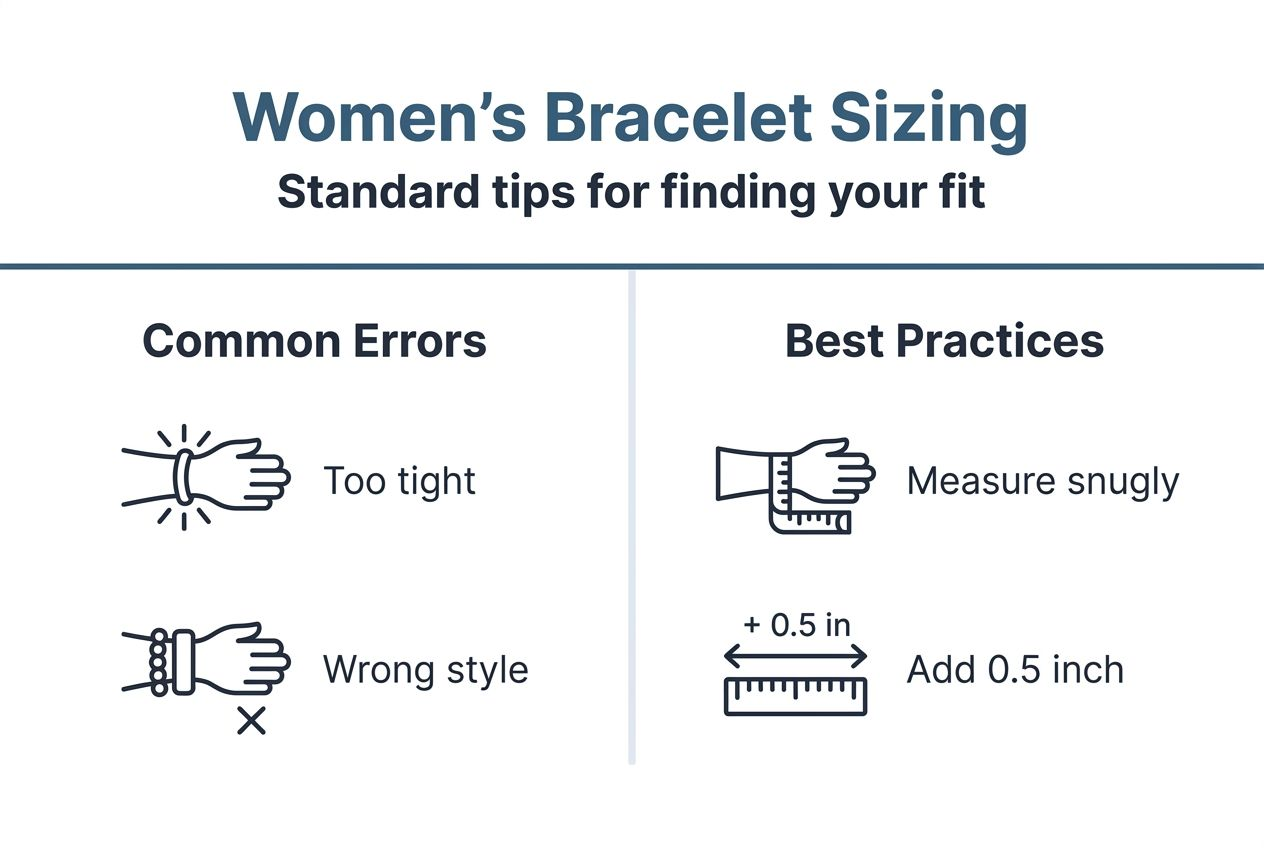
Many women believe bracelet size should equal wrist circumference exactly. This misconception leads to ordering bracelets that feel uncomfortably tight and restrict movement. Bracelet size must always include allowance space beyond your actual wrist measurement for proper fit and comfort.
Another widespread false belief involves adjustable bracelets. Shoppers assume adjustable means one size fits all wrists universally. Adjustable bracelets have specific size ranges, typically spanning 1.5 to 2 inches. A bracelet adjustable from 6.5 to 8 inches won’t fit someone with a 5.5 inch wrist or an 8.5 inch wrist.
Relying solely on visual appeal without considering fit creates disappointment. A stunning bracelet photographed on a model won’t look the same on you if the size is wrong. Too loose bracelets spin around your wrist awkwardly. Too tight bracelets leave marks and feel restrictive. Aesthetic appeal requires proper sizing as its foundation.
Return statistics reveal the real cost of sizing ignorance:
Online jewelry retailers report that sizing issues drive 40% or more of bracelet returns, with customers frequently ordering multiple sizes before finding the right fit. These returns increase costs for both retailers and consumers while delaying the joy of wearing a beautiful new piece.
Avoid these common sizing errors:
- Ordering your exact wrist measurement without adding allowance space
- Assuming all bracelet styles need the same amount of extra length
- Guessing at sizes for gifts instead of using adjustable options
- Ignoring bracelet width when calculating comfortable allowance
- Failing to account for hand size when selecting bangles
Understanding that bracelet sizing combines wrist measurement, style requirements, and personal comfort preferences prevents these mistakes. Take time to measure accurately and research the specific bracelet style you’re considering. This upfront effort saves frustration and ensures you’ll love wearing your bracelet every day.
Sizing frameworks and practical tips for choosing the right bracelet
Follow this systematic approach to determine your perfect bracelet size every time. Start by measuring your wrist accurately at the wrist bone. Add the appropriate allowance based on bracelet style and your fit preference. Verify the final size falls within available options before purchasing.
For most chain and cuff bracelets, add 0.5 to 0.75 inches to your wrist measurement for a comfortable fit. If your wrist measures 6.5 inches, choose a 7 to 7.25 inch bracelet. This creates enough space for natural movement without excessive sliding. For bangles, add at least 1 inch and measure around your knuckles to ensure the bangle can slide over your hand.
Adjustable bracelets solve sizing uncertainties by covering a range of sizes. These versatile pieces typically accommodate 1.5 to 2 inches of adjustment, fitting multiple wrist sizes within one bracelet. They’re perfect for gifts when you can’t measure the recipient’s wrist secretly. Check the specific adjustment range to confirm it includes the recipient’s likely wrist size.
Use this step by step sizing framework:
- Measure your wrist circumference at the wrist bone using a flexible tape
- Identify the bracelet style you want (bangle, chain, cuff, tennis, etc.)
- Add appropriate allowance: 0.5 inches for snug fit, 0.75 inches for comfortable fit, 1+ inches for bangles
- Compare your calculated size to the bracelet’s available sizes
- Choose the closest size, rounding up if between two options
- Consider adjustment options if exact size isn’t available
Quick reference sizing guide:
| Your Wrist | Chain/Cuff Size | Bangle Size | Adjustable Range |
|---|---|---|---|
| 6 inches | 6.5 to 6.75 inches | 7+ inches | 6 to 7.5 inches |
| 6.5 inches | 7 to 7.25 inches | 7.5+ inches | 6.5 to 8 inches |
| 7 inches | 7.5 to 7.75 inches | 8+ inches | 7 to 8.5 inches |
When buying gifts without measurements, prioritize adjustable styles or choose medium sizes around 7 inches as the safest bet. Consult our jewelry gift choosing guide for additional selection strategies. Many retailers offer gift receipts enabling easy exchanges if sizing needs adjustment.
Pro Tip: Consider how the recipient wears bracelets when choosing gift sizes. Women who layer multiple bracelets often prefer slightly looser fits with more movement, while those who wear single statement pieces may want closer fits.
Additional practical considerations:
- Heavier bracelets benefit from slightly larger sizes to prevent uncomfortable weight
- If between sizes, choose larger for bangles and smaller for adjustable chains
- Seasonal wrist swelling may require sizing up in summer months
- Active lifestyles often need tighter fits to prevent bracelet damage
Explore comprehensive bracelet size charts and ideal sizing guides for detailed measurements. Reference expert gift guides when selecting bracelets for others. These resources eliminate guesswork and build confidence in your sizing decisions.
Discover your ideal bracelet at Malibu Vibes
Now that you understand bracelet sizing, explore our thoughtfully crafted bracelet collection designed with both style and fit in mind. Each piece reflects the meticulous attention to detail that defines our Los Angeles studio.

Our collection features bangles, chain bracelets, cuffs, and adjustable styles in precious metals including 14k gold and sterling silver. Many designs incorporate diamonds and gemstones for elegant sparkle. Whether you’re selecting a bracelet for daily wear or a special occasion gift, our range covers various size options to ensure your perfect fit.
Learn about our fine jewelry making process that prioritizes quality craftsmanship and lasting beauty. We create pieces meant to be treasured for years. Reference our detailed bracelet size chart to confidently select the right size based on your measurements and style preference.
FAQ
What is the average standard bracelet size for women?
Most women’s bracelet sizes fall between 6.5 and 7.5 inches, with 7 inches being the most common medium size. This accounts for average wrist circumferences of 6 to 7 inches plus the necessary allowance for comfortable movement. Remember that bracelet size must exceed wrist measurement to prevent tight, uncomfortable fit.
How do I measure my wrist correctly for bracelet sizing?
Wrap a flexible measuring tape around your wrist bone where you’d wear a bracelet, pulling it snug without creating an indent in your skin. Keep the tape parallel to the floor and measure at the end of the day when your wrist is slightly larger. For detailed technique and common mistakes to avoid, check our comprehensive wrist measurement guide.
Can adjustable bracelets fit all wrist sizes?
Adjustable bracelets offer flexibility but don’t fit every wrist universally. These pieces typically adjust across 1.5 to 2 inch ranges, such as 6.5 to 8 inches or 7 to 8.5 inches. Measure your wrist first and confirm it falls within the bracelet’s specific adjustment range before purchasing.
What bracelet size should I choose as a gift if I don’t know the recipient’s wrist size?
Select adjustable bracelets that cover a wide size range when you can’t measure secretly. These styles minimize sizing risk and fit multiple wrist sizes within one piece. Alternatively, choose medium sizes around 7 inches as a safe bet for most women. Explore our jewelry gift guide and general gift selection strategies for additional tips on choosing without exact measurements.
Recommended
- Bracelet Size Guide 2026: 40% Returns Due to Poor Fit – Malibu Vibes Jewelry
- Bracelet Size Chart – Ensuring Perfect Fit and Style – Malibu Vibes Jewelry
- Bracelet Size Guide: Finding Your Ideal Fit – Malibu Vibes Jewelry
- Wrist Size for Bracelet – Why Exact Fit Matters – Malibu Vibes Jewelry
- 2024’s Hottest Jewelry Trends: Glamour Redefined – San Rocco Italia