

TL;DR:
- True luxury jewelry is rooted in rare materials, expert craftsmanship, and personal significance.
- Recognizing genuine pieces involves checking hallmarks, certifications, and signs of hand-setting.
- Personalization and emotional value elevate jewelry from material possession to meaningful legacy.
Luxury jewelry is one of those things people assume they’ll recognize the moment they see it. A big price tag, a famous name, a box wrapped in ribbon. But real luxury runs deeper than any of those surface signals, and that’s exactly where so many shoppers get misled. The most genuinely exquisite pieces combine rare materials, irreplaceable craftsmanship, verified authenticity, and a design that speaks to who you are. As handcrafted fine jewelry becomes more accessible through ethical innovations and personalized options, knowing what separates a truly exceptional piece from an expensive imitation matters more than ever.
Table of Contents
- The foundation of luxury: Materials and gemstones
- Craftsmanship: The artistry behind luxury jewelry
- Certifications, hallmarks, and authenticity
- Design, individuality, and the role of personalization
- What most people miss about luxury jewelry
- Find your next luxurious piece with Malibu Vibes Jewelry
- Frequently asked questions
Key Takeaways
| Point | Details |
|---|---|
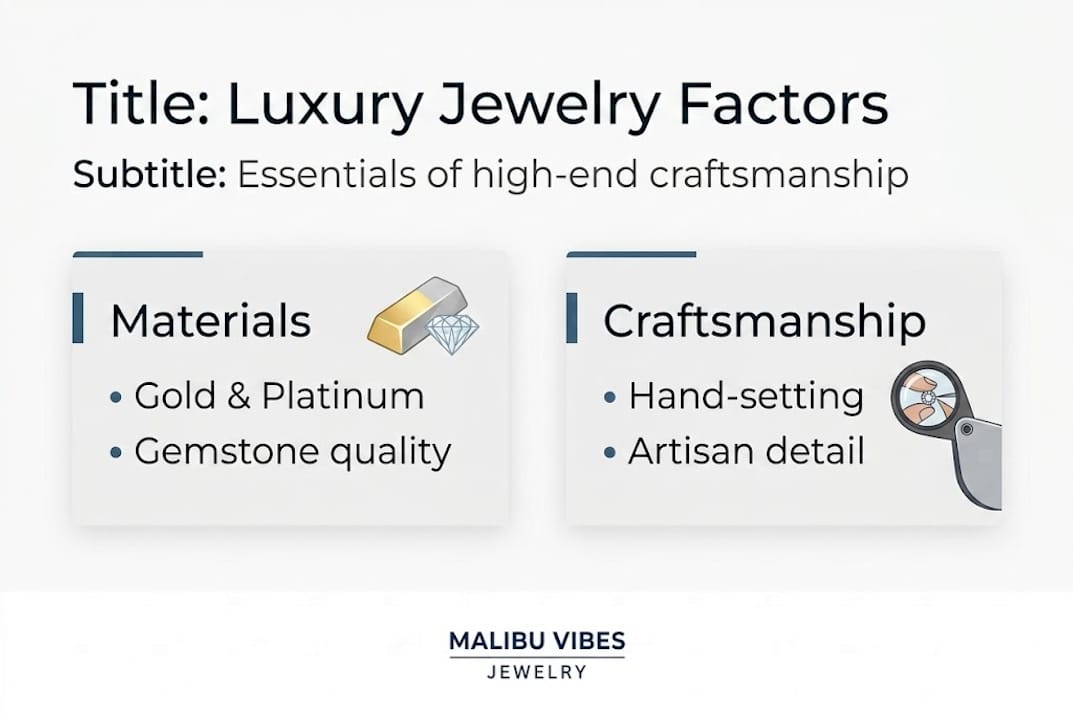
| Quality materials | Luxury jewelry always uses high-grade metals and premium gemstones with outstanding clarity. |
| Expert craftsmanship | Hand setting and artisanal techniques distinguish true luxury from mass production. |
| Proven authenticity | Look for certifications such as GIA and official hallmarks to ensure authenticity. |
| Personalized design | Unique, bespoke features make luxury jewelry deeply personal and memorable. |
| Ethical and emotional value | Today’s luxury also includes ethical sourcing and a strong emotional or storytelling element. |
The foundation of luxury: Materials and gemstones
Every luxurious piece of jewelry starts with the same question: what is it made of? The answer sets the stage for everything else, from how the piece feels on your wrist to how it holds up twenty years from now.
Precious metals and what they signal
Gold remains the gold standard, and the karat number tells you a great deal. 14k gold contains 58.3% pure gold mixed with other metals for durability, making it the sweet spot between hardness and richness. 18k gold steps up to 75% purity, giving pieces a deeper, warmer color and a softer feel. Platinum sits at the very top of the metal hierarchy. It’s naturally white, incredibly dense, and resistant to tarnish in a way that gold alloys simply cannot match. Sterling silver, which is 92.5% pure silver, is the accessible entry point to fine jewelry and carries real value when crafted thoughtfully. The lasting value and beauty of any piece ties directly to the quality of its metal foundation.
Gemstones and the four Cs
For stones, luxury buyers live and die by the four Cs: cut, color, clarity, and carat. Cut is arguably the most important because it governs how light moves through a stone. A brilliant round diamond with a perfect cut will outshine a larger stone with a mediocre cut every single time. Color refers to how colorless a diamond is (in white diamonds, less color equals more value) or how vivid the hue is in colored stones like sapphires, rubies, and emeralds. Clarity describes the presence of natural inclusions or blemishes inside the stone. Carat is the weight measurement, but bigger is only better when the other three Cs are strong.
| Metal | Purity | Key benefit |
|---|---|---|
| Platinum | 95% | Hypoallergenic, very durable |
| 18k gold | 75% | Rich color, high purity |
| 14k gold | 58.3% | Durable, ideal for everyday wear |
| Sterling silver | 92.5% | Accessible, timeless shine |
The rise of lab-grown gemstones
One of the most exciting shifts in luxury jewelry is the growing acceptance of lab-grown stones. These gems are chemically, physically, and optically identical to mined stones. Lab-grown gems offer ethical alternatives without any quality loss, which means you can own a visually flawless, brilliant diamond or sapphire without the environmental and ethical concerns tied to traditional mining. For women who want both beauty and integrity in their jewelry choices, lab-grown stones are increasingly becoming the preferred option.
“True luxury in materials is not about the rarest thing money can buy. It’s about the most beautiful thing crafted with integrity.”
Choosing high-quality materials is the first test a piece of jewelry must pass. Everything else, the artistry and design, is built on this foundation. When you look at lasting style in 2026 and beyond, the pieces that endure are always rooted in exceptional raw materials.
Craftsmanship: The artistry behind luxury jewelry
Beyond materials, the hands that craft a piece reveal its real luxury. You can have the most perfect diamond in the world, but if it’s set carelessly into a mold-pressed metal band, the result feels hollow. True luxury jewelry is made with intention, skill, and a level of precision that takes years to develop.
What hand-setting actually means
Hand-setting is the process of individually placing each stone by a skilled artisan rather than using automated machinery. It takes longer and costs more, but the results are unmistakable. Stones sit more securely. Prongs are shaped with care. The overall appearance has a subtlety and depth that no machine can replicate. When you see a pavé ring where every tiny diamond catches light at a slightly different angle, that’s the fingerprint of hand-setting. Mass-produced jewelry, by contrast, often features stones that look a little too uniform, a little too perfect in a mechanical way that loses the warmth of human craft.
How to spot authentic artistry
Here are four practical ways to identify genuinely handcrafted fine jewelry:
- Examine the setting under magnification. Hand-set prongs show slight variations that machines don’t produce. Look for small, intentional asymmetries that suggest a human touch.
- Check the weight. Handcrafted pieces, especially in platinum or high-karat gold, feel substantial. Hollow or lightweight pieces often signal mass production.
- Look at the finish. Luxury pieces are polished or textured with care on all sides, including areas you rarely see like the inside of a ring band.
- Ask about the production method. A reputable jeweler should be able to tell you clearly whether a piece was handcrafted, cast, or machine made.
Pro Tip: When shopping online, look for brands that explain their production process in detail. A jeweler who is proud of their craft will show you how it’s done, not just what it looks like. Expert tips for jewelry quality can help you ask the right questions before you buy.
The hallmarks of artisanal excellence
Artisanal jewelry often includes visible signatures of its maker, literally and figuratively. Look for consistent prong heights, smooth bezel edges, and engraving work that flows naturally. Chains should feel supple and even. Stone-to-stone spacing in pavé settings should be deliberate. These signs of quality jewelry are the visual language that separates a showpiece from something that will fade or fail within months.
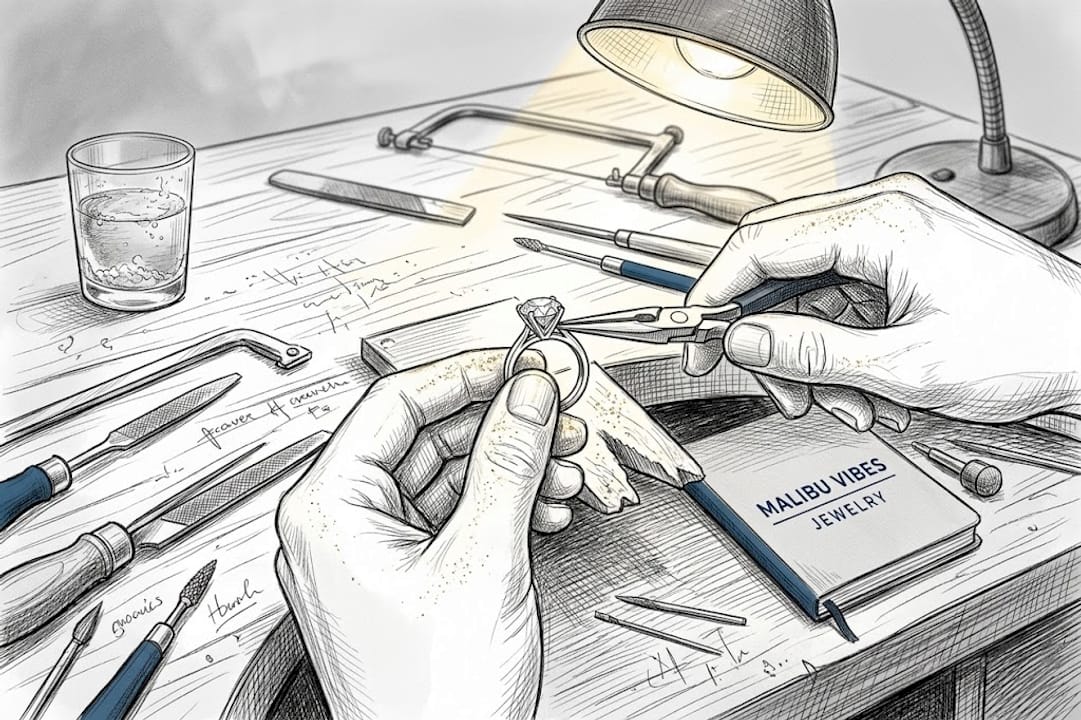
As industry insiders note, shoppers should focus on hallmarks, GIA certificates, hand-setting cues, and bespoke options, especially when shopping for fashion occasions or milestone events where the piece needs to perform beautifully for decades.
Certifications, hallmarks, and authenticity
Recognizing top-tier craft is crucial, but proving authenticity is just as essential. Even if a piece looks stunning, without the right documentation and markings it’s impossible to confirm what you’re actually buying. This is where certifications and hallmarks become your best protection as a buyer.
What is a hallmark, and why it matters
A hallmark is a small stamped mark on a piece of jewelry that officially certifies its metal content. In the United States, gold jewelry is marked with numbers like 585 (14k), 750 (18k), or simply 14K or 18K. Platinum is stamped with 950 or PLAT. Sterling silver carries 925. These marks are not decoration. They are legal indicators of what the metal is, and their absence on a piece claiming to be fine metal is a serious red flag. Always look for these stamps on a ring’s inner band, a pendant’s bail, or a bracelet’s clasp.
GIA certification and what it covers
The Gemological Institute of America, commonly known as GIA, is widely regarded as the most trusted independent authority on gemstone grading. A GIA certificate provides a detailed report on a stone’s cut, color, clarity, and carat weight, along with any treatments the stone has received. Reputable sources confirm that buyers should look for GIA certifications and official hallmarks as the baseline standard for verifiable luxury. Other respected labs include the American Gem Society (AGS) and the International Gemological Institute (IGI), but GIA remains the most universally recognized.
| Certification body | Key strengths | Best for |
|---|---|---|
| GIA | Strictest grading standards | Diamonds, colored stones |
| AGS | Excellent cut grading system | Round brilliant diamonds |
| IGI | Widely used for lab-grown stones | Lab-grown diamonds |
Documentation that should come with luxury jewelry
When you invest in a high-end piece, you should expect more than just a receipt. A full luxury purchase typically includes:
- A gemstone certificate from a recognized lab (GIA, AGS, or IGI)
- Metal purity documentation or assay certificate
- A brand authenticity card or certificate of origin
- Care instructions specific to the piece
- An appraisal letter for insurance purposes
The importance of certificates and appraisals cannot be overstated, especially when you’re buying a piece as a gift or investment. An appraisal tells you what the piece is worth for insurance replacement, while the gem certificate tells you what you actually have.
Pro Tip: Always photograph your jewelry documentation and store digital copies in a secure location separate from the physical papers. If anything is lost or damaged, these records protect your investment immediately.
Design, individuality, and the role of personalization
Even with rare materials and masterful craft, true luxury often shines in its uniqueness. A piece that could have been worn by anyone is beautiful. A piece designed with your specific story in mind is unforgettable. This is the dimension of luxury that resonates most deeply with modern jewelry buyers who see their accessories as an extension of identity, not just an addition to an outfit.
Limited editions and artist collaborations
Luxury jewelry houses and independent designers increasingly release limited-edition collections that elevate a piece’s desirability simply through scarcity. When a ring is one of only fifty made, it carries a different weight, emotionally and culturally, than something mass-produced by the thousands. Artist collaborations bring another layer of meaning. When a well-known sculptor or painter contributes their aesthetic vision to a jewelry collection, the result is wearable art with a documented lineage.
Why self-expression matters more than ever
For women in their late twenties through early forties, jewelry is rarely just decorative. It marks milestones, reflects values, and communicates something about who you are to the world. Self-expression in jewelry has become the defining trend in how younger luxury buyers approach their purchases. A birthstone ring that reflects your child’s arrival, a custom engraved bracelet with a meaningful date, or a sapphire chosen because blue is your power color: these decisions elevate a piece beyond its material value.
“Bespoke options and unique pieces are key to luxury for women seeking a one-of-a-kind style that belongs only to them.”
Current trends in personalized luxury jewelry
The shift toward individuality shows up clearly in design trends. Minimalist luxury trends have made way for layered, mixed-metal looks where each piece in a stack tells its own story. Signet rings with custom engravings. Initial necklaces in 14k gold. Birthstone stacking rings. These aren’t just pretty objects. They are intentional statements built around the wearer’s life.
Here’s what to consider when commissioning or selecting personalized fine jewelry:
- Start with a metal and stone that speaks to you personally, not just what’s trending. Trends shift; personal meaning lasts.
- Work with a jeweler who listens. The best custom experiences begin with a conversation about your life, not a catalog.
- Think about wearability alongside design. A bespoke ring that you can only wear once isn’t truly luxurious. The best personalized pieces are made for real life.
- Consider future heirloom potential. Will this piece mean something to someone else in your family someday? That question can shape beautiful decisions.
What most people miss about luxury jewelry
Here’s the part that most jewelry guides skip entirely: the most powerful dimension of luxury is emotional, not material. We spend so much time discussing carats, certifications, and craftsmanship techniques that we forget the reason any of it matters is because jewelry carries stories.
A diamond tennis bracelet is beautiful. But a diamond tennis bracelet that was gifted on a specific morning by someone who knew exactly what it meant to you? That’s irreplaceable. Luxury in its truest form is not about rarity or price. It’s about meaning that compounds over time. The value of a piece actually increases as it accumulates moments: anniversaries, achievements, memories.
We’ve noticed a significant cultural shift in how women view luxury jewelry purchases. The old model was about status, about signaling wealth through recognizable brand names and ostentatious design. The new model is quieter and more personal. Women are choosing pieces with intention, thinking about legacy, social media influence on jewelry culture notwithstanding. They want pieces that feel like them, not pieces that perform for a room. That shift changes everything about how we think about what luxury means in 2026. The most luxurious piece you can own is one that becomes more yours with every year you wear it.
Find your next luxurious piece with Malibu Vibes Jewelry
If you’re ready to experience the difference of true luxury jewelry, Malibu Vibes Jewelry can help you find a piece that feels uniquely yours.
At Malibu Vibes Jewelry, every piece is designed and crafted in Los Angeles with the same commitment to quality and intentionality this article describes. From the metal selection to the stone setting, each step of the jewelry making process is handled with care and expertise. Whether you’re shopping for a milestone occasion or treating yourself to something that reflects exactly who you are, our diamond jewelry collection offers handcrafted pieces built to last a lifetime. Browse the full collection and discover what luxury actually feels like when it’s made for you.
Frequently asked questions
How can I tell if jewelry is genuinely luxurious?
Check for hallmarks, GIA certifications, quality metals like 14k gold or platinum, and visible signs of expert hand-setting. Authentic luxury pieces always come with proper documentation confirming the metal and gemstone quality.
Do lab-grown gemstones count as luxury?
Absolutely. Lab-grown gems offer identical physical and optical properties to mined stones, and when set in fine metals with expert craftsmanship, they deliver the full luxury experience with stronger ethical credentials.
Why do certifications like GIA matter for luxury jewelry?
GIA and similar certifications independently verify a gemstone’s quality grade, so you know exactly what you’re buying. Without a recognized gem certification, claims about a stone’s quality are unverifiable and therefore untrustworthy.
Is personalization important in luxury jewelry?
Personalization transforms a beautiful object into a meaningful one. Bespoke options and unique pieces add a layer of luxury that no off-the-shelf design can replicate, especially for milestone events and gifting occasions.
Recommended
- Luxury Jewelry Explained: Key Qualities and Value – Malibu Vibes Jewelry
- Why jewelry quality matters: lasting value and beauty – Malibu Vibes Jewelry
- What Makes Jewelry Heirloom Quality? Timeless Guide – Malibu Vibes Jewelry
- Why quality over quantity jewelry elevates your style – Malibu Vibes Jewelry