

TL;DR:
- Authentic artisan-crafted jewelry is handmade by skilled artisans using traditional techniques, ensuring individuality and quality. The process involves deliberate steps like design, material selection, hand fabrication, and precise stone setting, which enhance durability and uniqueness. Despite growing market demand, buyers should scrutinize craftsmanship details to ensure genuine quality, as “artisan” labels can sometimes be misleading.
Not every piece labeled “artisan” deserves that title. As handcrafted jewelry floods the market, that word gets applied loosely, sometimes to pieces with very little handwork involved. And yet, the surge in genuine artisan-crafted jewelry is real, meaningful, and worth understanding. Whether you’re treating yourself to something special or searching for a gift that actually says something, knowing what separates truly crafted jewelry from the rest will change how you shop, what you choose, and how long you’ll love it.
Table of Contents
- What is artisan-crafted jewelry?
- How is artisan-crafted jewelry made?
- How artisan craftsmanship influences quality and longevity
- What to look for when buying artisan-crafted jewelry
- The uncomfortable truth about artisan jewelry: what matters most
- Experience true artisan craftsmanship with Malibu Vibes Jewelry
- Frequently asked questions
Key Takeaways
| Point | Details |
|---|---|
| True artisan value | Artisan-crafted jewelry stands out for hand-finished details, not just the artisan label. |
| Quality over label | Durability depends more on setting, structure, and materials than artisan status alone. |
| Surging demand | The handmade jewelry market is growing rapidly thanks to style, self-expression, and value. |
| Smart shopping tips | Check construction, finish, and story to ensure your jewelry is both stylish and lasting. |
What is artisan-crafted jewelry?
At its core, artisan-crafted jewelry is made by hand, often by a single maker or a small team, using traditional techniques and intentional design choices. Unlike factory-produced pieces stamped out by the thousands, artisan jewelry starts as an idea in someone’s head and moves through real human hands before it reaches yours. That process introduces something rare: individuality.
The difference between artisan and mass-produced jewelry isn’t just about who touched it. It’s about how decisions get made at every step. A machine-made piece is optimized for speed and consistency. An artisan piece is shaped by skill, taste, and the kind of attention that only comes when someone cares about the outcome. The result is a piece that often carries a distinct point of view.
What draws people to artisan-crafted jewelry goes beyond aesthetics. There’s a reason why motivation for handmade jewelry so often centers on identity and meaning. People want jewelry that feels like them, not like something pulled off a shelf that thousands of others already own. That desire for self-expression is deeply personal, and artisan pieces answer it well.
Key characteristics that define artisan-crafted jewelry include:
- Handmade construction, often involving tools and techniques passed down through generations
- Small-batch or one-of-a-kind production, meaning each piece has natural variation
- High-quality materials, typically precious metals like 14k gold or sterling silver, set with real gemstones or diamonds
- Intentional design, where every element has a reason to exist
- A maker’s signature, whether that’s a hallmark, a specific style, or a finishing detail unique to that studio
The market is responding to this demand in a big way. The global handmade jewelry market was valued at $151.5 billion in 2022 and is projected to reach $472.5 billion by 2032, growing at a compound annual rate of 11.9%. Those numbers reflect something deeper than a trend. They reflect a cultural shift toward buying things with meaning, not just function.
If you’re new to this space, start with understanding artisan jewelry before diving into specific styles or collections. It gives you the vocabulary to shop with confidence.
How is artisan-crafted jewelry made?
With an understanding of what artisan-crafted means, it’s important to see how these pieces are brought to life. The process is slower and more deliberate than you might expect, and that’s exactly the point.
Here’s how a quality artisan piece typically moves from concept to your jewelry box:
- Design and sketching. The maker begins with an idea, sometimes inspired by nature, architecture, or a client brief. Sketches or 3D renderings bring the concept into focus before any metal is touched.
- Material selection. Choosing the right metal is critical. Factors like karat weight, metal hardness, and surface workability all influence the final piece’s appearance and durability.
- Hand fabrication. This is where the real craft shows. Metal is cut, shaped, soldered, and assembled by hand. Techniques like forging, wire wrapping, or lost-wax casting may be used depending on the design.
- Stone selection and setting. Each gemstone is chosen for its color, clarity, and cut, then set individually. The setting method, whether prong, bezel, pavé, or channel, affects both the look and the long-term security of the stone.
- Surface finishing. Polishing, texturing, and cleaning bring the piece to life. A hand-finished surface has a warmth and depth that machine-polished pieces rarely match.
- Final inspection. The maker checks every element: stone security, clasp function, solder points, surface consistency. This is where quality control happens through human eyes and hands.
The detail that matters most, and the one buyers most often overlook, is step four. Craftsmanship determines longevity because poor stone setting may look fine at first but can lead to loosening or loss over time. A stone that isn’t seated properly is one bump away from being gone.
For a deeper look at what goes into each stage, explore making artisan jewelry or see the specific steps behind the fine jewelry process at Malibu Vibes Jewelry.
Pro Tip: When evaluating a piece, gently press on each stone with a fingertip. It should feel completely immovable. Any wobble means the setting needs attention before you wear it.
How artisan craftsmanship influences quality and longevity
Once you know how artisan pieces are made, the next step is recognizing what physical qualities set them apart long-term. Craftsmanship isn’t abstract. It shows up in very specific, measurable ways.
“Poor workmanship may appear fine initially but can be more prone to loosening or damage over time, making the quality of construction the single biggest factor in a piece’s lifespan.” — Why Craftsmanship Determines Longevity in Fine Jewelry
Here’s a direct comparison of how artisan and mass-produced jewelry typically differ in the areas that matter most for everyday wear:
| Quality dimension | Artisan-crafted jewelry | Mass-produced jewelry |
|---|---|---|
| Setting security | Hand-set stones, individually inspected | Machine-set, consistent but less adaptable |
| Metal quality | Typically higher karat, hand-selected alloys | May use lower-grade metals or plating |
| Surface finish | Hand-polished, often with distinctive texture | Machine-polished, uniform but can feel flat |
| Structural integrity | Soldered by hand with reinforced joins | Stamped or cast in bulk, variable strength |
| Clasp and hardware | Usually heavier, more durable mechanisms | Lighter, cost-optimized components |
The surface finish column deserves more attention than it usually gets. Hand-finishing creates a layered, dimensional look that catches light differently depending on the angle. Machine-polishing produces uniformity, which has its place, but it doesn’t create that subtle warmth that makes a piece feel like it belongs to you.
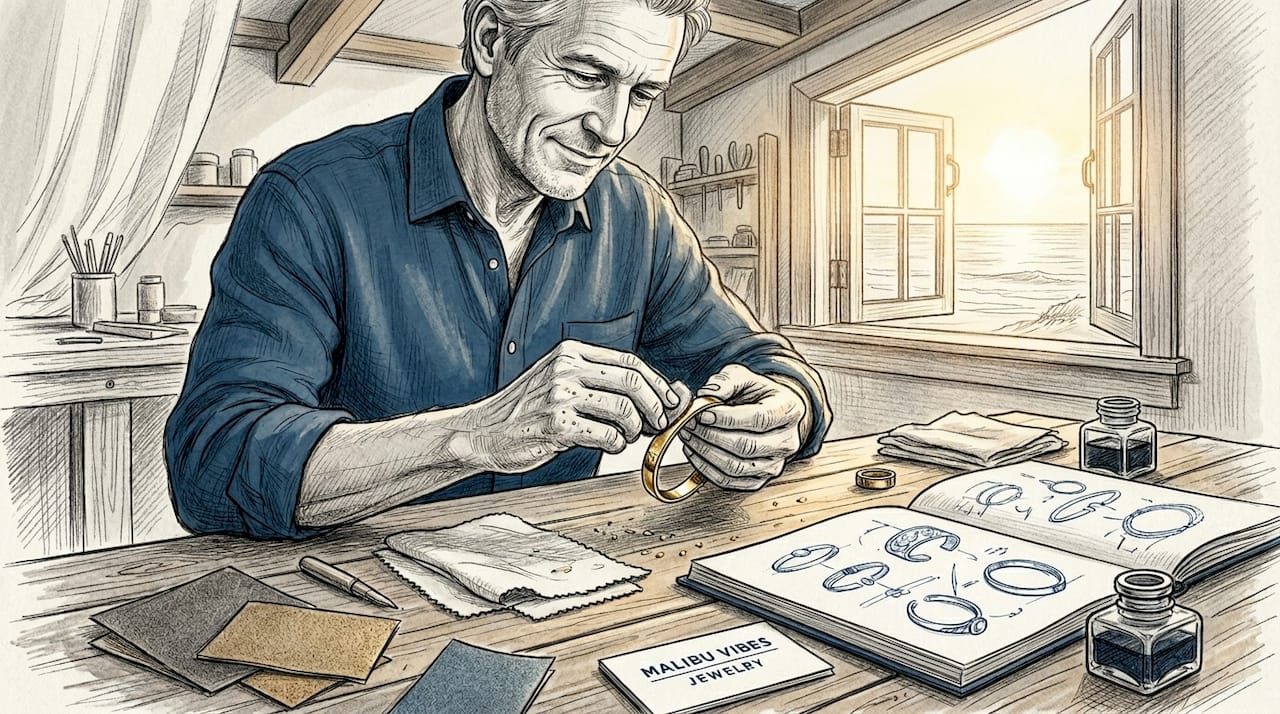
Weak clasps and loose stones are the two most common reasons fine jewelry ends up getting repaired or replaced early. Both are directly tied to how much time and care went into construction. When you invest in a piece with strong construction, you’re not just buying something beautiful for today. You’re buying something that holds up through years of real life.
For more on what separates lasting pieces from short-lived ones, the guide on lasting jewelry quality breaks it down clearly. And if you want to get specific about settings, this overview of gemstone setting techniques explains exactly what to look for and why.
Pro Tip: Run a fingernail lightly along the inside edge of any ring or bracelet. Rough or sharp spots mean the finishing wasn’t complete, and that’s a sign of rushed production, not careful craft.
What to look for when buying artisan-crafted jewelry
Armed with knowledge of quality markers, you’ll want to apply these insights when shopping for a piece you’ll treasure. Whether you’re buying for yourself or choosing something as a gift, having a mental checklist makes all the difference.
Here’s what to evaluate before committing to a purchase:
- Stone setting: Are the stones secure? Do prongs look evenly spaced and fully pressed down?
- Weight: A piece that feels substantial usually contains more metal. Lightweight pieces may be hollow or heavily plated.
- Detail work: Look at the back of the piece. Artisan makers finish both sides carefully. A rough or unfinished back is a red flag.
- Surface consistency: Scratches, pits, or uneven polish often signal that the finishing step was rushed.
- Designer signature or hallmark: Reputable makers mark their work. Look for stamps indicating metal content (like “14k” or “925”) and, ideally, a maker’s mark.
- Materials disclosure: A trustworthy maker tells you exactly what the piece is made of. Vague descriptions like “gold-tone” or “silver-finish” usually mean plating, not solid metal.
It’s also worth addressing a common assumption: not all mass-produced jewelry is poor quality. Some manufacturers achieve durability through engineered consistency and strong quality control processes. The key is knowing what you’re evaluating rather than assuming one category is always better.
| Buying factor | Artisan piece | Mass-produced piece |
|---|---|---|
| Uniqueness | High, often one-of-a-kind | Low, identical across inventory |
| Emotional story | Maker’s narrative, process transparency | Brand story, rarely maker-specific |
| Price point | Higher, reflects labor and materials | Lower, scaled for volume |
| Repairability | Easier with the original maker | May require generic jeweler |
| Gift impact | Strong, tied to meaning and craft | Can feel impersonal at higher price points |
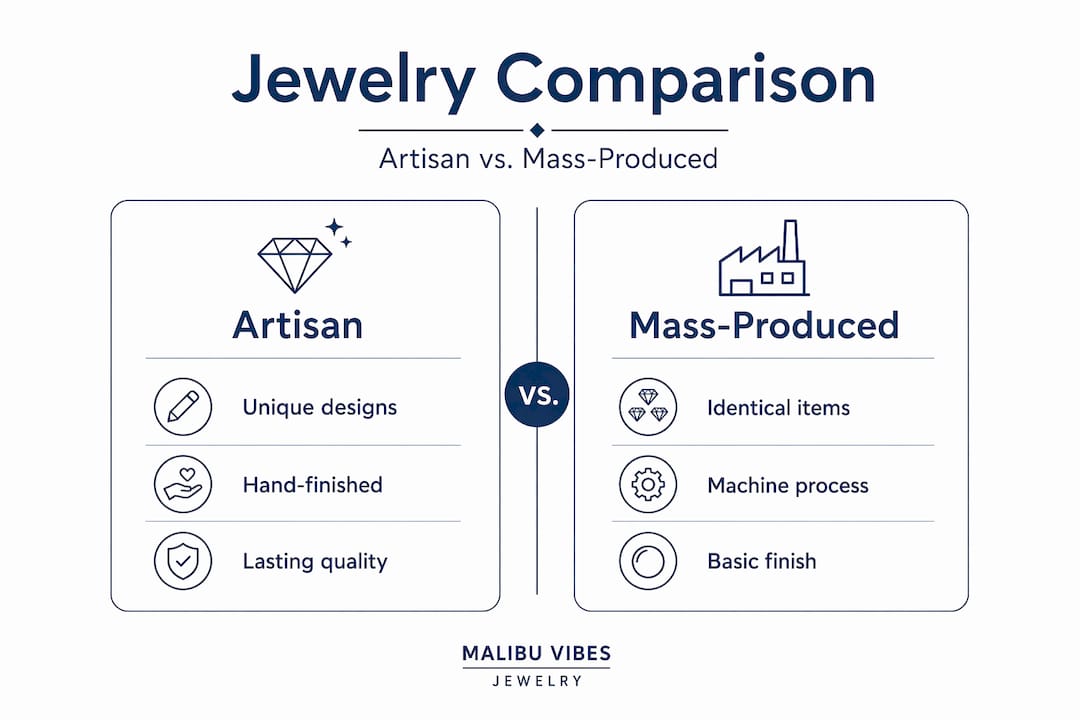
When it comes to gifting, the story behind a piece matters as much as the piece itself. Craftsmanship adds value to gifts in a way that price alone never does. Knowing that a piece was shaped by hand, set stone by stone, and finished with care gives the recipient something to connect with beyond the sparkle.
If you’re thinking about a gift that could be passed down, the guide on heirloom jewelry qualities explains exactly what makes a piece worth keeping for generations. For additional perspective on why buyers choose handmade over mass-produced, this look at quality and meaning in handmade jewelry offers a candid breakdown.
The uncomfortable truth about artisan jewelry: what matters most
Here’s what most jewelry content won’t tell you. The word “artisan” has become a marketing tool, and not always an honest one. Some pieces carry that label because they were assembled by hand in the most basic sense, like stringing beads or closing a clasp. That technically qualifies, but it’s a far cry from the hand fabrication, individual stone setting, and skilled finishing that true artisan jewelry involves.
The uncomfortable reality is that buyers often pay a premium for the story, not the substance. And sometimes that story isn’t backed up by the quality of the piece itself. That’s not an argument against artisan jewelry. It’s an argument for being a more informed buyer.
What actually creates lasting satisfaction with a piece of jewelry? Three things. First, genuine construction quality: strong settings, solid metal, clean finishing. Second, design that fits your real life and personal style. A beautifully made piece you never wear because it doesn’t suit you is a waste of craftsmanship. Third, a connection to the piece, whether through the maker’s story, a personal occasion, or simply the way it looks on you every single day.
The lasting value and beauty in jewelry you actually wear comes from that combination. Not from a label. We’ve seen buyers fall in love with an artisan piece that turned out to be poorly constructed, and we’ve seen others find extraordinary quality in a piece that came with no special story at all. The inspection process matters more than the branding. Trust your eyes, trust your hands, and trust the details.
Experience true artisan craftsmanship with Malibu Vibes Jewelry
For readers ready to explore or invest in authentic artisan-crafted pieces, here’s where Malibu Vibes Jewelry can help.
Every collection at Malibu Vibes Jewelry is built around the same principles this article covers: secure stone settings, quality precious metals, careful hand finishing, and designs that are both fashion-forward and genuinely wearable. Pieces are crafted in Los Angeles, where a commitment to quality over quantity shapes every decision from materials to final inspection.

Whether you’re drawn to 14k gold rings, sterling silver necklaces, or diamond-set earrings, you’ll find that the Malibu Vibes jewelry process reflects everything we’ve described here: real craft, real materials, and real attention to detail. Browse the collections when you’re ready. You’ll see the difference the moment you look closely.
Frequently asked questions
How can I tell if jewelry is truly artisan-crafted?
Look for hand-finished details, quality settings, and a designer’s signature touch. A metal hallmark and clean finishing on both the front and back of a piece are reliable indicators of genuine craft.
Are artisan-crafted pieces more durable than mass-produced jewelry?
Often, yes, but only when built with secure settings, strong construction, and quality materials. Poor workmanship may look fine initially but can lead to loosening or damage far sooner than a well-constructed piece.
Why is artisan-crafted jewelry getting so popular?
Global demand is surging because buyers want pieces that feel personal, unique, and meaningful. The handmade jewelry market is projected to grow from $151.5 billion in 2022 to $472.5 billion by 2032, reflecting a broad cultural shift toward quality and self-expression.
Is “artisan” a guarantee of better style?
Not always. Personal style and thoughtful design matter more than any label. A piece that aligns with how you actually dress and live will serve you better than one that just sounds impressive on paper.
Can I find artisan jewelry for special gifts?
Absolutely. Artisan-crafted pieces make meaningful gifts precisely because they come with a story, a process, and a level of care that mass-produced pieces rarely match. The craft behind the piece becomes part of the gift itself.
Recommended
- What is Artisan Jewelry? Understanding Unique Craftsmanship – Malibu Vibes Jewelry
- Why quality over quantity jewelry elevates your style – Malibu Vibes Jewelry
- Why quality matters in jewelry: lasting style in 2026 – Malibu Vibes Jewelry
- How Handcrafted Jewelry Is Made: Artistry Explained – Malibu Vibes Jewelry