

TL;DR:
- Expert craftsmanship in jewelry enhances durability, beauty, and emotional value, transforming raw materials into enduring keepsakes.
- Choosing handcrafted pieces supports endangered traditional skills and promotes ethical, sustainable sourcing.
Most people assume that what makes jewelry beautiful is simply the stone or the metal. That assumption costs them. The truth is that the skill behind the piece, meaning the hands that shaped, set, and finished it, determines everything from how long it lasts to how deeply it resonates as a gift. Expert craftsmanship transforms raw materials into something that carries emotional weight, holds its beauty over decades, and tells a story no mass-produced piece ever could. Here’s what every smart jewelry buyer needs to know.
Table of Contents
- What is jewelry craftsmanship and why does it matter?
- How craftsmanship influences jewelry quality and style
- The role of craftsmanship in sustainable and ethical jewelry
- How to identify and choose jewelry with exceptional craftsmanship
- Why true craftsmanship makes every piece unique
- Discover fine craftsmanship with Malibu Vibes Jewelry
- Frequently asked questions
Key Takeaways
| Point | Details |
|---|---|
| Craftsmanship defines quality | Expert jewelry craftsmanship affects lasting value, style, and personal meaning. |
| Look beyond the surface | Fine details and skilled handiwork are signs of jewelry made to endure and impress. |
| Support sustainable artistry | Choosing crafted jewelry helps sustain ethical work and endangered skills. |
| Practical tips matter | Learn to spot true craftsmanship so your choices reflect both taste and values. |
What is jewelry craftsmanship and why does it matter?
Jewelry craftsmanship is the skilled application of technique, care, and artistic judgment in creating a piece of jewelry. It’s not just about following steps. It’s about understanding how metal behaves under heat, how a gemstone’s facets catch light at different angles, and how a prong set incorrectly can cause a diamond to fall out three years down the road. For a full overview of jewelry craftsmanship, the definition runs deep into both technical skill and artistic vision.
Craftsmanship affects three things that matter most to buyers: durability, beauty, and emotional value. A ring made by a skilled artisan won’t just look better on day one. It will still look the same on the tenth anniversary. The stones will sit securely. The metal will wear evenly. The finish won’t dull or flake. That’s what separates a cherished heirloom from a discarded accessory.
“Great craftsmanship is invisible in the best way. You don’t notice it because nothing has gone wrong. You only notice poor craftsmanship when a prong snags your sweater or a clasp breaks in the middle of a dinner party.”
What’s especially striking is how fragile the world of traditional jewelry skills has become. Diamond cutting is critically endangered in the UK due to the rising cost of skilled labor and intense competition from producers in India and China. This tells us something important: true craftsmanship is rare, and getting rarer. When you choose a handcrafted piece, you’re not just buying jewelry. You’re supporting a practice that the market is actively threatening.
Here are the characteristics that define highly crafted jewelry:
- Precision in stone setting: Stones are aligned, secure, and evenly spaced
- Seamless metalwork: Solder joints are invisible, edges are smooth
- Consistent surface finish: Polish is even, textures are intentional
- Symmetry: The piece looks balanced from every angle
- Attention to wearability: Clasps, prongs, and bezels are designed for daily use
To understand more about what goes into each piece, the process behind handcrafted jewelry artistry shows why every step demands expertise. And if you’ve ever wondered what separates a fine jeweler from a factory, artisan jewelry explained gives you the full picture.
How craftsmanship influences jewelry quality and style
Craftsmanship is the invisible force behind every quality signal you can see and feel. When a piece of jewelry catches light evenly, lays flat against your skin, or closes with a satisfying click, that’s skilled labor made physical. These aren’t accidents. They’re the result of hours of practiced technique.
The visual difference between mass-produced and handcrafted jewelry is real, and it shows up fast. Mass production relies on molds, machines, and speed. Handcrafted work relies on human judgment at every step. That’s why two rings from the same handcrafted collection can be subtly unique, while factory-made versions look identical and often feel hollow.
| Feature | Mass-produced jewelry | Handcrafted jewelry |
|---|---|---|
| Stone setting | Machine set, uniform | Hand set, individually adjusted |
| Metal finish | Machine polished, can be uneven | Hand polished, consistent sheen |
| Durability | Variable, depends on automation | High, checked at each stage |
| Uniqueness | Identical across units | Subtle variations, each piece distinct |
| Repair potential | Often not worth repairing | Built to be maintained and restored |
| Emotional resonance | Low, commodity feel | High, personal and intentional |
The importance of lasting quality in jewelry goes beyond durability. A well-made piece actually shapes how you wear it and how you feel wearing it. Jewelry that fits correctly, sits right, and holds its finish becomes part of your identity. Poorly made jewelry just becomes a problem.
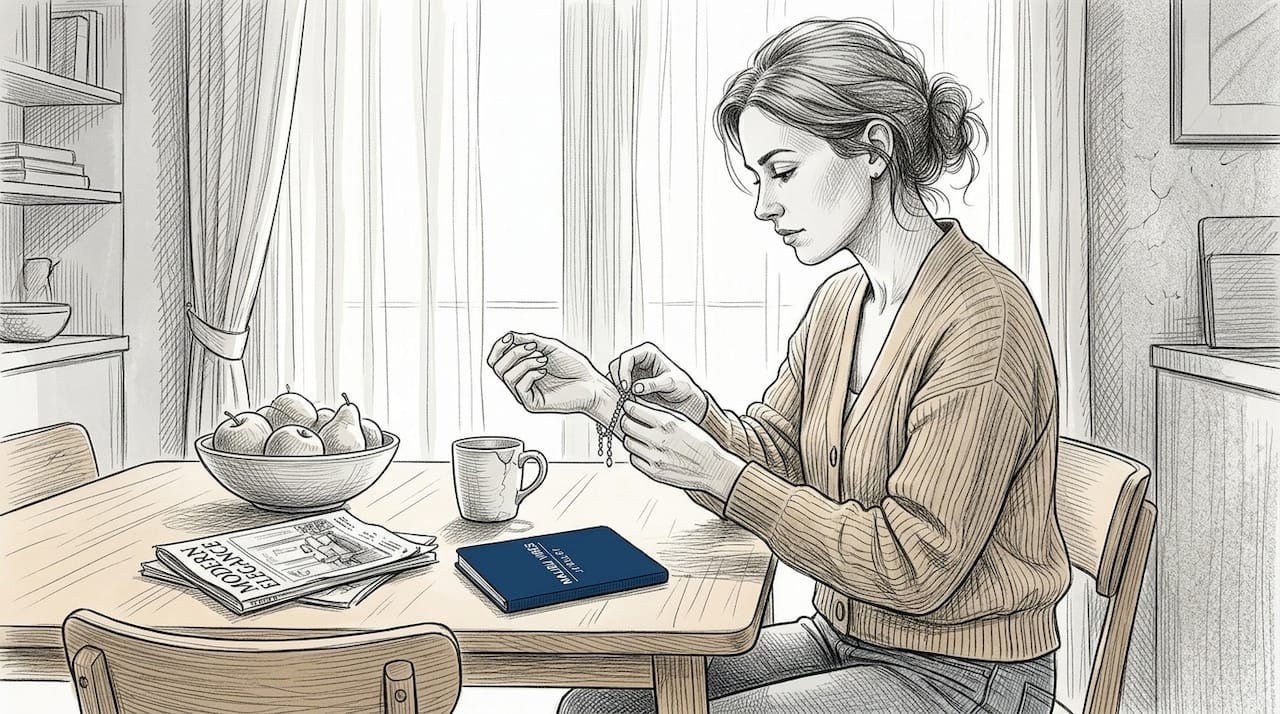
Style is also directly linked to craftsmanship. The delicate tension between negative space and metal, the way a bezel frames a colored stone, the curve of a band as it tapers, these are design decisions that only skilled hands can execute. And as diamond cutting faces extinction in traditional markets, the craftspeople who can execute these decisions properly are becoming increasingly valuable.
Pro Tip: Before buying any fine jewelry, look at the back of the piece. That’s where craftsmanship hides. A skilled jeweler finishes the back as carefully as the front. If the back is rough, uneven, or poorly finished, the rest of the piece likely reflects the same lack of care.
For a deeper breakdown of what to examine in person or in product photography, the expert tips on jewelry quality article walks through each indicator in practical detail. If you want to understand how the making process itself shapes quality, the jewelry making process explains every step from raw material to finished piece.
The role of craftsmanship in sustainable and ethical jewelry
Quality isn’t just about looks. It’s about how jewelry is made and sourced. There’s a direct and often overlooked link between high craftsmanship and ethical production. Artisans who take pride in their work tend to be more careful about where their materials come from. Rushed, mass-market production rarely prioritizes sourcing transparency because the margin pressure is too high.
When you invest in a well-crafted piece, you’re more likely buying from a maker who knows their supply chain. That matters enormously, both to your conscience and to the planet. Explore the full scope of ethical sourcing in jewelry to see how sourcing decisions at the production level affect the final product you wear.
The statistics reinforce this urgency. Traditional craft skills like diamond cutting are critically endangered because cheaper, less traceable mass production has pushed them out of the market. Every time a consumer chooses a handcrafted piece over a factory-made one, they vote for the survival of these skills. That’s not abstract. It’s a purchasing decision with a ripple effect.
Here’s how to identify truly ethical and expertly crafted jewelry:
- Check for transparency: Does the brand clearly state where their materials come from?
- Look for named artisans or studios: Brands that can tell you who made the piece are more accountable.
- Evaluate the materials: Recycled metals and responsibly sourced gemstones are strong indicators of intention.
- Read the brand story: Vague claims about quality are easy. Specific commitments to sourcing and labor are harder to fake.
- Ask about longevity: Sustainable jewelry is made to last. If a brand doesn’t stand behind repairs or long-term durability, that’s a signal.
The connection between eco-friendly jewelry materials and craftsmanship is real. Artisans who use precious metals carefully produce less waste. Skilled stone setters don’t damage gems during setting, which reduces the need to replace stones prematurely. Every element of quality craftsmanship supports a more sustainable outcome.
Gifting a handcrafted, ethically made piece also changes the meaning of the gift itself. You’re not just giving jewelry. You’re giving something made with intention, backed by values, and built to last for years or even generations.
How to identify and choose jewelry with exceptional craftsmanship
With sustainability in mind, it’s just as important to recognize craftsmanship in your next jewelry purchase. Whether you’re shopping for yourself or looking for a gift that will genuinely impress, knowing what to look for gives you a real advantage.
Start with these key features:
- Stone setting security: Gently press on any gemstone. It should not move at all.
- Surface finish consistency: Look for even polish across all surfaces, especially inside rings and behind pendants.
- Symmetry and proportion: Hold the piece at arm’s length. It should look balanced from every angle.
- Clasp and closure quality: Clasps should open and close smoothly without excessive force.
- Metal weight and thickness: Quality pieces have substance. Very light pieces often cut corners on metal thickness.
- Hallmarks and stamps: Look for metal purity stamps (14k, 925, etc.) as basic proof of material quality.
- Edge finishing: Edges should be smooth and rounded, not sharp or uneven.
If you’re buying as a gift, ask yourself these questions. Does this piece reflect the recipient’s personal style or a moment they’d want to remember? Is it made to last beyond the moment it’s opened? Could this become something they’d pass on someday? The lasting value of jewelry is as much about the craft behind it as the occasion it marks.
| Craftsmanship indicator | What to check | Why it matters |
|---|---|---|
| Stone setting | No movement when pressed | Prevents stone loss over time |
| Metal finish | Even polish front and back | Indicates thorough workmanship |
| Weight | Feels substantial for its size | Reflects quality metal thickness |
| Symmetry | Balanced from all angles | Shows precision in fabrication |
| Hallmarks | Clearly stamped and legible | Confirms material authenticity |
| Clasp function | Opens and closes cleanly | Ensures long-term wearability |
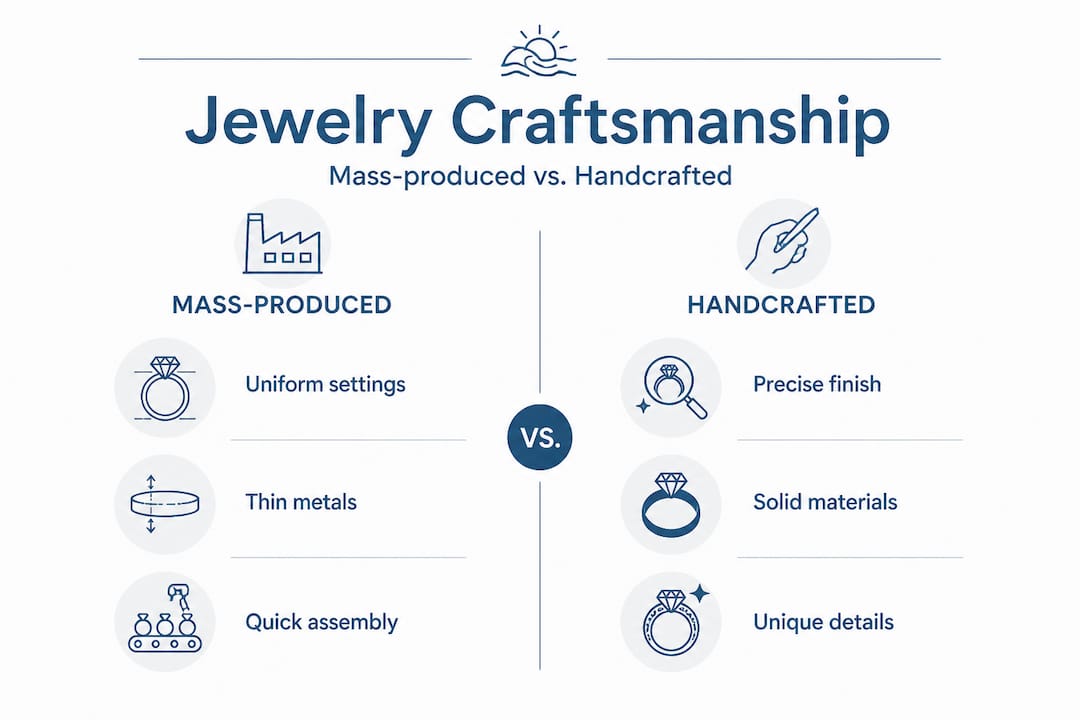
For a complete breakdown of what these indicators mean in practice, the expert jewelry tips guide covers each one with clear examples. The more informed you are going into a purchase, the more confident you’ll feel wearing or giving it.
Why true craftsmanship makes every piece unique
Here’s the view that most jewelry content won’t give you: craftsmanship isn’t just a quality marker. It’s what turns a piece of metal and stone into something that carries meaning across time.
We live in a moment where social media shapes jewelry trends constantly, making it easy to chase whatever’s trending and ignore what actually lasts. But here’s the thing: every trending jewelry style that has stood the test of time, from the signet ring to the tennis bracelet to the solitaire, was made possible by the kind of craft that’s now considered endangered. Trends change. The skill required to execute them well does not.
People often describe receiving a handcrafted piece as feeling different from receiving mass-produced jewelry. It’s not imagination. A piece made by skilled hands holds micro-variations that machine production cannot replicate. A slightly hand-hammered texture. A stone set at a fractionally unique angle. These details aren’t flaws. They’re signatures. They’re evidence of a human being who cared about what they made.
Consider the heirloom. The reason certain pieces survive for generations isn’t just sentiment. It’s construction. A piece built with thick enough metal, well-seated stones, and a secure clasp will physically survive decades of wear and storage. Poorly made jewelry breaks, tarnishes, or loses its stones and gets thrown out. Exceptional craftsmanship is what separates a memory from a keepsake.
There’s also a financial case. Well-crafted fine jewelry in gold or platinum holds value in a way that fashion jewelry never can. The materials retain worth, and skilled construction preserves them. That’s not just an investment argument. It’s permission to treat yourself or someone you love with something real.
The overlooked truth is that individuality in style still depends on old techniques. Lost wax casting, hand engraving, granulation, stone setting by hand: these are methods centuries old, still relevant because no machine has fully replaced what a trained eye and steady hand produce. When you wear handcrafted jewelry, you wear that lineage.
Discover fine craftsmanship with Malibu Vibes Jewelry
Ready to experience true craftsmanship firsthand? At Malibu Vibes Jewelry, every piece starts with a commitment to skill over speed. Each design is created in Los Angeles with an intentional focus on quality materials and artisan-level finishing, because we believe the jewelry you wear every day or give as a gift should be something that lasts. Learn more about our approach when you explore our craftsmanship and see exactly how each piece comes to life.

Whether you’re looking for something that expresses your personal style or searching for a gift with real meaning, our collections are built to deliver both. Browse our gemstone necklace collection for vibrant, handcrafted statement pieces, or explore our diamond jewelry for women for timeless elegance backed by genuine artistry. Quality you can see, feel, and trust, that’s what every Malibu Vibes piece is built around.
Frequently asked questions
What are the signs of high-quality jewelry craftsmanship?
Look for precise stone settings, smooth and even finishes, clear symmetry, and secure closures. These details signal skilled handiwork throughout the piece, not just on the visible surfaces.
How does craftsmanship affect the longevity of jewelry?
Expert construction prevents the most common problems: stones working loose, metal thinning unevenly, and clasps failing under normal use. A well-made piece can last decades with basic care.
Is handcrafted jewelry more sustainable?
Handcrafted pieces typically involve more careful material sourcing and less production waste than mass manufacturing. They also support critically endangered traditional craft skills that are at risk of disappearing.
Why are some jewelry crafts endangered?
Traditional skills like diamond cutting face extinction because mass producers in lower-cost markets offer faster, cheaper output. This squeezes skilled artisans out of the market and reduces the availability of truly handcrafted work.
How can I find jewelry with exceptional craftsmanship?
Choose brands that are transparent about their production process, show detailed product imagery, and stand behind the longevity of their pieces. Specifics about materials, artisans, and techniques are always a better sign than vague quality claims.
Recommended
- How jewelry is valued: materials, craftsmanship & worth – Malibu Vibes Jewelry
- How Handcrafted Jewelry Is Made: Artistry Explained – Malibu Vibes Jewelry
- Why quality matters in jewelry: lasting style in 2026 – Malibu Vibes Jewelry
- Why quality over quantity jewelry elevates your style – Malibu Vibes Jewelry
- Why craftsmanship create 100% excellence