

TL;DR:
- Custom jewelry is an accessible and meaningful investment, emphasizing personal symbolism over market resale value. Its worth stems from emotional significance, craftsmanship, and material choices, making each piece unique and durable. Proper aftercare, documentation, and understanding cost factors ensure lasting value and deep personal connection.
Custom jewelry carries a reputation for being out of reach, reserved for milestone moments or people with unlimited budgets. That reputation is mostly wrong. The truth is that a custom piece, whether it’s a delicate sterling silver ring or a diamond-set pendant, can be one of the most rewarding purchases you make, both financially and emotionally. This guide breaks down what drives value, what you can realistically expect to spend, and how to buy with confidence so that every dollar you invest carries real meaning.
Table of Contents
- What makes custom jewelry valuable?
- How much does custom jewelry really cost?
- The factors that influence custom jewelry value
- How to ensure your custom piece’s lasting worth
- What most shoppers miss about the value of custom jewelry
- Explore your custom jewelry journey with Malibu Vibes
- Frequently asked questions
Key Takeaways
| Point | Details |
|---|---|
| Multi-dimensional value | Custom jewelry offers emotional, aesthetic, and investment value far beyond mass-market items. |
| Wide price range | Custom pieces can start under $500, with complex designs costing several thousand dollars. |
| Lasting worth | Superior materials and craftsmanship help custom jewelry maintain or even grow in value. |
| Preservation matters | Professional appraisals and proper care are essential for protecting your investment. |
What makes custom jewelry valuable?
Custom jewelry is not just a product. It’s a process, a story, and a lasting object that carries intention behind every design choice. Understanding that distinction is the first step to seeing why so many women are moving away from mass-produced pieces and toward something made specifically for them.
The most immediate source of value is emotional connection. When a piece is designed to mark a birthday, a milestone, or a relationship, it takes on significance that a rack item simply cannot replicate. That significance only deepens over time. Heirloom jewelry has been passed down for generations precisely because it carries a family’s story inside a physical object. A custom piece you commission today could serve the same role for someone you love decades from now.
Beyond sentiment, value of jewelry craftsmanship plays a direct role in both beauty and longevity. A skilled jeweler who hand-sets stones, refines prong work, and polishes each surface brings a level of care that automated production lines simply can’t match. That craftsmanship shows up in how a piece wears over years, not just how it looks in a photo.
Here is what actually sets custom jewelry apart from mass-market alternatives:
- One-of-a-kind design: No two custom pieces are identical, which means you own something genuinely unique.
- Material control: You choose the metal, the stone quality, and the finish, rather than accepting whatever a brand decided was profitable.
- Fit and proportion: Custom sizing ensures the piece feels right on your body, not just on a generic display model.
- Intentional symbolism: Engravings, birthstones, and personal motifs give a piece narrative weight that off-the-shelf items rarely have.
- Long-term durability: Quality materials selected by the buyer, paired with skilled construction, tend to outlast fast-fashion jewelry by years.
“The most valuable jewelry is often the piece that was made with purpose. When a buyer chooses every element with intention, the result is something that cannot be replicated at any price.”
As jewelry quality experts note, quality materials paired with skilled production deliver lasting beauty and structural integrity that cheaper pieces simply can’t sustain.
Buyer guides and insurance specialists recommend comparing quotes across jewelers for comparable scopes, noting that prices start modestly for simple builds but rise quickly with added stone count, setting intricacy, and designer skill.
Pro Tip: Before you commission anything, write down the intention behind the piece. Is it a daily reminder of a value you hold? A gift meant to mark a specific relationship? That intention should guide every design decision and help you prioritize where to spend more versus where to keep it simple.
How much does custom jewelry really cost?
One of the biggest barriers to buying custom jewelry is not the price itself. It’s the uncertainty around price. People assume custom always means expensive, and without a clear range, they walk away from the idea entirely. That’s a shame, because the reality is far more accessible than most expect.
Custom jewelry costs vary widely depending on the type of piece: simple custom rings can start around $300, while more intricate gemstone bracelets and statement pieces are often quoted in the $2,000 to $5,000 range and beyond.
Here’s a practical breakdown of what different types of custom pieces typically cost:
| Piece type | Simple design | Mid-range | Intricate/gemstone |
|---|---|---|---|
| Ring | $300 to $600 | $700 to $1,500 | $2,000 to $5,000+ |
| Necklace/pendant | $250 to $500 | $600 to $1,200 | $1,500 to $4,000+ |
| Bracelet | $300 to $700 | $800 to $1,800 | $2,000 to $5,000+ |
| Earrings (pair) | $200 to $450 | $500 to $1,100 | $1,200 to $3,500+ |
These numbers reflect the primary cost drivers: metal type (14k gold costs significantly more than sterling silver), stone quality and carat weight, the complexity of the setting, and the level of hand finishing required. A plain band in sterling silver with a single engraved message sits at the lower end. A platinum setting with conflict-free diamonds and a filigree design sits at the upper end.
Understanding how jewelry is valued by material and craftsmanship helps you understand why two pieces that look similar can have very different price tags. The difference is almost always in what you cannot see: the quality of the stone cut, the weight of the metal, and the precision of the setting.
The most important number to know: Custom does not automatically mean more expensive than branded retail. Many branded items carry significant markups for name recognition alone. A custom piece at the same price point often delivers superior materials and a design that is actually yours.
Pro Tip: When comparing quotes, always specify the same materials and complexity level to each jeweler. Vague requests produce wildly different estimates. Know your metal, your stone preferences, and your rough design concept before you start asking for numbers.
If you want to understand the full scope of what custom jewelry is before you budget, it helps to read up on the process and terminology so you can communicate clearly with a designer from day one.
The factors that influence custom jewelry value
Now that cost ranges are on the table, it’s worth going deeper into what actually moves the needle on value. Because understanding these factors does not just help you budget. It helps you make smarter choices at every stage of the design process.
Material choices are the foundation of any piece’s value. The metal matters enormously. Solid 14k gold holds its value over decades and resists tarnishing. Sterling silver is more affordable and still beautiful, but requires more regular care. Platinum sits at the premium end and is exceptional for securing high-value stones. The gemstones you choose add another layer of complexity. Diamond quality is measured by the four Cs (cut, color, clarity, and carat weight), and each factor shifts the price and the long-term value significantly.
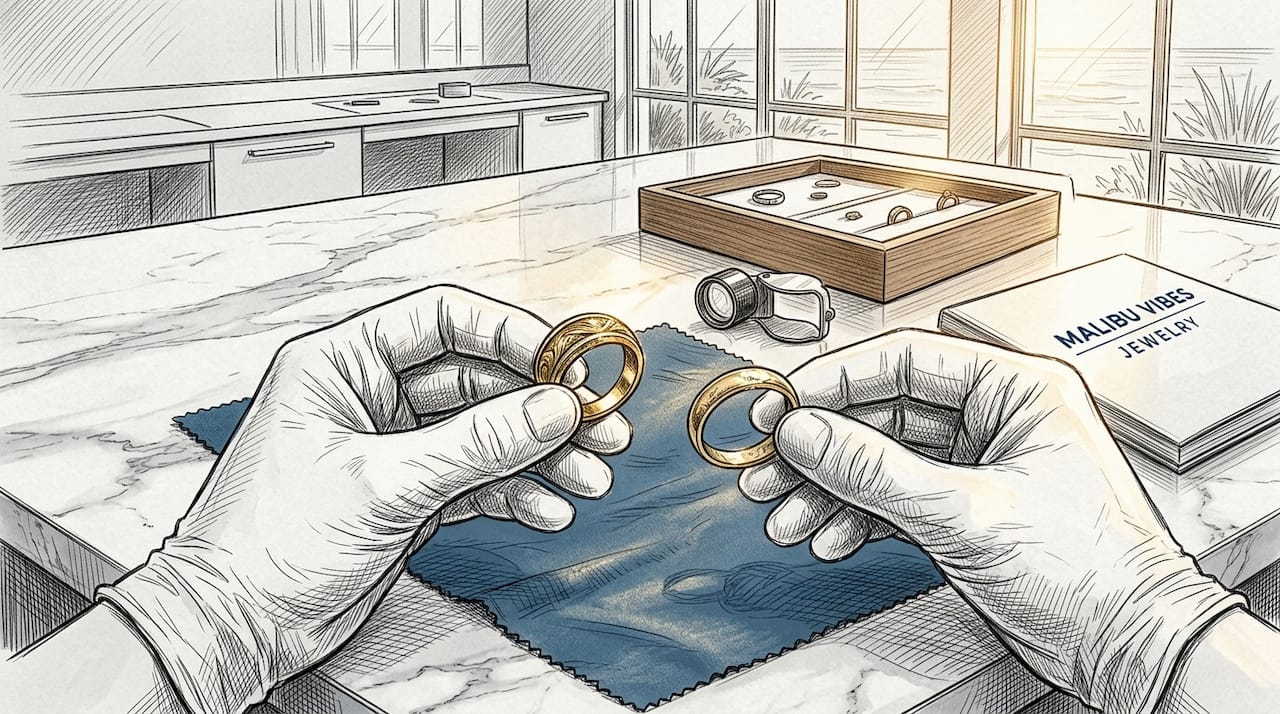
Craftsmanship and jeweler skill are factors that buyers often underestimate. An experienced jeweler working by hand brings precision to prong placement, stone alignment, and surface finishing that automated methods skip. According to expert jewelry quality tips, the small details in construction are often the clearest indicators of whether a piece will hold up beautifully or begin to show wear within a year.
Level of personalization adds both cost and value. Hand engraving costs more than laser engraving, but it produces a texture and character that stands out. Custom stone sourcing, where a jeweler finds a specific color or origin for a gemstone, adds time and therefore cost. But these personalizations are also what make a piece irreplaceable.
Here is a direct comparison to help you see the difference at a glance:
| Feature | Custom jewelry | Mass-market jewelry |
|---|---|---|
| Material quality | Buyer-specified, verified | Standardized, often minimized |
| Design uniqueness | One-of-a-kind | Produced in thousands |
| Craftsmanship | Hand-finished, artisan-made | Automated, assembly-line |
| Sentimental value | High, intentionally built in | Low, generic |
| Appraisal value | Reflects true materials used | Often inflated by brand premium |
| Longevity | High with proper materials | Variable, often lower |
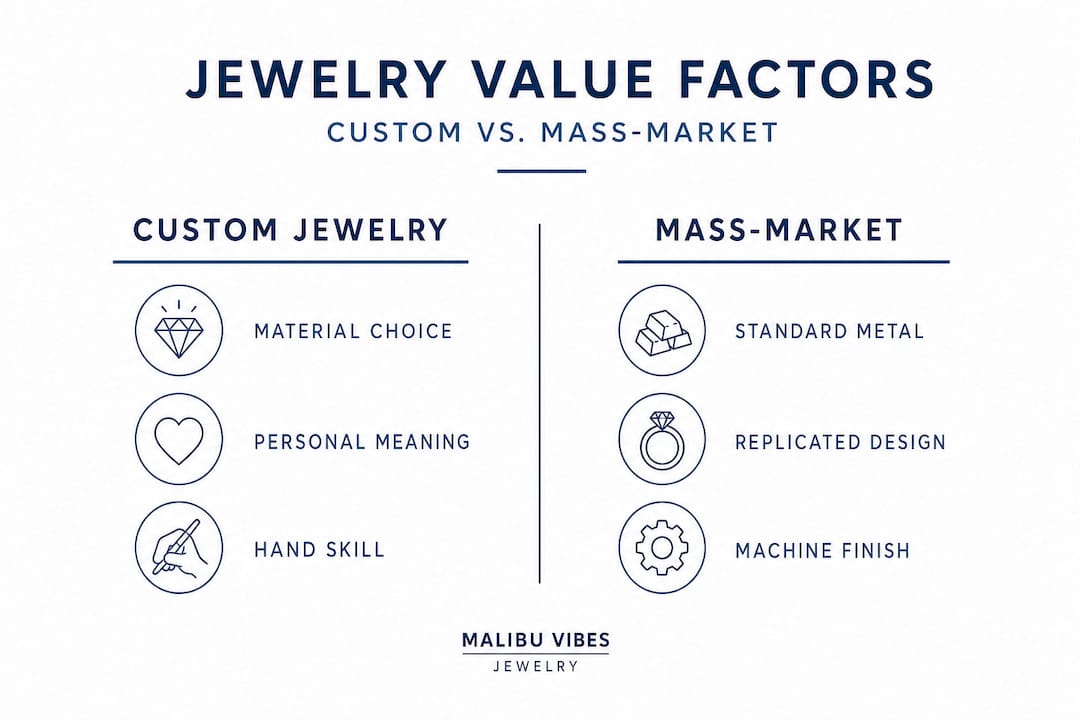
The designing custom jewelry process involves multiple stages of consultation, design approval, and quality review that protect your investment from start to finish.
Buyer and insurance guides confirm that prices rise quickly with added stone count, setting intricacy, and designer skill. Knowing this in advance helps you prioritize where your budget will have the greatest visible and lasting impact.
How to ensure your custom piece’s lasting worth
You’ve invested in a meaningful piece. Now comes the part most buyers skip: protecting it. Proper aftercare and documentation can be the difference between a piece that holds its value for decades and one that quietly deteriorates or becomes uninsurable.
Follow these steps to protect every piece you commission:
- Request a professional appraisal immediately after purchase. A certified appraiser provides an independent document stating the replacement value of the piece. This is essential for insurance coverage and for resale if that ever becomes relevant.
- Insure the piece through a specialized jewelry insurance policy. General renters or homeowners insurance rarely covers jewelry adequately. Dedicated jewelry insurance covers loss, theft, and damage in ways that standard policies do not.
- Keep all documentation in a single secure location. This includes the appraisal certificate, any gemstone grading reports, purchase receipts, and the jeweler’s warranty or service guarantee.
- Clean and maintain the piece according to the metal and stone type. Gold and silver have different cleaning needs. Gemstones vary in hardness and porosity. Ask your jeweler for a specific care guide on the day you receive the piece.
- Schedule a professional cleaning and inspection every one to two years. A jeweler can catch loose prongs, worn settings, or surface damage before it becomes a serious problem.
Understanding the jewelry appraisal process in detail helps you ask the right questions when you pick up your finished piece. Reputable jewelers, including those who follow a transparent fine jewelry making process, will typically walk you through care guidelines as part of the handoff.
Buyer guides consistently recommend jeweler consultations on aftercare, particularly because each combination of metal and stone has specific maintenance needs that generic advice does not cover.
Pro Tip: Before you finalize any order, ask your jeweler in writing what their service policy covers and for how long. A reputable craftsperson stands behind their work and will offer some form of structural guarantee on their setting and finishing work.
What most shoppers miss about the value of custom jewelry
Here’s a perspective that most buying guides won’t give you: the obsession with resale value in custom jewelry is largely a distraction. People spend enormous energy trying to calculate whether a piece will appreciate on the open market, and in doing so, they miss the actual point entirely.
Custom jewelry is not a stock. It’s not a commodity you trade. The real return on a custom piece is measured in moments, not markets. It’s the look on someone’s face when they unwrap a pendant made with their grandmother’s birthstone. It’s the way a ring catches the light every morning and reminds you of a decision you’re proud of. That return doesn’t appear on any appraisal document, but it’s real.
The brands and mass-market retailers would love for you to believe their items hold better resale value. In reality, retail markup on branded jewelry is often 200% to 400% above material cost. The moment you walk out of the store, much of that markup is gone. A custom piece, made with verified materials and documented by an independent appraiser, often holds its insured replacement value far more honestly.
The artistry behind custom jewelry is also something that appreciates in the human sense. As handcraft skills become rarer in a world of digital manufacturing, pieces made with traditional techniques gain a kind of cultural worth that factory output simply cannot replicate.
Our honest advice: buy custom jewelry for meaning first. Choose quality materials because you want the piece to last, not because you’re expecting to sell it. When the intention is right and the craftsmanship is genuine, the value takes care of itself.
Explore your custom jewelry journey with Malibu Vibes
Ready to find a piece that holds deep meaning? Here’s how Malibu Vibes can help you turn inspiration into wearable art.
At Malibu Vibes Jewelry, every piece begins with intention. Our Los Angeles-based team works with fine materials including 14k gold, sterling silver, and genuine gemstones to create jewelry that wears beautifully for years. Whether you’re shopping for yourself or designing a gift that will be remembered for a lifetime, we make the process clear and rewarding from first sketch to final polish. You can explore our fine jewelry process to see exactly how we work, or browse our sterling silver collection and diamond jewelry designs to spark your vision. Quality, craftsmanship, and meaning are never out of reach.
Frequently asked questions
Is custom jewelry more expensive than branded pieces?
Simple custom jewelry can be comparable in price to many branded items, and custom rings start around $300 for straightforward designs, though complex gemstone pieces can exceed $5,000. Branded jewelry often carries significant name markups that custom pricing does not include.
How can you tell if a custom piece will hold its value?
Look for skilled hand craftsmanship, superior metals like solid 14k gold or platinum, certified gemstones, and an independent appraisal document. Guides from insurance specialists confirm that material quality and complexity are the clearest predictors of long-term worth.
What documents should come with valuable custom jewelry?
A well-made custom piece should include an independent appraisal certificate, any gemstone grading reports, the original purchase receipt, and the jeweler’s warranty or service agreement.
Are custom pieces good for gifting special occasions?
Custom jewelry is one of the strongest gift choices for meaningful occasions because it adds personal symbolism, uniqueness, and emotional significance that ready-made gifts simply cannot deliver.
Does custom jewelry always take longer to make?
Yes, custom pieces require design consultations, material sourcing, and hand production that add time compared to ready-made items. Most custom projects take anywhere from two to eight weeks depending on complexity.
Recommended
- Craft Your Story with Custom Jewelry Trends – Malibu Vibes Jewelry
- 2025 jewelry style trends: Elevate your luxury look – Malibu Vibes Jewelry
- Why quality matters in jewelry: lasting style in 2026 – Malibu Vibes Jewelry
- Why fine jewelry gifts: meaningful luxury for every occasion – Malibu Vibes Jewelry